Lady beetles are great in the garden. In your living room, not so much. When temperatures drop, certain lady beetles (especially the Asian lady beetle) look for warm places to spend the winter. That is why they show up suddenly on sunny windows, in light fixtures, and in corners of ceilings.
The good news: you can get them under control without fogging your house or turning your walls into a stain-fest. Below is a realistic plan that works in normal homes, with normal time, and normal patience.
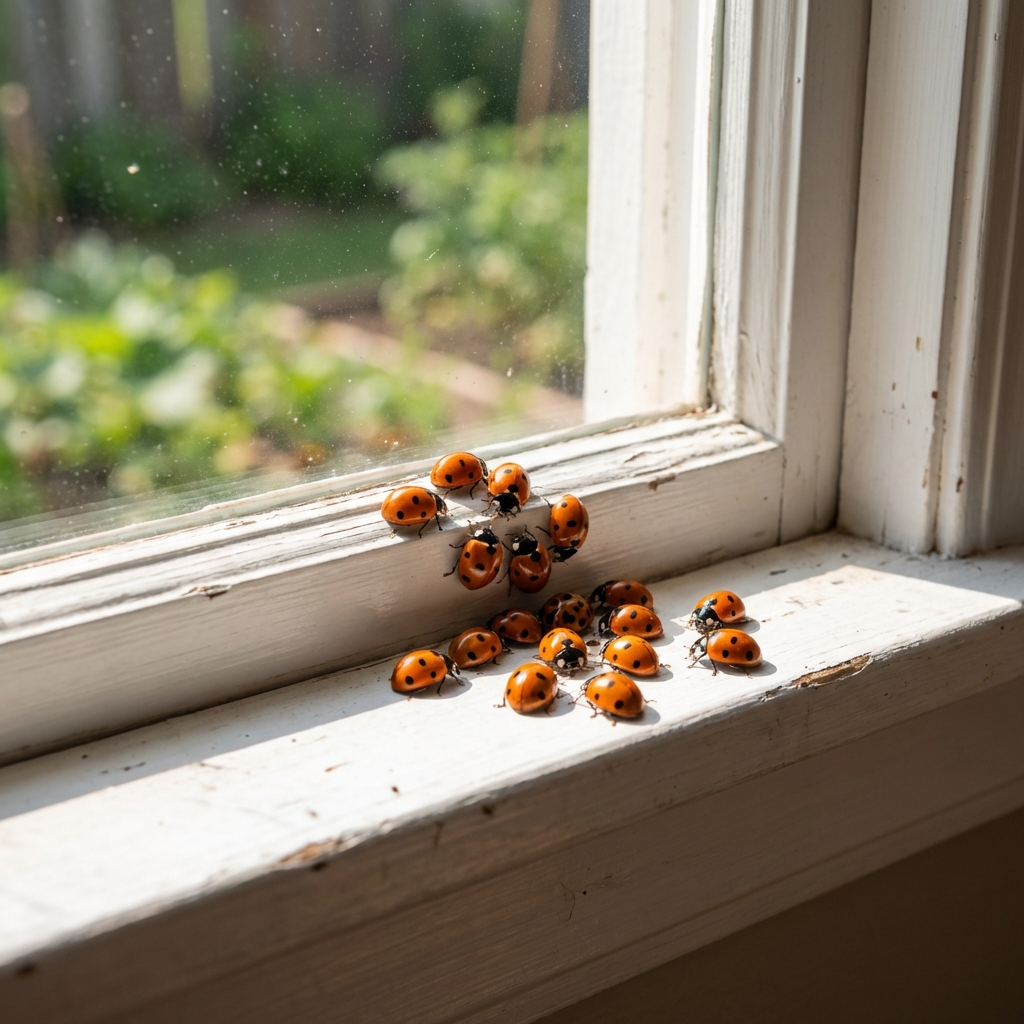
Lady beetle or something else?
Before you treat anything, make sure you are dealing with lady beetles. A lot of homeowners call anything small and beetle-like a ladybug, but the solution changes if it is a different pest.
Common indoor invader: Asian lady beetle
- Color: often orange, sometimes red, sometimes with no spots
- Marking: many have a pale area behind the head with a black “M” or “W” shape (helpful, but not universal)
- Behavior: shows up in large numbers in fall or during warm winter days
- Can bite: yes, occasionally, especially if trapped in clothing or bedding
- Odor/stains: can release a yellow fluid that smells and can stain fabrics and walls
Important lookalike: lady beetle larvae and carpet beetles
- Lady beetle larvae: usually outside on plants, alligator-shaped, dark with orange markings. These are beneficial.
- Carpet beetles: small oval beetles that can damage fabrics. Different problem, different plan.
If what you have is clustering near windows and on sun-warmed walls in fall and winter, you are almost certainly dealing with Asian lady beetles.
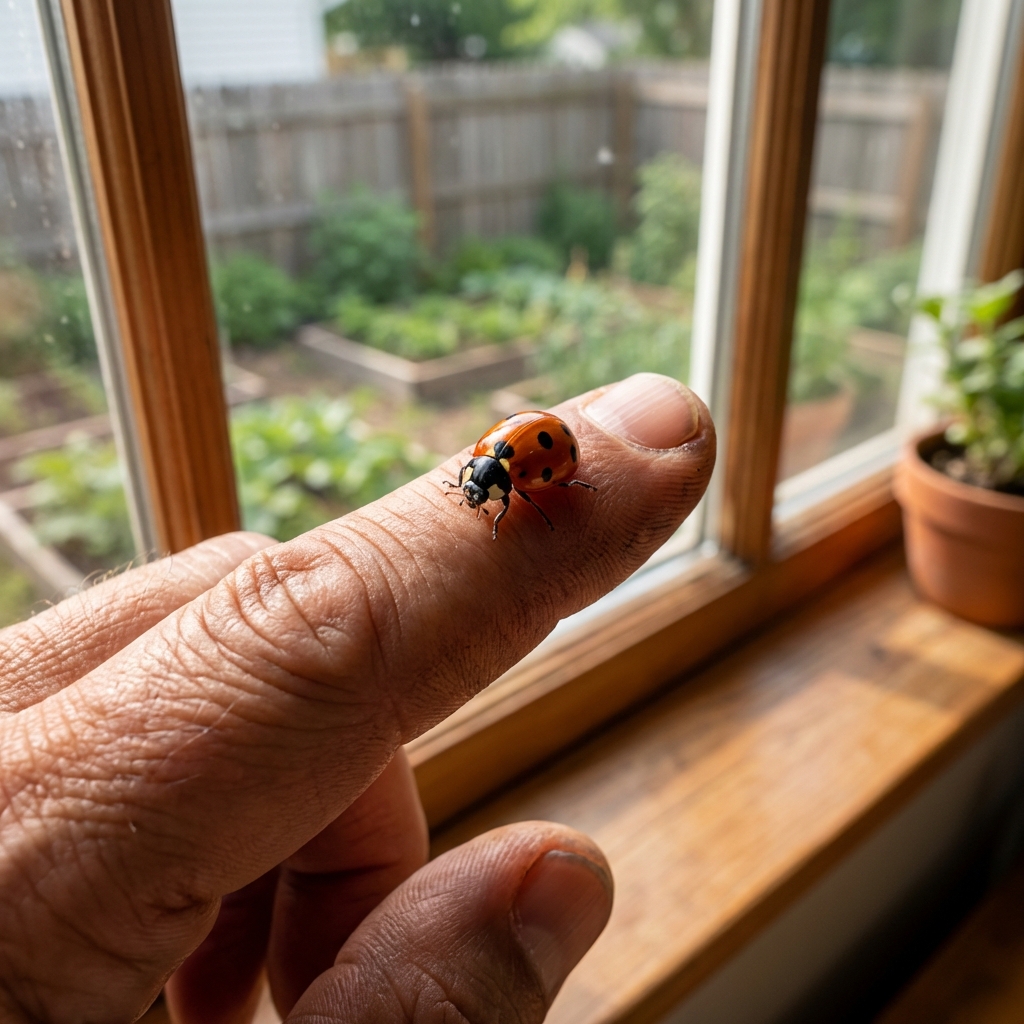
Why they keep coming back every year
Asian lady beetles tend to return to the same overwintering spots because chemical cues (including aggregation pheromones), plus a favorable microclimate, make certain homes and walls especially attractive.
Also, once a few get inside, they tend to gather in the same areas: attics, wall voids, upper floors, and window frames. That is why it can feel like you removed them yesterday and today there are 20 more.
Will they reproduce indoors?
Usually, no. In most homes, Asian lady beetles are not setting up a breeding population indoors. They are overwintering, then waking up and wandering on warm, sunny days, which is why they seem to “appear out of nowhere” in mid-winter or early spring.
What not to do
A few common moves make the problem worse or harder to clean up:
- Do not crush them on walls or curtains. They can leave yellow stains and a lingering smell.
- Do not spray random aerosol insecticides indoors. You risk staining, respiratory irritation, and dead beetles in hidden voids that can create odor and may attract scavenger pests.
- Do not use “bug bombs” or foggers. They rarely reach where beetles are hiding and can create unnecessary chemical exposure.
Fast indoor removal (best methods)
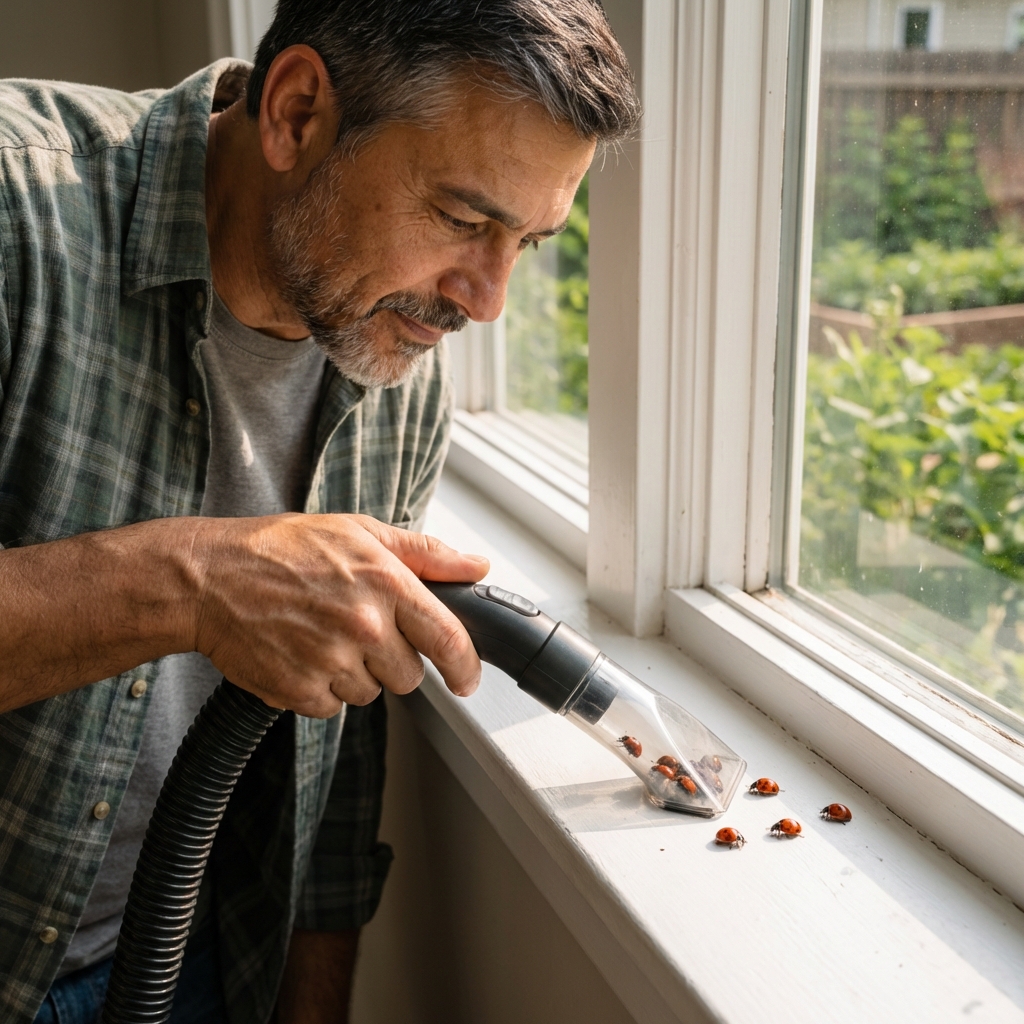
1) Vacuum them up the right way
This is the quickest, cleanest approach for most homes.
- Use a vacuum with a hose attachment.
- If possible, put a stocking or fine mesh over the hose end and secure it with a rubber band. This lets you collect them without them getting deep into the vacuum.
- Bagless vacuum: empty it outside immediately. Odor can linger if they sit in the canister.
- Disposal options: seal them in a bag and put it in the outdoor trash, or freeze the sealed bag/container overnight before disposal. (Releasing them outside can work in the moment, but it does not always prevent them from coming back.)
2) Try a simple trap (hit or miss)
Asian lady beetles are often more attracted to warmth and light-colored surfaces than to light itself, but a basic trap can still help in some rooms, especially at night.
- In a dark room, place a lamp aimed at a shallow bowl of soapy water.
- Check it in the morning and refresh as needed.
3) Sweep, then seal
If you have beetles on floors or in corners, sweep them gently into a dustpan and dispose of them (sealed bag is best). Then jump to Prevention below. If you do not block the entry points, you will be doing this again next week.
Clean-up tips (so you do not end up with stains)
If you have yellow marks or odor from defensive fluid:
- Painted walls: wipe gently with warm water and a drop of dish soap. Test in a hidden spot first.
- Fabrics: rinse cold first, then wash. Avoid heat until the stain is gone.
- Hard surfaces: a mild all-purpose cleaner works well. Do not scrub aggressively on matte paint.
Prevention that actually works
Prevention is where you win. Once they are inside wall voids or attic spaces, you are mainly reacting. Your goal is to block entry before fall swarms.
Seal the common entry points
- Caulk cracks around window frames, door trim, and siding joints.
- Replace worn weatherstripping on doors.
- Add or repair door sweeps.
- Seal gaps where pipes and cables enter the home.
- Install fine mesh screens on attic vents and ensure window screens fit tight.
Focus on the sunny sides of the house
Asian lady beetles tend to mass on south and west exposures that warm up in the afternoon sun. If you can only tackle one side of the house this weekend, start there.
Reduce “welcome signs”
- Turn off unnecessary exterior lights at night during peak season.
- If nighttime lighting is needed, yellow “bug” bulbs may reduce attraction for some insects. For lady beetles, results vary, so treat this as a small assist, not a main strategy.
- Keep window screens in good shape and windows closed on warm fall days when beetles are active.

Outdoor control (keeping them from clustering on siding)
If you get the classic fall swarm on siding, eaves, and around windows, outdoor steps help reduce how many find a way inside.
Rinse them off
A strong stream of water from a hose can knock clusters down. This is not a permanent fix, but it reduces the immediate pressure around entry points.
Physical exclusion beats pesticides
In most home settings, sealing and screening gives you better long-term results than spraying. Broad insecticide use can also harm beneficial insects.
If you choose to use an outdoor residual spray
Only use products labeled for exterior lady beetle control and follow the label exactly. Focus on:
- around windows and door frames
- under eaves
- cracks where siding meets trim
Avoid spraying flowers, vegetable beds, and areas where pollinators forage.
Natural repellents: what helps and what is hype
You will see a lot of “just use this essential oil” advice online. Some scents may discourage beetles in small areas, but they rarely solve a whole-house problem by themselves.
Worth trying (small, targeted use)
- Soapy water spray: works for direct contact on a few beetles. Test on surfaces first.
- Light scent deterrents: mild use near window sills may reduce lingering beetles, but it will not replace sealing.
Usually disappointing
- Ultrasonic devices: inconsistent results.
- Indoor “barrier” sprays without sealing: you still get beetles, just dead ones in hidden places.
If you like low-chemical methods, put your effort into vacuuming and exclusion. Those two are the real workhorses.
What to do if they are coming from the attic or walls
If lady beetles seem to appear out of nowhere, they may be overwintering in wall voids, attic insulation, or around recessed lights and ceiling fixtures.
- Do not open walls. That creates a bigger mess and rarely fixes the source.
- Seal from the outside where possible. Exterior cracks and gaps are usually the main entry.
- Improve attic screening. Make sure vents are screened and attic access doors close tight.
- Use indoor vacuum removal as they appear. You are catching the stragglers that wake up on warm days.
Are lady beetles harmful?
They are not dangerous in the way termites or roaches are, but they are still a nuisance.
- Bites: Asian lady beetles can bite. It is usually mild but annoying.
- Allergies: some people react to their odor or the dust from large numbers.
- Stains: the yellow defensive fluid can stain walls, curtains, and upholstery.
When to call a pro
If you are dealing with hundreds or thousands every season, it may be time to bring in a pest professional for an exterior exclusion and targeted treatment plan.
Call for help if:
- clusters are heavy in the attic and living spaces
- you cannot locate or seal major entry points
- allergies or asthma are being triggered
Quick checklist
- Vacuum beetles and empty the vacuum right away
- Do not crush them on walls or fabrics
- Dispose in a sealed bag (freezing first is optional)
- Seal cracks around windows, doors, siding, and utility entries
- Repair screens and add mesh to vents
- Focus prevention on south and west sides of the house
- Use water to knock outdoor clusters down, then seal
If you tackle sealing before the next fall temperature swing, you will usually see a huge drop in indoor beetles the following season.

Jose Brito
I’m Jose Britto, the writer behind The Country Store Farm Website. I share practical, down-to-earth gardening advice for home growers—whether you’re starting your first raised bed, troubleshooting pests, improving soil, or figuring out what to plant next. My focus is simple: clear tips you can actually use, realistic expectations, and methods that work in real backyards (not just in perfect conditions). If you like straightforward guidance and learning as you go, you’re in the right place.