Groundhogs (also called woodchucks) are cute right up until they treat your garden like an all-you-can-eat salad bar. If you have clean, angled cuts on beans, peas, lettuce, or young transplants that seem to vanish overnight, a groundhog is a prime suspect. The good news: you do not need to “win” against wildlife. You just need to make your garden harder to access than the next yard.
This page walks you through what works best in real gardens: a proper fence, a dig barrier, and a few smart habits that make your space less inviting.
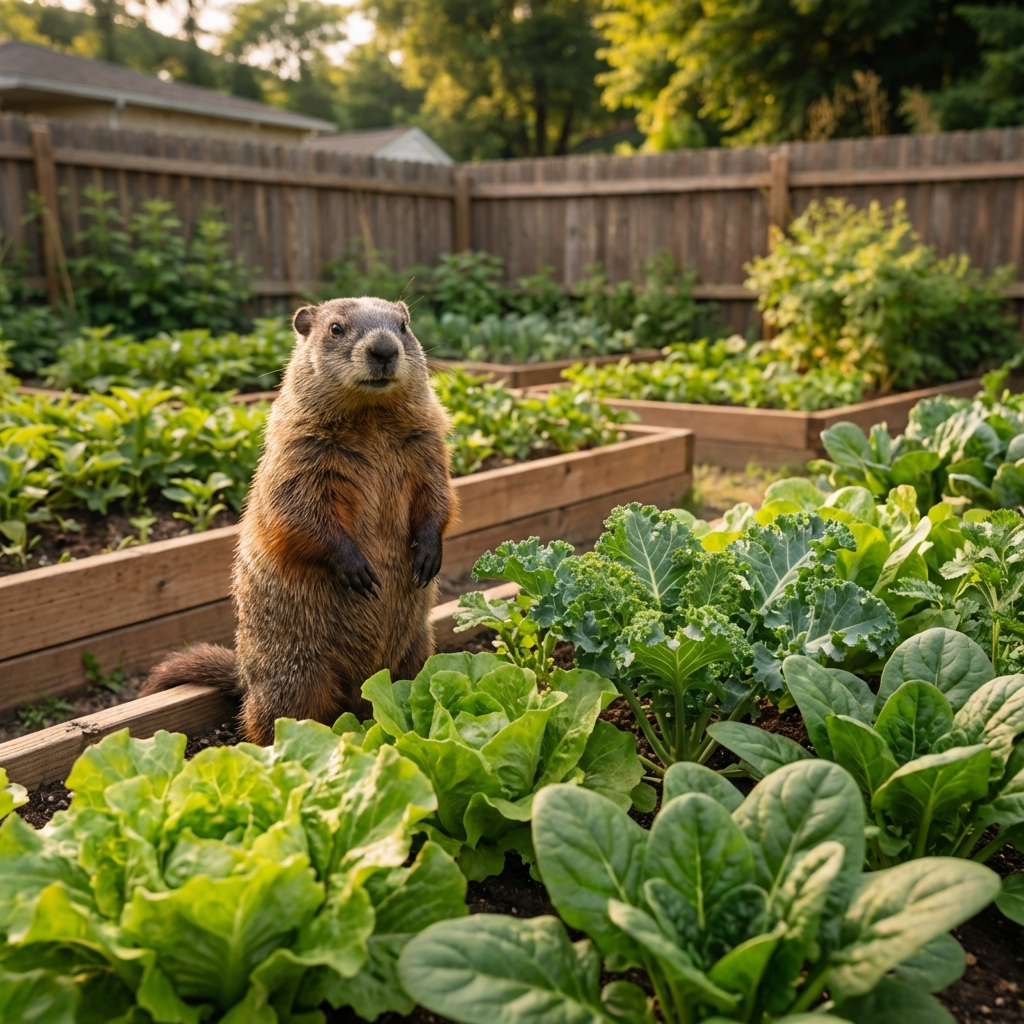
Know what you are dealing with
Groundhogs are strong diggers and steady grazers. They are mostly active during the day, and they often feed in the morning and late afternoon. They love tender growth. Unlike deer, they are not reaching high. They are coming in low, clipping stems, and sometimes pulling up or flattening seedlings.
Common groundhog signs
- Burrow entrances about 8 to 12 inches wide, often with a mound of dirt nearby.
- Cleanly clipped plants close to the ground, especially peas, beans, lettuce, broccoli, and flowers like zinnias.
- Damage along edges of beds first, then deeper as they get comfortable.
- Trails through grass leading from cover to the garden.
Groundhog or rabbit?
Rabbits can leave similar clean, angled cuts, so it helps to look for the giveaways. Rabbits usually do not make large burrows in your lawn, and you will often find small, round droppings nearby. Groundhog damage is commonly paired with a clear burrow entrance, wider paths, and heavier, “mowed down” areas near the garden edge.
If you also see damage higher up on plants, torn leaves, or ragged browsing, you may have more than one pest (rabbits, deer, or both). The fence recommendations below can be adjusted to cover those too.
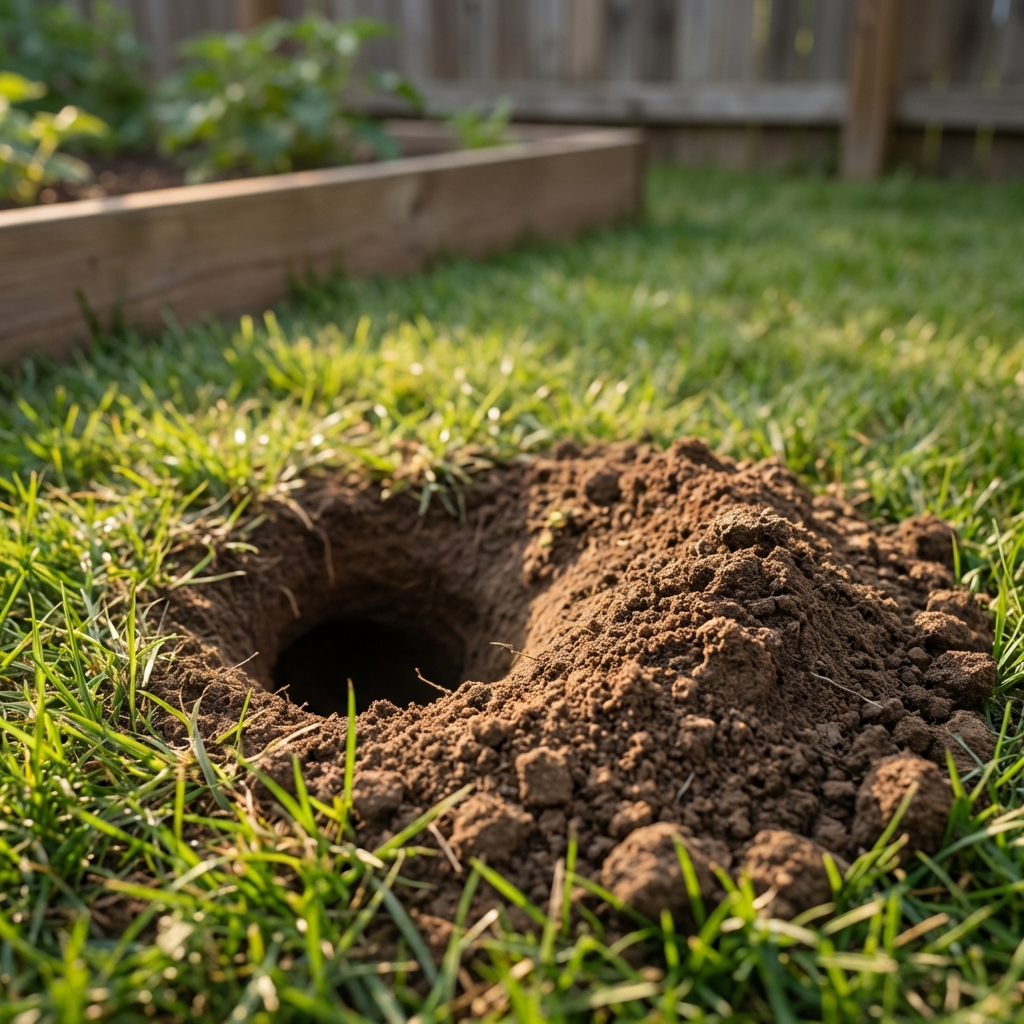
The best fix: a fence built for digging
If you take only one action, make it this one. Repellents and scare tactics can help, but a correctly built fence is what turns groundhogs from a weekly crisis into a rare sighting.
Before you build
- Call before you dig if you plan to trench for buried wire.
- Check local rules (HOA, city codes) if you are adding a tall perimeter fence.
- Plan for pets and kids so gates latch securely and sharp wire ends are capped or folded back.
Fence specs that actually work
- Height: 4 feet is a safer target. Some gardens get by with 3 feet, but groundhogs can climb, especially if there are nearby objects they can launch from.
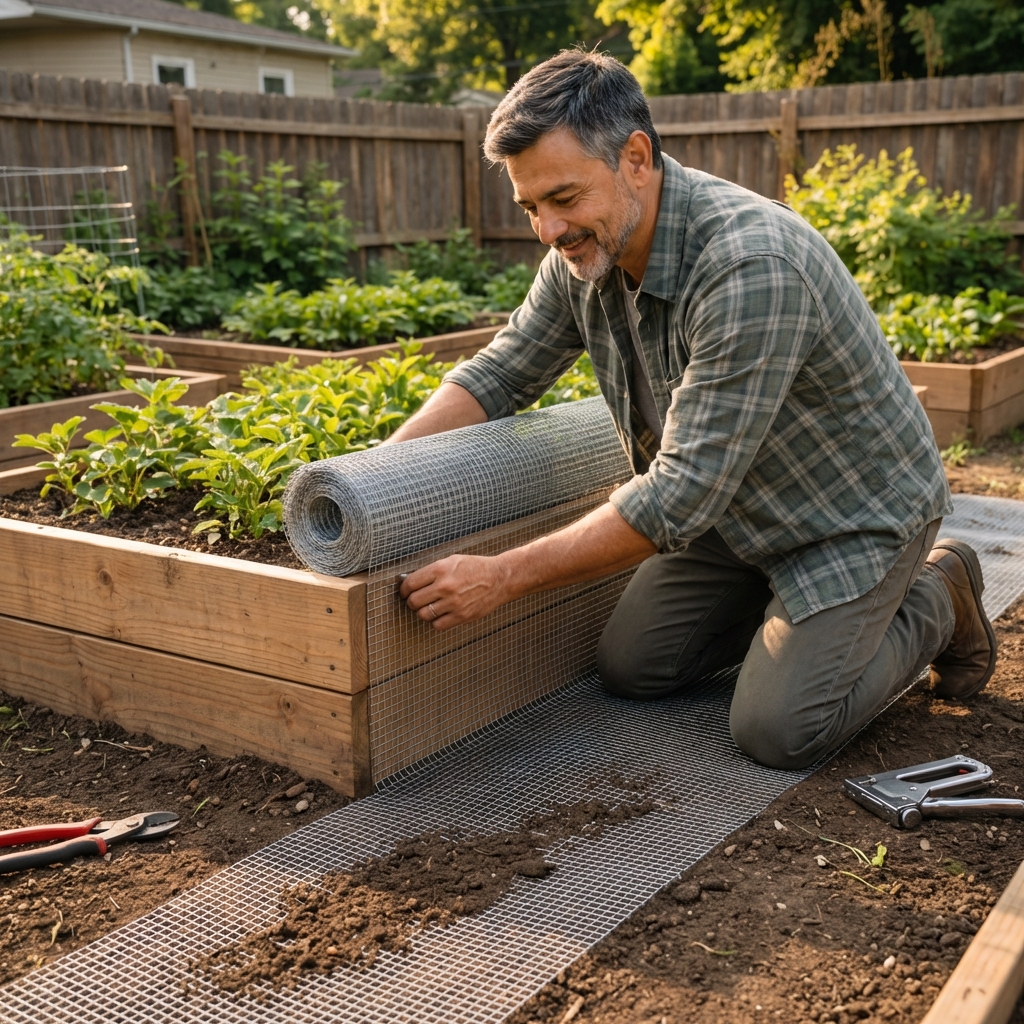
- Material: 1/2 inch galvanized hardware cloth is the gold standard. Welded wire can work if openings are small and the fence is tight. Chicken wire is often too flimsy and can be pushed under.
- Mesh size note: 1 inch openings may allow small juveniles through, so use 1/2 inch if you can.
- Dig barrier: bury the fence 12 inches down, or use an outward L-footer on the ground. In high-pressure areas, deeper burial can help, but the L-footer often does the job with less work.
- Outward angle: angle the top 6 to 12 inches outward to make climbing harder (optional, but helpful).
- No gaps: they will find the weak spot. Secure corners tightly and close off spaces under gates.
Two ways to stop digging under
Option A: Bury it. Dig a trench about 12 inches deep, set the fencing, and backfill. This is the most secure option.
Option B: Add an L-footer. Lay 12 to 18 inches of fencing outward on the soil surface (outside the garden), then pin it down with landscape staples and cover with soil or mulch. When a groundhog tries to dig at the fence line, it hits wire and usually gives up.
In normal backyard conditions, the L-footer is often the fastest win with the least digging.
Quick materials checklist
- 1/2 inch hardware cloth (or small-opening welded wire)
- Sturdy posts (metal T-posts or wood) and post caps
- Fence staples or heavy-duty zip ties (depending on posts)
- Landscape staples for an L-footer
- A gate solution that closes tight at the bottom (gate sweep, threshold board, or hardware cloth skirt)
- Gloves and wire cutters
Longevity tip: Galvanized materials hold up better outdoors. If you can, avoid leaving cut edges pressed into constantly wet soil, and patch rust-prone spots before they become holes.
Make the garden less tempting
Groundhogs like a short commute from cover to food. If your yard has tall weeds, brush piles, or easy hiding spots right next to the beds, you are basically providing a safe dining room.
Simple habitat changes
- Mow and trim edges near the garden so they feel exposed when approaching.
- Remove brush piles and stacked lumber close to beds.
- Close off spaces under sheds, decks, and porches with hardware cloth. Bury the bottom edge a few inches or add an L-footer.
- Pick ripe produce promptly and clean up fallen fruit and veggie scraps.
- Keep compost and “extra greens” away from the garden perimeter. A compost pile full of veggie scraps can become a reliable food stop.
These changes do not replace fencing, but they reduce repeat visits and help other deterrents work better.
Protect the favorite crops first
If you are not ready to fence the whole garden, you can still protect your highest-value plants while you plan a larger fix.
Fast protection options
- Mini fences around single beds using hardware cloth and stakes.
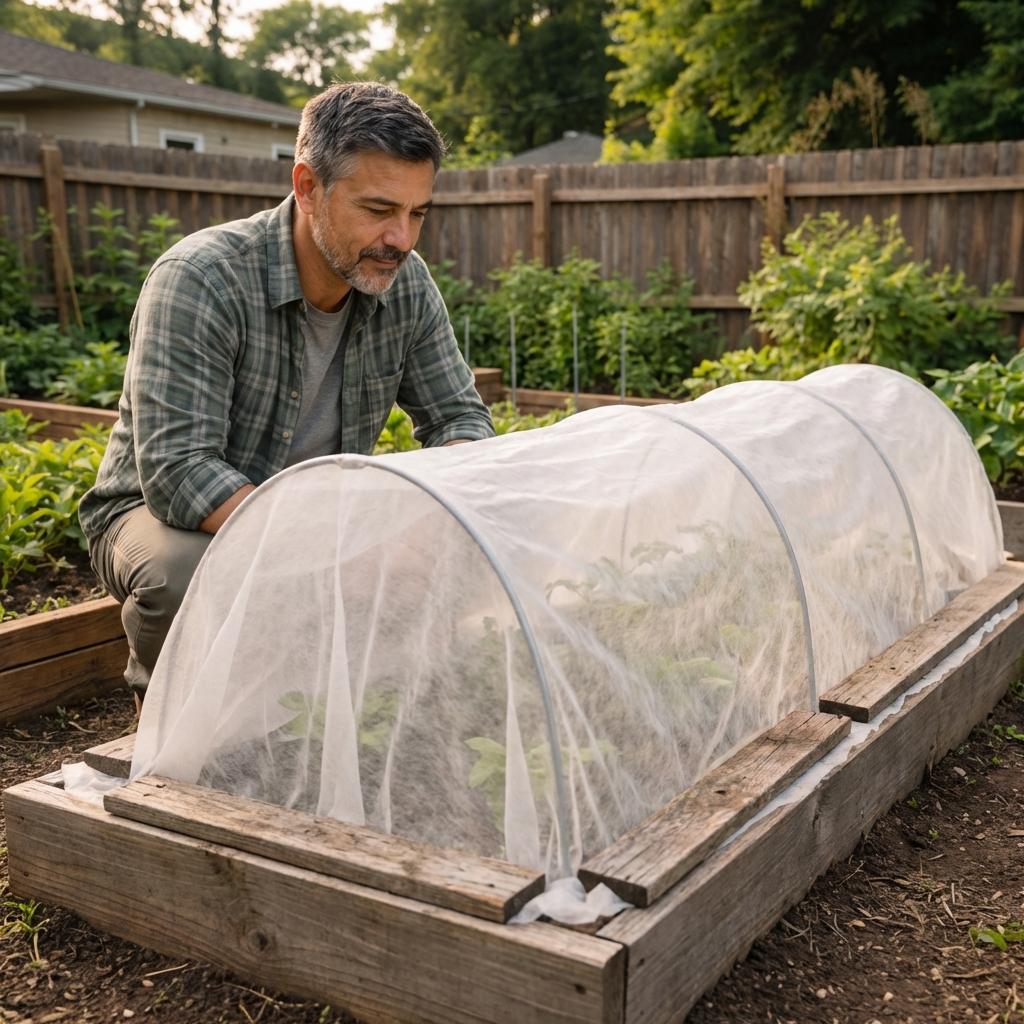
- Row covers secured tightly at the edges. Use boards, sandbags, or landscape pins. If there is a gap, they will find it.
- Cages around young transplants for the first few weeks.
Target crops first: beans, peas, lettuce, spinach, young brassicas, and tender flowers. Once plants are larger and tougher, they can tolerate a little nibbling, but seedlings cannot.
Repellents and deterrents
Repellents can help, but they are rarely a stand-alone solution for groundhogs. Think of them as a way to buy time while you improve barriers.
Practical deterrents that sometimes help
- Castor oil-based repellents on the ground near the perimeter can discourage digging and lingering. Reapply after heavy rain.
- Motion-activated sprinklers can be surprisingly effective in open areas, especially for daytime visitors.
- Strong-smelling plants (mint, alliums) are not a fence, but they can slightly reduce casual browsing when combined with other steps.
What usually fails on its own
- Ultrasonic devices tend to be inconsistent outdoors.
- Home remedies like human hair or random soaps can work briefly, then stop.
- Scarecrows and shiny tape may help for a few days until the animal learns it is harmless.
If you use repellents, use them strategically: apply along entry points and fence lines. Some gardeners find rotating products helps keep deterrents from fading into background noise, but do not rely on it without a physical barrier.
Burrows: handle them safely
If a burrow is active near the garden, you need to address it or you will keep seeing damage. A groundhog with a comfortable home nearby will keep testing your defenses.
Confirm a burrow is active
- Look for fresh soil, new tracks, and a clear, open entrance.
- Place a few leaves or sticks loosely at the opening. If they are moved within a day or two, it is active.
Do not seal an active burrow
Sealing an active burrow can trap the animal, create odor problems, and may be illegal in some areas. If you plan to exclude, do it only when you are confident the burrow is inactive, or work with a professional or your local wildlife office.
Humane removal: live trapping
In some yards, fencing is not possible everywhere and the groundhog is persistent. Live trapping can work, but it is not as simple as catching and driving away.
Important considerations first
- Check local laws on trapping and relocation. Many areas restrict relocation because it can spread disease and causes high mortality.
- Consider professional wildlife control if you are not comfortable handling an animal.
- Expect a vacancy problem if habitat and access stay the same. Another groundhog may move in later.
If trapping is legal where you live
- Use a sturdy live trap sized for groundhogs.
- Place it along a travel path or near the burrow entrance, not in the middle of open lawn.
- Bait with apple slices, melon, or leafy greens.
- Check traps frequently and follow humane handling guidelines.
Even with trapping, you will still want the fence and the dig barrier. Otherwise you are playing whack-a-mole every season.
A simple plan that works
If you want a realistic checklist, here is the order I recommend for most home growers:
- Install a perimeter fence using 1/2 inch hardware cloth or small-opening welded wire.
- Add a dig barrier by burying about 12 inches or installing an L-footer.
- Close gaps under gates and at corners (a gate sweep or bottom board helps).
- Trim cover near the garden to reduce hiding spots.
- Protect favorite crops with row cover or cages while the fence work is happening.
- Add a motion sprinkler if you still see visits.
Do those steps and you will often see a big difference within a week or two, especially once the animal realizes your garden is no longer easy. In tougher situations, it may take longer, but the barrier approach still pays off.
FAQ
How deep should I bury fence to stop groundhogs?
About 12 inches is a solid target. If digging a trench is not realistic, an outward L-footer of 12 to 18 inches pinned to the ground works well for many backyards.
Will groundhogs climb a fence?
Yes, they can climb some fencing, especially if it is rigid and has large openings, or if they can climb from a nearby object. Small-mesh hardware cloth, a tight installation, and an outward angle at the top reduce climbing attempts. If you are building from scratch, 4 feet tall is a safer baseline.
What is the fastest short-term fix?
Use a temporary hardware cloth barrier around the most damaged bed and secure a row cover tightly at the edges. Then plan a full perimeter fence with a dig barrier.
Do coffee grounds or pepper keep groundhogs away?
Sometimes briefly, usually not for long. Rain and irrigation wash them away, and hungry animals push through. If you use smell-based deterrents, pair them with a physical barrier.

Jose Brito
I’m Jose Britto, the writer behind The Country Store Farm Website. I share practical, down-to-earth gardening advice for home growers—whether you’re starting your first raised bed, troubleshooting pests, improving soil, or figuring out what to plant next. My focus is simple: clear tips you can actually use, realistic expectations, and methods that work in real backyards (not just in perfect conditions). If you like straightforward guidance and learning as you go, you’re in the right place.