Rats do not move into a garden because they love tomatoes. They move in because your yard offers three things: food, water, and cover. If you remove or reduce those, you usually solve most of the problem without turning your garden into a battleground.
This page focuses on practical, home-gardener steps that work in regular neighborhoods where rats can travel fence lines, sheds, and storm drains. You will get a simple plan, what to fix first, and what to avoid so you do not accidentally feed them more.
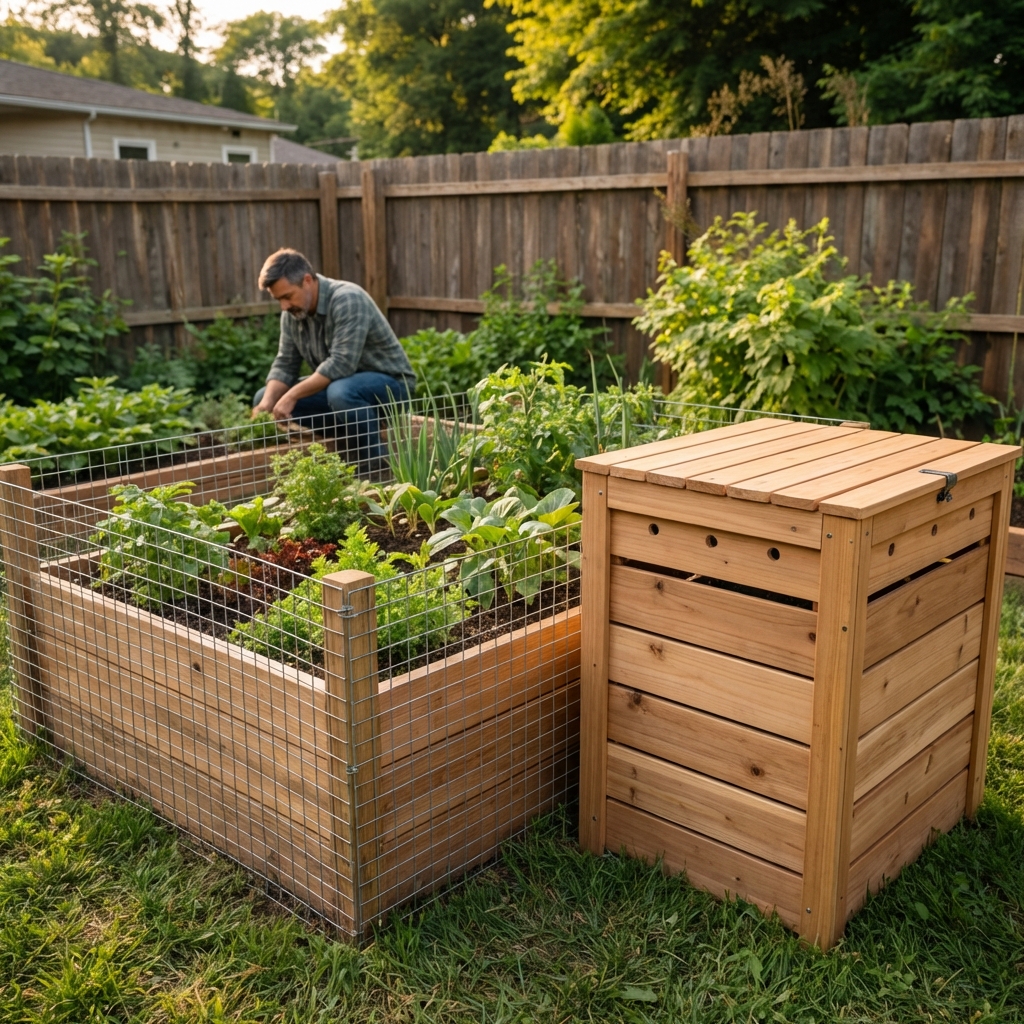
Know the signs before you guess
Rats are good at staying out of sight. The faster you confirm what is happening, the less damage you deal with.
- Burrows and holes near slabs, under sheds, along fences, or under dense groundcover.
- Runways or smooth paths in grass or mulch where they repeatedly travel.
- Droppings around compost, bird feeders, grills, pet areas, and sheds.
- Gnaw marks on irrigation tubing, plastic bins, wooden corners, or fruit.
- Night activity: movement at dusk, rustling in vines, or sounds in a shed.
Quick ID tip: Rat droppings are usually larger (often about 1/2 to 3/4 inch) and more capsule-shaped. Mouse droppings are smaller (often 1/8 to 1/4 inch) and more rice-like. If you only see chewed fruit but no burrows or droppings, you might be dealing with squirrels, possums, or raccoons instead. That matters because rat control starts with blocking access and removing nesting cover.
The 80% fix: remove what attracts rats
If you do one thing, do this first. Traps and repellents will not keep up if your garden keeps offering an all-you-can-eat buffet.
1) Tighten up compost
Compost is one of the top rat magnets, especially when it is open, damp, and regularly topped with kitchen scraps.
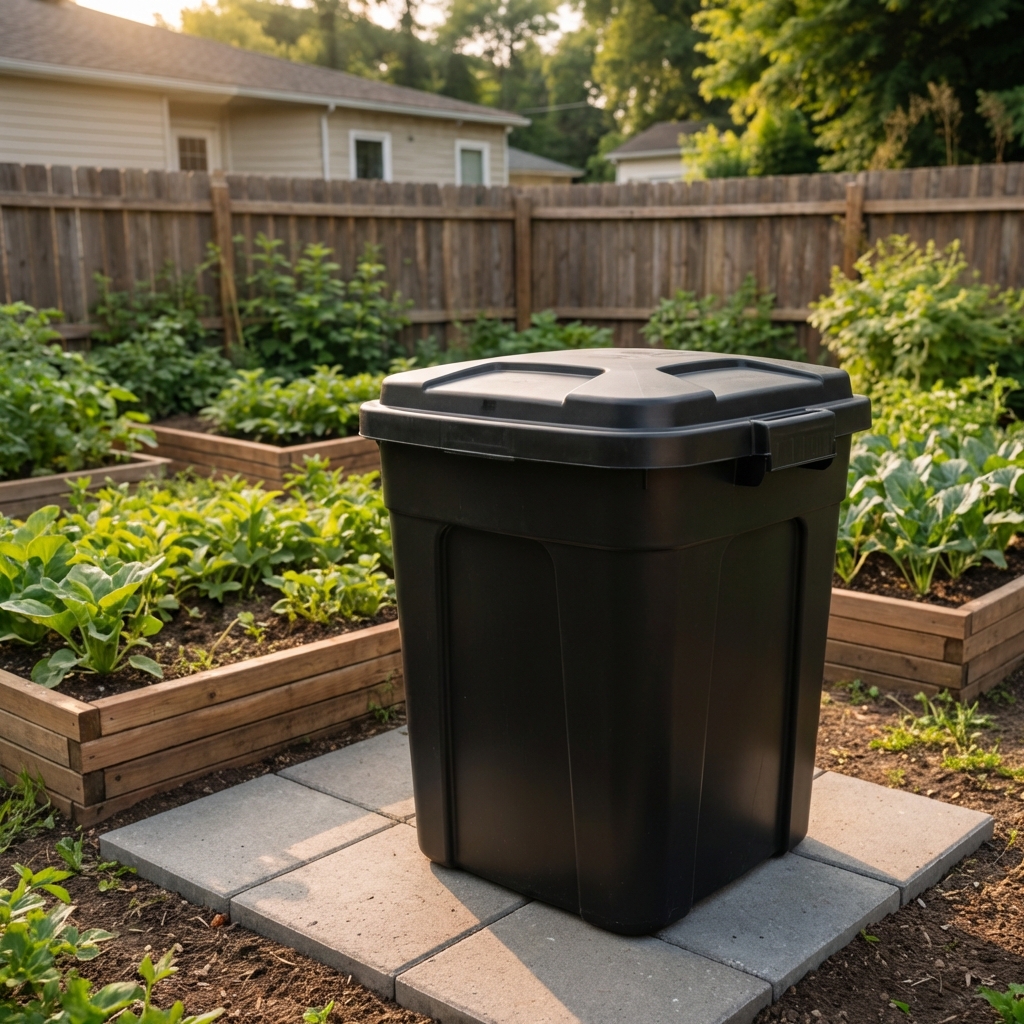
- Use a closed compost bin with a locking lid if rats are active in your area.
- Keep the bin off bare soil by setting it on pavers, or line the base with 1/4-inch hardware cloth so rats cannot tunnel in.
- Bury fresh scraps in the center and cover with browns. Do not leave food on top.
- Avoid adding meat, fish, oily foods, and large amounts of cooked grains.
If you are composting in an open pile right now, switch to a contained system until the rat pressure drops.
2) Clean up fallen fruit and “free snacks”
Rats love predictable, easy calories.
- Pick up fallen fruit daily during peak season.
- Harvest ripe vegetables promptly, especially tomatoes, melons, squash, and corn.
- Do not leave bowls of chicken feed, scratch, or pet food outside overnight.
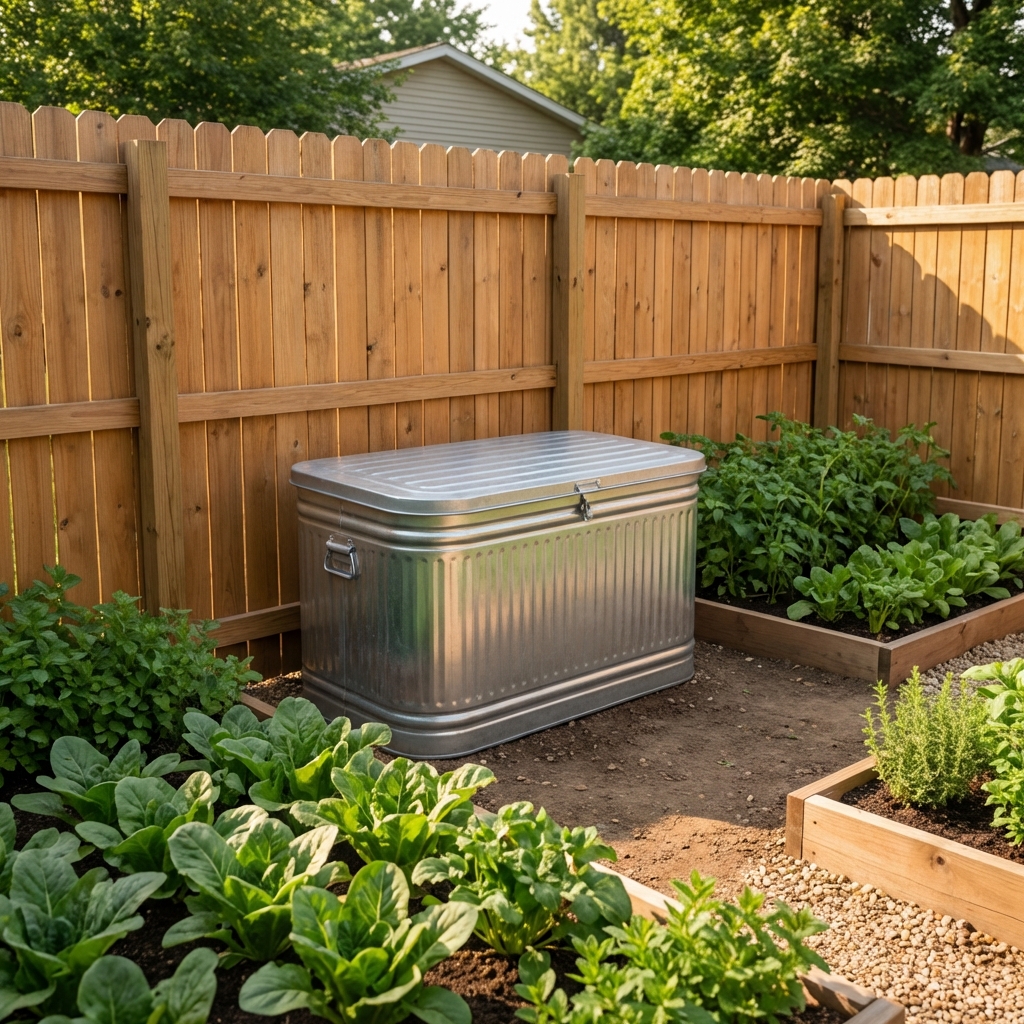
- Store bird seed in a metal can with a tight lid.
3) Rethink bird feeders
Bird feeders can end up feeding rats as much as birds, especially when seed spills onto the ground. If you keep feeders out:
- Use a seed catcher tray and empty it daily.
- Stop feeding for a few weeks if you have active rat signs. This often helps reset the yard, but the exact timeline depends on neighborhood pressure.
- Switch to suet in cages placed high and away from fences.
4) Remove shelter and nesting cover
Rats want protection from predators and people.
- Cut back dense ivy, tall weeds, and heavy groundcover along fences.
- Keep mulch to a reasonable depth, and avoid piling it against sheds and walls.
- Stack firewood off the ground and at least 12 inches away from fences or structures.
- Declutter: old pots, boards, and tarps become hiding zones.
Protect raised beds and crops
Once you reduce attractants, add physical barriers where rats are likely to enter. In real gardens, exclusion is the most reliable long-term method.
Line the bottom of raised beds
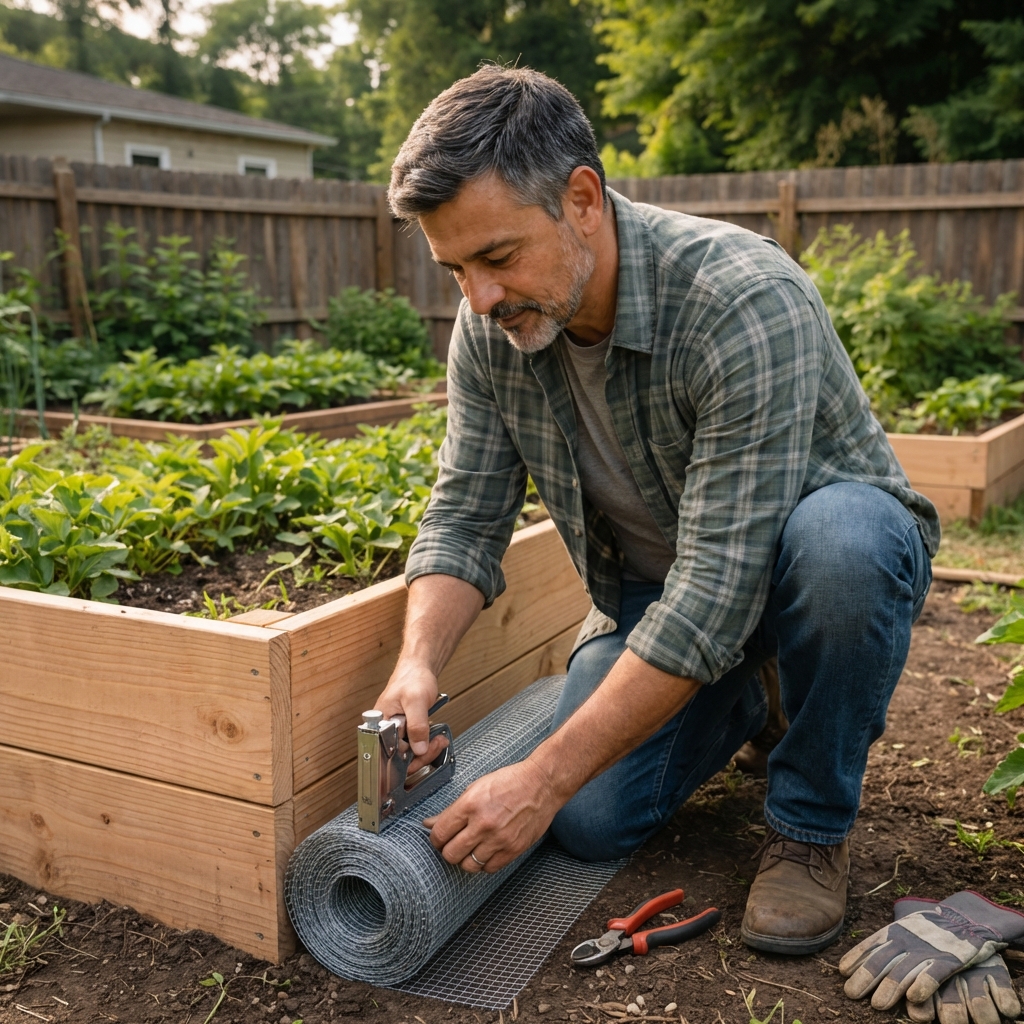
If you are building new beds or can retrofit, staple 1/4-inch hardware cloth across the bottom before adding soil. Chicken wire is not enough. Rats can squeeze and chew through larger openings.
- Overlap seams by at least 2 inches.
- Use galvanized staples and secure edges well.
- Extend mesh slightly up the interior sides if possible.
Use sturdy fencing for high-pressure gardens
If rats are climbing in or you have major losses, consider a barrier around beds.
- Best option: 1/4-inch hardware cloth for true exclusion, especially where juveniles may squeeze through.
- Stronger but less foolproof: 1/2-inch welded wire can reduce access, but it is not as reliable for keeping all rats out.
- Make it at least 24 inches high.
- Keep plants from touching the fence. Vines can become ladders.
Pick the right crop protection
- Netting helps with birds, but rats can chew through light netting.
- Row covers help for insect pressure but are not reliable for rats unless the edges are sealed and the material is tough.
- Hard-sided cloches or wire cages work well for individual plants, especially young seedlings.
Water habits that reduce rat visits
Rats do need water, but they can also get moisture from irrigated soil, plant drip lines, and juicy produce. That is why small leaks and easy water sources can make a yard feel “safe” to them.
- Fix leaking hose bibs, drip lines, and sprinklers.
- Do not leave pet water outside overnight.
- Empty saucers under pots after watering.
- If you have a pond, keep the edges open and visible, not hidden by dense plants.
Safe, effective control options
If rats are already established, you will likely need some level of active control while you remove attractants. The goal is to reduce the population quickly so your prevention steps can hold.
Snap traps (often the best starting point)
Quality snap traps are fast and effective when placed correctly.
- Place traps along walls, fences, and runways where rats travel, not out in the open.
- Set the trigger end against the wall.
- Use a small amount of bait like peanut butter, or tie on a bit of dried fruit so it cannot be stolen easily.
- Use a tamper-resistant trap box if you have pets, kids, or wildlife.
- Use enough traps: One trap is rarely meaningful. In active areas, plan on several traps spaced along the same travel route.
- Check daily: Reset, refresh bait, and move traps to the hottest runways as needed.
Electric traps
Electric traps can be effective and easier for some gardeners who do not want to handle snap traps. They still must be placed on travel routes and protected from pets and moisture.
Live traps (usually not ideal)
Live trapping sounds humane, but it creates problems: relocation is often illegal, rats can return, and handling increases disease risk. In most backyard settings, live traps are not the most practical choice.
Rodenticides (use extreme caution)
Poison baits can cause secondary poisoning in owls, hawks, cats, dogs, and other predators. Many second-generation anticoagulant rodenticides (often called SGARs) carry higher secondary-poisoning risk. If you choose this route, follow the label and local laws exactly, and consider having it handled by a licensed professional using enclosed bait stations and a plan that minimizes risk to non-target animals.
Trap safety and cleanup
Wear gloves, keep traps out of reach of kids and pets, and wash hands after handling. For cleanup, use disinfectant on dirty areas and avoid sweeping or blowing up dust in enclosed spaces.
Important: If you have heavy rat activity, or you are seeing them in daylight regularly, consider calling a local pest professional. Daytime sightings can signal a larger population, limited food competition, or recent disturbance, but they are a good reason to take the situation seriously.
What not to rely on
Some popular “rat fixes” sound good but rarely solve a real infestation.
- Ultrasonic repellents: inconsistent results, and rats often ignore them.
- Mothballs: not a safe outdoor solution and not reliable for control.
- Peppermint oil: may deter briefly in a small enclosed area, but does not hold up outdoors.
- Loose chicken wire: too large to block rats and easy to chew around.
A simple 7-day rat-proofing plan
If you feel overwhelmed, follow this order. It stacks small wins quickly.
- Day 1: Remove fallen fruit and harvest ripe produce. Stop outdoor feeding (bird seed, pet food).
- Day 2: Secure compost. Lid, base barrier, and no fresh scraps on top.
- Day 3: Trim cover along fences, sheds, and thick plantings.
- Day 4: Fix leaks and remove standing water sources.
- Day 5: Place snap traps in protected boxes along runways and walls. Check daily.
- Day 6: Add hardware cloth barriers where you see digging or entry points.
- Day 7: Recheck and reset: refill traps, inspect for new burrows, and keep up the cleanup routine.
Prevent rats from coming back
Once the activity drops, staying rat-free is mostly about not sliding back into easy food and shelter.
- Keep compost contained and tidy year-round.
- Maintain a 12 to 18 inch clear strip around sheds, fences, and the house foundation.
- Harvest on time and clean up windfalls quickly.
- Store seed, feed, and bulbs in sealed metal or heavy-duty containers.
- Inspect seasonally for new burrows, especially after rain or soil work.
Do not forget structures
Garden rats often move between yards and buildings. If you want long-term control, seal up easy entry points: repair torn vent screens, add door sweeps, and close gaps around pipes and garage corners with proper rodent-proof materials (like metal flashing and hardware cloth).
Neighborhood reality
In many neighborhoods, you cannot eliminate rats from the wider area. If the problem keeps returning, coordinate basic steps with neighbors (secure compost, reduce feeder spillage, clean up fruit). It makes your efforts hold.
If you want the most realistic expectation: you cannot control every fence line. But you can absolutely make your yard a tough place for rats to settle, and that is what protects your garden.
When to take it seriously
Contact a local professional or your local extension office if you see repeated daytime rat activity, rats inside structures, or you suspect a nest under a shed or deck. Structural entry points and large colonies are much easier to handle early.

Jose Brito
I’m Jose Britto, the writer behind The Country Store Farm Website. I share practical, down-to-earth gardening advice for home growers—whether you’re starting your first raised bed, troubleshooting pests, improving soil, or figuring out what to plant next. My focus is simple: clear tips you can actually use, realistic expectations, and methods that work in real backyards (not just in perfect conditions). If you like straightforward guidance and learning as you go, you’re in the right place.