Skunks are not usually looking for trouble. They are looking for easy meals and safe cover. If your yard offers either, skunks may visit and keep coming back until the “buffet” or the “hideout” is gone.
This guide walks you through practical steps that work in real backyards. No gimmicks, no panic. Just simple prevention that keeps skunks moving along without harming them.
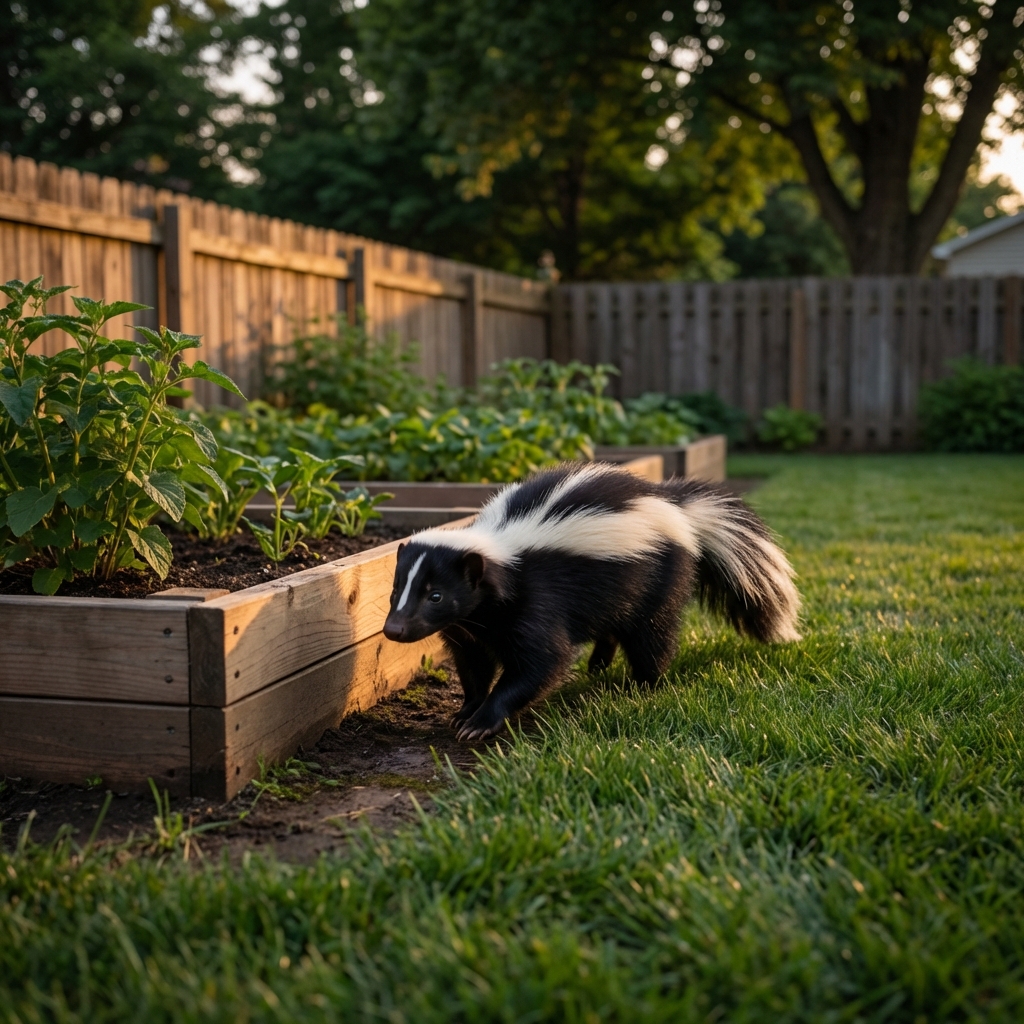
Know what attracts skunks
Skunks are opportunistic omnivores. Around homes, they are commonly drawn in by:
- Pet food left outside (especially overnight)
- Unsecured trash and food scraps
- Bird seed spilled under feeders
- Compost with kitchen scraps that are easy to access
- Grubs and insects in lawns and garden beds
- Fallen fruit and garden produce left on the ground
- Outdoor grills and grease drippings (especially if the drip tray is dirty)
- Den sites like decks, sheds, crawl spaces, woodpiles, and rock piles
If you only remember one thing, remember this: skunk control is mostly habitat and food control, not fighting the skunk itself.
Step 1: Remove easy food sources
Start here. Deterrents work much better once the rewards are gone.
Trash and recycling
- Use a tight lid and add a bungee cord if needed.
- Rinse food containers before tossing them.
- Keep cans in a garage or shed until pickup morning when possible.
Pet food and water bowls
- Feed pets indoors whenever you can.
- If you must feed outdoors, pick up bowls right after eating.
- Do not leave food out overnight. Night is prime skunk time.
Bird feeders
Bird seed is basically a skunk invitation, especially when it drops on the ground.
- Use a seed catcher tray or place feeders over a surface you can sweep.
- Switch to less messy feeds and avoid mixed seed that gets tossed around.
- Bring feeders in at night if skunks are actively visiting.
Compost
- Use a sealed bin or a bin with strong latches.
- Avoid adding meat, dairy, oils, and greasy foods.
- Bury fresh scraps deep in the pile and cover with dry browns.
Fallen fruit and grills
- Pick up fallen fruit daily during the season and harvest ripe produce promptly.
- Clean grill grates and empty the grease tray regularly. Store grease cans with a lid.
Step 2: Make your yard less inviting
Once food is handled, reduce the comfort factor. Skunks like quiet corners and easy digging.
Handle grubs and lawn insects
If you see small cone-shaped holes in the lawn or torn patches, skunks may be digging for grubs. Treating the food source can reduce repeat visits.
- Confirm grub activity first. Not all lawn damage is grubs.
- Use targeted controls appropriate for your region and season.
- Keep your lawn healthy with proper mowing height and watering habits.
Clean up “cover” areas
- Elevate woodpiles and keep them away from the house.
- Reduce dense brush piles and overgrown corners near foundations.
- Store bags of soil, mulch, and seed in sealed containers.

Step 3: Block den sites the right way
Skunks love to den under decks, sheds, porches, and crawl spaces. Exclusion is one of the most effective long-term fixes, but timing matters.
Before you seal, check for babies
In many areas, skunks raise young typically in spring through early summer (timing varies by region). If you block an active den with babies inside, you create a bigger problem fast. Signs of an active den can include fresh digging, a strong musky smell, tracks, or repeated sightings at dusk.
If you suspect a mother with kits, consider calling a licensed wildlife professional to handle exclusion safely, humanely, and legally.
How to exclude skunks under a deck or shed
- Use hardware cloth (galvanized welded wire mesh) rather than chicken wire.
- Bury the mesh at least 8 to 12 inches and bend it outward in an L-shape to stop digging. In loose soil or heavy digging pressure, you may need deeper coverage or a wider apron.
- Leave a single exit point and install a one-way door for a few nights so the skunk can leave but not re-enter. Check local wildlife rules before installing or removing exclusion devices.
- After you are confident it is empty, seal the final gap.
Beginner tip: If you are not sure the space is empty, set up a light dusting of flour or sand near the entrance at dusk. Check for tracks in the morning to confirm activity.
Do not forget vents and gaps
- Screen crawlspace vents with sturdy wire mesh and repair damaged vent covers.
- Check window wells, basement entry points, and gaps along foundations and steps.
- Seal openings with appropriate materials for your home (do not block required ventilation).
Step 4: Use humane deterrents that help
Deterrents work best when you combine them with food removal and exclusion. If you only add a repellent but keep the buffet open, the skunk will often tolerate the annoyance.
Motion-activated lights and sprinklers
- Motion sprinklers are one of the most consistently useful options for short-term pressure.
- Place them along common travel routes: fence lines, deck edges, and garden paths.
- Adjust sensitivity so neighborhood cats are not constantly triggering it.
Smell-based repellents
Some homeowners have success with commercial repellents labeled for skunks, often using strong scents or predator urine. Effectiveness is inconsistent, animals may habituate, and products need reapplication after rain.
- Follow label directions exactly and keep products away from kids and pets.
- Use repellents as a temporary tool while you fix the main attractants.
Fence upgrades for frequent visitors
Skunks are not strong climbers compared with raccoons, but they can climb some rough or low surfaces. They are excellent diggers and can squeeze through small gaps.
- Repair gaps under gates and fence lines.
- Add an L-shaped buried apron of hardware cloth along the base where digging happens.
- Seal all gaps. As a rule of thumb, aim for openings no larger than about 2 inches to be more failsafe.
If you see a skunk, do this
Skunks spray as a last resort when they feel trapped or threatened. Calm, slow movement is your best prevention.
- Do not run toward it and do not corner it.
- Back away slowly and give it a clear path to leave.
- Bring pets inside. Dogs are the most common reason skunks spray.
- If you must pass, make gentle noise and keep distance so it does not feel surprised.
Watch for warning signs: stomping front feet, tail lifting, and turning the rear end toward you. That is your cue to stop and retreat.
Health note: If a skunk is acting unusually aggressive, disoriented, or active during daylight, do not approach. Keep pets and people away and contact local animal control or public health for guidance.
What not to do
- Do not use mothballs around the yard or under structures. They are toxic and often illegal for this kind of outdoor use.
- Do not try to smoke them out or flood dens. This can harm animals and create serious safety issues.
- Do not use poisons. It is inhumane, unsafe for pets and wildlife, and can create odor problems if an animal dies in a hidden space.
- Do not rely on sound machines alone. Many animals get used to constant noise quickly.
- Do not attempt DIY trapping or relocation unless it is clearly legal where you live and you know how to do it safely. It increases the risk of spraying, bites, and orphaned babies, and relocation is regulated in many areas.
Skunk smell cleanup basics
If spraying happens, you want to neutralize the odor rather than cover it up.
For outdoor surfaces
- Ventilate the area and avoid pressure washing at first, which can drive odor deeper.
- Use a skunk odor neutralizer product made for outdoor use, or a mild wash followed by thorough rinsing.
- On porous materials (wood, concrete), it may take multiple treatments.
Skip the tomato juice: it may mask the smell briefly, but it does not reliably neutralize skunk odor.
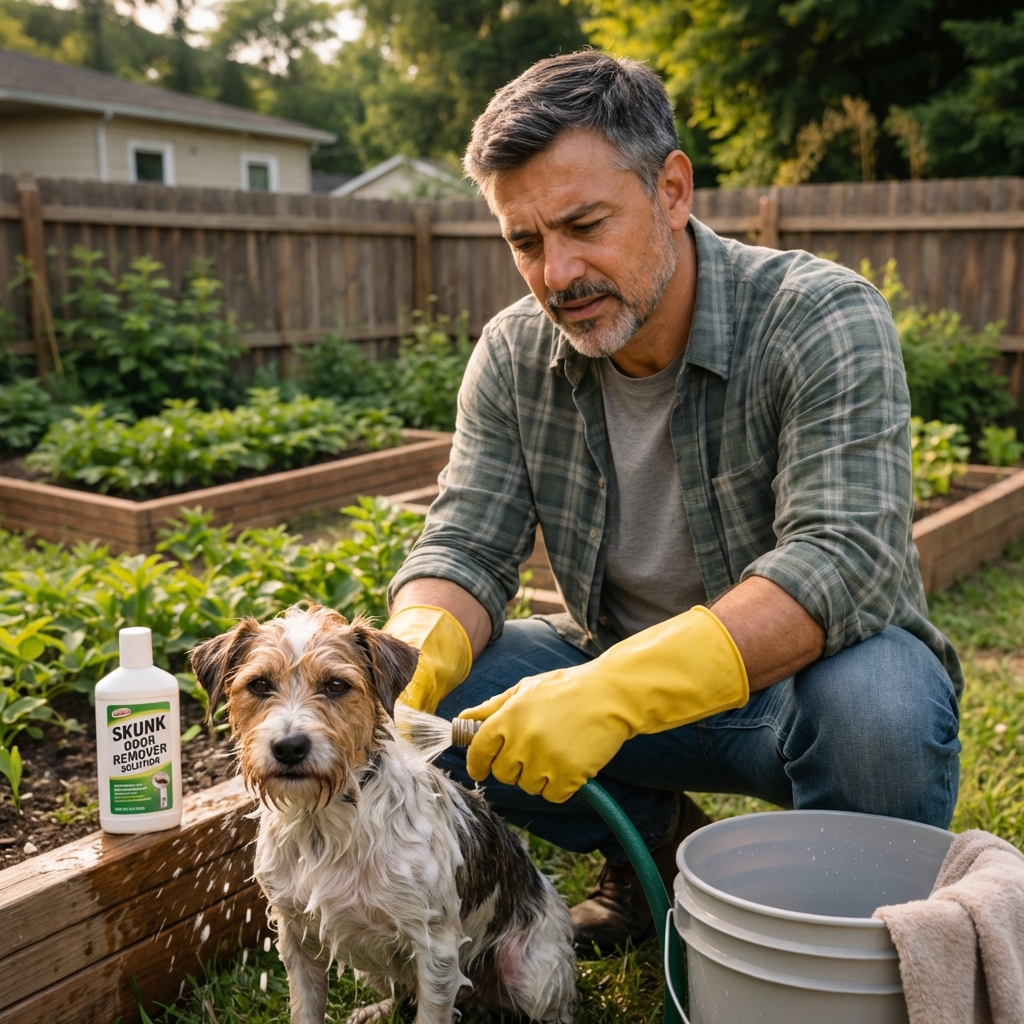
For pets
If a dog gets sprayed, use a veterinarian-recommended skunk shampoo or a proven neutralizing recipe recommended by your vet. Avoid getting anything in eyes, ears, or mouth and contact your vet if irritation occurs.
Quick checklist
- Secure trash with tight lids and cords
- Remove pet food and bowls at night
- Clean up spilled bird seed
- Seal compost in a latched bin
- Pick up fallen fruit and clean grill grease
- Reduce grubs if lawn digging is happening
- Block den access with buried hardware cloth, using a one-way exit if needed
- Screen vents and seal gaps around foundations and steps
- Add motion sprinklers or lights for short-term deterrence
When to call a professional
Call a licensed wildlife control professional if:
- You suspect a skunk is denning under your home, deck, or shed and you cannot confirm it is empty
- You think there may be babies
- The skunk is acting unusually aggressive, disoriented, or active during daylight
- You have repeated spraying incidents near doors, vents, or crawl space openings
In many areas, relocation is regulated. A professional will know the legal and humane options and can often install exclusion correctly the first time.
Bottom line
The most reliable way to keep skunks away from your house is to remove food, eliminate shelter, and seal entry points without trapping animals inside. Once the easy rewards are gone, skunks usually move on to the next yard.

Jose Brito
I’m Jose Britto, the writer behind The Country Store Farm Website. I share practical, down-to-earth gardening advice for home growers—whether you’re starting your first raised bed, troubleshooting pests, improving soil, or figuring out what to plant next. My focus is simple: clear tips you can actually use, realistic expectations, and methods that work in real backyards (not just in perfect conditions). If you like straightforward guidance and learning as you go, you’re in the right place.