Snakes show up around homes for the same reasons other wildlife does: food (usually rodents), water, and cover (cool, protected places to hide). The good news is you can make big improvements without turning your yard into a sterile, paved lot.
This guide focuses on realistic, simple solutions that reduce snake activity and help keep snakes out of your house. By “snake activity,” we mean sightings near the foundation, in garages and sheds, or (worst case) inside. If you ever suspect a venomous snake, treat it seriously and skip the DIY heroics.
Start with the basics: why snakes come close
Most “snake problems” are really habitat problems. If your property offers shade, clutter, and a steady supply of mice or frogs, snakes will patrol it. That does not mean your yard is “bad.” It just means it is comfortable.
- Food: mice, rats, voles, chipmunks, birds, eggs, frogs, lizards, insects (for smaller snakes).
- Cover: tall grass, brush piles, wood stacks, rock borders, dense groundcovers, sheds with gaps.
- Water and moisture: leaky spigots, birdbaths, pet bowls left out, low wet spots, ponds.
Your goal is not to eliminate every snake in the neighborhood. Your goal is to make the area right around your house unattractive so snakes move along.
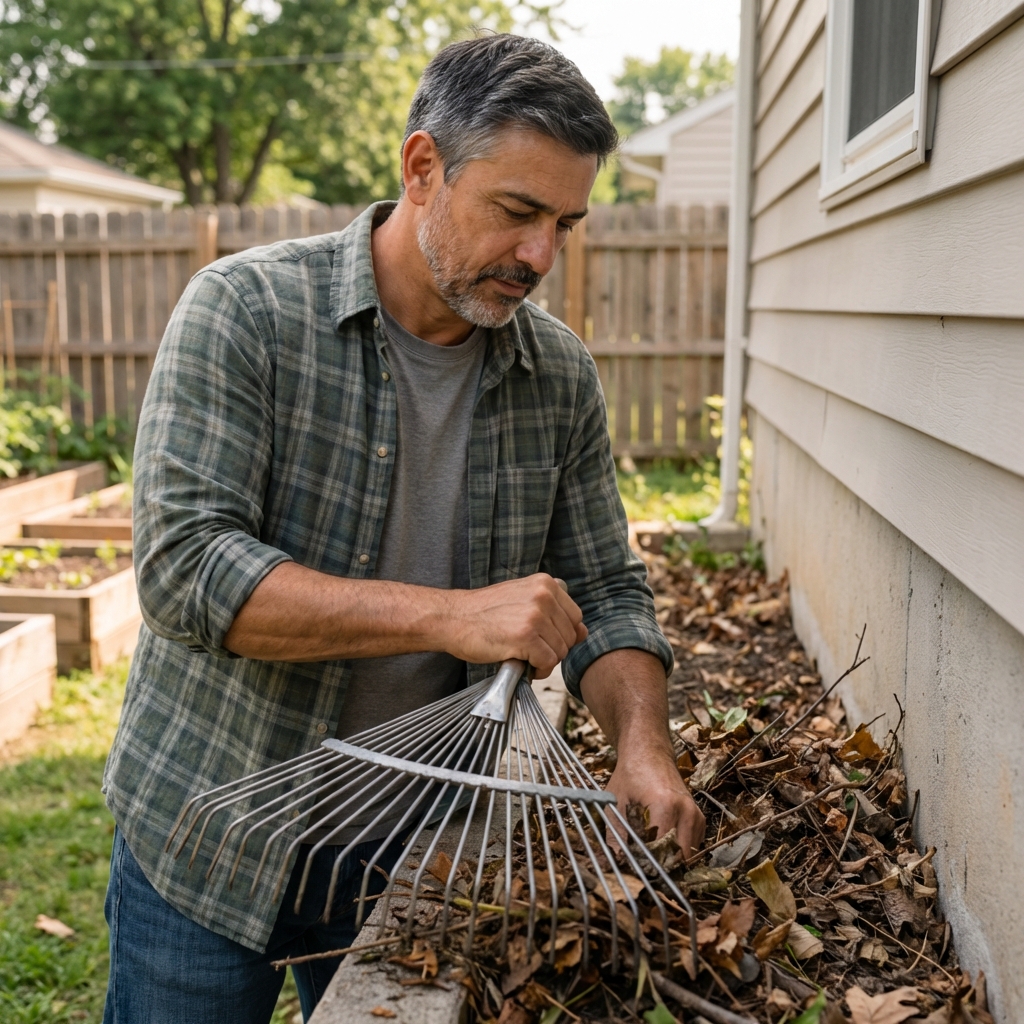
Make a “no-hide zone” around the foundation
If you do only one thing, do this. Many unwanted snake sightings happen within a few feet of the house because that is where clutter collects and shade stays coolest.
Clean up what snakes love
- Leaf piles: Rake and remove regularly, especially behind shrubs and under decks.
- Boards, scrap, tarps: Pick up anything flat that creates a cool hiding pocket.
- Kids’ toys and yard gear: Store in bins or on shelves, not on the ground.
- Compost: Keep it managed, enclosed if possible, and set away from the house.
Trim and mow with intention
Snakes feel safer moving through cover. Keep grass short and edges crisp. If you have a wild corner for pollinators, that is fine. Just keep it away from the house and separated with a maintained strip.
Simple target: maintain an 18 to 24 inch band around the house that is open and easy to see.
Quick safety note for yard work
- Wear boots and gloves when clearing brush, moving rocks, or handling wood.
- Use tools, not hands, to lift boards and reach into thick groundcover.
- Look before you step over logs, edging, or tall grass, especially at dusk.
Fix the real magnet: rodents
If you have mice or rats, you are basically running a snack bar for snakes. Snake repellents will not outwork a rodent buffet.
Cut off rodent food and shelter
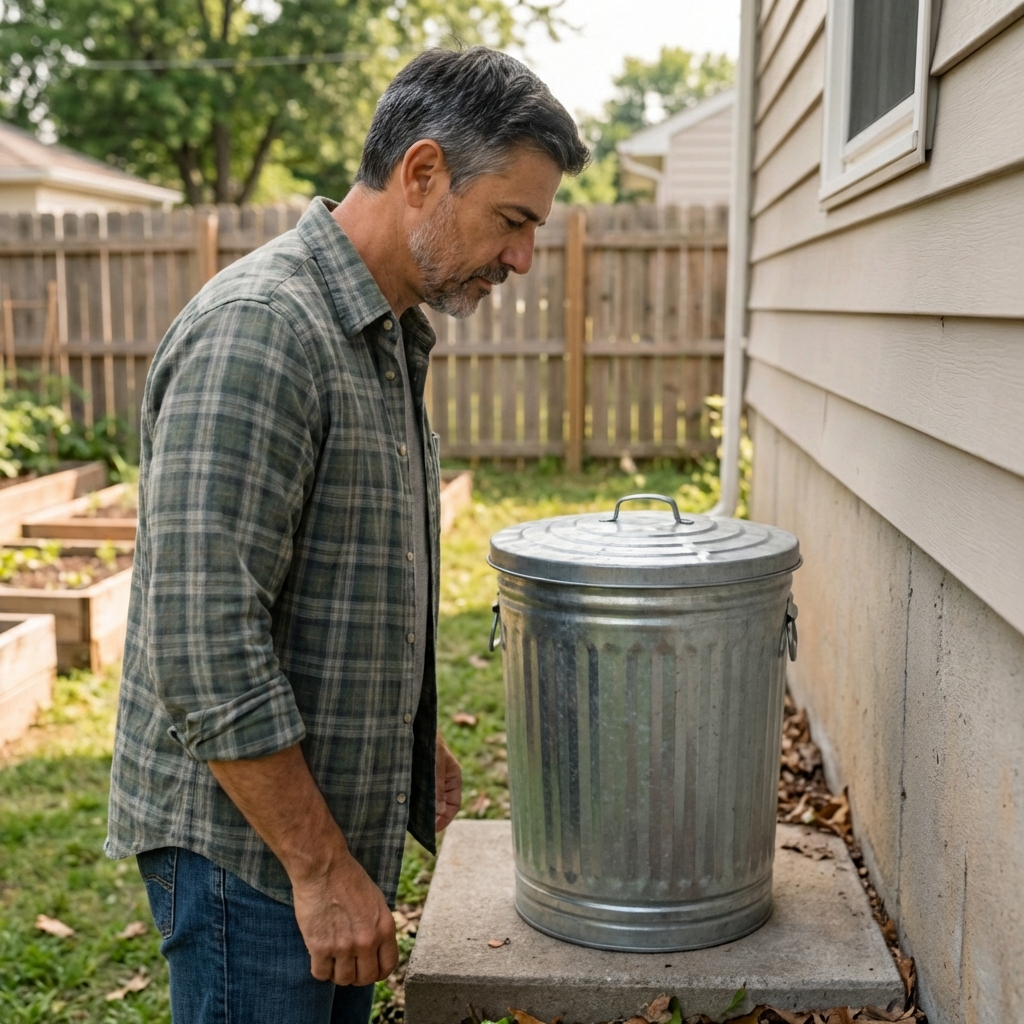
- Secure trash: Use tight-lid bins. Clean spilled seed and pet food.
- Bird feeders: Use a catch tray, do not overfill, and place feeders away from the house. Clean under them.
- Pet food: Feed indoors when possible. Do not leave bowls outside overnight.
- Garden harvest: Pick ripe produce promptly. Fallen fruit attracts rodents fast.
- Storage: Keep firewood and lumber off the ground and away from the house.
What about poisons?
Rodenticides can lead to secondary poisoning of owls, hawks, foxes, and even pets. If you must control rodents, consider snap traps in secure boxes or hire a professional who uses an integrated approach. Reducing rodent activity is one of the most reliable long-term snake deterrents.
Seal entry points so snakes cannot get inside
Snakes do not chew like rodents, but they can squeeze through surprisingly small gaps. Size varies by species and age, and juveniles can fit through openings that do not look possible. As a practical rule, treat any unsealed gap around 1/4 to 1/2 inch or larger as worth fixing.
Where to check
- Garage door gaps: Especially corners and worn weatherstripping.
- Door thresholds: Add or replace door sweeps on exterior doors.
- Foundation cracks: Patch with appropriate masonry sealant.
- Utility penetrations: Pipes, AC lines, cable entry points. Seal around them.
- Vents: Crawlspace and attic vents should have intact screens.
- Crawlspace doors and access panels: Make sure they close tight and latch.
- Sump pump covers and floor drains (where present): Confirm covers are secure and screens are intact.
- Gaps at steps, patios, and slabs: Check where concrete meets the foundation.
Materials that work
- Hardware cloth: 1/4 inch mesh is a solid go-to for vent covers and crawlspaces.
- High-quality exterior caulk: For small gaps around trim and penetrations.
- Backer rod + sealant: For wider cracks so the seal holds.
- Weatherstripping: For doors, garage, and outbuildings.
- Steel wool + sealant: Useful for some small gaps around pipes and irregular holes. Use where appropriate for your surface and location.
Tip: Do a slow walk around your home at dusk with a flashlight. Light at a low angle makes gaps and holes stand out.
Landscaping that discourages snakes
You can keep a nice landscape and still make it less snake-friendly. Think visibility, airflow, and fewer tight hiding pockets.
Simple changes that help
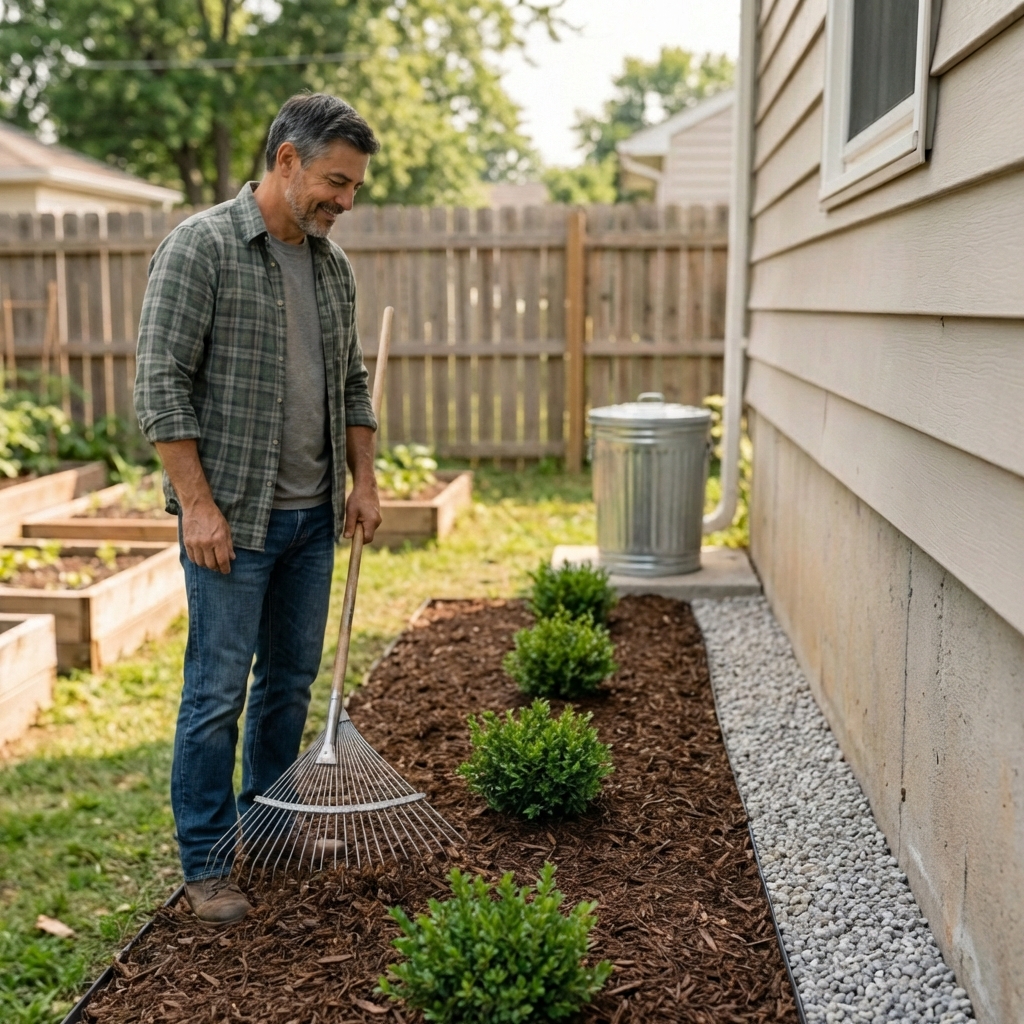
- Thin dense shrubs: Especially those pressed right against the house.
- Lift low branches: Create open space under shrubs where you can see the ground.
- Limit heavy groundcovers: Ivy and thick mats can hide rodents and snakes. Keep them away from the foundation.
- Use a gravel strip: A 12 to 24 inch gravel or rock strip can reduce cover. It also makes it easier to spot movement.
- Keep mulch reasonable: Thick, wet mulch layers can hold moisture and cover. Refresh as needed, but do not pile it deep against the house.
Note: Snakes can cross gravel. The benefit is mainly that it removes hiding places and improves visibility.
Water management: reduce moisture spots
During heat or drought, snakes are more likely to use damp, shaded microhabitats to stay cool and hydrated. Fixing small water issues can reduce traffic near the house.
- Repair leaky hoses, spigots, and irrigation lines.
- Do not leave pet water outside overnight if snakes are active in your area.
- Empty standing water in buckets, tarps, and low spots.
- Keep birdbaths away from the foundation and change water often.
Do snake repellents work?
Most store-bought snake repellents are hit-or-miss, and many are short-lived outdoors. If you try one, treat it as a small helper, not the main solution.
What tends to be realistic
- Physical habitat changes: The most reliable “repellent” is removing cover and rodents.
- Exclusion: Sealing gaps and screening vents is consistently effective.
- Motion lighting: Not a proven snake deterrent, but it can improve visibility and may reduce rodent activity in some settings.
Common DIY ideas to be cautious about
- Mothballs: Not recommended. They are toxic and not a dependable snake fix.
- Sulfur and strong-smell products: Results vary, and rain quickly reduces effectiveness.
- Ultrasonic devices: Evidence is weak and performance is inconsistent.
If you are spending money, put it into sealing, screening, and cleanup first.
Fencing: when you need a stronger barrier
If you live near woods, water, or rocky habitat and you regularly see snakes, a properly built snake fence can help. This is more effort, but it is one of the few ways to create a true boundary.
Snake fence basics
- Material: 1/4 inch hardware cloth or similar tight mesh.
- Height: Typically 30 to 36 inches above ground.
- Buried skirt: Bury at least 4 to 6 inches, or bend outward at the base to discourage pushing under. Deeper may be needed in sandy soils or for persistent diggers.
- No gaps: Seal around gates and posts. One gap ruins the whole idea.
- Angle: A slight outward angle can make climbing harder.
Follow local extension or wildlife agency guidance for your region and species. Fencing is most practical for a small area like a play space, dog run, or a tight backyard, not a sprawling property.
If you see a snake: what to do
Most snakes want nothing to do with you. Problems happen when they feel cornered.
Do this
- Keep distance and keep kids and pets back.
- Give it an escape route. Many snakes will move off if left alone.
- Take a quick photo from a safe distance for identification if needed.
- Use local resources for identification (your state wildlife agency or cooperative extension is ideal), especially if venomous species live in your area.
- Call local wildlife control if it is inside the house, in a tight area, or you suspect it is venomous.
Do not do this
- Do not try to handle or “shoo” it with your hands.
- Do not trap it in a corner.
- Do not rely on internet guesses for venomous identification if you are unsure.
Pets and kids
- Supervise dogs in tall grass and near brush piles, especially at dawn and dusk.
- Check the yard with a light before letting pets out at night.
- Keep cats indoors where possible. Outdoor cats are at higher risk and can bring snakes closer to the house.
Quick checklist: simple solutions that work
- Clear leaves, boards, and clutter along the foundation.
- Mow and trim so you can see the ground.
- Store firewood at least 20 feet from the house and raised off the ground.
- Control rodents by removing food sources and shelter.
- Seal gaps at doors, garage, foundation cracks, and utility lines.
- Screen vents and crawlspace openings with 1/4 inch hardware cloth.
- Move bird feeders away from the house and clean spilled seed.
- Fix leaks and avoid leaving water out overnight.
If you do these consistently, you will often see fewer snakes around the foundation because there is simply less reason for them to hang around. Timing varies by season, weather, and what is living nearby.
When to call a professional
Call a licensed wildlife removal expert or pest professional if:
- You see snakes repeatedly in the same spot and cleanup is not helping.
- A snake is inside your home, garage, or crawlspace.
- You suspect a venomous snake and cannot safely monitor it.
- You need help with exclusion work like vent screening or crawlspace sealing.
Important: Removal and relocation rules vary by state and species. When in doubt, contact your local wildlife agency or extension office for guidance.
A good pro will focus on exclusion and habitat changes, not just quick removal.

Jose Brito
I’m Jose Britto, the writer behind The Country Store Farm Website. I share practical, down-to-earth gardening advice for home growers—whether you’re starting your first raised bed, troubleshooting pests, improving soil, or figuring out what to plant next. My focus is simple: clear tips you can actually use, realistic expectations, and methods that work in real backyards (not just in perfect conditions). If you like straightforward guidance and learning as you go, you’re in the right place.