Wasps are part of a healthy yard. Many wasps hunt pests like caterpillars and flies, and some also pollinate while they forage. The problem starts when they set up shop where people eat, play, or garden. If you have ever had a wasp hover around your drink or defend a nest near the door, you know it is not just annoying. It is a safety issue.
This guide walks you through identification, prevention, and control, step by step. The goal is to keep wasps away from the places you use most, without turning your yard into a chemical zone.
Quick note: This guide is about common wasps and yellowjackets, not honey bees. If you think you have honey bees (fuzzy bodies, calmer behavior, or a swarm clustered on a branch), consider contacting a local beekeeper or bee rescue instead of using sprays.
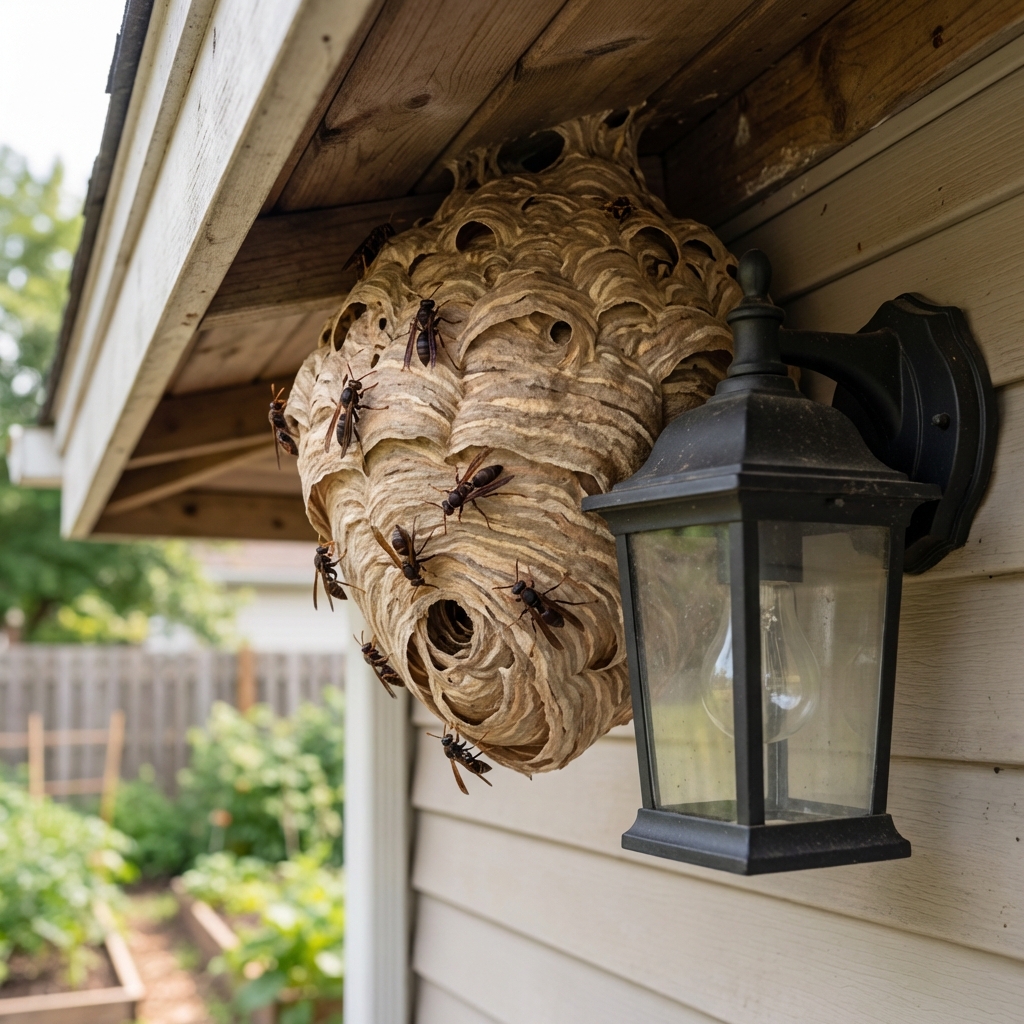
First: Know what you are dealing with
Different wasps behave differently. Control works best when you match the method to the insect.
Paper wasps
- Look: Long legs that dangle in flight, slender body, often brown with yellow or reddish markings.
- Nest: Open comb that looks like a small upside-down umbrella, usually under eaves, railings, soffits, shed overhangs, and porch ceilings.
- Behavior: Usually not aggressive away from the nest, but defensive close to it.
Yellowjackets
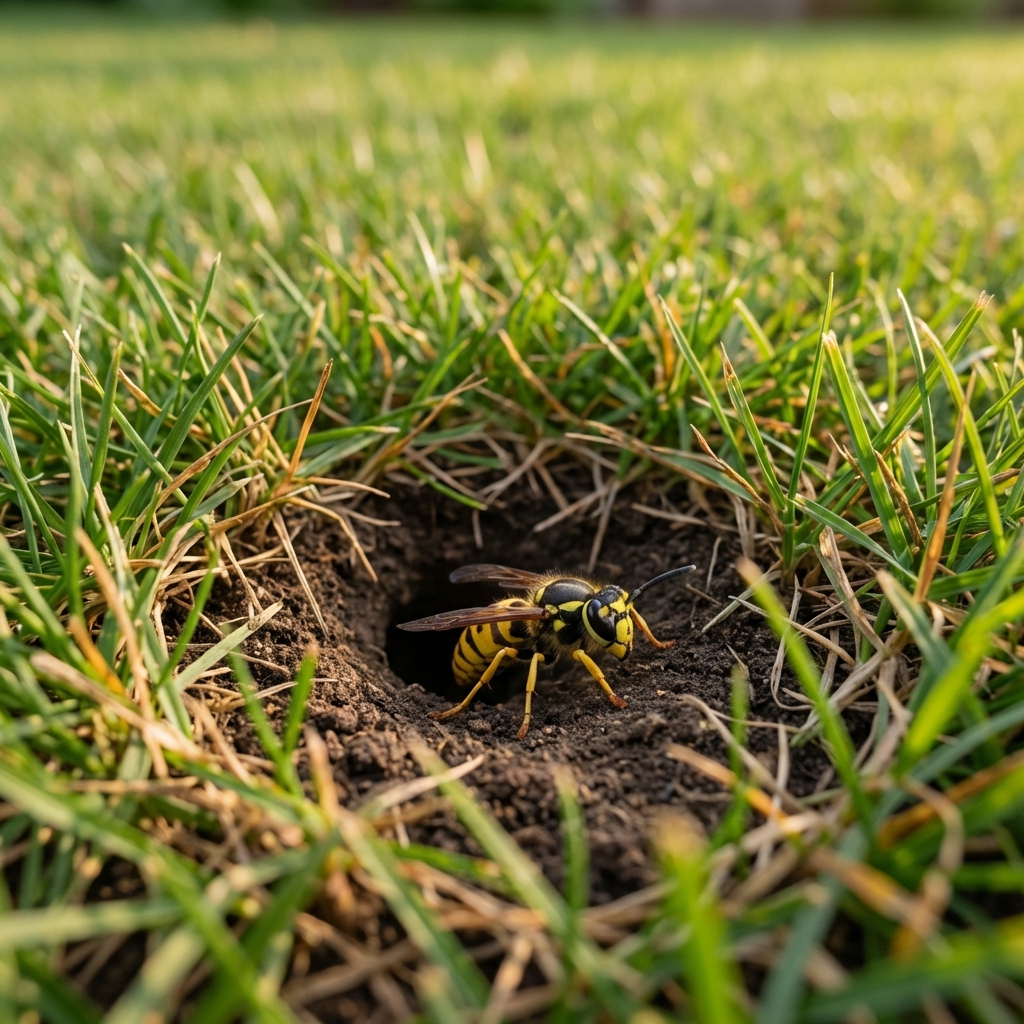
- Look: Bright yellow and black, compact, fast flyers.
- Nest: Often in the ground (old rodent holes, landscape voids) or inside wall cavities.
- Behavior: More likely to swarm and sting, especially in late summer and fall when colonies peak.
Bald-faced hornets (actually a type of yellowjacket)
- Look: Black with white markings.
- Nest: Large gray papery ball, usually hanging in trees, shrubs, or under overhangs.
- Behavior: Very defensive near the nest.
Mud daubers
- Look: Thin waist, often black or metallic, slower and less pushy around food.
- Nest: Small mud tubes or clumps on walls, ceilings, garages, and sheds.
- Behavior: Usually solitary and less aggressive.
Quick safety note: If you are not sure what you have, use yellowjacket-level caution until you can confirm. Ground nests and wall void nests are the ones that get people stung the fastest.
Sting safety: Know when it is an emergency
Most stings are painful but not dangerous. Still, severe allergic reactions can happen fast.
- Call your local emergency number right away if someone has trouble breathing, swelling of the face or throat, widespread hives, dizziness or fainting, vomiting, or a sense of doom after a sting.
- If you carry an epinephrine auto-injector, use it as directed and then seek emergency care.
- Multiple stings, especially in children, can also be a medical emergency even without a known allergy.
Step 1: Reduce the things that attract wasps
Before you buy traps or sprays, remove the reasons they are hanging around. This alone solves a lot of mild wasp problems.
Clean up food and drink cues
- Keep outdoor trash cans closed tight. Add a bungee cord if the lid does not seal.
- Rinse cans and bottles before they go in the recycling bin.
- Cover drinks outdoors. Open soda cans are wasp magnets.
- Pick up fallen fruit under trees. Rotting fruit pulls in yellowjackets fast.
- Feed pets indoors when possible. If you feed outside, pick up bowls right after.
Control water sources
- Fix leaky hose bibs and dripping irrigation heads.
- Dump standing water in trays and buckets.
- Change birdbath water regularly so it does not become a steady watering station.
Know when the season changes behavior
Many social wasps are less interested in people early in the season when they are focused on hunting protein for larvae. Later in summer and early fall, yellowjackets and some other social wasps often shift toward sugar sources. That is when they get pushy at picnics, trash cans, and fruit trees.
Step 2: Block nesting sites around the house
Most repeat wasp issues are really nest site issues. If you remove easy shelter, you reduce the odds they build where you do not want them.
Seal and screen common entry points
- Repair window screens and add door sweeps.
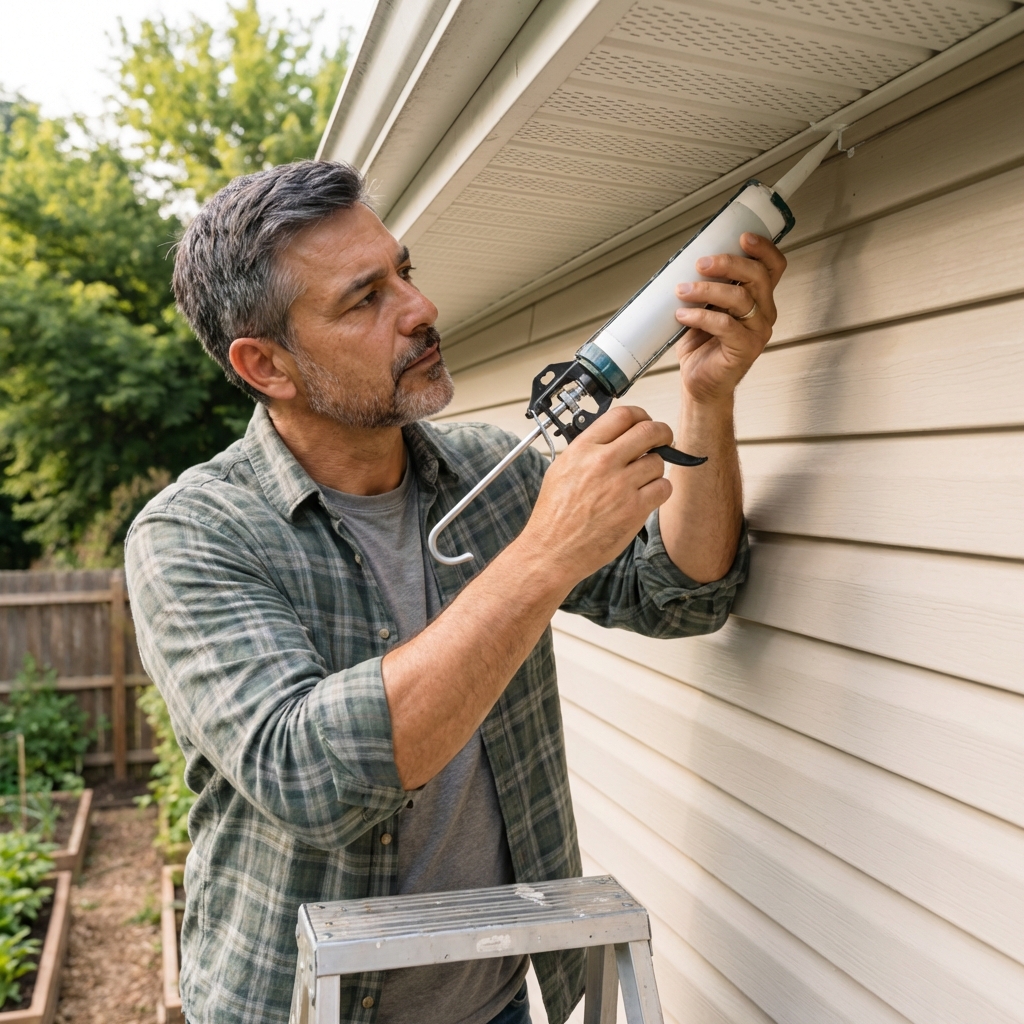
- Seal gaps around soffits, siding joints, and utility penetrations with exterior-grade caulk.
- Screen vents where it is appropriate (like gable and soffit vents) while maintaining airflow. Do not block dryer, furnace, or other exhaust vents.
- Fill cracks in masonry and around porch ceilings where queens start small nests.
Trim and tidy around high-traffic areas
- Prune shrubs away from doorways and walkways to reduce sheltered spots.
- Keep firewood stacked away from the house and off the ground.
- Store outdoor cushions in a bin. Wasps like quiet, protected corners.
Step 3: Use early-season prevention to stop nests before they grow
The easiest nest to deal with is the one that never gets past the starter stage.
Do a quick weekly check in spring
Walk your property once a week and look at:
- Under eaves and porch ceilings
- Deck rail undersides
- Shed and garage door frames
- Kids playsets and swing set crossbars
- Outdoor light fixtures and camera mounts
Knock down tiny paper wasp starts (only if it is safe)
If you see a very small paper wasp comb with only a few cells and no heavy activity, you can often remove it with a long tool early in the morning or at dusk when wasps are less active. Wear long sleeves, closed shoes, and gloves. Only attempt this if you can reach from the ground. Avoid ladders for nest removal. If wasps are already defending the area, stop and switch to a different plan.
Use a simple surface deterrent where they keep trying
If paper wasps repeatedly start nests in the same corner, a light coating of a wasp-deterring product labeled for eaves and overhangs can help. The key is following the label and applying to nest-prone surfaces, not blooming plants.
Step 4: Set up your outdoor space so wasps do not move in
Create a food zone and a people zone
When you are grilling or eating outside, place trash and any compost bucket as far from seating as practical. If you can, put the food prep area upwind of the seating area so odors drift away.
Use fans on patios
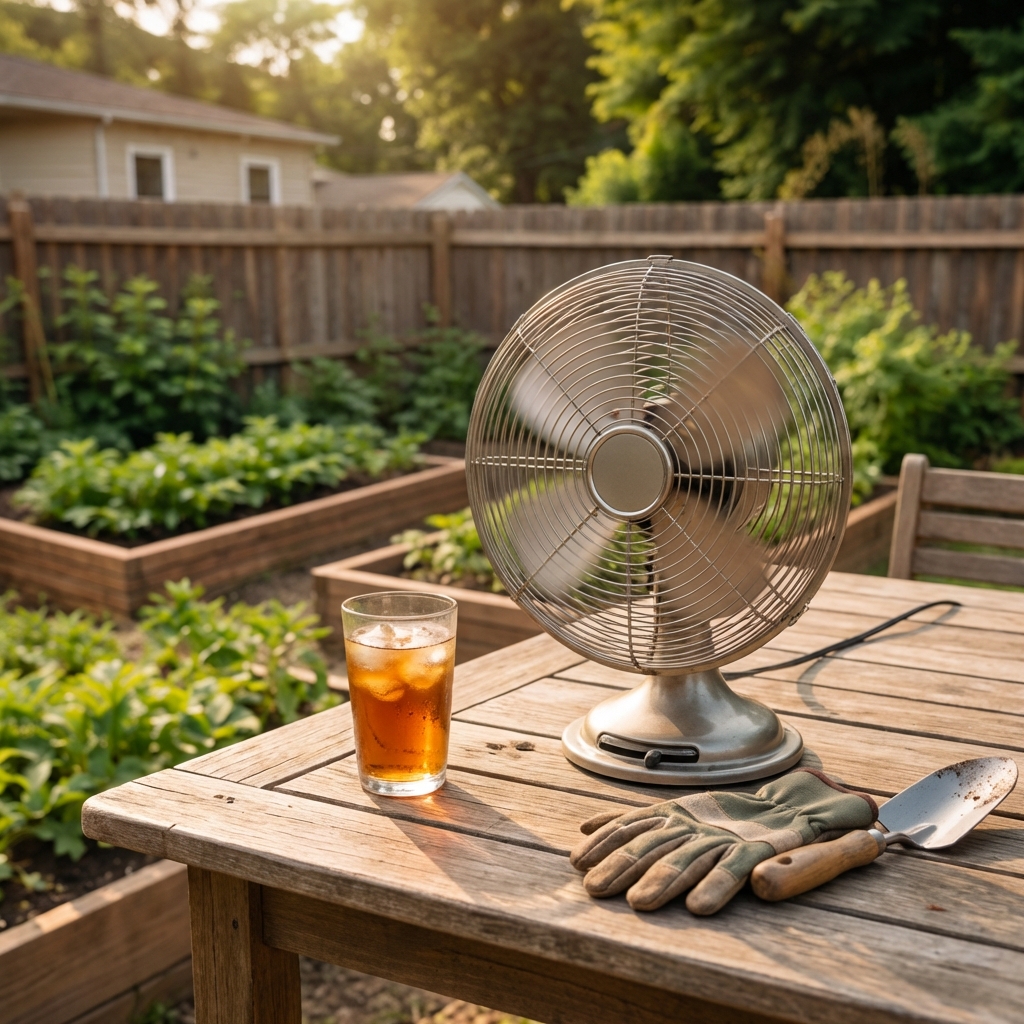
A simple box fan or oscillating fan helps more than people expect. Wasps are strong flyers, but steady air movement makes it harder for them to hover and investigate your table.
Choose flowers thoughtfully near doors
Wasps visit flowers. That is not bad, but you do not want a buffet right at the front door. Keep heavy-blooming plants a little farther from entryways, especially late-summer bloomers near seating areas.
Step 5: Traps, baits, and lures
Traps can help in specific situations, but they are not a magic shield. Used wrong, they can pull more wasps into your hangout area.
When traps make sense
- You have yellowjackets patrolling trash, fruit trees, or a pool area.
- You want to reduce numbers in a larger yard, especially late summer.
- You can place traps away from people and still within the wasps’ flight path.
Where to place traps
- Put traps at the edge of the area you use, not in the middle.
- Start 15 to 30 feet from patios and doors, farther if possible.
- Place traps downwind from seating if you can.
- Follow the trap label for height and placement. Many traps work well around 4 to 6 feet off the ground, high enough to keep them away from kids and pets.
- Use partial shade so the bait does not cook.
Which bait to use and when
- Early to mid-season: Protein-based lures can work better for yellowjackets and other social wasps when workers are hunting for larvae.
- Late summer to fall: Sweet baits often work better when they are chasing sugar.
Tip: If you notice traps increasing wasp activity near your table, move the traps farther out or remove them. The goal is to intercept, not to invite.
Step 6: What to do if you find a nest
This is where you decide if it is a leave it alone nest, a remove it safely nest, or a call a pro nest.
When you can often leave it alone
- The nest is far from doors, walkways, play areas, and the garden you work in.
- No one in the household has a known severe allergy to stings.
- You can keep 10 to 20 feet of distance without changing your routine.
Good to know: Most social wasp nests die off after hard frost and are not reused the next year. New queens start new nests in spring, usually in a different spot.
When to call a professional right away
- Any nest inside a wall void, attic, soffit cavity, or chimney area
- Ground nests in high-traffic areas
- Large bald-faced hornet nests near paths, playsets, or doors
- You have had multiple stings already
- You suspect Africanized honey bees (in warm regions) or you are unsure what it is
If you choose DIY control, follow these safety basics
- Work at dusk or very early morning when activity is lowest.
- Wear long sleeves, long pants, closed-toe shoes, gloves, and eye protection.
- Have a clear exit path. Do not corner yourself on a ladder.
- Keep kids and pets inside until you are done.
- Use only products labeled for the target pest and location, and follow label directions exactly.
Important: Never pour gasoline into a ground nest. It is dangerous, it can contaminate soil, and it is not a responsible control method.
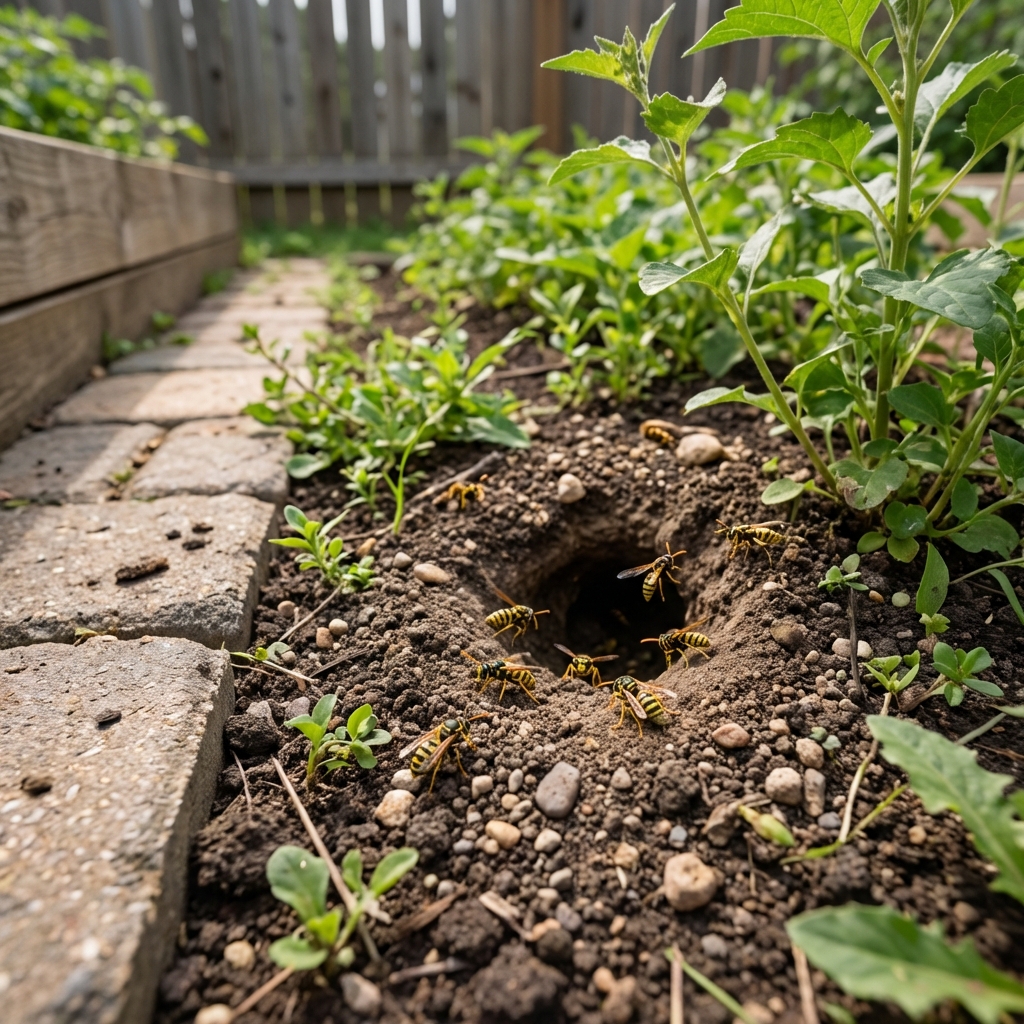
Step 7: Natural and low-chemical options
If your goal is to keep wasps away from a specific spot instead of wiping them out, these options can help when used consistently.
Physical exclusion
- Use fine mesh screens in gazebos or around eating areas.
- Cover compost and keep it managed so it does not smell sour.
- Use tight-fitting lids for outdoor bins.
Targeted nest removal for mud daubers
Mud dauber tubes can often be scraped off when inactive. Clean the surface afterward to remove residue that encourages rebuilding. They are usually less aggressive, but still treat them with respect.
Plant placement instead of plant removal
You do not need to rip out flowers. Just avoid placing heavy nectar plants right beside doors, grills, and seating. Move them a few yards away and you often get the benefit of pollinators without the traffic at your table.
Step 8: Keep wasps away from your vegetable garden
In a garden setting, wasps can be helpful because they hunt pests. The trick is keeping them out of your face while you are working.
- Harvest on cooler mornings when wasps are slower.
- Pick ripe fruit and damaged produce promptly so it does not split and ferment on the plant.
- Skip sweet bait traps in the garden itself. Place them away from beds so you do not increase traffic where you kneel and reach.
- Watch irrigation leaks. Standing water near beds invites regular visits.

Common questions
Why are wasps suddenly so aggressive?
Late summer and early fall is peak nuisance season for many social wasps. Colonies are large, food competition is higher, and workers are drawn to sugary drinks, fruit, and trash. Nearby mowing or trimming can also trigger defensive behavior if a nest is hidden in shrubs or the ground.
Will peppermint oil keep wasps away?
Strong scents can discourage some insects in small, short-term situations, but results vary a lot outdoors. If you try it, treat it as a spot deterrent that needs reapplication, not a main control strategy.
Do fake nests work?
Sometimes they help with paper wasps in early season because some wasps avoid nesting too close to another colony. They are less reliable against yellowjackets and they will not fix a major food attractant problem.
A simple plan for this week
- Walk the property and identify whether you see paper nests under eaves or flight traffic to a ground hole.
- Remove attractants for seven days straight: trash control, fallen fruit cleanup, covered drinks.
- Block nesting spots with basic sealing and screening where you find gaps.
- Set traps only if needed, placed well away from where people sit and following the label.
- Decide on the nest: leave it, DIY with proper timing and label directions, or call a pro for ground and wall void nests.
If you want, tell me where you are seeing wasps most often (patio table, trash cans, garden, under eaves, or a hole in the ground) and I can suggest the most effective next step for that exact situation.
Publication note: The images in this draft have empty src fields. Before publishing, add real image URLs and credits or remove the image tags.

Jose Brito
I’m Jose Britto, the writer behind The Country Store Farm Website. I share practical, down-to-earth gardening advice for home growers—whether you’re starting your first raised bed, troubleshooting pests, improving soil, or figuring out what to plant next. My focus is simple: clear tips you can actually use, realistic expectations, and methods that work in real backyards (not just in perfect conditions). If you like straightforward guidance and learning as you go, you’re in the right place.