English ivy looks charming right up until it starts swallowing everything in sight. It climbs fences, sneaks under shrubs, roots wherever a stem touches soil, and comes back fast if you only remove the top growth. The good news is you can beat it with a simple plan: remove the vines, kill the roots, then do short follow-ups so it cannot re-establish.
Below are practical methods that work in real yards, plus the timing and aftercare that make the difference between a one-week cleanup and a multi-year fight.
First, make sure it is English ivy
Most people mean Hedera helix or close relatives when they say English ivy. It usually has glossy, dark green leaves with lighter veins. Juvenile (creeping) ivy often has 3 to 5 lobes, while mature (flowering) ivy has more oval leaves and can form woody stems.
If you are unsure, take a few clear photos of the leaves and growth habit and compare with your local extension resources. Identification matters because removal steps are similar for many vines, but herbicide recommendations and timing can vary by species.
Safety and prep that saves you time
Wear the right gear
- Gloves: Some people get skin irritation or dermatitis from ivy, especially with repeated contact. Gloves also protect you from hidden thorns and sharp debris.
- Long sleeves and eye protection: Especially when pulling overhead vines off fences or walls.
- Mask: Optional, but helpful if you are working in dry leaf litter and dust.
Grab a few basic tools
- Hand pruners or loppers for thick vines
- A digging fork or narrow spade for roots
- A sturdy rake for gathering vines
- Contractor bags or a tarp for hauling
Tip: Do not compost ivy unless your compost gets reliably hot. Ivy can reroot from stem pieces. Bag it, solarize it in sealed black plastic for several weeks, or dispose of it according to local yard waste rules.
Also: Do not dump ivy in natural areas or woods. It spreads aggressively and can re-establish from cuttings.
Pick a method by location
English ivy usually shows up in one of three places. Your best approach depends on which one you are dealing with.
1) Ivy as groundcover
This is the most common situation. Ivy forms dense carpets with stems that root at nodes. The goal is to remove the mat and disturb the soil as little as possible so you are not constantly digging up fragments.
2) Ivy climbing trees
Ivy on trees is not just cosmetic. Thick vines can add weight, increase wind sail, hold moisture against bark, and compete for water. You do not need to rip ivy off the trunk to kill it. You just need to sever it and let it die in place.
3) Ivy on walls and fences
Ivy can damage some surfaces, especially older mortar, painted wood, and already-loose siding or fence joints. Here, patience matters. If you pull hard on live ivy, you can peel off paint, pop mortar, or take fence boards with it.
Cut, peel, pull, then repeat
Step 1: Cut climbing vines at the base
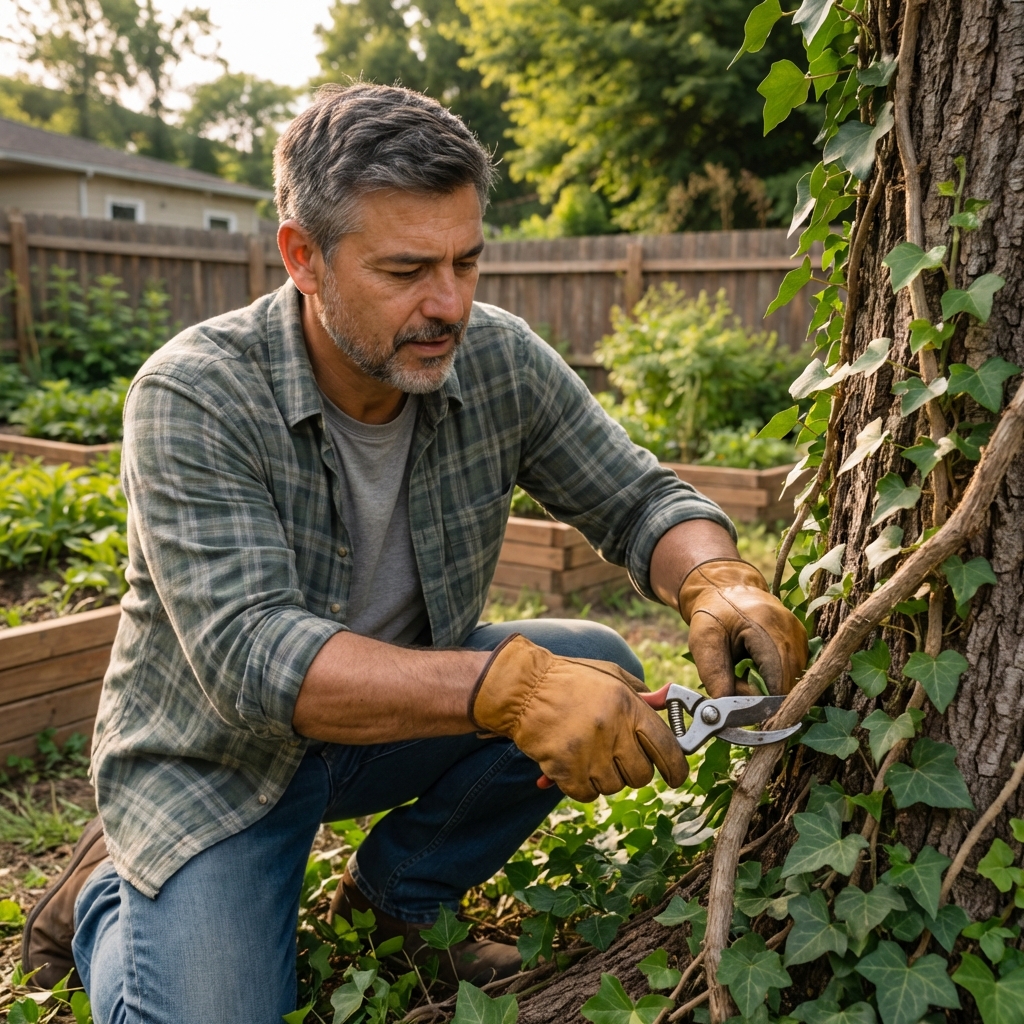
If ivy is climbing anything, start there. Use pruners or loppers to cut every vine you can reach and identify at about ankle height. Then make a second cut a few inches above the first and remove that short section.
That removed gap matters because ivy can reconnect if the cut ends touch again.
Step 2: Clear a ring around tree trunks
If ivy is on a tree, pull and dig ivy back 2 to 3 feet from the trunk, or as far as practical, so there is bare soil or mulch around the base. This keeps new shoots from reattaching quickly.
Step 3: Let cut ivy die on trees
Once the vine is cut, the top growth will die. Leave it on the tree. Over time it will loosen and drop. Pulling can strip bark, especially on young trees.
How long does it take? Dead ivy can take weeks to months to loosen, especially in cool weather.
Exception: If ivy is only lightly attached and the bark is thick and sturdy, you can gently peel small sections. When in doubt, let it die first.
When to call help: If there are heavy, mature vines high in the canopy and you are concerned about branches breaking or overhead hazards, call an arborist. Do not try to pull down large, dead vine curtains from a ladder.
Step 4: Pull ground ivy in “carpet strips”
After you cut climbers, move to the ground. Start at an edge and lift the mat like you are peeling back old sod. A digging fork helps lift roots without shredding the stems into a million rerooting pieces.
- Pull slowly and steadily.
- Shake soil off the roots as you go.
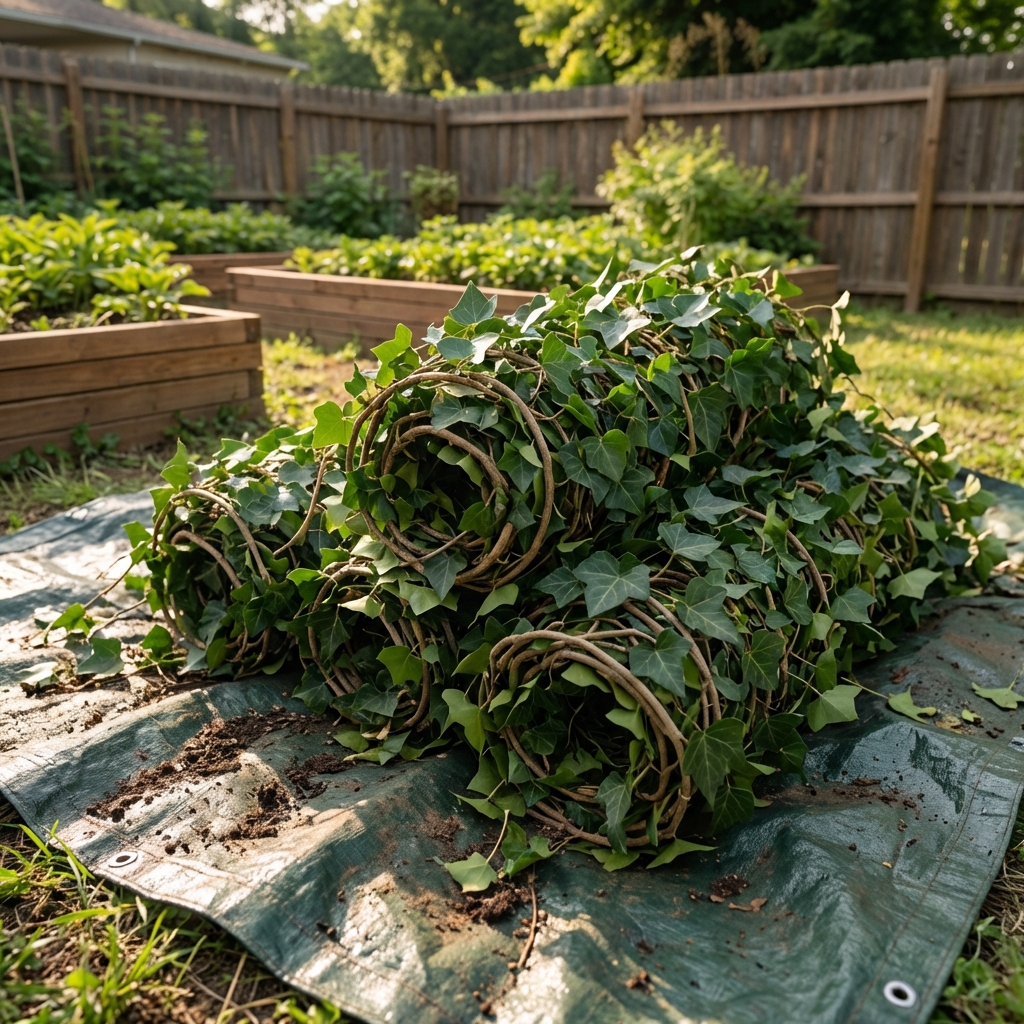
- Roll the vines into tight bundles so they are easier to carry.
Keep it off the ground: Do not leave pulled vines in contact with soil, especially in damp weather. Pile them on a tarp, in a bin, or in bags so they dry out instead of rerooting.
Step 5: Hunt for runners and rooted nodes
Ivy spreads via long stems that travel, root, then travel again. After the first big pull, walk the area and look for:
- Thick main runners you missed
- Rooted nodes still pinned under mulch
- Vines tucked under shrubs or along edging
Step 6: Plan on follow-up pulls
This is the part most people skip. Even a great first removal leaves fragments. Expect to revisit the area every 1 to 2 weeks for the first month, then monthly through the growing season.
Smothering method
If you have a large, flat area and do not want to fight roots right away, smothering works well. It is also a good option if you prefer to avoid herbicides.
How to smother ivy
Cut and flatten the ivy as low as possible. If it is thick, pull what you easily can first.
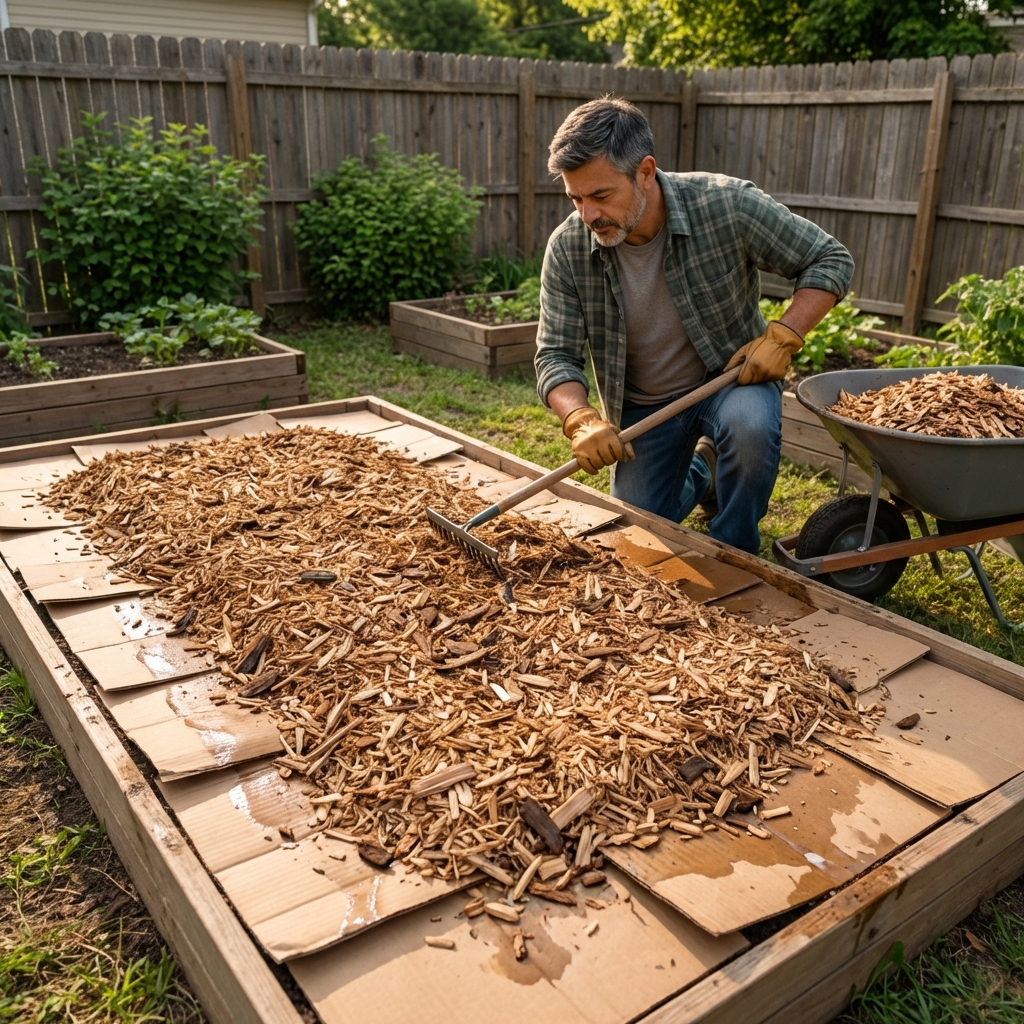
Cover completely with overlapping cardboard (remove tape) or a thick weed barrier paper.
Add weight with 4 to 6 inches of mulch, or weigh edges down with rocks or logs.
Timing: For vigorous, established ivy, plan on leaving the smothering layer in place for one full growing season. In cooler climates or deep shade, it can take longer.
Reality check: Smothering works best where you can seal edges. Ivy will try to escape at the margins. Inspect edges every couple weeks and pull any runners.
After storms: Check for lifted corners, torn cardboard, or mulch that slid off. Patch gaps promptly so light does not reach the ivy.
Herbicide options
Sometimes ivy is too extensive, too tangled in roots of desirable plants, or growing in a place where pulling causes erosion. In those cases, a targeted herbicide application can be the most practical tool.
What works on English ivy
Look for products labeled for ivy control that contain one of these active ingredients:
- Triclopyr (often best on woody vines and broadleaf plants)
- Glyphosate (non-selective, kills most green plants it contacts)
Always follow the product label for mixing, protective gear, and where it can be used. The label is the law.
Best application methods
- Cut-stem (cut-stump) treatment: Cut vines close to the ground and apply herbicide to the freshly cut end immediately, per label (often within a few minutes). This is very effective and minimizes drift.
- Foliar spray: Spray leaves until evenly wet, not dripping. Works best when ivy is actively growing and you can avoid hitting nearby plants.
Make foliar sprays work: English ivy leaves have a waxy surface that can shed spray. If the label allows it, add a surfactant (also called a spreader-sticker) so the herbicide coats the leaf and absorbs better. Some products already include one, so check before adding anything.
Best timing
Late summer through fall is often especially effective because the plant is moving carbohydrates down to the roots, which helps carry the herbicide where you need it. In many climates, other windows can work too as long as the ivy is actively growing and the label allows treatment. Avoid spraying right before rain, and avoid windy days.
Important: Do not spray ivy climbing a tree if the spray will contact the tree’s leaves, bark wounds, or exposed roots. In those cases, cut the vine and do a careful cut-stem treatment on the ivy only.
Keeping ivy from coming back
English ivy control is mostly about follow-up. Once you remove or kill the main patch, the comeback usually comes from small hidden stems or from neighboring properties.
Aftercare checklist
- Mulch 2 to 4 inches after removal to make new sprouts easier to spot and pull.
- Edge the area if ivy creeps in from outside your yard. Even a simple trench edge helps.
- Patrol monthly and pull small regrowth immediately. Ivy is easiest to kill when it is young.
- Replant quickly with competitive groundcovers or shrubs so the space is not just bare soil.
Replacement ideas
Choices depend on your region and sun level, but the general strategy is to plant something dense that you can manage easily.
- For shade: native ferns, woodland sedges, or clumping groundcovers recommended locally
- For sun: low-growing perennials or spreading natives that stay where you put them
For region-specific ideas, check your local cooperative extension office or a reputable native plant society in your state. They can point you to species that handle your exact light and soil conditions.
Common mistakes
- Only trimming the top: Ivy responds by branching and thickening. You still have living roots.
- Pulling ivy off trees in one go: You can damage bark and invite pests or disease.
- Leaving vine piles on the ground: Ivy can reroot, especially in damp weather.
- Skipping follow-ups: The first cleanup is step one, not the finish line.
Quick weekend plan
Day 1: Cut all climbing vines at the base and remove a small section to create a gap.
Day 1 to 2: Pull up ground mats in strips, then bag or tarp-haul the vines so they dry out and cannot reroot.
Week 2: Return and pull regrowth and missed runners.
Weeks 4 to 12: Patrol monthly, mulch, and replant.
That rhythm, initial removal plus short, consistent follow-up, is what turns ivy from a recurring headache into a solved problem.

Jose Brito
I’m Jose Britto, the writer behind The Country Store Farm Website. I share practical, down-to-earth gardening advice for home growers—whether you’re starting your first raised bed, troubleshooting pests, improving soil, or figuring out what to plant next. My focus is simple: clear tips you can actually use, realistic expectations, and methods that work in real backyards (not just in perfect conditions). If you like straightforward guidance and learning as you go, you’re in the right place.