Bed bugs are small, sneaky, and annoyingly good at hiding in seams and cracks. The good news is you do not need special training to do a solid first inspection. You just need the right light, a little patience, and a plan so you do not miss the spots they prefer.
This guide walks you through a beginner-friendly DIY search, what counts as real evidence, and what to do next if you find signs.

Before you start: quick safety and setup
Start with two goals: (1) confirm whether bed bugs are likely present, and (2) avoid spreading them while you look.
What you need
- Bright flashlight (your phone light works, but a small flashlight is better)
- Thin card (old gift card) to scrape along seams
- Disposable gloves (optional but helpful)
- White paper towels to wipe and reveal dark spotting
- Zip-top bags or a small sealed container for samples
- Vacuum with a crevice tool (optional for cleanup, not for “proof”)
Simple do and do not
- Do reduce clutter around the bed so you can see baseboards and furniture edges.
- Do keep bedding, clothes, and soft items in bags until you know what is going on.
- Do not move items room to room while you inspect. That can spread hitchhikers.
- Do not immediately fog or “bomb” the room. Foggers often push bed bugs deeper into cracks and make control harder.
Know what you are looking for
Most beginners expect to see a bunch of bugs crawling around. In reality, you usually find signs first.
High-confidence evidence
- Live bed bugs: flat, oval, reddish-brown. Adults are about apple seed size. Nymphs are smaller and lighter.
- Shed skins: pale, empty “shells” from molting, often caught in seams.
- Eggs: tiny, white, rice-grain-like, often tucked into protected cracks.
- Fecal spots: small black dots that look like ink from a felt-tip pen. They often bleed into fabric when dabbed with a slightly damp paper towel.
Clues that can be misleading
- Bites: bite patterns vary widely and can be from mosquitoes, fleas, or skin irritation.
- Blood smears: can happen from scratching or other insects too.
- Musty odor: sometimes present in heavy infestations, but not a reliable early sign.
Start where they usually are: the bed
Bed bugs prefer to stay close to where people sleep because they feed at night. Your first pass should focus on the bed itself.
1) Inspect pillows and sheets (quickly)
Pull back bedding and look for small black dots or rusty stains. Do not shake linens. If you suspect bed bugs, bag bedding for laundering on hot later.
2) Check mattress seams and piping
Use the flashlight at a low angle. Slowly run the card along seams, piping, and labels. Pay extra attention to the head end of the mattress.

3) Inspect the box spring
Box springs are a common hiding place, especially along the wooden frame and inside corners. If there is a thin dust cover underneath, check for tears and look along the edges where staples are.
- Look at the top edge where the box spring meets the mattress.
- Check plastic corner guards and folds.
- Inspect staple lines, cracks, and joints in the wood.
4) Do not skip the bed frame and headboard
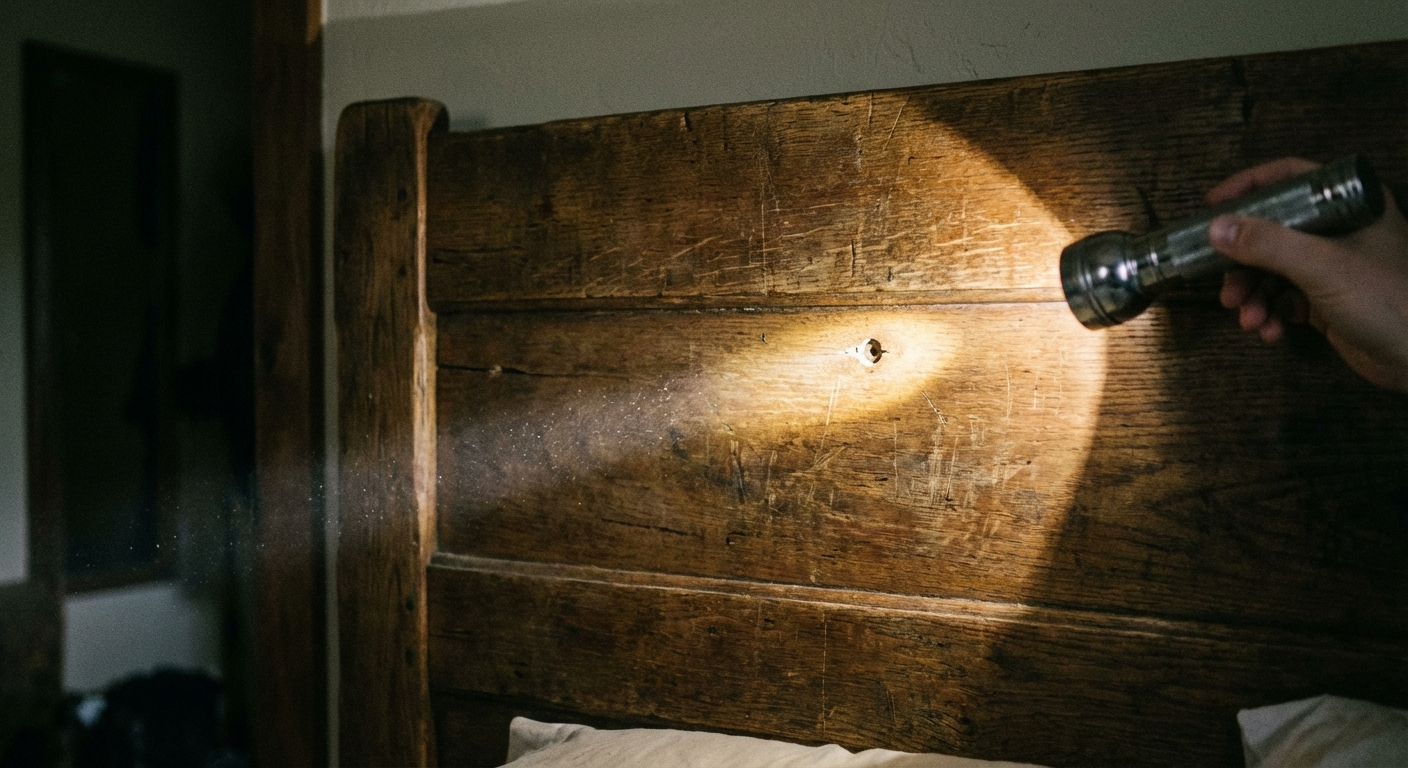
Headboards are one of the most missed spots, especially if they are upholstered or mounted to the wall. Shine the light into screw holes, joints, and any fabric seams.
5) Look at anything stored under the bed
Storage bins, shoes, books, and extra linens can become hiding spots. If you find signs here, that increases the odds the issue is established.
Expand outward: the 5 to 10 foot zone
If bed bugs are present, they often spread from the bed to nearby furniture, then outward along room edges.
Nightstands and dressers
- Remove drawers and inspect drawer joints, undersides, and runners.
- Check the back panel and corners where panels meet.
- Look under and around handles and hardware.
Upholstered furniture
If you nap on a couch or have a chair in the bedroom, inspect it like a mattress: seams, welting, zippers, and the underside fabric.

Baseboards, trim, and wall edges
Use your flashlight along the baseboards behind the bed and nightstands. Look for spotting where the wall meets the floor and around gaps in trim.
Outlets and wall plates
Bed bugs can hide behind loose wall plates, especially near the bed. If you are comfortable doing so, turn off the breaker to that outlet and remove the cover plate to peek inside. If not, just inspect around the edges.
Fast checks for travel and “brought it home” situations
If your concern started after a trip or a guest stayed over, focus on items that move.
Luggage and bags
- Inspect seams, zippers, and pockets with a flashlight.
- Check the hard edges where fabric meets plastic frames.
- Keep luggage off the bed while you inspect.
Coats, backpacks, and shoes near the bed
Look at seams and folds. Bed bugs are not attracted to dirty laundry, but they will hide in nearby clutter and fabrics.
How to tell bed bugs from lookalikes
A lot of insects get blamed for bed bugs. If you can capture a specimen, you can get a more confident ID.
- Fleas are laterally flattened and jump. Bed bugs do not jump.
- Carpet beetles are often found near windowsills and feed on natural fibers. Their larvae are fuzzy. They do not leave ink-like fecal spotting near mattress seams.
- Ticks have 8 legs as adults and a different body shape. Bed bugs have 6 legs and clear abdominal segmentation.
If you find a bug, place it in a sealed bag or container and take a clear close-up photo in good light.
Simple DIY monitors that help confirm activity
If you did not find clear evidence but you still suspect bed bugs, monitoring can help.
Interceptor traps
These go under bed and furniture legs and can catch bugs traveling up or down. They are useful for confirming activity and reducing bites, but they are not a complete solution by themselves.
Mattress encasements
A quality bed bug rated encasement can trap bugs already in the mattress and make future inspections easier because there are fewer seams. It does not fix the room, but it supports a treatment plan.
If you find signs: what to do next
Finding evidence is stressful, but early action helps a lot. Your next steps depend on how much you found.
1) Do not move to the couch
It feels logical to sleep elsewhere, but that can spread bed bugs into another room. If you can, keep sleeping in the same place while you plan control.
2) Start containment
- Bag washable bedding and clothing. Wash hot and dry on high heat when fabric allows.
- Keep cleaned items sealed until the problem is resolved.
- Reduce clutter near sleeping areas so treatment can reach hiding spots.
3) Vacuum carefully
Vacuum seams, crevices, and floor edges to remove some bugs and debris. Immediately seal and discard the vacuum contents outdoors. Vacuuming helps, but it rarely removes all bugs or eggs.
4) Decide on DIY treatment vs professional help
Small, early infestations can sometimes be handled with a careful DIY approach, but bed bugs are one of those pests where professional treatment often saves time and repeat frustration.
- Consider a pro if you find bugs in multiple rooms, see signs in furniture beyond the bed, or live in an apartment or shared building.
- If you DIY, focus on a combination of heat from a dryer, targeted crack and crevice treatment, and ongoing monitoring. Avoid total-release foggers.
5) Notify the right people
If you rent, check your lease and local rules and notify your landlord early. If you recently stayed in a hotel, you can also let them know, especially if you have photos or a captured specimen.
Common beginner mistakes (and what to do instead)
- Mistake: Only checking the top of the mattress. Do instead: Inspect the box spring, headboard, and bed frame joints.
- Mistake: Assuming no bites means no bed bugs. Do instead: Look for physical evidence like spotting, skins, and eggs.
- Mistake: Throwing furniture out immediately. Do instead: Confirm first. Discarded furniture can spread bed bugs through your home or neighborhood if not wrapped and labeled properly.
- Mistake: Using foggers. Do instead: Use targeted methods and monitoring.
Quick inspection checklist
If you want a short plan to follow, use this order:
- Mattress seams and tags
- Box spring edges and corners
- Bed frame joints and headboard
- Nightstand drawers and underside
- Nearby upholstered furniture
- Baseboards and wall gaps near bed
- Luggage, bags, and items stored under bed
If you find any high-confidence sign, stop and contain items before continuing to reduce the chance of spreading bugs around.
When to get confirmation
If you are unsure after inspecting, it is reasonable to get a second opinion. A licensed pest control company can confirm activity and propose a treatment plan. In some areas, specially trained detection dogs are available, but results vary, so use them as one tool, not the only tool.
The main thing is this: a careful inspection in the right places usually tells you a lot. Take your time, use bright light, and focus on seams, cracks, and corners where bed bugs actually hide.

Jose Brito
I’m Jose Britto, the writer behind The Country Store Farm Website. I share practical, down-to-earth gardening advice for home growers—whether you’re starting your first raised bed, troubleshooting pests, improving soil, or figuring out what to plant next. My focus is simple: clear tips you can actually use, realistic expectations, and methods that work in real backyards (not just in perfect conditions). If you like straightforward guidance and learning as you go, you’re in the right place.