Christmas cactus (Schlumbergera) can be a little stubborn. It looks healthy, grows new segments, and then December shows up with zero flowers. The good news is blooming is not a mystery once you understand what the plant is waiting for: a clear signal that the season has changed.
To bloom, it needs two main cues for several weeks: long nights and cooler temperatures. Nail those, keep watering steady, and buds usually follow.
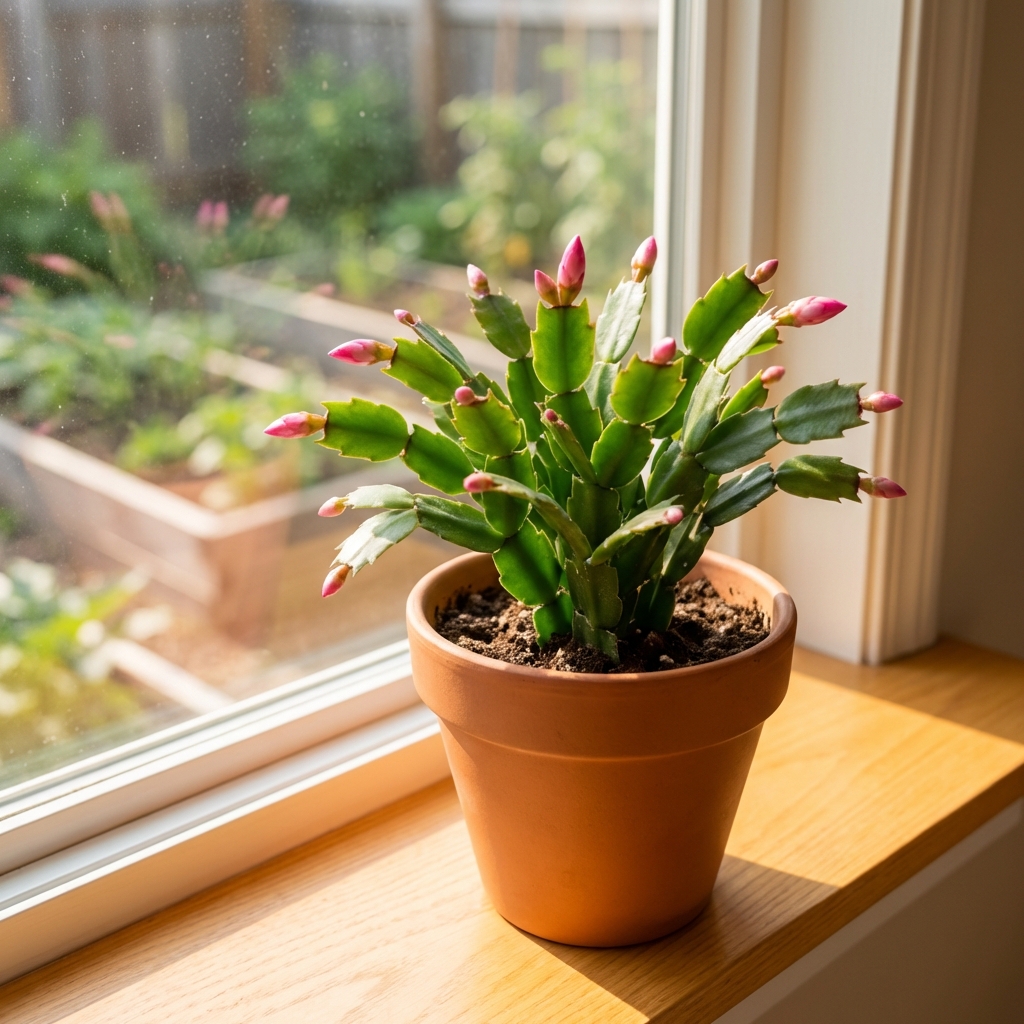
First, make sure it really is a Christmas cactus
People call several holiday cacti “Christmas cactus,” and care is similar, but bloom timing can vary. The most common mix-up is between:
- Thanksgiving cactus (Schlumbergera truncata): usually blooms earlier, has sharper, claw-like segment edges. This is the most common type sold as “Christmas cactus.”
- Christmas cactus (often Schlumbergera × buckleyi): smoother, rounded segment edges, often blooms a bit later.
- Easter cactus (Rhipsalidopsis): different leaf shape and tends to bloom in spring.
If yours reliably blooms in November, you likely have a Thanksgiving cactus. That is not a problem. The bloom-trigger routine below still works.
The quick answer: what triggers blooms
A Christmas cactus usually sets buds when it gets about 6 to 8 weeks of:
- Long, uninterrupted nights (roughly 12 to 14 hours of darkness, often closer to 14)
- Cooler temperatures (especially cooler nights)
- Steady moisture (not soggy, not bone-dry)
Light and temperature work together. If your nights are reliably cool, the plant can be a little less picky about perfect darkness, but indoor light at night is still the most common reason for “no buds.”
The 6 to 8 week bloom routine
Start this routine in early to mid fall if you want blooms around late November to December. If you start later, you can still get blooms, they may just shift closer to January.
Step 1: Bright, indirect light in the day
A spot near an east or north window is great. South or west windows can work too, but avoid harsh midday sun on the segments unless it is filtered. Too much direct sun can lead to reddening and stress, which can slow blooming.
Step 2: Long nights with no light leaks
For bud set, aim for 12 to 14 hours of darkness every night for 6 to 8 weeks. The key word is uninterrupted. Even a lamp turned on for a few hours during the dark period can interrupt bud set.
- Keep it out of rooms where lights are on at night.
- Do not place it near a porch light, bright streetlight, or a TV that stays on late.
- If needed, set it in a closet or cover it in the evening, then uncover it in the morning.
If you cover it: use a breathable box or bin that does not touch the plant, and make sure it is not trapping heat or moisture around the segments. Airflow matters.
Consistency matters more than perfection. If you miss a night, just get back on schedule.
Step 3: Cool nights help a lot
Temperature is the other big lever. Most plants set buds best when nights are cooler. Try for something like:
- Night: around 50 to 65°F (10 to 18°C), with 55 to 60°F (13 to 16°C) often being a sweet spot for bud initiation
- Day: around 65 to 75°F (18 to 24°C)
Avoid prolonged cold below about 50°F (10°C), and always protect the plant from frost.
You do not need a perfect thermometer routine. A slightly cooler room, a rarely used bedroom, or a spot near a cool window often does the trick.
Step 4: Water by dryness, not dates
Christmas cactus likes even moisture, but it hates staying wet. During the bud-setting period:
- Let the top 1 to 2 inches of potting mix dry (closer to 2 inches for larger pots).
- Check deeper moisture too. A pot that still feels heavy or cool-damp lower down does not need more water yet.
- Water thoroughly until it drains, then empty the saucer.
- Do not let it sit in water.
If your home is dry, you may water a bit more often. If your home is cool or the pot is large, you may water less often.
Step 5: Pause heavy feeding
Fertilizer is helpful during active growth (spring and summer), but it is not what triggers blooms. During the 6 to 8 week bud-setting routine, keep it simple. If you fertilize at all, use a diluted houseplant fertilizer and do not overdo it.
After buds set: what to do next
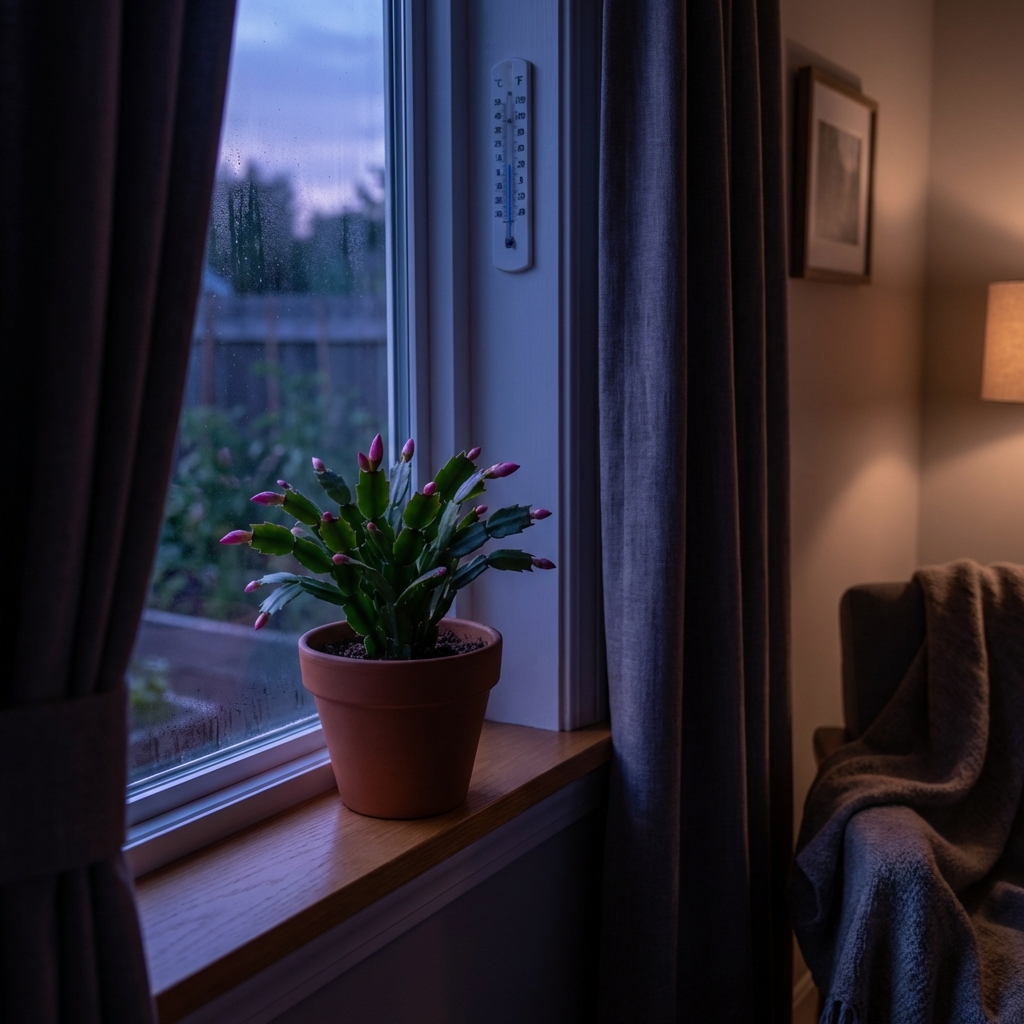
Once you see small buds at the tips, you can usually stop the strict “timer” routine. You do not need to keep forcing 14-hour nights until the last flower opens.
What matters most now is stability: keep nights reasonably dark, temperatures fairly steady, and watering consistent.
Keep buds from dropping
Bud drop is usually caused by sudden change. Keep conditions steady:
- Avoid relocating it to a different environment once buds are forming (for example, a warmer room, a drafty spot, or a much brighter window). Small adjustments like a slight rotation are usually fine if conditions stay the same.
- Keep watering consistent. Letting it dry out hard can cause buds to shrivel.
- Avoid heat blasts from vents, radiators, fireplaces, and space heaters.
- Avoid cold drafts from frequently opened doors or icy windows.
Quick humidity note: average home humidity is fine, but extremely dry air plus heat vents can contribute to bud drop. If your air is very dry, move it away from vents and consider a pebble tray or a small humidifier nearby.
Best soil and pot setup
Holiday cacti are epiphytes in nature, meaning they grow in leaf litter and debris on trees (and sometimes rocks), not heavy garden soil. Indoors, they do best in a mix that drains well but does not dry out instantly.
A simple mix that works
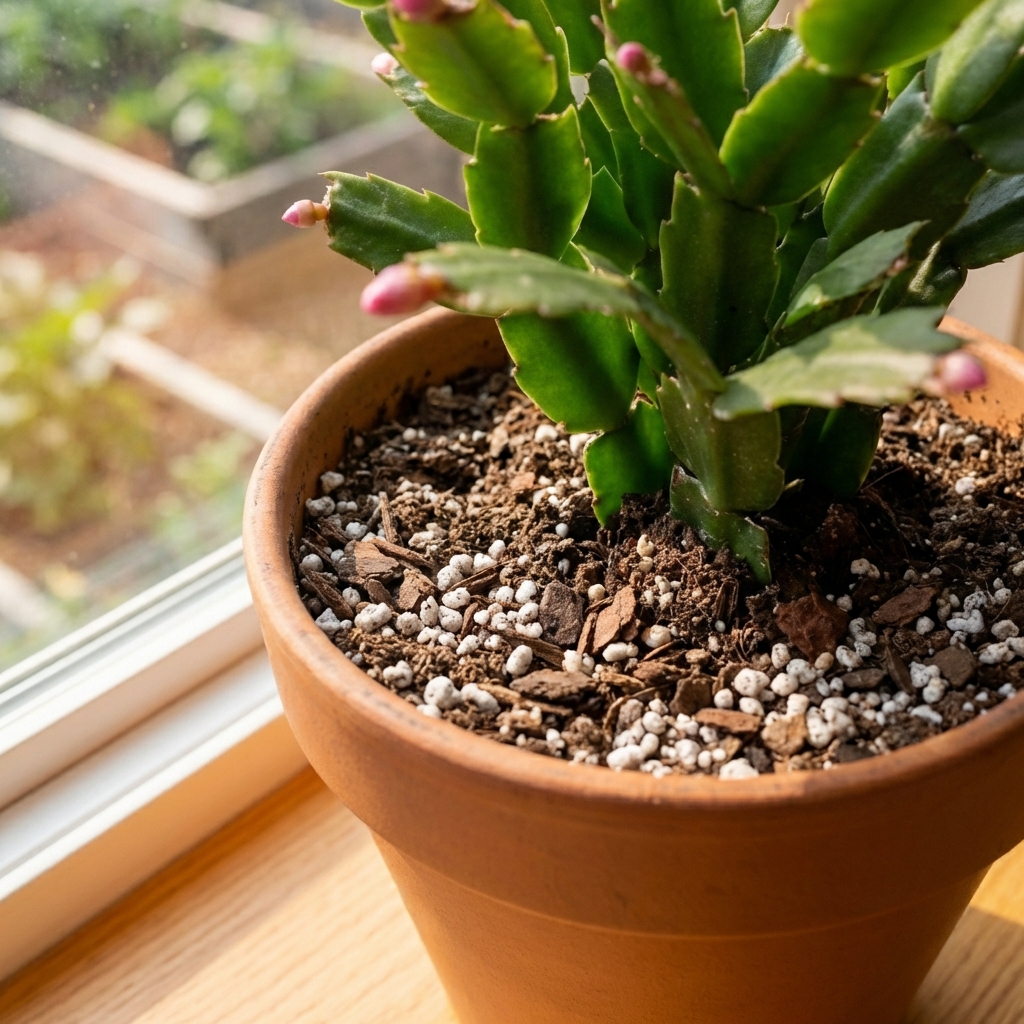
- 2 parts quality indoor potting mix
- 1 part perlite or pumice
- Optional: a handful of orchid bark for extra air space
Easy alternative: a cactus and succulent mix amended with orchid bark and perlite also works well, especially if your home is on the humid side.
Use a pot with a drainage hole. A slightly snug pot is fine. These plants often bloom better when they are not overpotted.
Light at night: the top "no bloom" cause
If your plant is healthy but refuses to flower year after year, the usual culprit is nighttime light. Indoor lighting can be enough to interrupt the long-night signal.
A simple test: if you can comfortably read a book in the room at night with lights on, your cactus is not experiencing “night” in the way it needs.
- Move it to a darker room at night.
- Or give it a protected dark period (closet or cover), with airflow and no heat buildup.
Troubleshooting
It has buds but they fall off
- Cause: temperature swings, dry air blasts, drying out too much, or a sudden change in light or location.
- Fix: keep it in one stable spot away from vents and drafts, maintain steady moisture, and avoid big temperature changes.
Lots of growth, no buds
- Cause: nights are too bright or too warm (or both).
- Fix: 12 to 14 hours of uninterrupted darkness (often closer to 14) plus cooler nights for 6 to 8 weeks.
Segments look wrinkled or limp
- Cause: underwatering, or roots stressed from staying too wet.
- Fix: check the mix deeper than the surface. If it is bone dry, water thoroughly. If it stays wet for days, repot into a faster-draining mix and confirm the pot drains.
Leaves turning reddish or purple
- Cause: too much direct sun, cold stress, or sometimes low nutrients.
- Fix: move to bright indirect light, avoid cold drafts, and resume light feeding in spring.
Bud formation started, then stalled
- Cause: light exposure during the dark period, or the room warmed up significantly.
- Fix: recommit to darker nights and cooler temperatures until buds plump up.
It never blooms and looks stressed
- Cause: pests (like mealybugs) or root problems (like rot) can sap energy and reduce flowering.
- Fix: inspect stems and soil line, and address pests or soggy soil before focusing on bloom triggers.
Prune, repot, fertilize
Prune after blooming
If you want a fuller plant, pinch off one or two segments per stem after flowering ends. This encourages branching, which means more tips and more future flowers.
Repot only when needed
Repotting right before bloom season can delay flowering. If the plant is rootbound but otherwise fine, wait until after blooming or in spring.
Fertilize in the growing season
Feed lightly in spring and summer when it is actively growing. A balanced houseplant fertilizer at half strength every 4 to 6 weeks is plenty for most home setups.
A simple timeline
- Spring and summer: bright indirect light, water when the top 1 to 2 inches are dry, light feeding, optional outdoor shade time when nights stay above about 50°F (10°C).
- Early fall: start the 6 to 8 week routine: long dark nights, cooler nights, steady watering.
- Late fall to winter: buds form and flowers open. Keep conditions stable and avoid sudden changes.
- After bloom: prune lightly if you want, then return to normal care.
FAQ
Do I have to keep it in total darkness?
It does not need a pitch-black cave, but it does need uninterrupted darkness without room lights during the dark period. Even a bright lamp for part of the evening can interfere if it breaks up the long night.
Should I stop watering to force blooms?
No. Some people “stress” plants to trigger flowers, but Christmas cactus is more likely to respond by dropping buds. Keep moisture steady and let the light and temperature do the triggering.
Can I put it outside to trigger buds?
Yes, if temperatures are safe. Many people get great results by placing it outdoors in bright shade in early fall where it naturally gets cool nights and long darkness. Bring it in before frost and keep it away from heaters once inside.
How long does it take from bud to bloom?
Often a few weeks, depending on variety and indoor temperature. Cooler conditions tend to slow the opening, warmer conditions speed it up.
Bottom line
If you want a Christmas cactus that blooms on purpose instead of by accident, focus on the seasonal cues: dark nights, cooler nights, and steady care. Start 6 to 8 weeks before you want flowers, then keep conditions stable once buds form, and you will usually get a solid show.

Jose Brito
I’m Jose Britto, the writer behind The Country Store Farm Website. I share practical, down-to-earth gardening advice for home growers—whether you’re starting your first raised bed, troubleshooting pests, improving soil, or figuring out what to plant next. My focus is simple: clear tips you can actually use, realistic expectations, and methods that work in real backyards (not just in perfect conditions). If you like straightforward guidance and learning as you go, you’re in the right place.