Avocados have a talent for being rock-hard all week, then suddenly turning to mush the moment you’re ready to use them. The good news is you can control a lot of that ripening with a few kitchen-simple moves. No weird chemicals, no special gadgets, just smarter timing and storage.
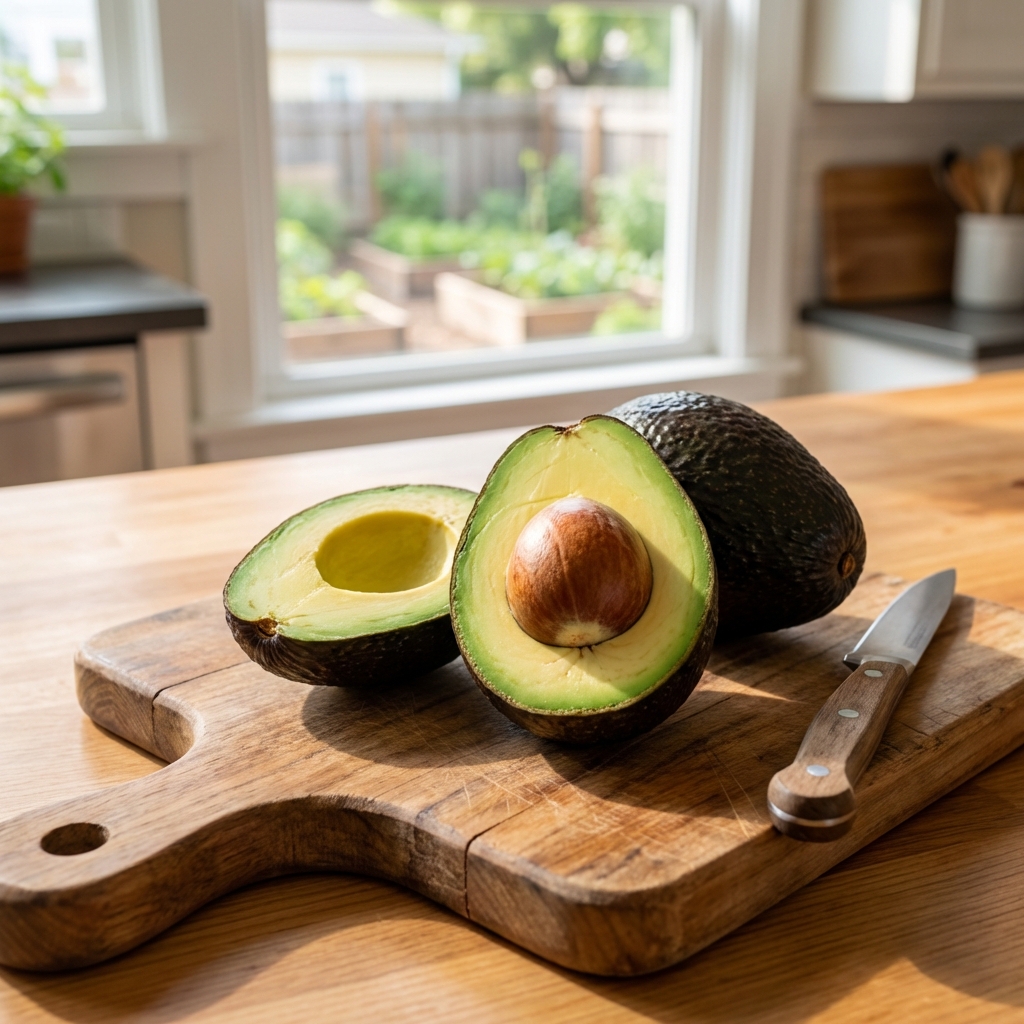
Know what you’re trying to control
Avocados ripen because they release ethylene gas. Warmth speeds that process up, and cold slows it down. Most “make it last longer” strategies are really just ways to:
- Slow ethylene action (cooler temperatures, fewer ethylene-producing neighbors)
- Reduce oxygen exposure (for cut avocado browning)
- Manage moisture (too wet encourages spoilage, too dry can cause shriveling)
Once you understand those three levers, the rest is just choosing the right method for the stage your avocado is in.
Best storage by ripeness stage
If it’s hard and green
Keep it on the counter until it gives slightly when you press it gently in your palm. Avoid pressing with fingertips, since that bruises the flesh and creates brown spots later.
- Keep away from sunlight and heat sources.
- Give it space from ethylene-heavy fruits if you are trying to slow things down (bananas, apples, stone fruit, tomatoes).
- Use a paper bag only to speed ripening. Paper traps ethylene, which is great when you need the avocado ready fast. Check daily so it does not overshoot.
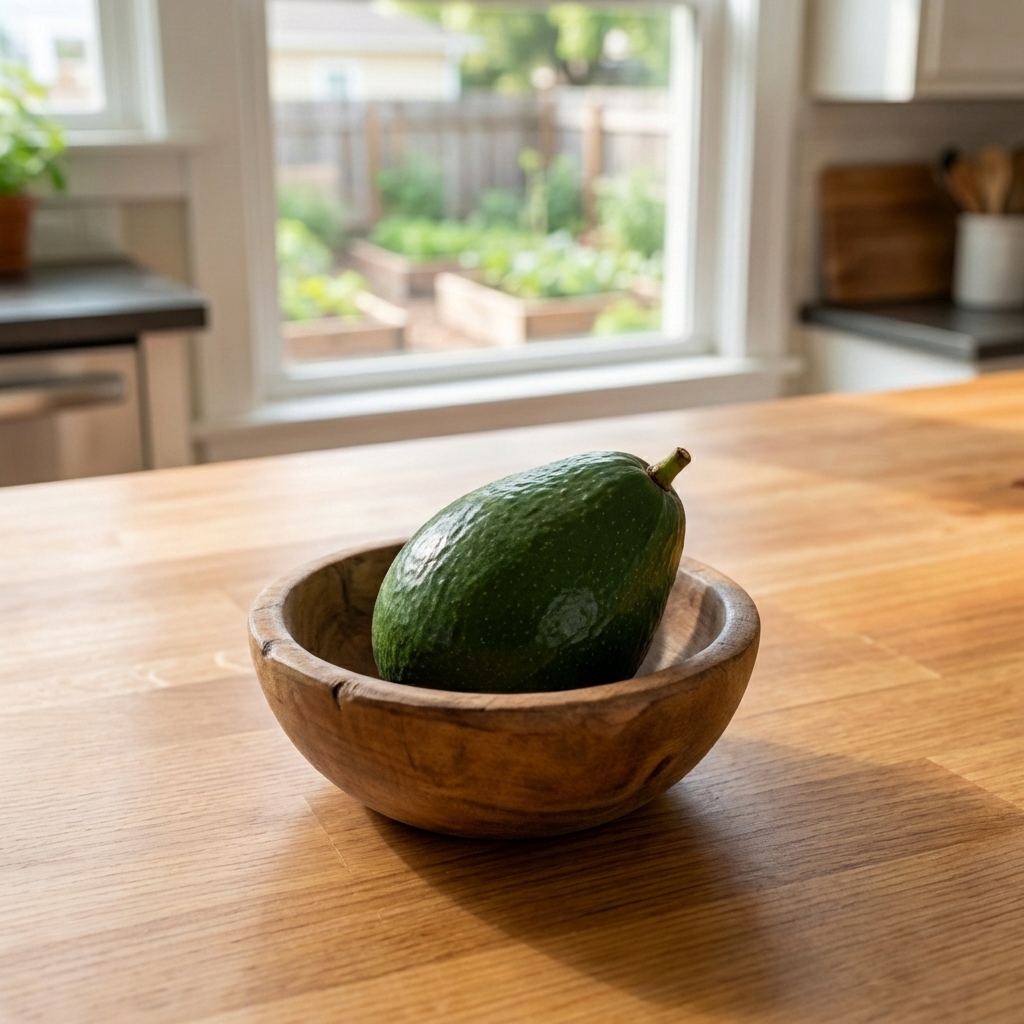
If it’s ripe and ready
This is where the fridge becomes your best friend. The moment an avocado is ripe, move it to the refrigerator. Cold temperatures slow the ripening enzymes down so it stays in that sweet spot longer.
- Whole ripe avocados: store in the fridge, ideally in the crisper drawer.
- Realistic expectation: you’ll usually buy yourself a few extra days, sometimes more depending on how ripe it was when it went in.
If it’s overripe
Overripe does not always mean “trash.” If it smells sour, has mold, or has widespread stringy brown or black flesh, toss it. But if it’s just very soft with some browning, you can still use it in:
- Smoothies
- Brownies or quick bread
- Avocado chocolate pudding
- Blended dressings
Stop cut avocado from turning brown (simple fixes)
Cut avocado browns because the exposed flesh reacts with oxygen. Your job is to block air and add a little acid when it makes sense.
1) Lemon or lime juice (simple and reliable)
Brush or lightly rub lemon or lime juice over the cut surface. The citric acid slows browning naturally.
- Best for: guacamole, tacos, salads
- Tip: use a light hand so it does not overpower the flavor.
2) Vinegar works in a pinch
Apple cider vinegar or white vinegar can slow browning, but it’s stronger tasting. Use a tiny amount and spread it thin.
3) Tight wrap contact method
Wrap the avocado so plastic wrap is pressed directly against the flesh, with no air pockets. This is one of the most effective no-ingredient tricks.
4) Store with the pit (helpful, not magic)
Keeping the pit in can reduce browning only where it physically blocks air. It helps most when you store a half avocado with the pit still in the larger half.
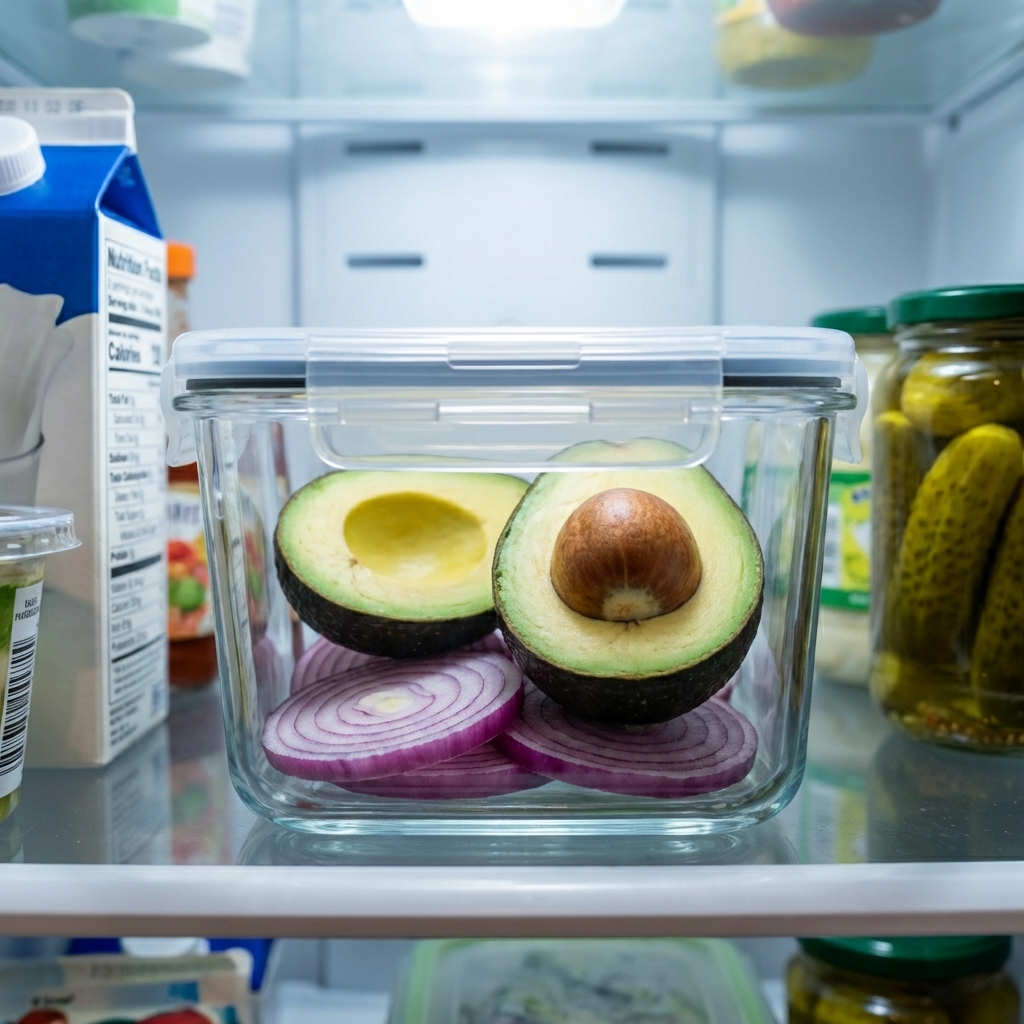
5) The onion container trick (great for guac)
Onion naturally releases sulfur compounds that can help slow browning. If you can handle a little onion aroma, it works surprisingly well.
- Place thick onion slices in the bottom of an airtight container.
- Set the avocado (or guacamole) above the onion, not smashed into it.
- Seal and refrigerate.
The best way to store half an avocado
If you only use half, here’s the method that holds up best in real life:
- Leave the pit in (if it’s in that half).
- Lightly coat the cut surface with lemon or lime juice.
- Press plastic wrap directly onto the flesh.
- Refrigerate in the crisper drawer.
When you unwrap it later, you might see a thin brown layer. You can usually scrape that off with a spoon and the avocado underneath is still green.
Can you freeze avocados?
Yes, and it’s a very practical “save it before it’s too late” move. Freezing changes the texture, so frozen avocado is best for blending, spreading, or mixing, not for neat slices.
How to freeze avocado (no additives required)
- Scoop ripe avocado flesh into a bowl.
- Mash lightly (or puree) depending on how you’ll use it.
- Add a little lemon or lime juice if you want extra browning protection.
- Pack into an airtight container or freezer bag, press out air, and freeze.
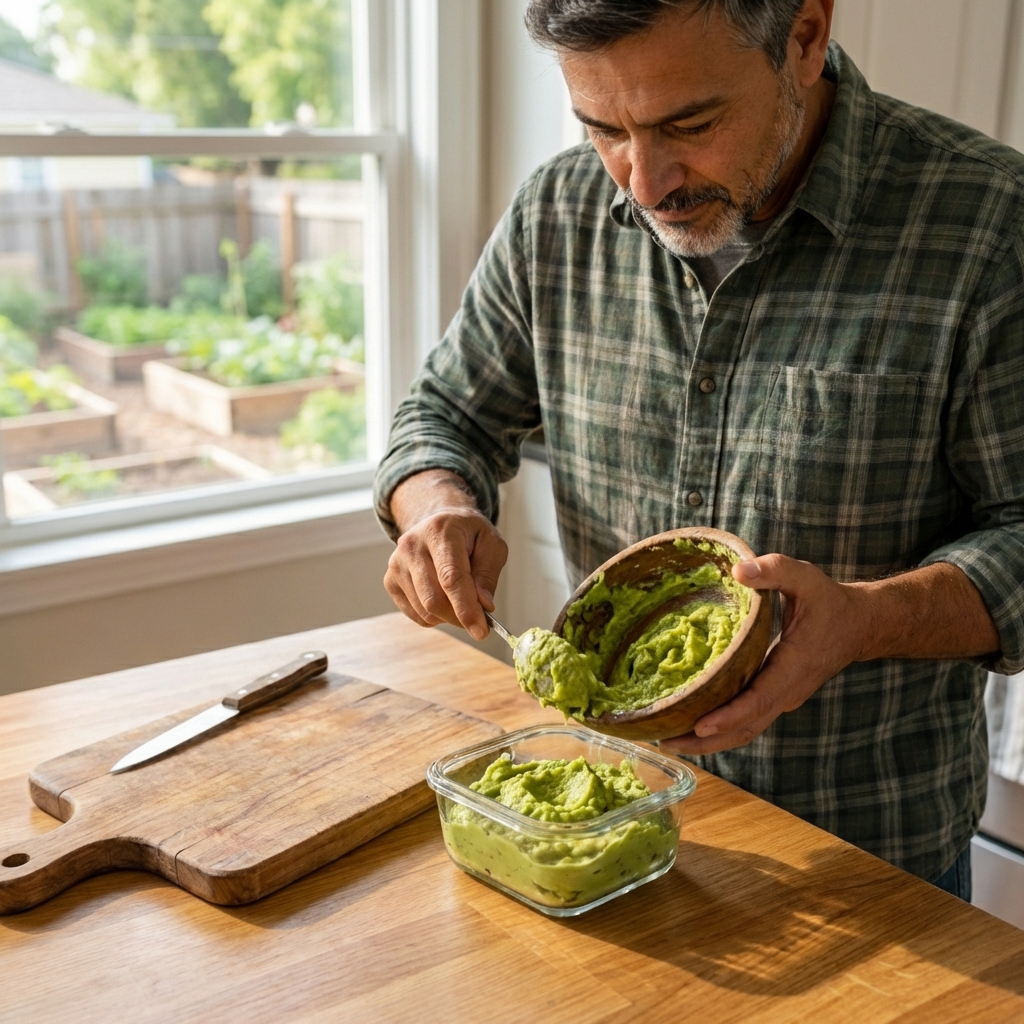
To use: thaw in the fridge overnight, then stir well.
Quick troubleshooting
Why did my avocado spoil so quickly in the fridge?
It was likely already very ripe when it went in, or it got chilled and then warmed repeatedly (like living in the fridge door). Move it to the crisper drawer and try to avoid temperature swings.
Why is it brown inside even if it’s firm?
That’s often bruising from handling or pressure during transport. It’s common if you squeeze-test hard with fingertips. Use palm pressure instead.
Is it safe if it has brown spots?
Small brown areas are usually fine to cut away. If there’s a sour smell, mold, or the flesh looks gray and stringy throughout, compost it.
My simple avocado plan for the week
If you want this to feel effortless, stop treating every avocado the same. Try this:
- Buy a mix: a couple firm, a couple that are close to ripe.
- Ripen on the counter, checking daily.
- Refrigerate as soon as they hit ripe.
- Freeze the extras once you realize you will not eat them in time.
That routine alone cuts down on waste, and you’ll almost always have an avocado that’s ready when you are.
Key takeaways
- Let avocados ripen at room temperature, then refrigerate to hold ripeness longer.
- Keep avocados away from bananas and apples if you want to slow ripening.
- For cut avocado: acid plus airtight contact wrapping is the most reliable combo.
- Freeze ripe avocado if you’re not going to use it soon.

Jose Brito
I’m Jose Britto, the writer behind The Country Store Farm Website. I share practical, down-to-earth gardening advice for home growers—whether you’re starting your first raised bed, troubleshooting pests, improving soil, or figuring out what to plant next. My focus is simple: clear tips you can actually use, realistic expectations, and methods that work in real backyards (not just in perfect conditions). If you like straightforward guidance and learning as you go, you’re in the right place.