Vinegar weed killer is popular because it is cheap, easy to mix, and works fast on top growth of small weeds. The catch is that it is a contact herbicide. It burns what it touches and rarely kills deep roots in one application. If you use it with the right expectations and apply it carefully, it can be a handy tool for cracks, gravel, and weedy edges.
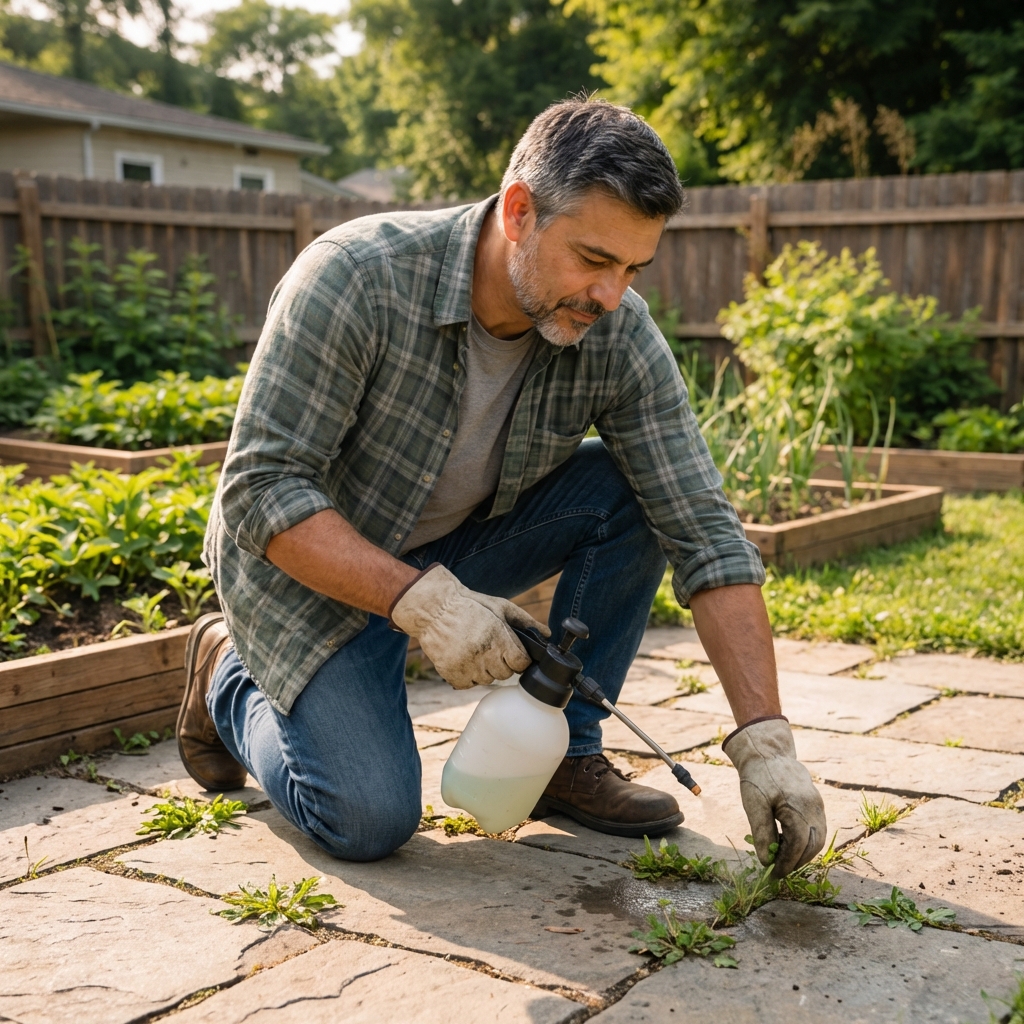
How vinegar kills weeds (and when it does not)
Household vinegar contains acetic acid. When sprayed on leaves, it pulls moisture out of plant tissue and causes rapid burn-down. You will often see wilting within hours in warm, sunny weather.
- Works best on: tiny seedlings, young broadleaf weeds, and weeds growing in pavement cracks or gravel.
- Struggles with: established weeds with thick or waxy leaves, grasses, and anything with a strong root system like dandelion, bindweed, Bermuda grass, or thistle.
- Not selective: it can damage any plant it touches, including your lawn and ornamentals.
Repeated applications can weaken some perennials over time, but vinegar is still best viewed as a top-kill tool, not a root killer.
If you need to clear a planting bed (not just a walkway), vinegar is usually the wrong tool because it can splash and harm nearby plants.
Vinegar weed killer recipes (beginner friendly)
Start with the mildest mix that can do the job. Stronger is not always better because the risk to your eyes, skin, and nearby plants goes up.
Quick safety note: Avoid windy days, spray close to the target, and do not inhale the mist. Keep kids and pets away until everything is dry.
Recipe 1: Simple household vinegar spray
- Ingredients: 5% white vinegar (standard kitchen vinegar)
- Optional: 1 teaspoon of plain, unscented mild dish soap per quart (helps it stick to leaves). Avoid specialty soaps with heavy degreasers, fragrances, or antibacterial additives. For the most consistent results, a garden sprayer surfactant works better than dish soap.
Best for: very young weeds, repeated spot treatments, and tight spaces where you can spray carefully.
Recipe 2: Stronger vinegar spray (use with extra care)
- Ingredients: 20% horticultural vinegar (sold for outdoor use, often in the 10% to 30% range)
- Optional: 1 teaspoon plain, unscented mild dish soap per quart
Best for: tougher weeds in gravel or cracks where you are not trying to protect nearby plants.
Label and legal note: Higher strength acetic acid can cause chemical burns and may be regulated in some areas. Follow product label directions and local rules.
Do you need salt?
Many recipes add salt, but I avoid it in most home landscapes. Salt can build up in soil, harm nearby plants, and make it harder to grow anything in that area later.
- Skip salt if you want to plant there in the future.
- Only consider salt for areas you truly want bare long term (and even then, use sparingly).
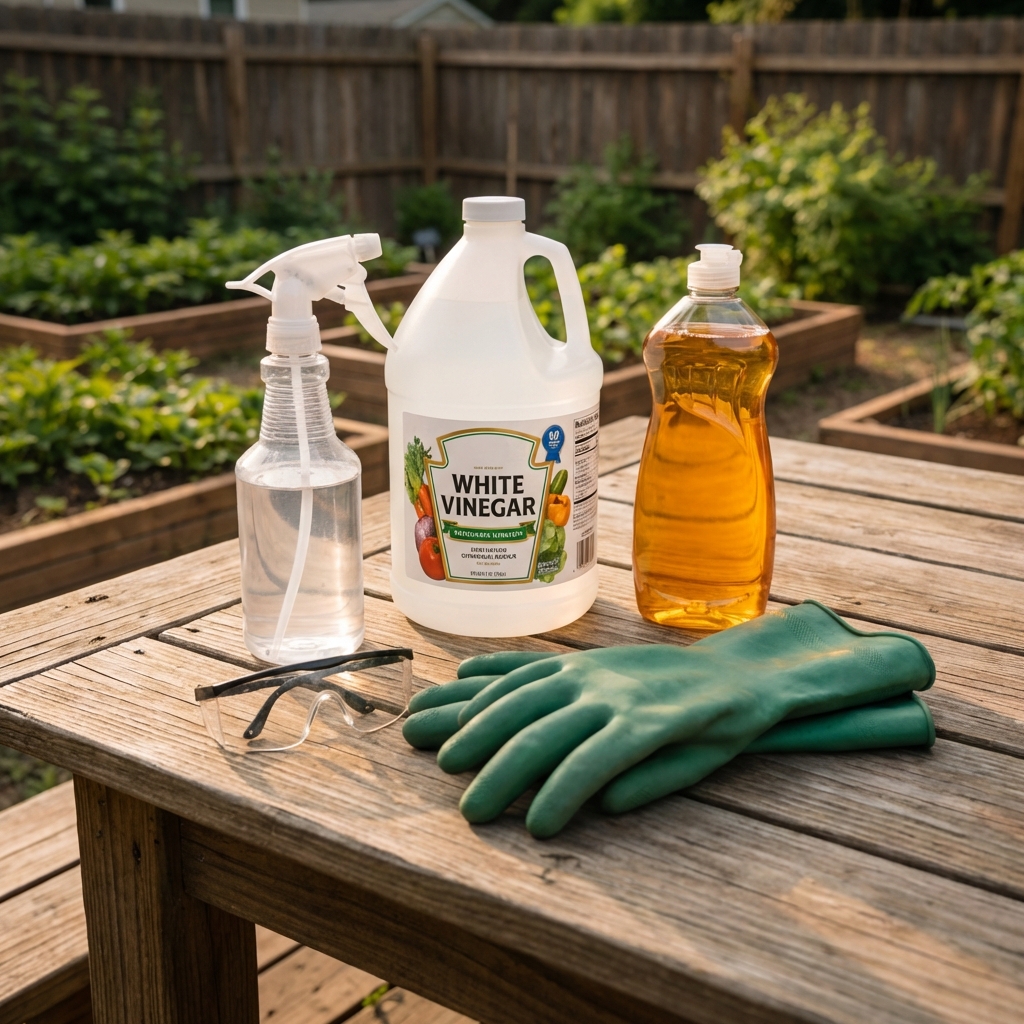
What you need
- Spray bottle or pump sprayer dedicated to weed control
- White vinegar (5%) or horticultural vinegar (10% to 30%)
- Plain, unscented mild dish soap or a garden surfactant (optional)
- Gloves and eye protection, especially with stronger vinegar
- Cardboard, a piece of plastic, or a spray shield for protecting nearby plants
Step-by-step: how to mix it
- Choose your vinegar. Use 5% for light jobs, stronger vinegar for tougher weeds in non-plant areas.
- Add soap (optional). Add about 1 teaspoon of plain, unscented mild dish soap per quart of vinegar (or use a labeled garden surfactant).
- Mix gently. Swirl or tip the sprayer to combine. Avoid shaking hard since soap can foam.
- Label the sprayer. Mark it clearly so it does not get used on edible plants later.
Important: Never mix vinegar with bleach or other cleaners. That can create dangerous fumes.
How to apply for the best results
Timing matters
- Pick a hot, sunny day. Sun speeds up the burn-down.
- Avoid rain for a while. Aim for at least a few rain-free hours after spraying, and ideally longer if you can manage it.
- Target young weeds. Seedlings are dramatically easier to kill than mature weeds.
Spot-spray, do not mist
Adjust your nozzle for a tight stream or coarse spray so you can hit only the leaves you want. Spray until the leaves are wet but not dripping.
Protect nearby plants
- Use a piece of cardboard as a shield behind the weed.
- Spray close to the target to reduce drift.
- Avoid windy days.
Watch your surfaces
- Stone warning: Vinegar can etch or dull some stone, especially limestone and marble. Test a small hidden spot first.
- Hardscape caution: Frequent use on concrete and some pavers can cause discoloration or surface wear over time. Use the smallest amount that works.
- Runoff: Do not spray where it can wash into storm drains or waterways.

Aftercare: what to do after spraying
Most weeds will look worse within a few hours and may be fully browned by the next day. Then you have two choices:
- Pull and remove: Once the top is dead, pull the weed if possible. This is the best way to keep it from returning.
- Repeat treatment: For weeds that re-sprout, spray again in 7 to 14 days. Perennial weeds often take multiple hits, and some may still need digging or a different control method.
If you sprayed cracks in pavement, consider sweeping in polymeric sand (where appropriate) or topping gravel to reduce future germination.
Safety tips (especially with stronger vinegar)
Household vinegar is mild, but it can still irritate eyes and skin. Horticultural vinegar is much stronger and deserves real caution.
- Wear gloves and eye protection. For higher strengths, consider long sleeves and closed-toe shoes.
- Keep kids and pets away until the spray is dry.
- Do not spray near desirable plants, vegetable beds, or newly seeded lawns.
- Avoid spraying on windy days to prevent drift.
- Store leftover vinegar and mixes out of reach and clearly labeled.
Where vinegar weed killer fits in a beginner weed plan
If you are trying to keep a yard or garden manageable, vinegar is best used as a spot tool, not the whole strategy. It shines on small annual weeds and seedlings, especially in hardscape areas. Here is a simple, realistic approach:
- Mulch beds 2 to 4 inches thick to block new weeds.
- Hand-pull after rain when soil is soft, especially for deep-rooted weeds.
- Use vinegar for hardscape weeds (pavers, driveway edges, gravel paths).
- Overseed thin lawn areas so weeds have less room to move in.
Troubleshooting
It burned the top but the weed came back
That is normal for perennial weeds. Pull it, dig out the root if you can, or plan on repeated spot treatments. Vinegar rarely kills the root system in one go, although repeated hits can weaken some plants over time.
Nothing happened
- It may have rained too soon.
- The weed may be mature or waxy-leaved.
- You may have sprayed in cool or cloudy weather.
I accidentally hit my plants
Rinse the leaves with water right away. It does not always save the plant, but quick rinsing can reduce damage.
Quick FAQ
Will vinegar kill weeds permanently?
It can permanently kill small annual weeds. Many established or perennial weeds will return because roots survive. Repeated spot treatments may weaken some perennials, but digging or other controls are often needed for long term results.
Is vinegar safe for soil?
In small, spot applications, vinegar breaks down fairly quickly. The bigger risk is overspray onto nearby plants. Avoid adding salt if you want the soil to stay plant-friendly.
Can I spray weeds in my lawn?
I would not. Vinegar is not selective and can burn turfgrass the same way it burns weeds.

Jose Brito
I’m Jose Britto, the writer behind The Country Store Farm Website. I share practical, down-to-earth gardening advice for home growers—whether you’re starting your first raised bed, troubleshooting pests, improving soil, or figuring out what to plant next. My focus is simple: clear tips you can actually use, realistic expectations, and methods that work in real backyards (not just in perfect conditions). If you like straightforward guidance and learning as you go, you’re in the right place.