Ants are impressive little workers until they decide your pantry, pet bowl, raised bed, or patio cracks are part of their supply line. The good news is you do not need harsh sprays to get results. The trick is understanding what ants are doing and then choosing a natural method that targets the right part of the problem.
Most “natural” ant tips fail for one of two reasons: they only kill the ants you see (not the colony), or they ignore the food and moisture that started the trail in the first place. Below are the approaches that often work in real homes and backyards.
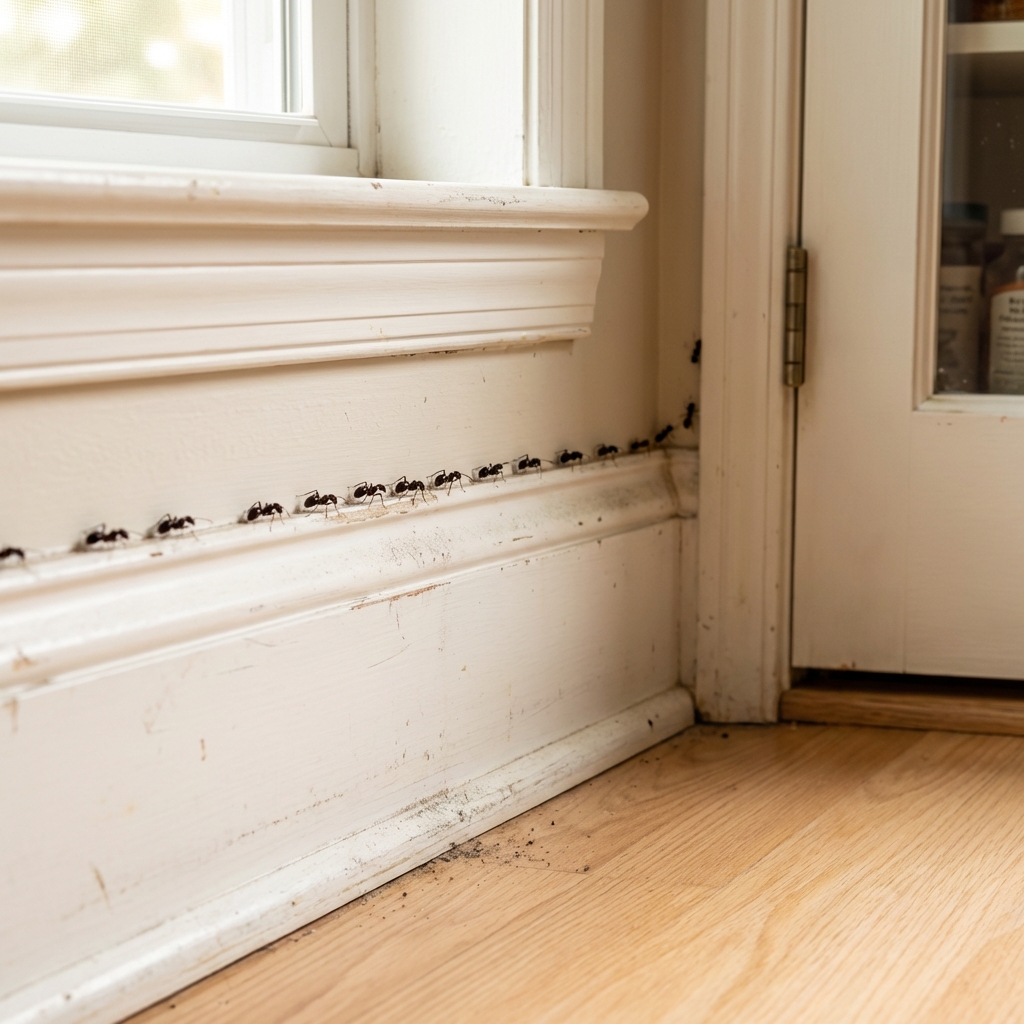
First, figure out what kind of ant problem you have
Different natural treatments shine in different situations. Take one minute to observe before you start throwing remedies at them.
Common scenarios
- Kitchen trail to sugar, fruit, or crumbs: usually a foraging trail. Baits work well.
- Ants around sink, tub, or houseplants: often moisture-driven. Fix damp spots first, then use baits or barriers.
- Ant mound in the lawn or along a walkway: the nest is outdoors. Boiling water or a light dusting of food-grade diatomaceous earth in dry cracks can help.
- Ants “farming” aphids on plants: the ants are protecting aphids for honeydew. You have to manage the aphids or ants will keep returning.
Quick reality check: if you see a steady trail every day, you are usually dealing with a colony that has found a reliable food source. That is exactly when bait is your best natural tool.
Also: bait preferences can shift. Many ants go for sweets, but some want protein or grease (often seasonally). If one bait is ignored, switch instead of doubling down.
The most effective natural option: bait they carry home
If your goal is to actually kill ants (not just repel them), you usually want a slow-acting bait. Ants feed it to nest mates, including the queen, which is how you stop the cycle. (Some situations, like carpenter ants in damp wood or stubborn multi-nest colonies, can need different bait matrices or a professional inspection. More on that below.)
DIY borax bait (common for indoor trails)
Borax (sodium borate) is a mineral-based laundry booster commonly used in DIY pest baits. It can be effective because it is slow acting. Ants do not die instantly, which gives them time to take it back to the colony.
Basic sweet bait recipe (start mild):
- 1/2 cup sugar
- 1 1/2 cups warm water
- 1/2 to 1 1/2 tablespoons borax
Stir until dissolved. A common reason baits fail is the mix being too strong (ants avoid it or it works too fast) or too weak (not effective). If ants approach but do not feed, reduce the borax. If they feed for days with no drop in activity, you can increase slightly.
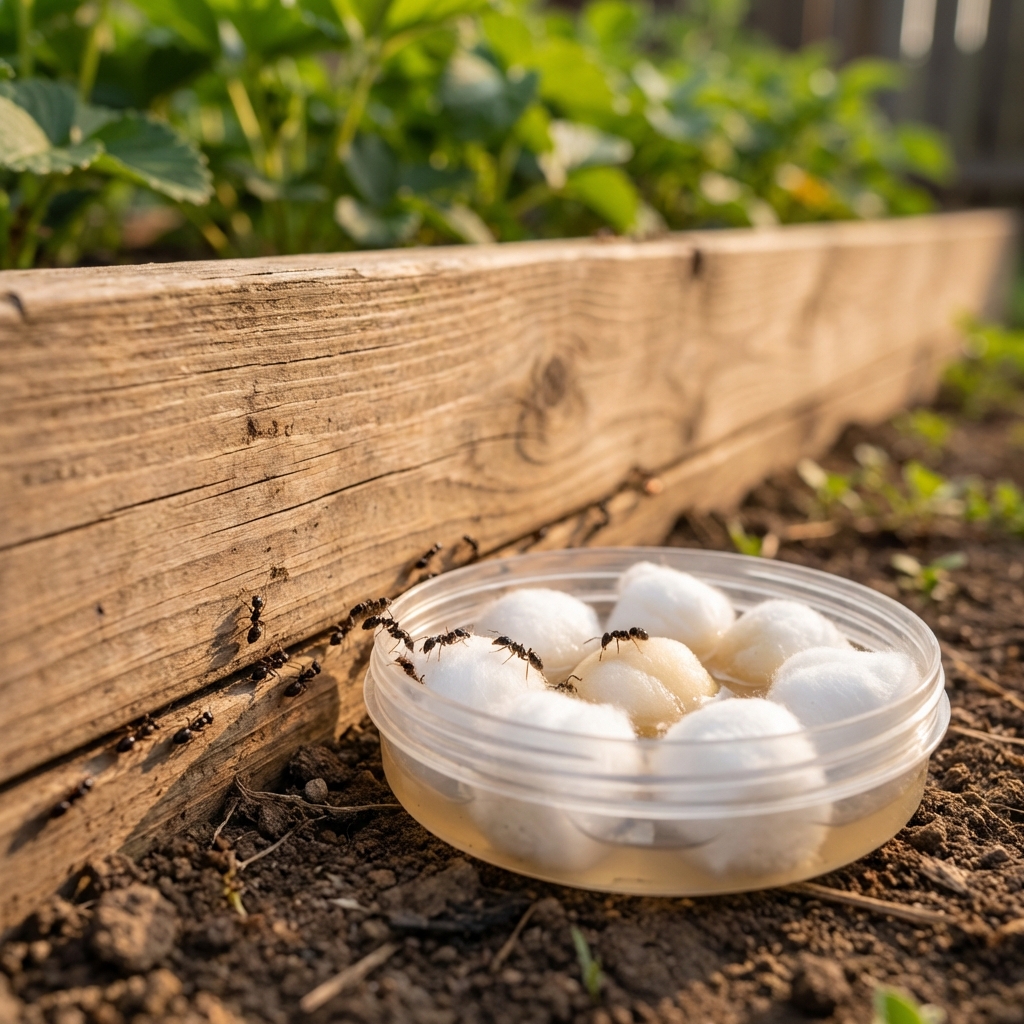
Soak cotton balls and place them in shallow lids inside a covered bait station near trails. (A simple DIY station is a small plastic container with tiny entry holes.) Refresh every few days.
Protein or grease bait (when they ignore sugar)
Some ants prefer protein, especially at certain times. If they walk right past sugar bait, switch.
- Mix about 1 part borax to 20 parts peanut butter (for example, 1/4 teaspoon borax to 5 teaspoons peanut butter). Add a few drops of water if needed to make a soft paste.
- Set it in a covered bait station to reduce accidental contact.
How to use baits so they actually work
- Do not spray repellents or scrub the active trail right before baiting. Clean up crumbs and spills, but let the established route remain so they find and use the bait.
- Place bait along their route, not far away. Ants follow established paths.
- Be patient. You might see more ants at first. That is a good sign. Give it 3 to 7 days for noticeable drop-off.
- Use multiple bait points. Especially if you see trails in more than one room.
- Limit competing food. The cleaner the area, the more attractive your bait becomes.
Safety note (important)
Borax is not a food ingredient. Keep it away from children and pets, and avoid open bait where it can be licked, pawed, or spilled. Use enclosed bait stations as your default. Place stations off food prep surfaces and away from places where food is stored uncovered. Wash hands after handling baits.
If you cannot bait safely, skip to the barriers and prevention sections and focus on exclusion and habitat changes.
Natural contact killers for quick relief
Sometimes you need immediate control while baits are doing the long game. These methods can knock down the ants you see, but they usually do not eliminate the colony by themselves.
Soapy water spray
Dish soap in water can kill or disable ants on contact by coating them and interfering with normal breathing and movement.
- Mix a few drops of dish soap in a spray bottle of water.
- Spray directly on ants and wipe up.
- Follow up with baiting or prevention, otherwise the trail often returns.
Boiling water for outdoor nests
If you have a clear mound outdoors (not near delicate plant roots you care about), boiling water can help. Results vary by species and colony structure, and many colonies have satellite chambers, so plan to repeat.
- Pour slowly into the nest entrance during a time you see activity.
- Expect to repeat over several days as needed.
Use caution: boiling water is dangerous. Keep kids and pets inside and protect your hands and feet.
Barriers and repellents that help stop trails
Repellents can be useful, especially when combined with baiting. Think of these as fence building. They reduce wandering and help funnel ants toward your bait stations.
Diatomaceous earth (food grade) for dry cracks
Food-grade diatomaceous earth (DE) is a fine powder that can damage insects as they crawl through it. It works best when it stays dry.
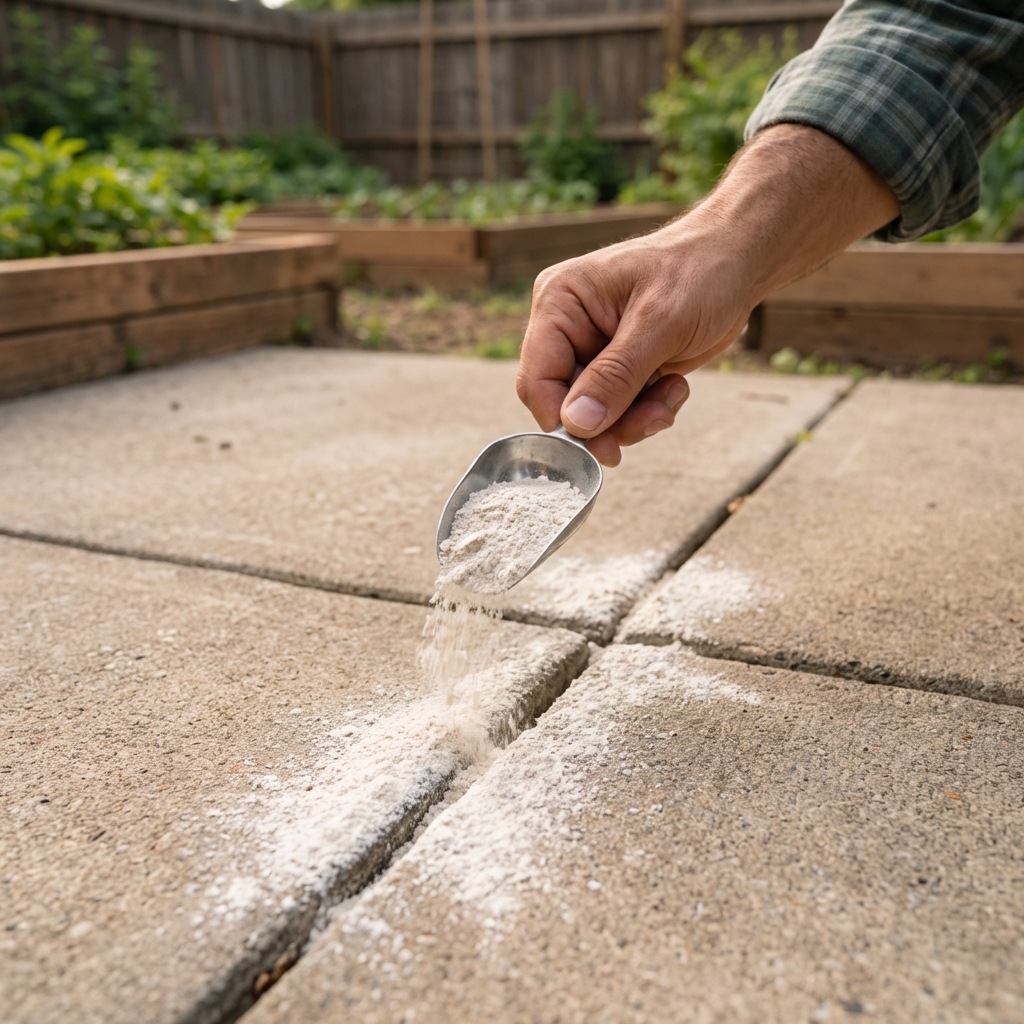
- Dust a thin, barely visible layer in cracks, under appliances, and along entry points.
- Avoid breathing the dust and keep it out of eyes.
- Use sparingly and avoid spreading it where beneficial insects are active.
- Reapply after rain or damp cleaning.
Vinegar wipe-down (good for removing trails)
Vinegar does not reliably kill a colony, but it can disrupt scent trails so the line breaks.
- Wipe counters and baseboards with a 1:1 mix of white vinegar and water.
- Do this after bait stations are set up, or wipe areas that are not part of the bait route.
- Ants can reroute quickly, so pair vinegar with baiting and sealing entry points.
Essential oils (use carefully)
Some oils can deter ants, but they are not a colony solution. Also, many essential oils are unsafe for pets, especially cats. If you use them, keep concentrations low and avoid areas pets can contact.
Instead of relying on oils, prioritize bait and exclusion. Oils are optional, not the main event.
If bait is not working
- They are not feeding: the mix may be too strong, or you used the wrong food type. Reduce borax and/or switch between sweet and protein.
- Too much competing food: wipe up crumbs, store foods airtight, and rinse recyclables.
- You sprayed repellents nearby: strong cleaners and essential oils can push ants to reroute and ignore bait. Stop sprays and let them settle back onto a route.
- Bad placement: move bait closer to the trail and add more stations.
- Species mismatch: some ants are picky. Try a different bait base (sugar water, honey, jelly, peanut butter) before giving up.
How to stop ants from coming back
Once the trail slows, prevention is what keeps it from restarting next week.
1) Remove the reliable food source
- Store sugar, flour, cereal, and pet treats in sealed containers.
- Rinse recyclables and sticky jars before they sit in the bin.
- Do a quick sweep under pet bowls and high chair areas.
2) Fix moisture and hiding spots
- Repair slow leaks under sinks and at outdoor spigots.
- Do not overwater houseplants that are attracting ants.
- Keep mulch a few inches back from the foundation to reduce nesting habitat.
3) Seal entry points
Ants can fit through tiny gaps. A little caulk goes a long way.
- Caulk gaps along baseboards, around pipes, and where counters meet walls.
- Replace worn door sweeps.
- Repair window screens and frame gaps.
- Trim vegetation that touches the house and move firewood away from structures.
Garden-specific ant problems
Ants in the garden are not always a disaster. They can aerate soil and help break down organic matter. The issue is when they protect sap-sucking pests or build nests where you are planting.
Ants and aphids: treat the aphids first
If ants are climbing stems and new growth, check for aphids under leaves and on tender tips. Ants often farm them for honeydew.
- Blast aphids off with a strong stream of water.
- Use insecticidal soap if needed, following label directions.
- Reduce excess nitrogen fertilizer that creates very soft, aphid-prone growth.
Ant nests in raised beds
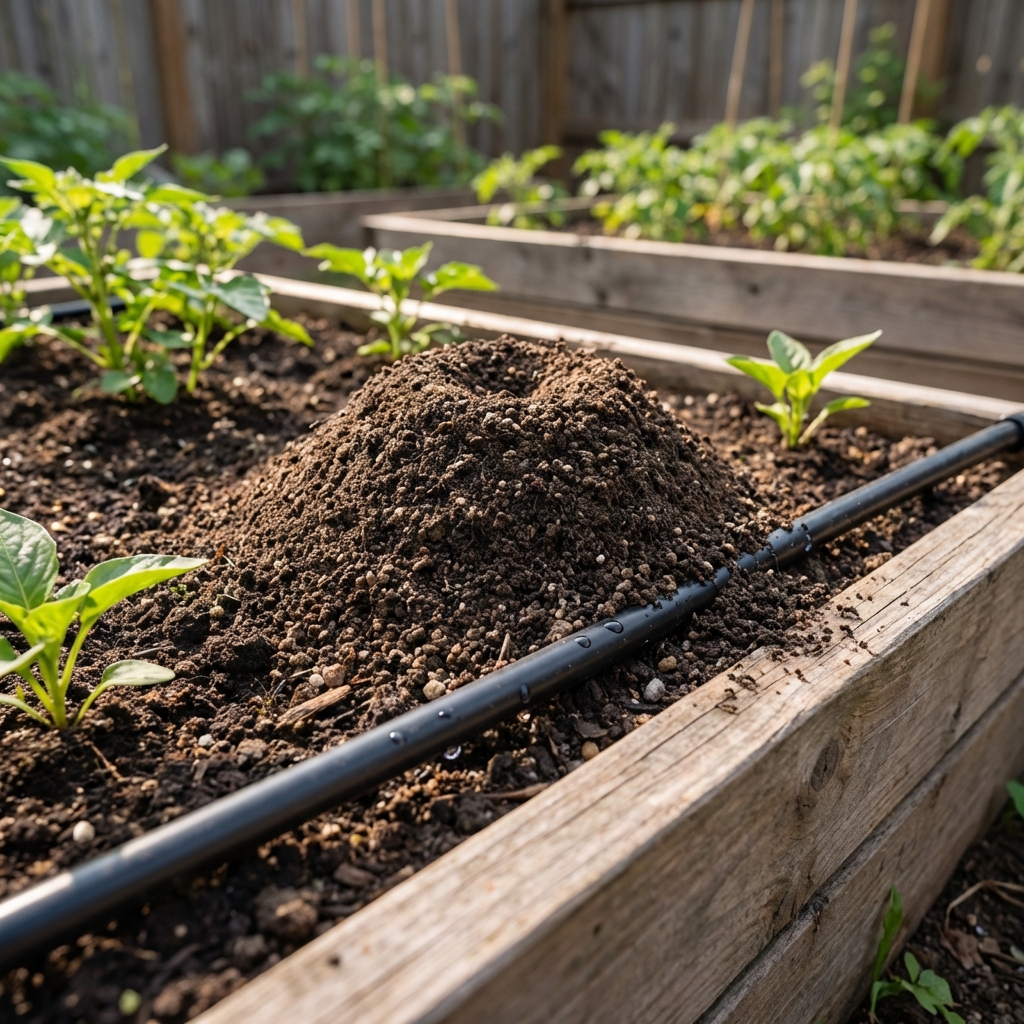
Ants like dry, fluffy soil. If a raised bed is extremely dry, it is basically an ant invitation.
- Water deeply and consistently. This alone often makes the bed less attractive.
- Disturb the nest area with a trowel and re-level the soil.
- Use DE only in dry zones and avoid dusting directly on blooms where pollinators land.
What to avoid
- Sprinkling random powders everywhere: thick layers of DE or cinnamon can make a mess and rarely solves the colony problem by itself.
- Relying on vinegar alone: it can break trails, but ants can reroute quickly.
- Using strong essential oils around pets: natural does not automatically mean safe.
- Spraying visible ants and skipping bait: you kill scouts, but the colony keeps sending more.
When to call a pro
If you suspect carpenter ants (larger ants, often near damp wood), see ants coming from inside walls, or you have repeated indoor activity that ignores multiple bait attempts, it is worth getting an inspection. Natural methods can still be part of your plan, but hidden moisture and structural nesting sites sometimes need professional tools and diagnosis.
Quick plan you can follow today
- Step 1: Identify where the trail starts and where it ends.
- Step 2: Put out 2 to 4 covered bait stations along the route (sweet first, protein if ignored).
- Step 3: Use soapy water to wipe up the ants you see away from the bait route. Do not erase the active trail that leads to your bait stations yet.
- Step 4: After activity drops, clean and seal entry points, then store foods airtight.
- Step 5: In the garden, manage aphids and reduce dry nesting spots.
Do those five steps and you will usually go from daily trails to “where did they go?” within about a week, without turning your home into a chemical zone.

Jose Brito
I’m Jose Britto, the writer behind The Country Store Farm Website. I share practical, down-to-earth gardening advice for home growers—whether you’re starting your first raised bed, troubleshooting pests, improving soil, or figuring out what to plant next. My focus is simple: clear tips you can actually use, realistic expectations, and methods that work in real backyards (not just in perfect conditions). If you like straightforward guidance and learning as you go, you’re in the right place.