Mushrooms popping up in the lawn can feel sudden, but they rarely mean your turf is doomed. In most cases, mushrooms are simply the fruiting bodies of fungi already living in the soil, doing what fungi do best: breaking down old roots, wood, and thatch.
The good news is you can remove the mushrooms you see and make your yard less inviting for the next flush. Below is the approach I use for home lawns: simple steps first, then targeted fixes that improve drainage and reduce excess organic matter.
One more reassuring note: many lawn mushrooms vanish on their own once the weather turns drier. If you are seeing them repeatedly, that is your cue to adjust moisture and cleanup habits.

First, are lawn mushrooms dangerous?
Some mushrooms are harmless, some can cause stomach upset, and a few can be seriously toxic if eaten. The problem is you cannot reliably tell which is which at a glance.
- Kids and pets: Treat all lawn mushrooms as potentially poisonous. Remove them promptly and supervise outdoor time during wet spells. Pets can be poisoned by chewing even small amounts.
- Touching: Touching most mushrooms is not typically dangerous, but wear gloves anyway. Avoid touching your eyes or mouth, and wash hands afterward. The real risk is ingestion.
- Allergies: If anyone in your home has mold or mushroom allergies, consider a mask when raking, bagging mushrooms, or dealing with heavy spore release.
Why mushrooms show up in lawns
Mushrooms appear when conditions are right for the fungus underground to reproduce. That usually means a combination of moisture, mild temperatures, and a food source. Flushes are most common during rainy stretches in spring and fall, but they can pop up any time conditions stay damp.
- Decaying organic matter: Old tree roots, buried lumber, stumps, construction debris, or heavy thatch can feed fungi for years.
- Excess moisture: Overwatering, poor drainage, compacted soil, or low spots that stay wet.
- Shade and humidity: Dense tree cover or areas that dry slowly.
- Fresh mulch, compost, or new soil: Spores and fungal networks often hitchhike in organic materials. If mushrooms showed up right after new sod, topsoil, or compost, it may fade as that material finishes breaking down.
Interestingly, mushrooms can be a sign your soil biology is active. But if they are frequent or widespread, they are also a sign something is staying too wet or there is a lot of decay below the surface.
Quick removal (what to do today)
If you want them gone fast, focus on removing the fruiting bodies before curious kids or pets find them. Picking them will not “sterilize” the soil, since spores are already common outdoors, but it does help with safety and appearance.
1) Pick and bag them
- Put on gloves.
- Gently twist and pull mushrooms from the base, or use a trowel to lift them out with a small plug of soil.
- Bag them and place them in the trash. Avoid tossing them into your compost if you are trying to reduce repeat flushes. Even hot composting is not a reliable way to prevent future mushrooms in the lawn.
2) Mow only if you can bag clippings
Mowing over mushrooms can spread pieces around. If you do mow, use a bagger and empty it into the trash. If you cannot bag, pick mushrooms first. After mowing, scrape or rinse the mower deck so you are not tracking fragments to other areas.
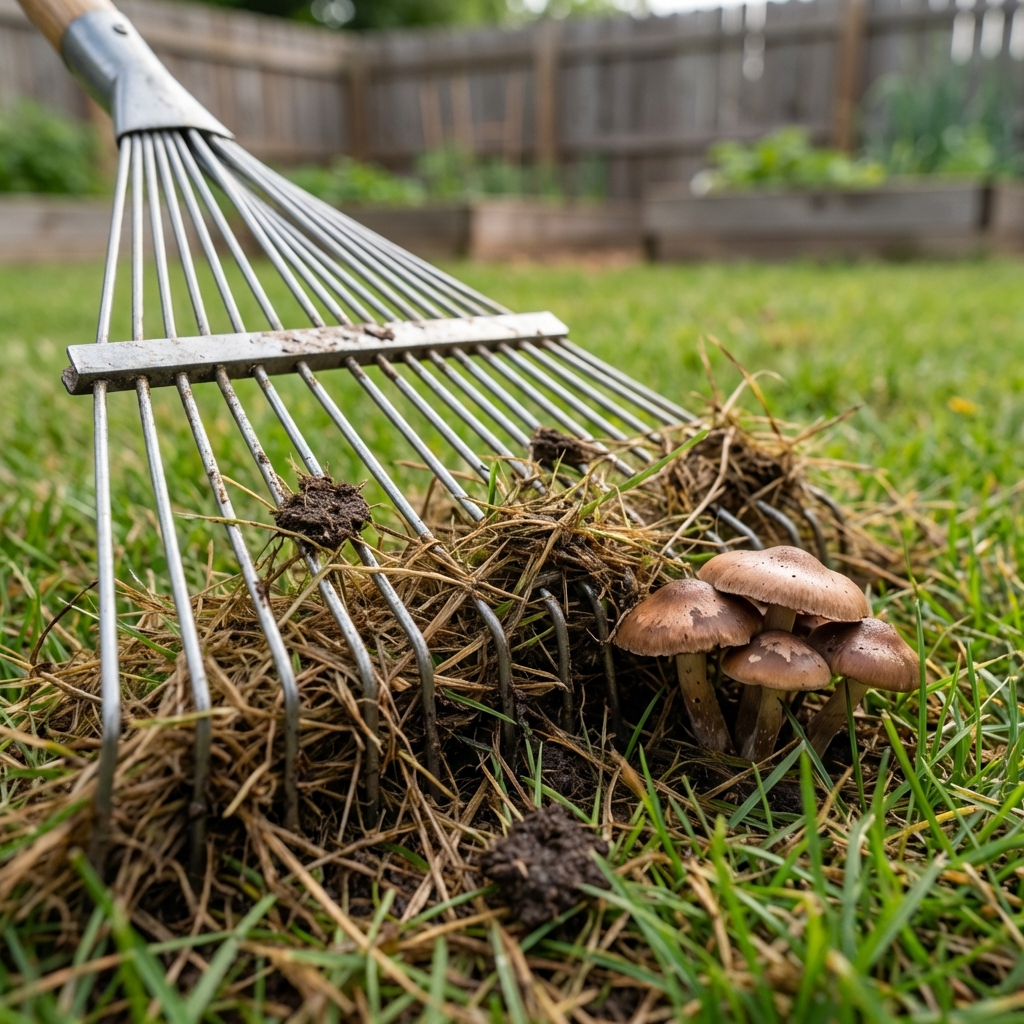
3) Rake the area lightly
After removal, lightly rake to break up remaining bits and help the surface dry. Do not scalp the lawn.
Stop mushrooms from coming back
Removing mushrooms is cosmetic. Preventing them is about changing the conditions that allow them to keep fruiting. You will not eliminate fungi from soil entirely, and you do not need to. The goal is fewer mushrooms and healthier turf.
Fix watering habits
- Water early: Morning watering helps grass dry out during the day.
- Water deeply, less often: Frequent light watering keeps the surface damp, which mushrooms love. Aim for fewer sessions that wet the root zone, then let the top dry.
- Check irrigation coverage: Overspray onto shady areas and fence lines often creates mushroom hot spots.
Improve drainage and reduce compaction
If water sits for hours after rain, mushrooms will keep showing up. Compacted clay soils are especially prone.
- Aerate: Core aeration creates channels for water and air to move. Fall is ideal for cool-season lawns, late spring to early summer for warm-season lawns.
- Level low spots: Topdress with soil to smooth shallow depressions that collect water.
- Redirect downspouts: Make sure roof runoff is not dumping into a lawn corner.
Dethatch if the lawn holds moisture
Thatch that is about 1/2 inch or more can hold moisture at the surface and feed fungal activity. To check, cut a small wedge of turf and measure the spongy layer between grass and soil.
- Use a dethatching rake for small lawns.
- For bigger areas, rent a power dethatcher, but follow with proper watering and fertilizing so the lawn recovers.
Look for buried wood
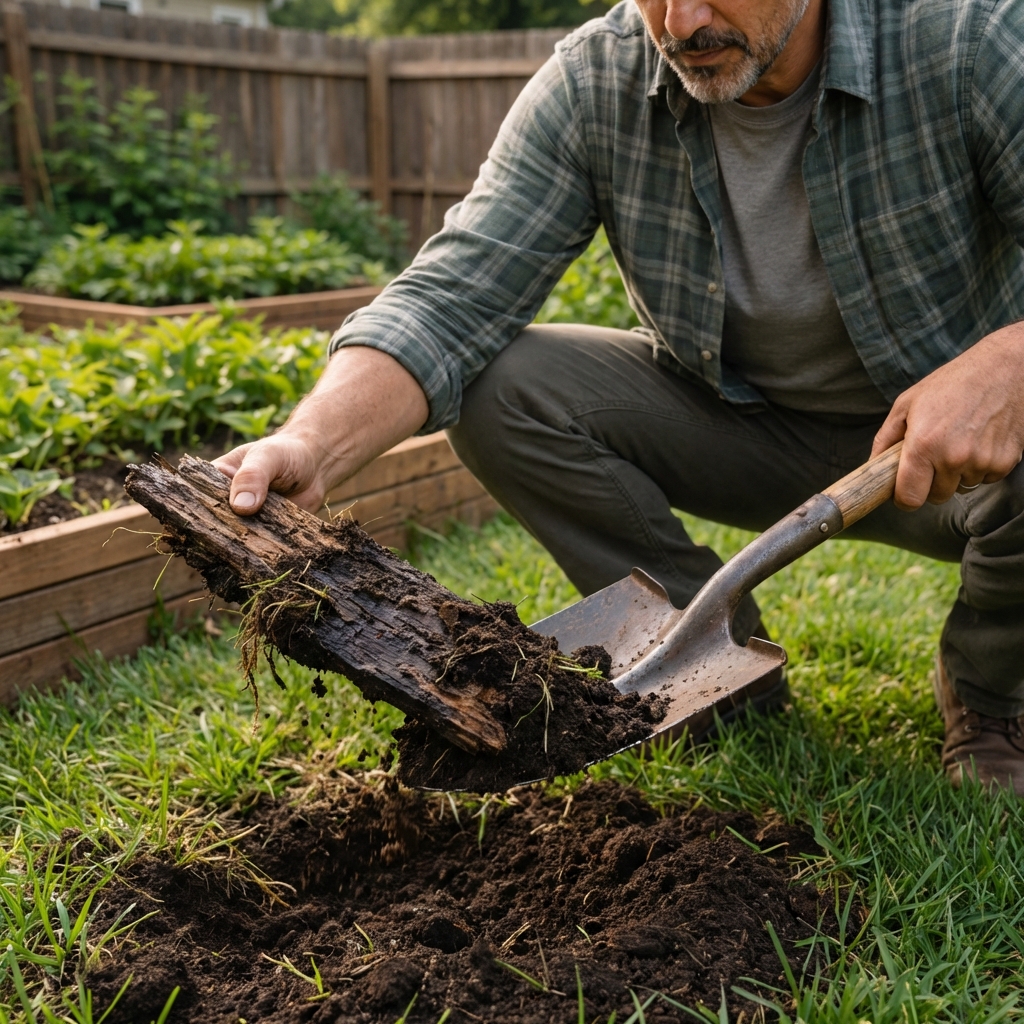
If mushrooms appear in the same spot repeatedly, especially in a line or patch, there may be old roots, a stump, or buried lumber below.
- Probe with a screwdriver or soil knife to check for buried wood.
- If you find debris near the surface, remove what you can and backfill with soil.
- For large stumps or construction debris deeper down, you may need professional removal or accept that the area may flush mushrooms during wet seasons for a while.
Should you use fungicide?
In most home lawns, fungicides are not the best answer for mushrooms. Here is why:
- They do not remove the food source: If there is decaying wood or thick thatch, mushrooms can return after treatment.
- They are often unnecessary: Mushrooms are usually short-lived and do not directly harm grass.
- They can disrupt beneficial soil life: Broad treatments can affect non-target organisms.
If you are dealing with a confirmed turf disease (not just mushrooms), that is a different situation. For repeated mushroom flushes, moisture management, aeration, and organic matter reduction typically work better than chemicals.
Common patterns you might see
I am not going to pretend you can ID every mushroom from a quick web photo, because you often cannot. But these patterns help you troubleshoot the cause:
- Small clusters after rain: Usually tied to wet soil and surface organic matter.
- Large, individual mushrooms: Often tied to buried wood or old root systems.
- Fairy rings (arcs or circles): Fungal growth expanding outward underground. This can create rings of mushrooms and sometimes greener grass from released nutrients.
If you need an ID for safety reasons, contact a local extension office or a regional mycology group and provide clear photos of the cap, underside, stem, and the surrounding habitat.
Fairy ring: what to do
Fairy rings get attention because they can repeat in the same spot for years. The fungus lives in the soil and expands outward like ripples.
Steps that actually help
- Remove mushrooms: Pick and bag as they appear.
- Aerate and water correctly: Some fairy ring fungi can create hydrophobic soil that repels water. Aeration plus deep watering helps re-wet the area.
- Topdress lightly: A thin layer of compost or quality topsoil after aeration can improve infiltration.
If your fairy ring is causing thinning or brown, stressed turf (often called severe or Type I fairy ring), you may need professional help. Lawn pros may also use wetting agents to help water soak back into the affected soil.
Clean up safely
- Do not: Sprinkle bleach, lime, or household cleaners on the lawn. This can damage turf and soil biology and it rarely solves the underlying issue.
- Do not: Dig up large areas of lawn unless you have confirmed buried wood or debris you can actually remove. You can create a bigger repair project without stopping the fungus.
- Do: Wear gloves, bag mushrooms, and wash hands and tools.
- Do: Keep pets away from mushroom hot spots during wet weeks, and do not let them graze or chew in those areas.
When mushrooms mean a bigger issue
Call in help or dig deeper if you notice any of the following:
- Standing water that lasts more than a day after rainfall
- Large areas of spongy thatch or severe compaction
- Repeated mushrooms plus thinning grass in the same zone
- Mushrooms growing out of a visible stump, exposed roots, or landscape timbers
These point to drainage, grading, or buried-organic-matter issues that sometimes need more than simple maintenance.
Quick checklist
- Pick and bag mushrooms promptly
- Water in the morning and avoid frequent light watering
- Aerate compacted soil
- Dethatch if the lawn holds moisture at the surface
- Investigate repeated spots for buried wood or old roots
- Skip fungicide unless you are treating a confirmed turf disease
FAQ
Will mushrooms kill my grass?
Usually no. Mushrooms feed on decaying organic matter, not living grass. They are more of a symptom of moist conditions than a direct cause of turf loss.
Do I need to remove the mushroom roots?
The main fungal network is in the soil and you cannot realistically remove it without removing the soil. Focus on reducing moisture and excess organic matter. Removing the mushrooms you see helps with safety and appearance.
Are mushrooms a sign I overwater?
Often, yes. They can also show up after rainy periods even with perfect watering. If mushrooms keep returning, review irrigation timing, duration, and drainage in that area.
Can I just rake them up?
You can, but picking and bagging is cleaner and reduces the chance of spreading fragments around. If you rake, collect and discard the debris.

Jose Brito
I’m Jose Britto, the writer behind The Country Store Farm Website. I share practical, down-to-earth gardening advice for home growers—whether you’re starting your first raised bed, troubleshooting pests, improving soil, or figuring out what to plant next. My focus is simple: clear tips you can actually use, realistic expectations, and methods that work in real backyards (not just in perfect conditions). If you like straightforward guidance and learning as you go, you’re in the right place.