Bees are great for gardens, but nobody wants a crowd of them around the front door, kids’ play area, or outdoor table. The goal is not to kill bees. It is to make your space less interesting so they move along to better forage.
This guide sticks to quick, realistic steps you can use today, plus a few longer-term fixes that help prevent repeat visits.
Quick safety note: Stay calm, wear shoes outside, keep kids and pets back, and do not poke at nests or swarms. If you see concentrated activity at one spot every day, assume there may be a nest nearby and give it space.
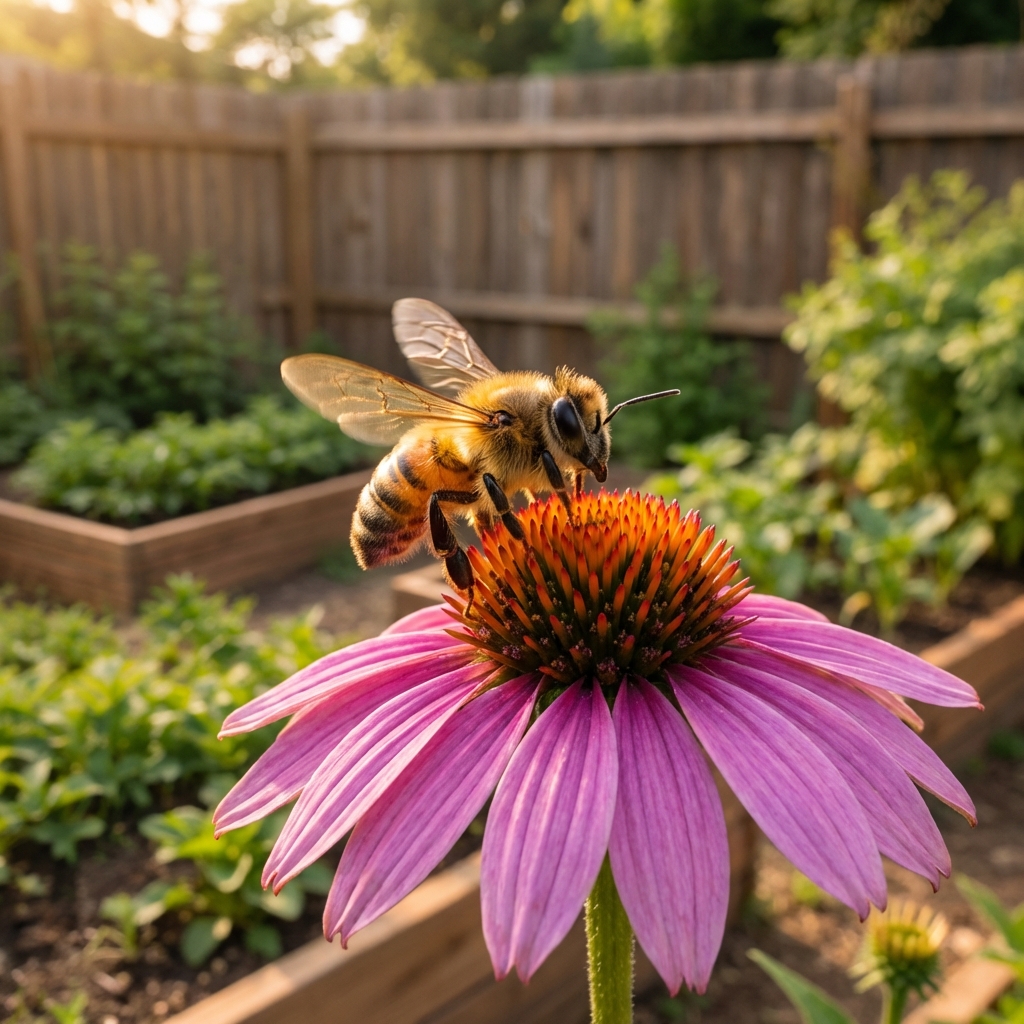
First, know what you are dealing with
Most “bee problems” are actually about location. A few bees visiting flowers is normal. A cluster on a branch, a steady stream into a wall void, or repeated defensive behavior needs a different response.
Also, “aggressive” encounters are often one of two things: a wasp or yellowjacket looking for food, or a bee defending a nest. If you can safely confirm what it is, you will choose the right fix faster.
Common look-alikes
- Honey bees: Golden-brown, usually calm, often seen on flowers. They may swarm in spring when colonies split.
- Bumblebees: Round and fuzzy. Often nest in the ground or tucked in thick grass or compost edges. Generally not aggressive unless the nest is disturbed.
- Carpenter bees: Often mistaken for bumblebees. Similar size, but they have a smooth, shiny black abdomen. They hover around eaves, decks, and railings and drill neat, round holes in bare wood.
- Wasps and yellowjackets: Sleeker bodies, brighter yellow, more likely to investigate food and trash. They are not bees and are managed differently.
If you are not sure, watch their behavior from a safe distance. Bees are usually more focused on flowers and water. Yellowjackets and some wasps are more likely to show up around open drinks, meat, and trash, especially later in the season.
Quick wins: remove what is attracting them
This is the fastest way to reduce activity, and it costs almost nothing.
1) Cut off sugary smells
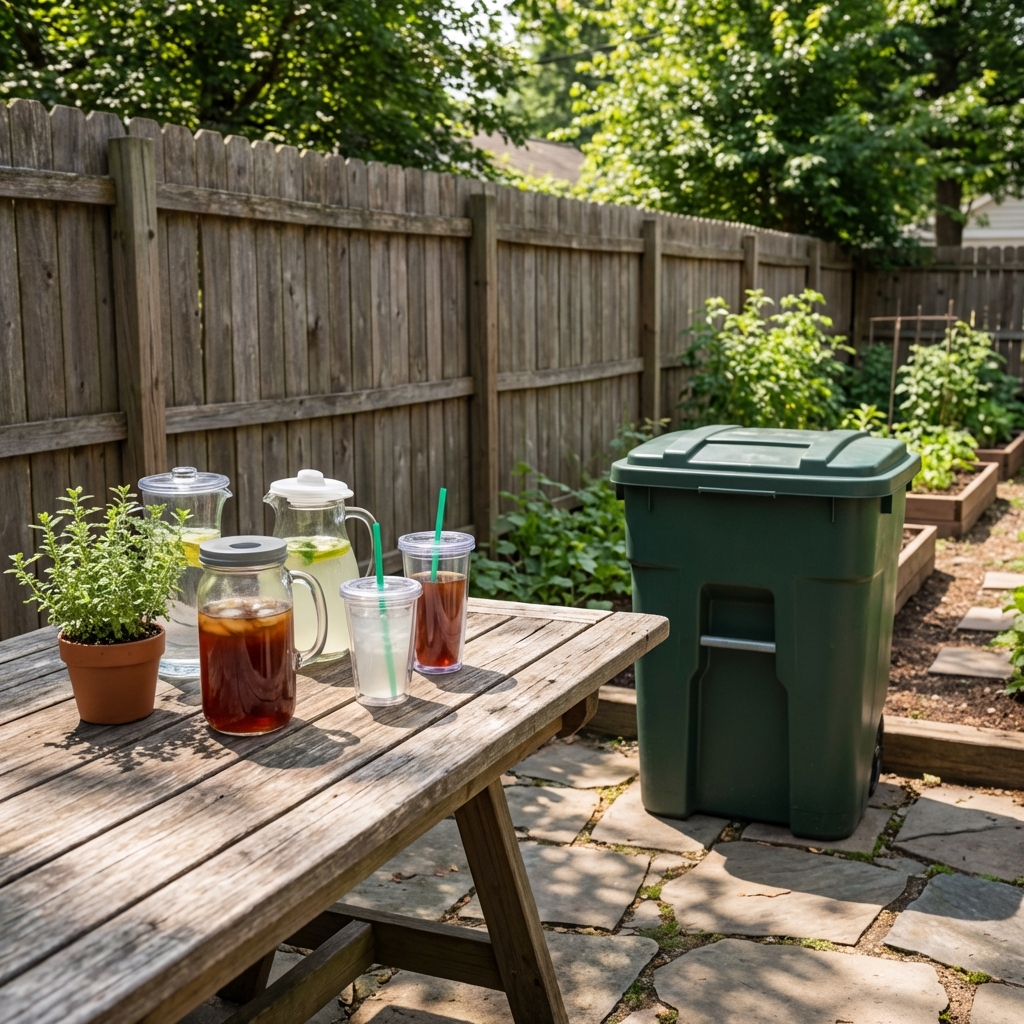
- Cover drinks outdoors. Use cups with lids and straws.
- Rinse recyclables before tossing them in an outdoor bin.
- Keep trash cans closed and wipe sticky residue off the lid.
- Pick up fallen fruit under trees. Overripe or fermenting fruit is a magnet.
2) Make your water source less convenient
Bees collect water, especially in hot weather. If they keep showing up at your hose bib (outdoor spigot), birdbath, or pet bowl, make that spot less convenient.
- Dump standing water daily for a week and see if activity drops.
- Fix slow drips at spigots and hoses.
- If you want them to go elsewhere, set a shallow water dish far away from your patio with pebbles for landing.
Simple repellents that discourage bees
Repelling bees is mostly about scent and surface cues. The best approach is targeted use around high-traffic areas, not blasting the whole yard.
These options are popular with homeowners, but results vary by species and situation. Treat them as “may help,” not a guaranteed fix.
Use scents bees may avoid
- Peppermint: Add a few drops of peppermint essential oil to water in a spray bottle and lightly mist door frames, railings, and furniture legs.
- Citronella: Helpful around seating areas. Think “patio perimeter,” not “spray flowers.”
- Clove: Strong scent some insects avoid. Use lightly and only on hard surfaces.
Use with care: Essential oils can irritate skin, and they can be unsafe for pets if licked or heavily inhaled. Use a light application on non-porous surfaces, let it dry, and keep sprays away from kids’ hands, pet bowls, and anything that will be touched often. Never spray oil mixes directly on blossoms or active foraging areas.
Try a mild vinegar wipe for problem spots
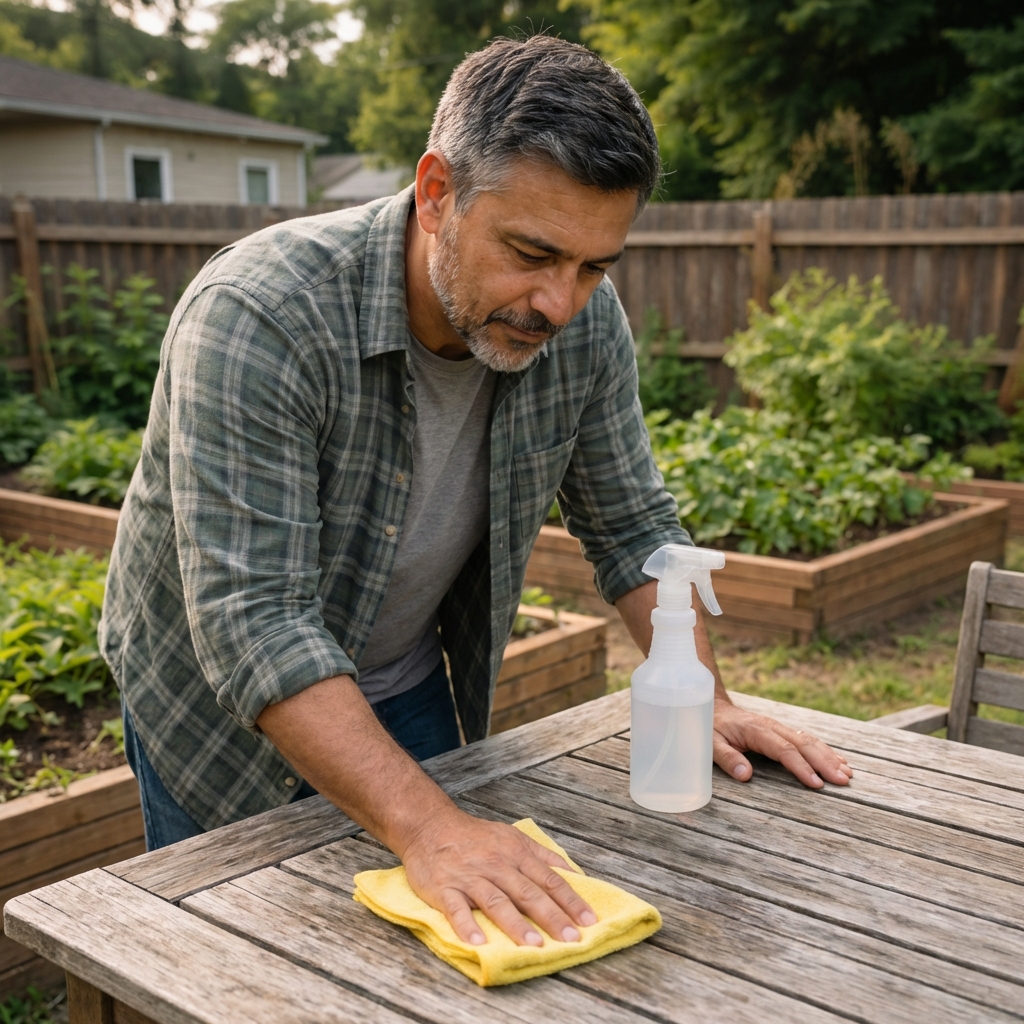
White vinegar is most useful for removing food residue and odors that keep insects checking the same place.
- Wipe down outdoor tables after meals.
- Clean sticky deck rails or garbage can lids.
- Avoid using vinegar on natural stone that is sensitive to acid.
Keep bees away from doors, decks, and play areas
These are the areas where people usually get nervous. Your best tools are exclusion and smart landscaping.
Seal easy nesting gaps
- Repair torn window screens.
- Seal cracks around siding, soffits, and utility penetrations with appropriate caulk.
- Add door sweeps to reduce openings at thresholds.
If you suspect bees are entering a wall void, do not seal the entrance while they are active. That can trap them inside and create a bigger problem. That is a professional call.
Move “bee plants” away from traffic
You do not need to remove flowers. Just relocate or re-balance them.
- Keep heavily visited blooms like lavender, borage, salvia, and mint farther from doorways and seating areas.
- Use less-attractive border plants near patios, like ornamental grasses or foliage plants.
- Deadhead blooms near walkways so fewer flowers are open at once.
If it is carpenter bees
Carpenter bees are usually not aggressive, but the wood damage adds up over time.
- Paint, stain, or seal exposed wood. They prefer bare, weathered surfaces.
- If you see round holes, wait until activity is low (often evening) and consider plugging holes after you are sure they are inactive. If in doubt, call a pro.
- If damage is extensive or you see many active holes, get professional help to avoid trapping bees in a structure or worsening the problem.
Bees getting indoors
One bee inside is usually a simple wrong turn. Several bees over multiple days can suggest a nearby nest, especially if they appear near one window or vent.
- Open a window or door nearby and turn off indoor lights to help it find the exit.
- Do not spray insect killer indoors. It can create a mess and does not address the source.
- If you keep seeing bees in the same room, check for a possible entry point and consider a professional inspection.
What not to do
Some common tactics backfire or create safety risks.
- Do not swat: Swatting makes you look like a threat and can trigger defensive behavior.
- Do not spray random insect killer: It can harm beneficial insects, contaminate edible plants, and may not solve the real issue.
- Do not plug a nest entrance: Especially in structures. Trapped bees can find a way into living spaces.
- Do not use strong fragrances on yourself: Sweet perfumes and scented hair products can attract curious visitors.
If bees are swarming
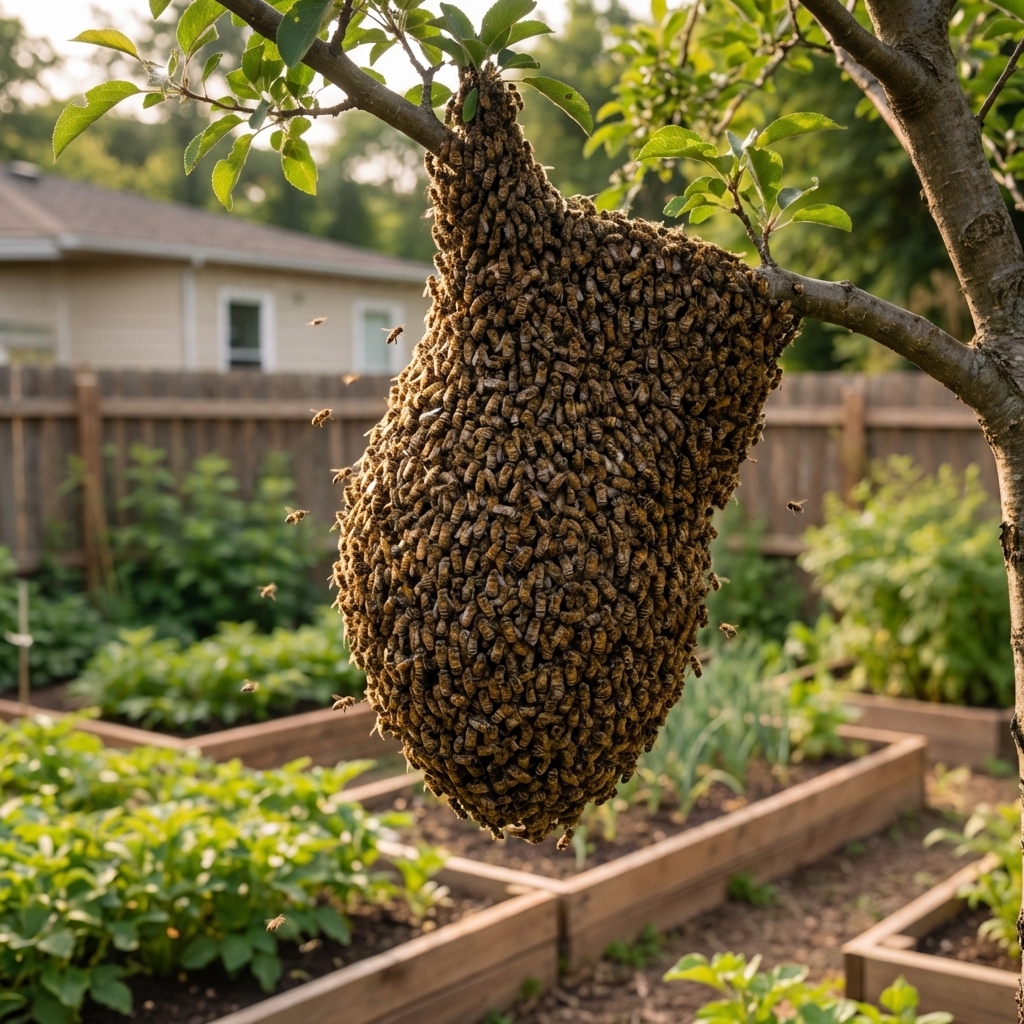
A swarm looks dramatic, but it is often temporary. Honey bees swarm when they are relocating. In many cases, they rest for a few hours to a couple of days while scout bees look for a new home.
What to do
- Keep people and pets away.
- Avoid spraying them with water or chemicals. Spraying can agitate them or scatter the swarm.
- Call a local beekeeper or a licensed pest professional who offers live removal.
Many beekeepers will collect swarms because it helps them and saves the bees.
If bees are nesting on your property
Ground nests, wall void nests, and hollow tree nests are different situations.
Ground-nesting bees
Many native bees nest in the ground and are solitary and low-aggression. If the nest is in a low-traffic area, the easiest option is to mark it and leave it alone while they finish their cycle. For many species, that is often a few weeks to a couple of months. If you suspect it is a social nest (for example, some bumblebees), activity can last longer.
- Rope off the area temporarily.
- Raise mowing height and avoid vibration right over the nest.
- Keep kids and pets from running through that patch of lawn.
Nests in structures
If bees are entering a hole in siding, brick, soffit, or around a vent, get professional help. Removing the colony without removing comb can lead to lingering odors, pests, and stains.
Quick checklist: repel bees in 10 minutes
- Bring in open soda, juice, and fruit.
- Wipe the table and trash can lid.
- Move pet water bowls away from the patio.
- Mist door frames and railings with a light peppermint water spray (optional).
- Give them a calm escape route instead of swatting.
If you do these steps consistently for a few days, you will usually notice fewer “scout” bees checking the same spots.
When to call a pro
Get expert help if:
- Someone in the home has a known sting allergy.
- Bees are entering a wall, attic, chimney, or other structure.
- You see a large swarm and need it removed safely.
- Activity is defensive, concentrated in one spot every day, or centered around a visible entrance hole.
- Carpenter bee damage is widespread.
Ask specifically about live removal or relocation if you suspect honey bees. It is often possible and it is better for your local pollinators.

Jose Brito
I’m Jose Britto, the writer behind The Country Store Farm Website. I share practical, down-to-earth gardening advice for home growers—whether you’re starting your first raised bed, troubleshooting pests, improving soil, or figuring out what to plant next. My focus is simple: clear tips you can actually use, realistic expectations, and methods that work in real backyards (not just in perfect conditions). If you like straightforward guidance and learning as you go, you’re in the right place.