Avocados feel like they go from “hard as a rock” to “brown and mushy” in about five minutes. It is not actually that fast, but it can definitely feel that way. The good news is you can control most of it with a few simple, realistic habits. The trick is storing them based on where they are right now: unripe, ripe, or cut.
This guide walks you through exactly what to do at each stage, plus the simple solutions that actually help, and the common mistakes that make avocados spoil faster.
Quick note on timing: The time ranges below are estimates. Variety (Hass vs. green-skins), starting firmness, and your kitchen or fridge temperature all make a difference.
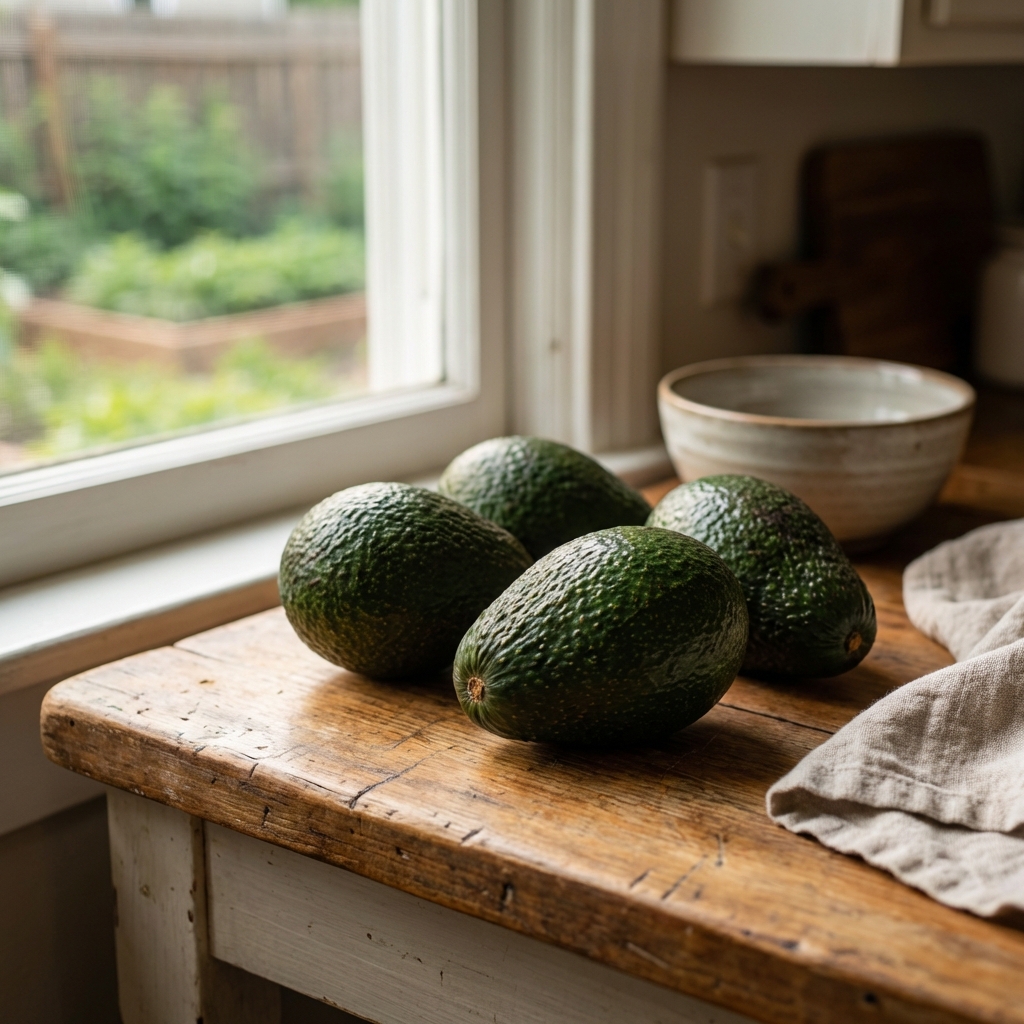
Start here: how ripe is your avocado?
Before you store anything, take 10 seconds to check ripeness. That single step prevents most waste.
- Unripe: very firm, no give when you press gently with your palm.
- Ripe: yields slightly to gentle palm pressure, not squishy.
- Overripe: very soft, dents easily, may feel hollow or “sloshy.”
Tip: Avoid poking with fingertips. It bruises the flesh and those bruises turn brown first.
Optional check: If the avocado still has the little stem “nub,” flick it off. Green underneath usually means it is in a good window. Brown underneath often means it is overripe. This is not perfect, but it can help you avoid surprises.
How to store unripe avocados (ripen them)
Best option: room temperature on the counter
For hard avocados, the simplest method is the best. Leave them at room temperature, out of direct sun. Most will ripen in 2 to 5 days depending on variety and starting firmness.
- Keep them dry.
- Give them breathing room. Piling them tightly can lead to bruising.
- Check daily once they start to soften.
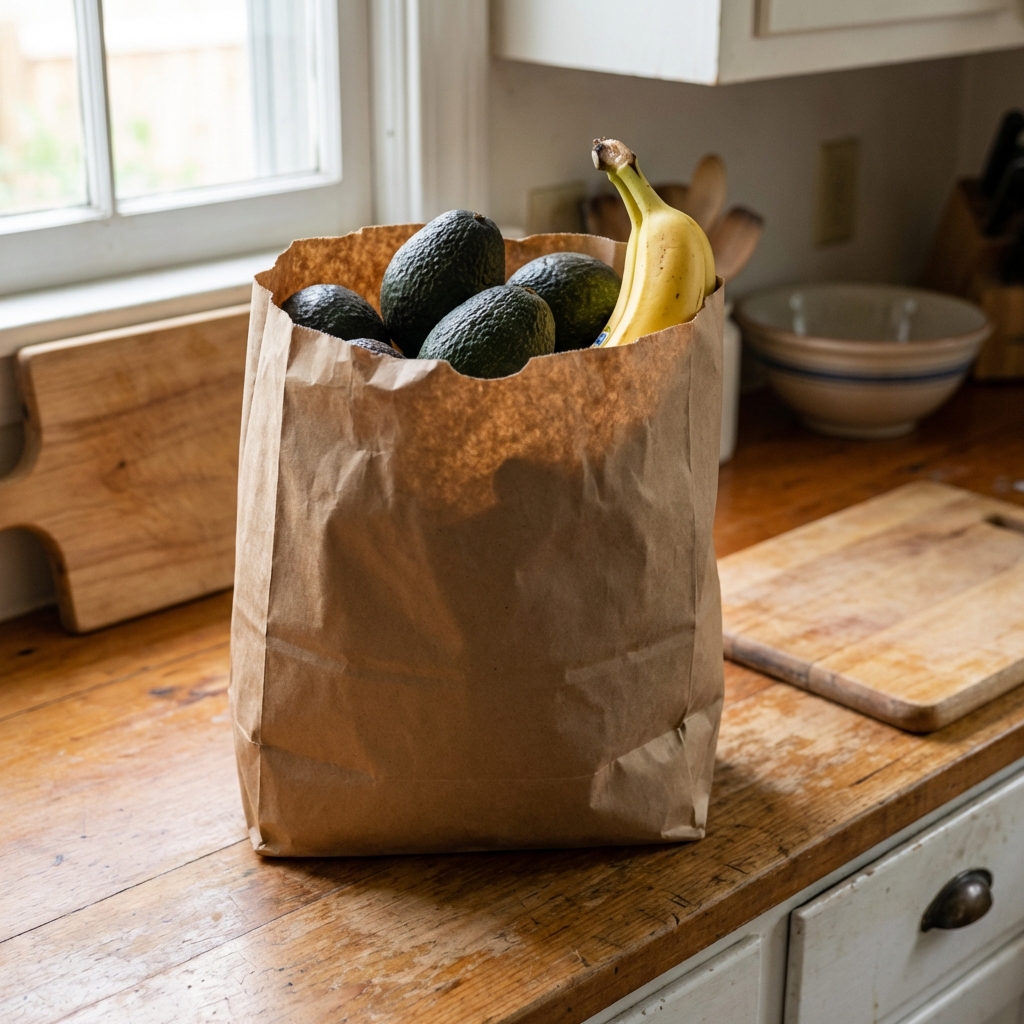
To ripen faster: paper bag method
Avocados release ethylene gas as they ripen. Trapping some of that ethylene speeds the process.
- Put the avocados in a paper bag.
- Add one banana or one apple to boost ethylene.
- Fold the bag closed and leave it on the counter.
- Check in 12 to 24 hours, then daily.
Plastic bag note: Avoid sealing avocados in an airtight plastic bag. Condensation can build up and speed spoilage. If you do use plastic, leave it slightly open and keep it dry (a paper towel can help if moisture forms).
What not to do: oven or microwave
Heating can soften an avocado, but it does not truly ripen it. You often get a weird texture and flat flavor. If you need good guacamole, skip the heat hacks and use the paper bag method instead.
How to store ripe avocados (slow them down)
Best option: refrigerate whole avocados
Once an avocado is ripe, the fridge is your friend. Cold temperatures slow the ripening process and help delay browning.
- Place ripe whole avocados in the refrigerator.
- They usually keep well for 2 to 5 days, sometimes up to a week if they were just-ripe.
Where in the fridge: The crisper drawer is a good spot because temperature swings are smaller. Keep them away from strong-smelling foods if you can.
Simple tip: keep them away from ethylene producers
If you store ripe avocados on the counter, keep them away from bananas, apples, pears, and tomatoes. Those fruits push ripening along faster.
How to store cut avocados (keep them green longer)
Cut avocados brown because oxygen triggers oxidation (also called enzymatic browning). Your goal is to reduce air contact and create a mild barrier on the surface.
Method 1: lemon or lime juice + airtight container
Citrus juice is a simple option because its acidity slows browning.
- Brush or drizzle lemon or lime juice over the cut surface.
- Press plastic wrap directly onto the flesh or use a snug airtight container.
- Refrigerate and use within 1 to 2 days for best quality.
Flavor note: Use a light hand. Too much juice can make it taste sharp.
Method 2: store with the pit (helpful, but not magic)
Leaving the pit in slightly reduces exposed surface area. It helps most when combined with an airtight seal.
- Keep the pit in the half that still has it.
- Add citrus juice, then wrap tightly or seal in a container.
Method 3: cut-side down in a tight container
This is a low-effort trick that works by limiting how much air hits the cut surface.
- Place the avocado half cut-side down in a small container so there is minimal empty space.
- Seal and refrigerate. Use within 1 day for best color and texture.
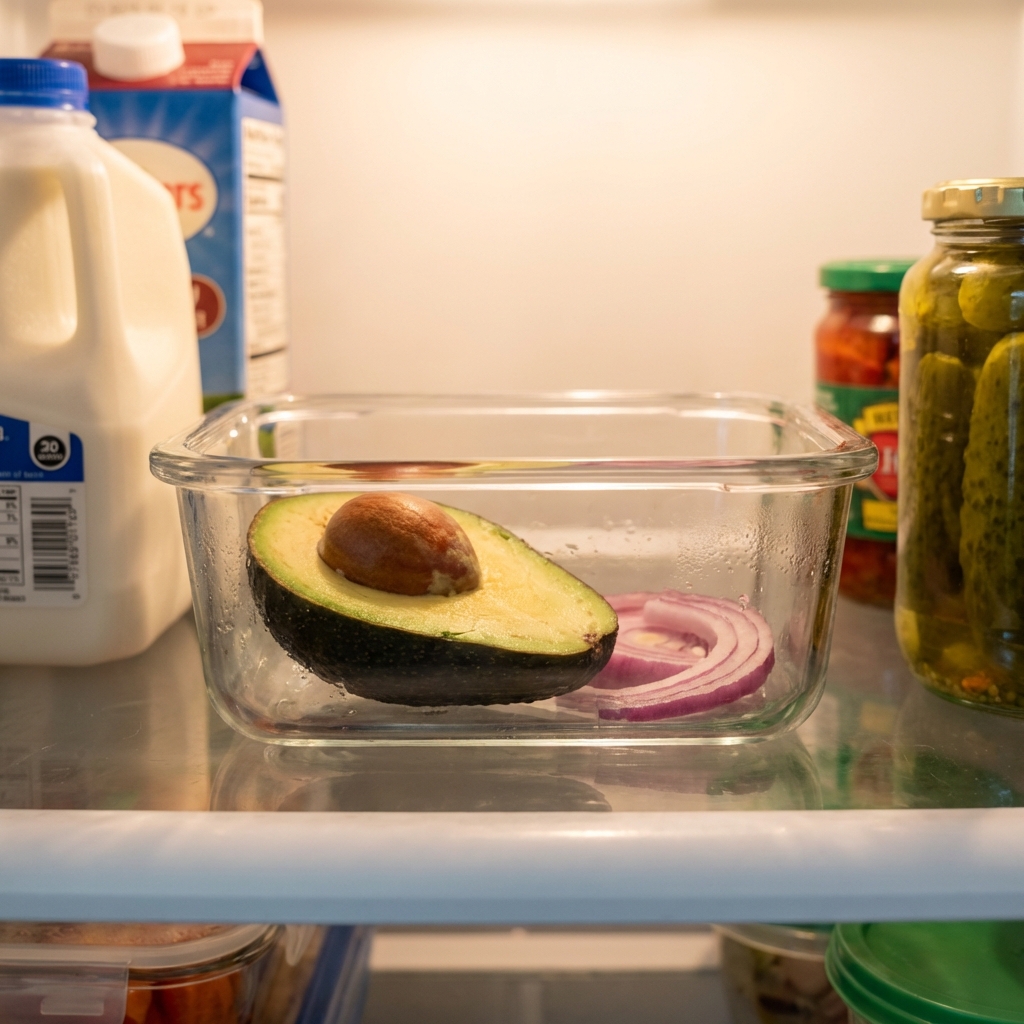
Method 4: onion in the container (mixed results)
Some people swear by storing avocado with onion. The idea is that onion’s sulfur compounds may help slow browning. Results vary, and onion can transfer its smell.
- Put a few thick slices of red or white onion in the bottom of a container.
- Place the avocado half on a rack or small plate so it is not sitting in onion juice.
- Seal and refrigerate.
Heads up: If you are sensitive to onion smell, skip this method and use citrus instead.
Method 5: thin layer of olive oil (for savory uses)
A light coating of oil limits oxygen contact. This is a good choice when you plan to use the avocado in sandwiches, salads, or guacamole.
- Brush a very thin layer of olive oil on the cut surface.
- Seal airtight and refrigerate.
- Use within 1 day for best texture.
Storing mashed avocado or guacamole
Mashed avocado has more surface area, so it browns faster. The goal is an airtight seal with as little air as possible.
Best method: press and seal
- Put guacamole in a container and press it down to remove air pockets.
- Lay plastic wrap directly on the surface so it touches the guacamole.
- Put the lid on and refrigerate.
Add lime juice to taste, but do not rely on lime alone. The physical barrier is what really helps.
About the “water layer” trick
Some people pour a thin layer of water over guacamole to block oxygen, then pour it off and stir before serving. It can work, but it can also dilute flavor if you do not drain well. If you try it, use just enough water to cover the surface and keep the container cold.
Freezing avocados (best for long storage)
If you have more ripe avocados than you can use, freezing is the most reliable way to stop the clock. Frozen avocado is best for smoothies, spreads, dressings, and guacamole, not for pretty slices.
Freeze avocado halves or chunks
- Peel and remove the pit.
- Brush with lemon or lime juice.
- Freeze on a tray until firm, then transfer to a freezer bag.
Freeze mashed avocado
- Mash with a little citrus juice.
- Pack into a freezer bag and flatten.
- Press out air and seal.
Storage time: For best flavor, use within 3 to 6 months.
Thawing tip: Thaw in the refrigerator, then drain off any extra liquid and stir. The texture will be softer than fresh, which is why it works best blended or mashed.
Common storage mistakes that spoil avocados faster
- Refrigerating unripe avocados: The cold mostly delays ripening and can lead to uneven texture. If you chill them, they usually will resume ripening when returned to room temperature, but it can take longer. Ripen first, then chill.
- Leaving ripe avocados on the counter: They can go from ripe to overripe in a day, especially in warm kitchens.
- Trapping moisture while ripening: Condensation speeds spoilage. Paper bags breathe better than airtight plastic.
- Storing cut avocado with lots of air space: Air is the enemy. Use wrap pressed to the surface or a snug container.
Food safety and quality notes
- A little surface browning is normal. You can usually scrape it off and the avocado underneath is still green.
- If you see mold, notice a strong off smell, or the flesh is widely gray or stringy, it is best to discard it.
Quick cheat sheet
- Hard avocado: counter, or paper bag + banana to speed up.
- Perfectly ripe avocado: refrigerate whole to buy a few extra days.
- Cut avocado: citrus + airtight seal, or cut-side down in a tight container.
- Too many ripe avocados: freeze with citrus for best results.
If you want one habit that saves the most avocados: check ripeness daily and move ripe ones to the fridge immediately. That simple switch keeps them in the “ready to eat” window much longer.

Jose Brito
I’m Jose Britto, the writer behind The Country Store Farm Website. I share practical, down-to-earth gardening advice for home growers—whether you’re starting your first raised bed, troubleshooting pests, improving soil, or figuring out what to plant next. My focus is simple: clear tips you can actually use, realistic expectations, and methods that work in real backyards (not just in perfect conditions). If you like straightforward guidance and learning as you go, you’re in the right place.