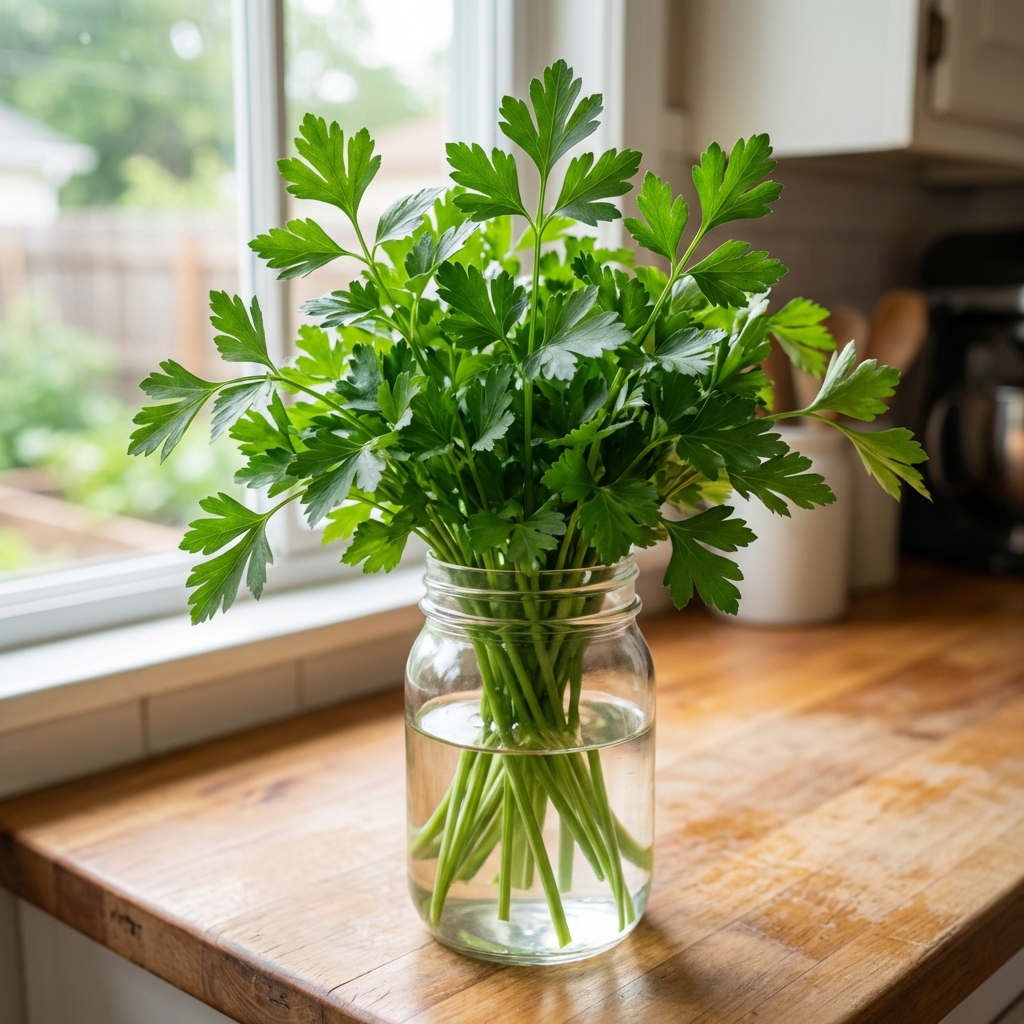
Parsley has a habit of going from perky to sad fast, usually because it is either too wet, too dry, or stuck in a bag with no airflow. The good news is you do not need fancy containers. You just need to match the storage method to how you plan to use it.
Below are my go-to, no-drama ways to store parsley, plus quick fixes for common problems like slimy stems and wilted leaves.
Before you store it: quick prep
Most parsley storage failures start with trapped moisture or bruised leaves. Take 2 minutes to set yourself up for success.
- Sort it: Remove yellow leaves, damaged sprigs, and any slimy stems right away.
- Decide whether to wash now: If parsley is gritty, wash it in cold water, swish it around to loosen sand, then lift it out and give it a final rinse. If it is already clean, you can store it unwashed and rinse right before using.
- If you wash it, dry it well: Water left on leaves is the fastest path to rot. Spin in a salad spinner or pat dry with a towel.
- Trim the stems: Cut 1/4 to 1/2 inch (about 0.5 to 1 cm) off the bottom. Fresh cuts help the stems absorb water.
Rule of thumb: Crisp parsley likes a little humidity, but not puddles.
Quick note: Curly and flat-leaf parsley store the same way. Flat-leaf tends to bruise a bit more easily, so handle it gently.
Best fridge method: the jar bouquet (my favorite)
If you want parsley to last the longest in the refrigerator, treat it like flowers.
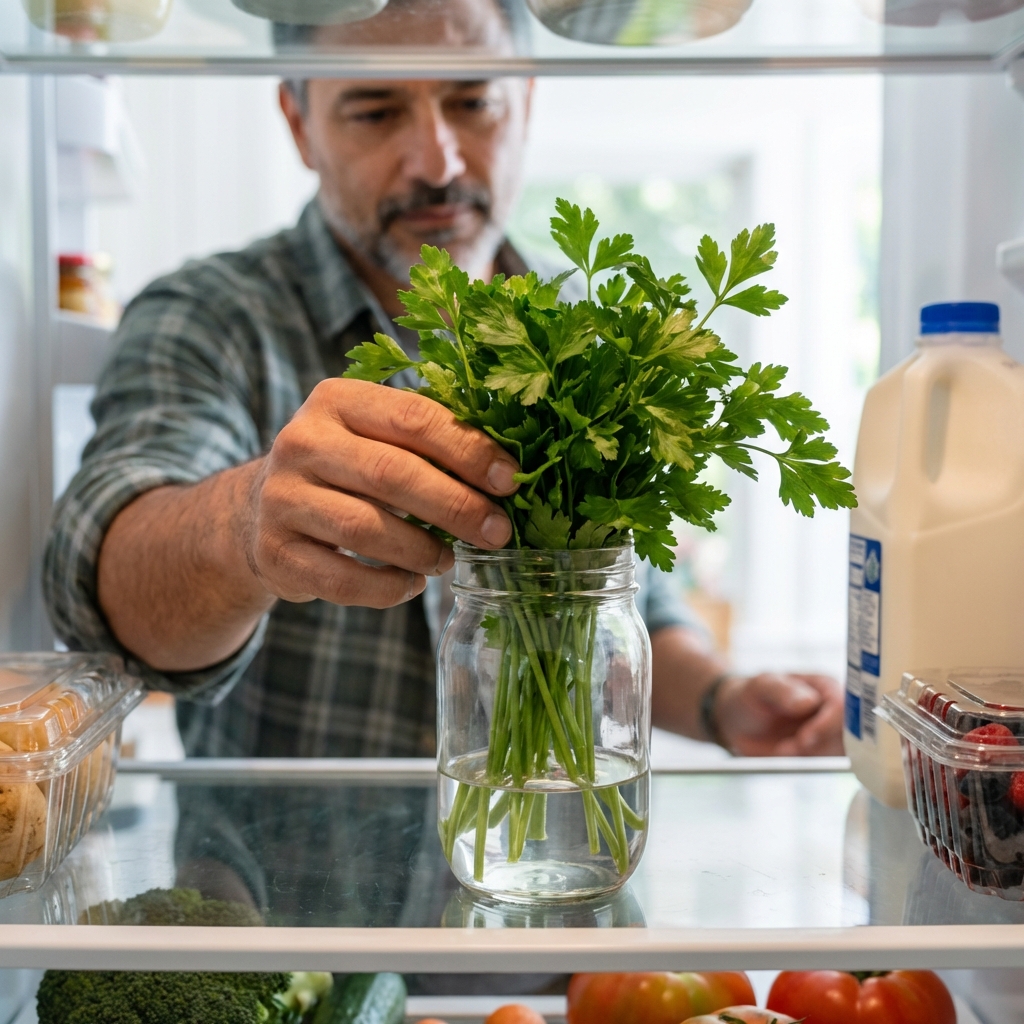
Steps
- Trim the stem ends.
- Put the bunch in a jar with about 1 inch (2 to 3 cm) of water.
- Loosely cover the top with a plastic bag (or a reusable produce bag). Do not seal it tight.
- Store in the fridge on a front shelf or in the crisper drawer, wherever it will not get crushed. Skip the door since it runs warmer and more temperature-variable.
- Change the water every 2 to 3 days, or sooner if it looks cloudy.
How long it lasts: About 1 to 2 weeks, depending on how fresh the bunch was and how cold your fridge runs.
Why it works: The stems stay hydrated while the bag reduces drying. Loose coverage prevents the swampy, sealed-bag effect.
Fast and simple: the towel-and-bag method
This is the best method when you do not have fridge space for a jar or you have a smaller amount of parsley.
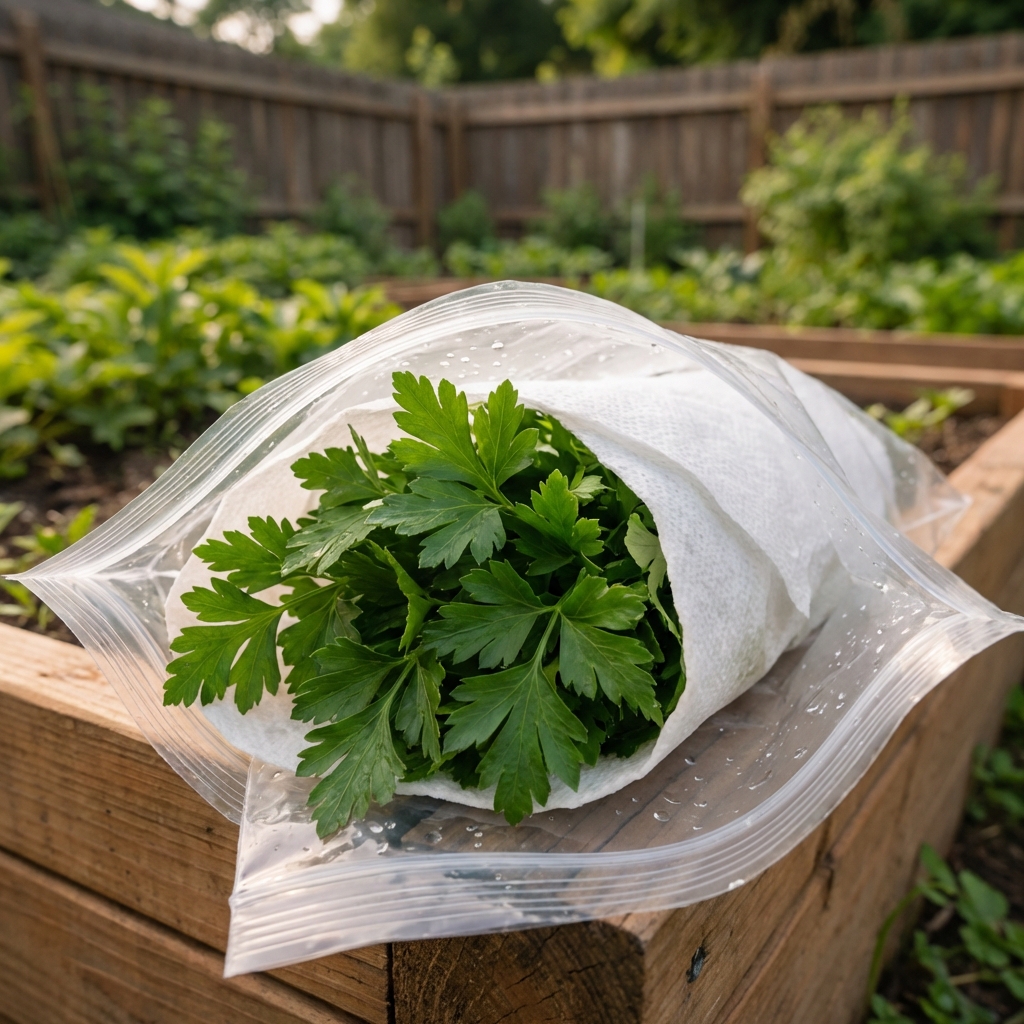
Steps
- If parsley is washed, dry it thoroughly first.
- Wrap the bunch loosely in a dry paper towel or clean kitchen towel.
- Place it in a resealable bag or container.
- Seal most of the way, leaving a small gap for airflow.
How long it lasts: About 5 to 10 days.
Where to put it: The high-humidity crisper drawer is great for this method, as long as the parsley will not get squished.
Tip: If the towel gets damp, swap it out. A damp towel is basically an invitation to rot.
Can you store parsley on the counter?
Yes, sometimes. If your kitchen is cool and you will use the parsley within a day or two, the jar method can work on the counter, just like a bouquet. Keep it out of direct sun and away from heat sources.
Skip countertop storage if: your kitchen runs warm, the bunch is already a little limp, or you will not use it quickly.
Freezing parsley (best for long-term storage)
Frozen parsley will not have the same crisp texture, but the flavor holds up well for soups, sauces, eggs, and roasted veggies. If you regularly waste parsley, freezing is the fix.
Option 1: Freeze chopped parsley on a tray
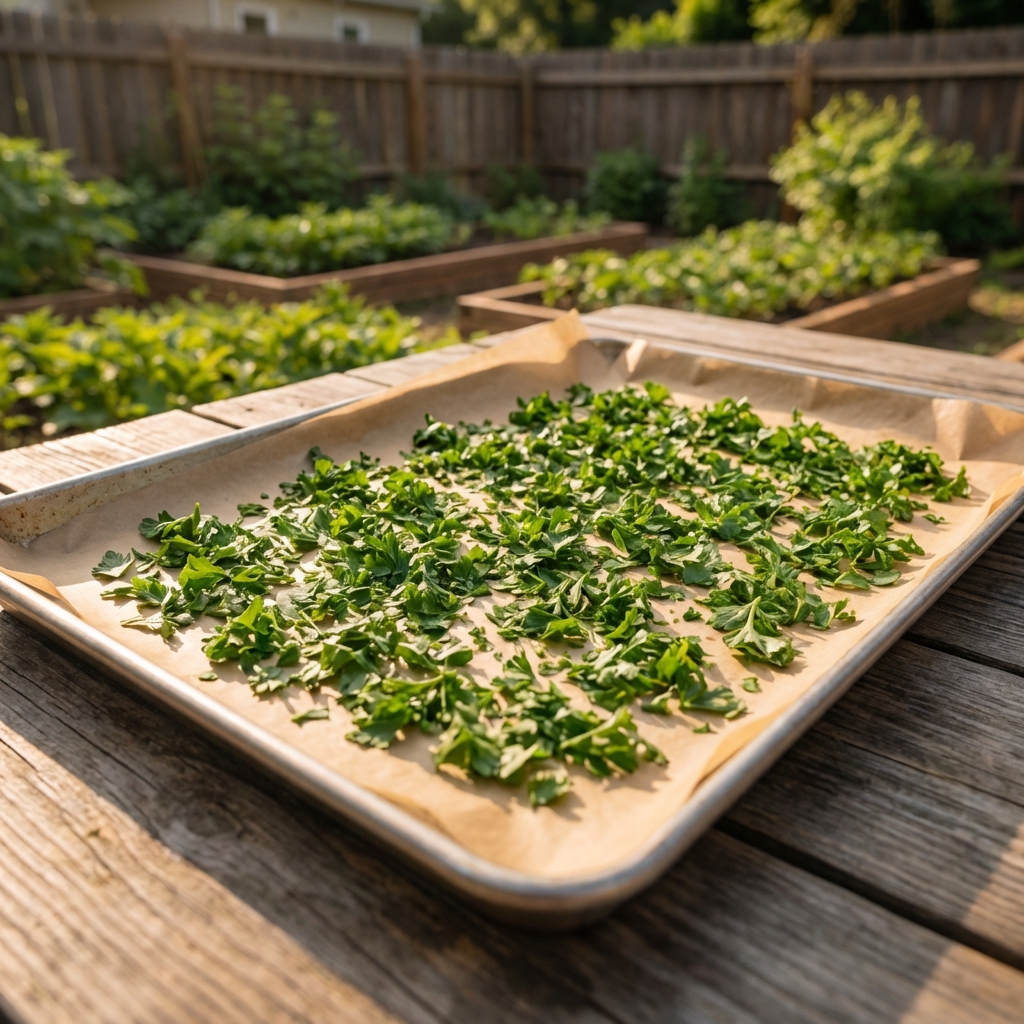
- Wash and dry the parsley very well.
- Chop to your usual cooking size.
- Spread in a thin layer on a parchment-lined baking sheet.
- Freeze until firm, then transfer to a freezer bag or airtight container.
Why this is nice: It stays loose so you can pinch out what you need.
Option 2: Herb cubes (parsley + oil or water)
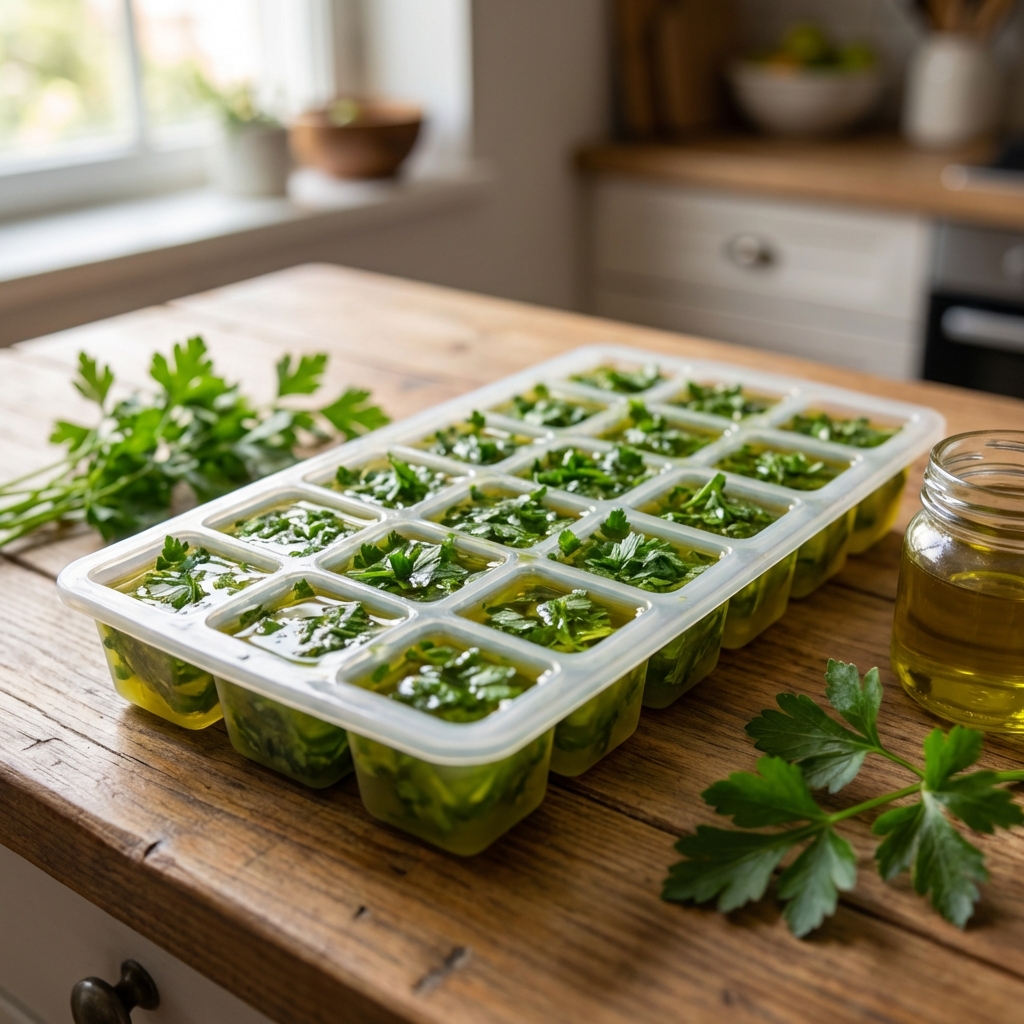
- Chop clean, dry parsley.
- Pack into an ice cube tray.
- Cover with olive oil (great for sauteing) or water (good for soups).
- Freeze promptly, then pop out cubes and store in a freezer bag.
Storage tip: Press out excess air and seal well so the cubes do not pick up freezer odors.
How long frozen parsley lasts: Best within 3 to 6 months for flavor, but often usable longer if sealed well.
Drying parsley (good for convenience)
Drying works, but dried parsley tastes lighter than fresh. I use it when I want something quick for marinades, dressings, or pantry seasoning blends.
Air-drying (simple, slow)
- Tie small bundles of clean, dry parsley.
- Hang in a warm, dry spot with good airflow, out of direct sun.
- If your home is humid, skip air-drying. It can mold. Use a dehydrator or the oven method below instead.
- When leaves crumble easily, strip from stems and store in an airtight jar.
Oven drying (more reliable)
- Spread leaves on a baking sheet in a single layer.
- Use the lowest oven setting and keep the door slightly cracked if possible.
- Check often to avoid browning.
Storage tip: Keep dried parsley in a cool, dark cabinet. Flavor is best within about a year. For the best aroma, crush it right before using.
How to revive wilted parsley
If parsley looks limp but does not smell off and is not slimy, you can often bring it back.
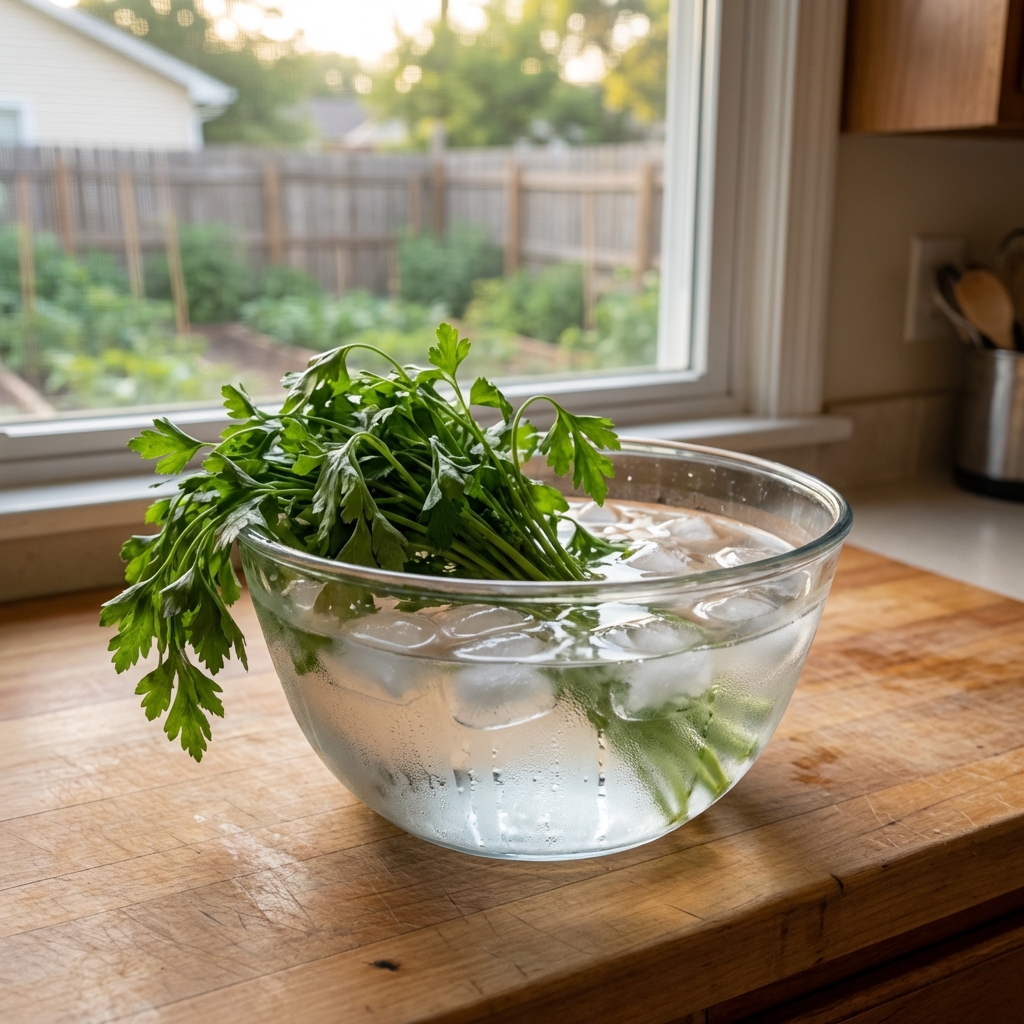
Quick revive method
- Trim the stem ends.
- Soak the bunch in a bowl of cold water for 10 to 20 minutes.
- Lift out, shake off water, and dry well.
- Store using the jar bouquet method or the towel-and-bag method.
When to toss it: Strong sour smell, mushy stems, or slimy leaves usually means it is past saving.
Common parsley storage problems
Parsley turns slimy in the fridge
- Cause: Too much moisture and not enough airflow.
- Fix: Dry it thoroughly. Use the towel-and-bag method. Leave the bag slightly open. Change jar water regularly.
Leaves dry out and curl
- Cause: Not enough humidity or too much cold air exposure.
- Fix: Switch to the jar bouquet method or add a loose bag cover. Move it away from the back of the fridge where air is coldest.
Blackened stems
- Cause: Age, bruising, or sitting in dirty water.
- Fix: Trim stems, refresh water, and remove any compromised sprigs before they affect the rest.
What not to do
- Do not seal wet parsley in an airtight bag. That is how you get slime.
- Do not leave parsley in a store clamshell or tied produce bag if you see condensation. Move it to a better setup at home.
- Do not cram it into the back of the fridge where it can freeze and dry out.
Quick picking guide
- Using within 3 to 5 days: towel-and-bag method
- Want maximum fridge life: jar bouquet method
- Want zero waste: chop and freeze, or make herb cubes
- Want pantry convenience: dry it (air-dry in low humidity or use a low oven)
If you only choose one: do the jar method. It is the closest thing to set-it-and-forget-it parsley storage.

Jose Brito
I’m Jose Britto, the writer behind The Country Store Farm Website. I share practical, down-to-earth gardening advice for home growers—whether you’re starting your first raised bed, troubleshooting pests, improving soil, or figuring out what to plant next. My focus is simple: clear tips you can actually use, realistic expectations, and methods that work in real backyards (not just in perfect conditions). If you like straightforward guidance and learning as you go, you’re in the right place.