Waking up with itchy bites can send your mind straight to bed bugs. Sometimes that is the right call. Other times it is mosquitoes, fleas, skin irritation, or even a reaction to laundry products. The tricky part is that bites alone rarely prove bed bugs. The smartest approach is to match what is happening on your skin with what you can find around your sleeping area.
TL;DR: Look for patterns on exposed skin, but confirm by inspecting mattress seams, the bed frame, and nearby cracks for live bugs, dark fecal spots, shed skins, or eggs.
This guide walks you through both: what bed bug bites commonly look and feel like, and the practical home checks that confirm whether bed bugs are actually present.
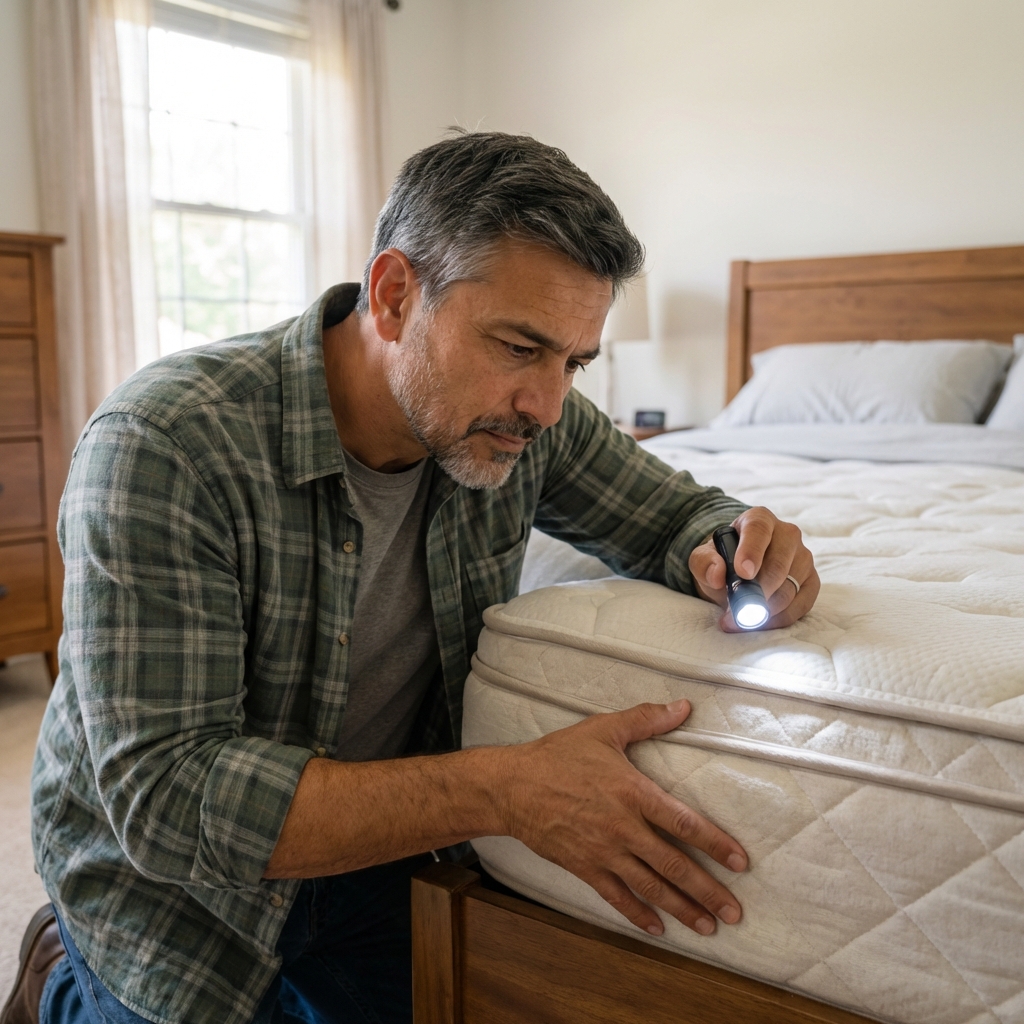
What bed bug bites usually look like
Bed bug bites can look different from person to person. Some people react strongly. Others barely react at all. Still, there are a few patterns that show up often enough to be useful.
Common appearance
- Small red bumps or welts, sometimes with a darker red center.
- Itchiness that can range from mild to intense.
- Swelling around the bite, especially in people who react more.
- Blister-like spots in more sensitive skin (less common).
Typical bite patterns
Bed bugs often bite more than once during a feeding. That is why you may see:
- Clusters of several bites close together.
- Lines or zigzags of bites (often called “breakfast, lunch, dinner”).
- Multiple bites on the same general area.
That said, not every bed bug bite forms a neat line. Plenty of real cases look messy and random.
Where bites show up most often
Bed bugs usually bite exposed skin while you sleep. Common areas include:
- Arms and shoulders.
- Neck.
- Face.
- Hands.
- Lower legs and feet.
If bites are mostly under tight clothing (waistbands, sock lines), that can sometimes point more toward chiggers, irritation, or other causes. Treat it as a weak clue, not a deciding factor. Bed bugs can also bite under loose clothing, and pressure lines can mimic “bite patterns.”
Timing: when bed bug bites appear
One of the reasons bed bugs are confusing is delayed reactions.
- Some people itch and welt within hours.
- Others do not react until 1 to 3 days later.
- Some people show no visible reaction even if they are being bitten.
So if you woke up fine and got itchy later that day, bed bugs are still on the table. The timing does not rule them out.
Bed bug bites vs lookalikes
If you want to be confident, compare bite clues with your environment. Here is how bed bug bites commonly stack up against the usual suspects.
Mosquito bites
- Often single, larger puffy welts.
- More common after being outdoors, especially at dusk.
- Can show up anywhere, not just after sleeping.
Flea bites
- Often smaller red bumps with intense itch.
- Commonly around ankles and lower legs.
- More likely if you have pets or wildlife under the house.
Chigger bites
- Often around sock lines, waistbands, tight clothing.
- Typically after being in tall grass, brush, or weedy areas.
- Itch can be intense and last for days.
Contact dermatitis or skin irritation
- Looks more like a patch or rash than distinct bites.
- Often linked to new detergent, soap, lotion, or fabric.
- May spread beyond “exposed while sleeping” areas.
Scabies (needs medical diagnosis)
- Intense itching, often worse at night.
- May see tiny tracks or burrows, commonly on wrists, fingers, waist, or groin.
- Requires prescription treatment.
Bottom line: If you only have bites and no other evidence, you cannot call it bed bugs with certainty. Your next step is to inspect the sleeping area.
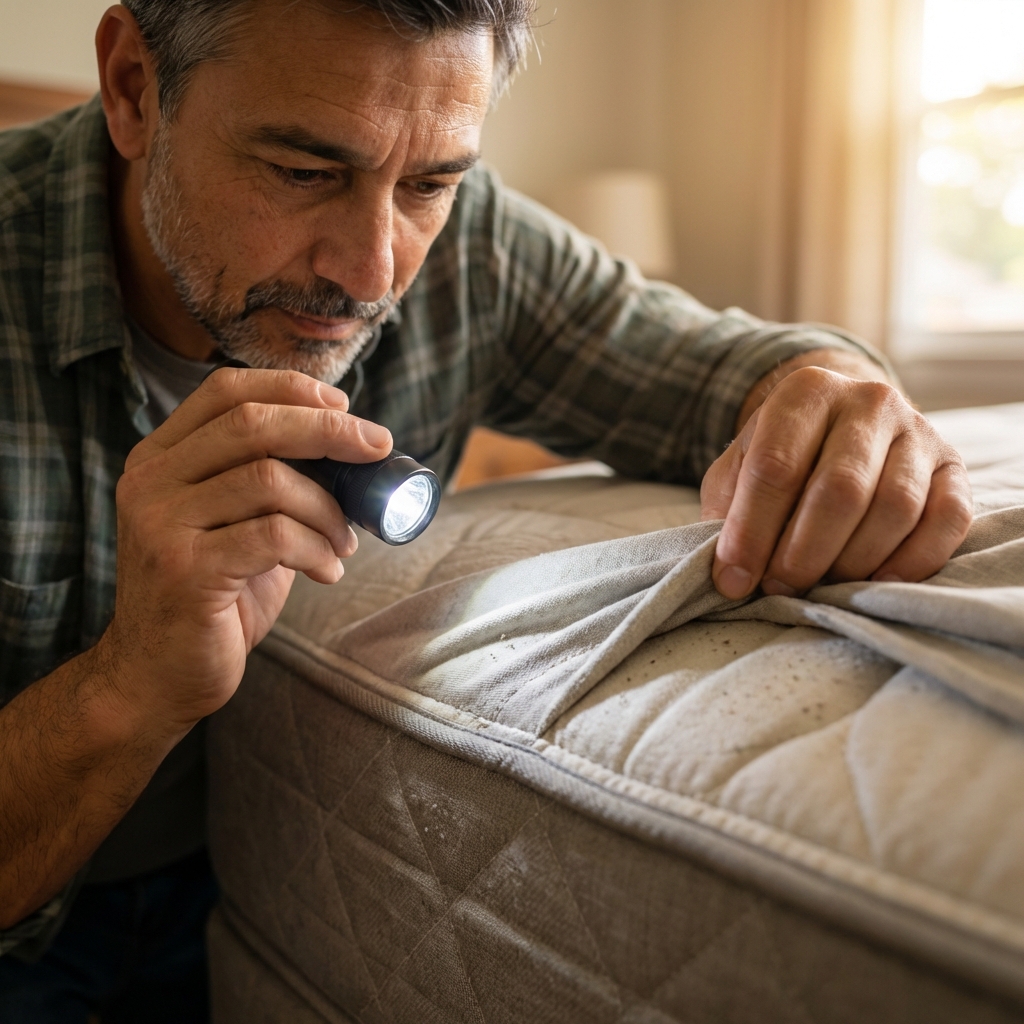
The fastest way to confirm bed bugs
Think of this as the “garden rule” applied indoors: do not guess the pest based on damage alone. Find the pest. With bed bugs, that means looking for signs where they hide.
Where to look first
- Mattress seams and piping, especially near the head of the bed.
- Box spring edges, corners, and the fabric underside.
- Bed frame joints, screw holes, and cracks.
- Headboard (back side and mounting points).
- Nightstand seams and drawer joints.
- Baseboards and wall cracks near the bed.
What you are looking for
- Live bed bugs: adults are flat, reddish-brown, and often described as apple-seed sized. Nymphs are smaller and lighter (sometimes translucent), so do not dismiss what looks like “tiny” bugs.
- Shed skins: pale, paper-like shells from molting.
- Dark spots: tiny ink-like fecal stains on fabric, wood, or along seams.
- Tiny white eggs: pinhead-sized, usually in clusters in protected crevices.
- Blood smears: small reddish stains on sheets or pillowcases.
If you can, use a bright flashlight and a credit card or old gift card to run along seams and cracks. Bed bugs like tight spaces.
Quick at-home checks
1) Are bites mainly happening after sleep?
If you consistently wake up with new bites, that supports bed bugs. If bites show up randomly during the day, look harder at mosquitoes, fleas, or irritants.
2) Did it start after travel or a used item?
Bed bugs commonly hitchhike in luggage, on clothing, or in used furniture.
- Recent hotel stay, cruise, or visitor?
- New-to-you couch, mattress, or bed frame?
- Moving boxes stored in shared spaces?
3) Do other people in the home have bites?
Sometimes one person reacts and others do not. So this is not definitive. But if multiple people wake up itchy in the same room, it is worth a serious inspection.
4) Are pets itching too?
Fleas are more likely to cause pet itching than bed bugs. Bed bugs can bite pets, but fleas are the more common culprit when animals are scratching.
What to do right away if bed bugs are possible
If bed bugs are on your short list, a calm, organized response beats panic cleaning every time. The goal is to confirm, contain, and plan treatment.
Step 1: Reduce spread
- Do not move bedding, pillows, or clothing room to room uncovered.
- Bag items in sealed plastic bags before transporting them.
- Avoid sleeping on the couch. That can spread bugs to a second area.
Step 2: Heat-treat what you can safely wash and dry
Heat is a reliable killer when done correctly, but dryers vary. A practical rule is to use the hottest dryer setting the items can safely handle and run a full high-heat cycle. If you are timing it, aim for at least 30 minutes of high heat after items are fully hot (not just “30 minutes total” for a cold, packed load).
- Wash on hot if the fabric allows.
- Dry on high heat using a full cycle (or the guidance above).
- Place cleaned items into fresh sealed bags or bins.
If something cannot be washed, the dryer alone (high heat) can sometimes be used, depending on the item. Always follow care labels.
Step 3: Vacuum strategically
- Vacuum mattress seams, bed frame cracks, and around baseboards.
- Immediately seal and discard the vacuum bag, or empty the canister outside into a sealed bag.
Step 4: Add interceptors under bed legs (and isolate the bed)
Bed bug interceptor cups can help you confirm activity by trapping bugs trying to climb up or down.
They can also reduce bites if the bed is properly isolated:
- Pull the bed slightly away from the wall.
- Make sure sheets, blankets, and bed skirts do not touch the floor.
- Place interceptors under every bed leg.
If bedding touches the floor or the bed is against the wall, bugs can bypass interceptors and still reach you.
Step 5: Be careful with DIY chemicals
- Avoid “bug bombs” or foggers. They are often ineffective for bed bugs and can push bugs deeper into hiding.
- Do not apply pesticides to bedding or sleep surfaces unless the label specifically allows it.
- If you use any product, follow the label exactly. More is not better.
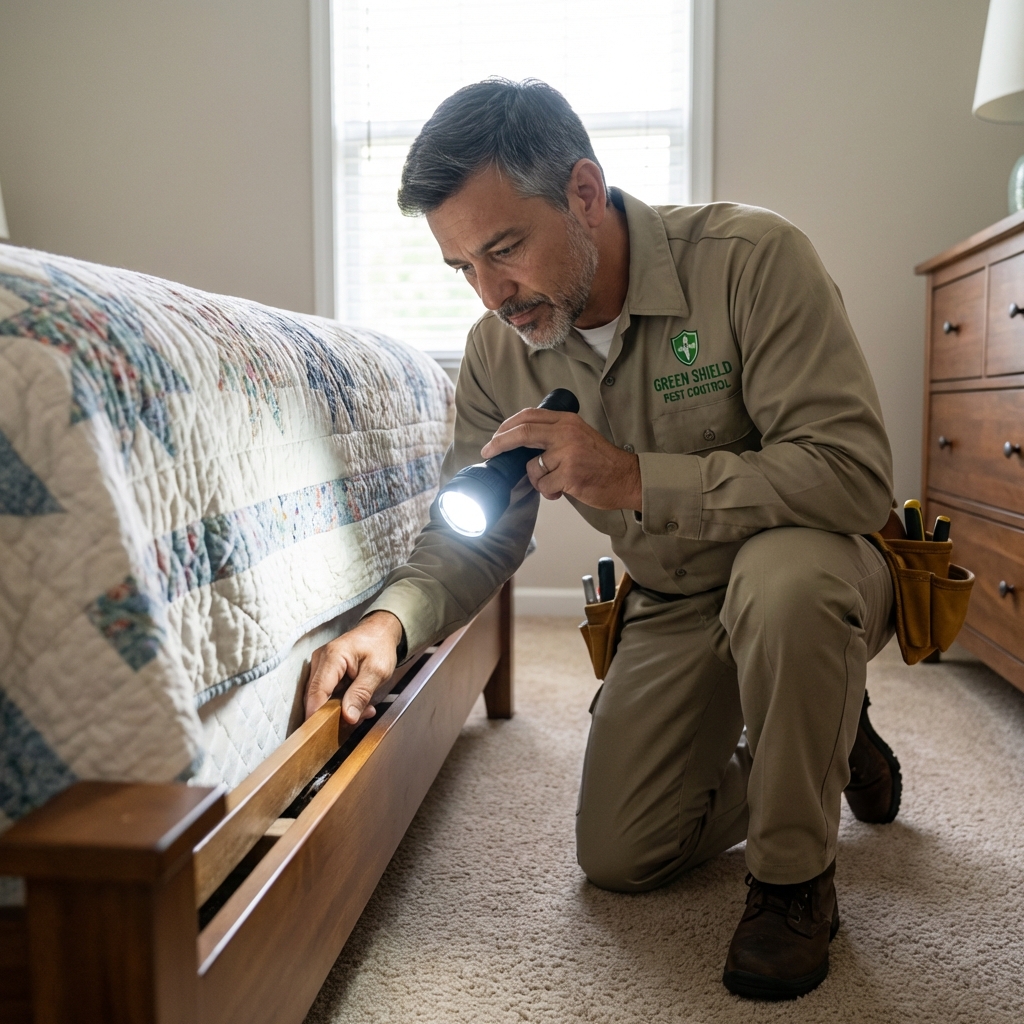
Step 6: Consider professional help early
DIY can work for very small, caught-early situations, but bed bugs are not like ants. They hide well and rebound fast. A licensed pest control pro can confirm the species and recommend the most effective treatment for your setup.
How to treat the bites safely
Treating the bites does not solve the bed bug problem, but it can make you a lot more comfortable while you work on the source.
- Wash bites gently with soap and water.
- Use a cold compress for swelling and itch.
- Consider an over-the-counter anti-itch option like hydrocortisone cream or an oral antihistamine if you can take it safely.
- Avoid scratching as much as possible to reduce the risk of infection.
Bed bugs are not known to spread disease in typical household settings, but scratching can cause secondary skin infections.
Get medical advice promptly if you have signs of infection (increasing redness, warmth, pus, fever), a severe allergic reaction, or a widespread rash.
Common myths that waste time
“If it’s bed bugs, I would definitely see them.”
Not always. They hide in seams and cracks and come out mainly at night. Many people have them for weeks before spotting one.
“If I spray the mattress with something strong, I’m done.”
Most quick sprays do not reach where bed bugs hide. Some products can also be unsafe if used on sleeping surfaces. Targeted treatment and a full plan matter.
“I’ll throw the mattress away.”
Sometimes a mattress encasement plus proper treatment works better than tossing it. And if you throw it out without addressing the rest of the room, the bugs can stay behind and infest the new bed.
When to call a pro (and what to ask)
If you find physical signs, or if bites keep happening and you cannot confirm the cause, professional inspection is usually worth it.
Good questions to ask
- How will you confirm bed bugs during the inspection?
- What treatment methods do you use (heat, targeted insecticides, combination)?
- How many visits are included?
- What prep do you require, and what prep is optional?
- Do you provide guidance to prevent re-infestation?
Quick checklist: are these likely bed bug bites?
- You are getting new itchy bumps mainly after sleeping.
- Bites appear in clusters or short lines on exposed skin.
- You see small dark spots or shed skins on mattress seams or bed frame cracks.
- The problem started after travel, guests, or bringing in used furniture.
If you check two or more boxes, move straight to a careful bedroom inspection. If you find physical signs, start containment and consider professional treatment sooner rather than later.
Simple prevention tips (once you are clear)
- Use mattress and box spring encasements designed for bed bugs.
- Keep encasements on and sealed for the long haul (often up to 12 months) so any trapped bugs cannot survive long enough to restart the problem.
- Reduce clutter near the bed so there are fewer hiding spots.
- After travel, dry travel clothes on high heat before putting them away.
- Inspect used furniture carefully before bringing it inside.
Bed bugs are not a cleanliness issue. They are a hitchhiker issue. The win is catching them early and responding with a plan.

Jose Brito
I’m Jose Britto, the writer behind The Country Store Farm Website. I share practical, down-to-earth gardening advice for home growers—whether you’re starting your first raised bed, troubleshooting pests, improving soil, or figuring out what to plant next. My focus is simple: clear tips you can actually use, realistic expectations, and methods that work in real backyards (not just in perfect conditions). If you like straightforward guidance and learning as you go, you’re in the right place.