Bed bugs are not a “dirty house” problem. They are a hitchhiker problem. They ride in on luggage, used furniture, and sometimes even everyday items that have been in infested indoor spaces, like work bags, jackets, or shoes from a client’s home, a hotel, or public transit. Cardboard shipping and delivery boxes can be a pathway too, but it is less common than travel and secondhand items.
This guide keeps it simple: what bed bugs look like, the signs they leave behind, how to inspect without guesswork, and what to do next if you find evidence.
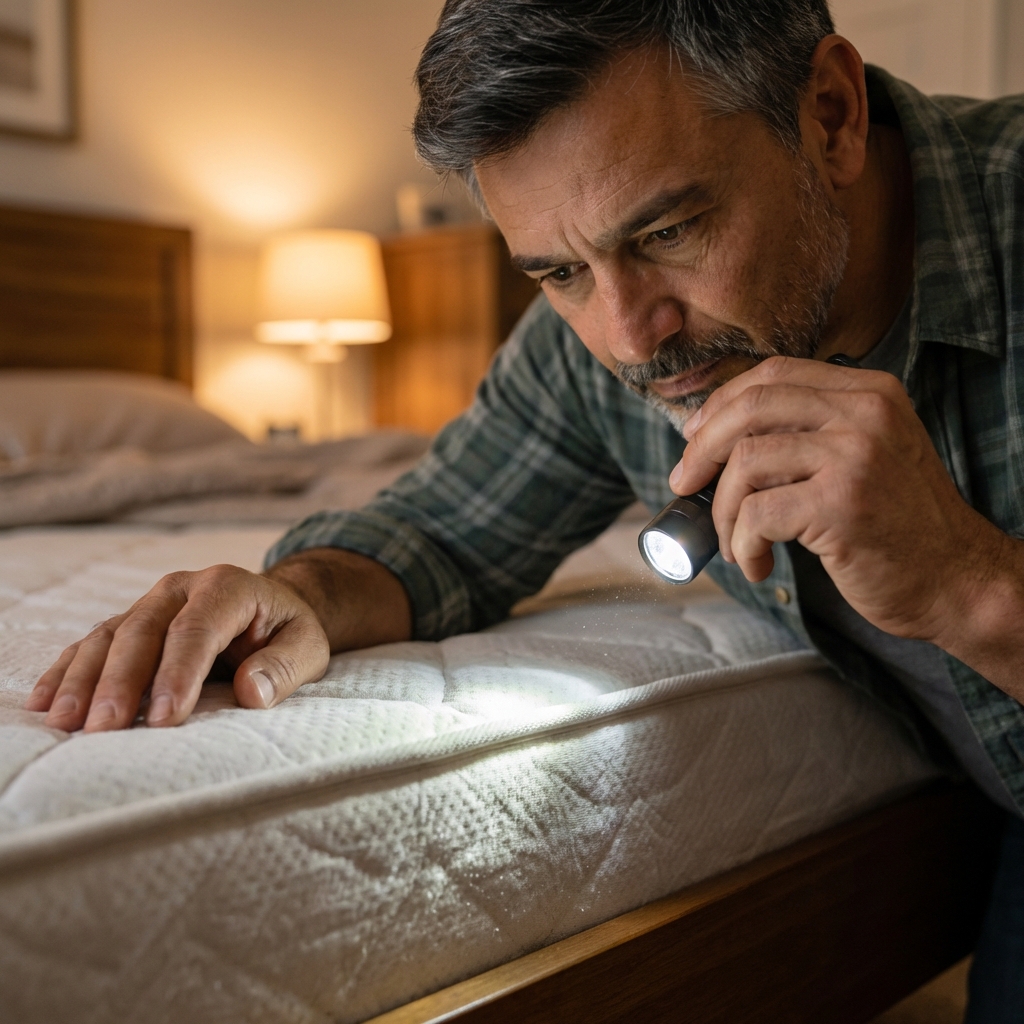
Quick signs that point to bed bugs
If you want the fastest “is this worth investigating?” checklist, start here. A single sign can be a fluke. Two or more together is when it is worth taking seriously.
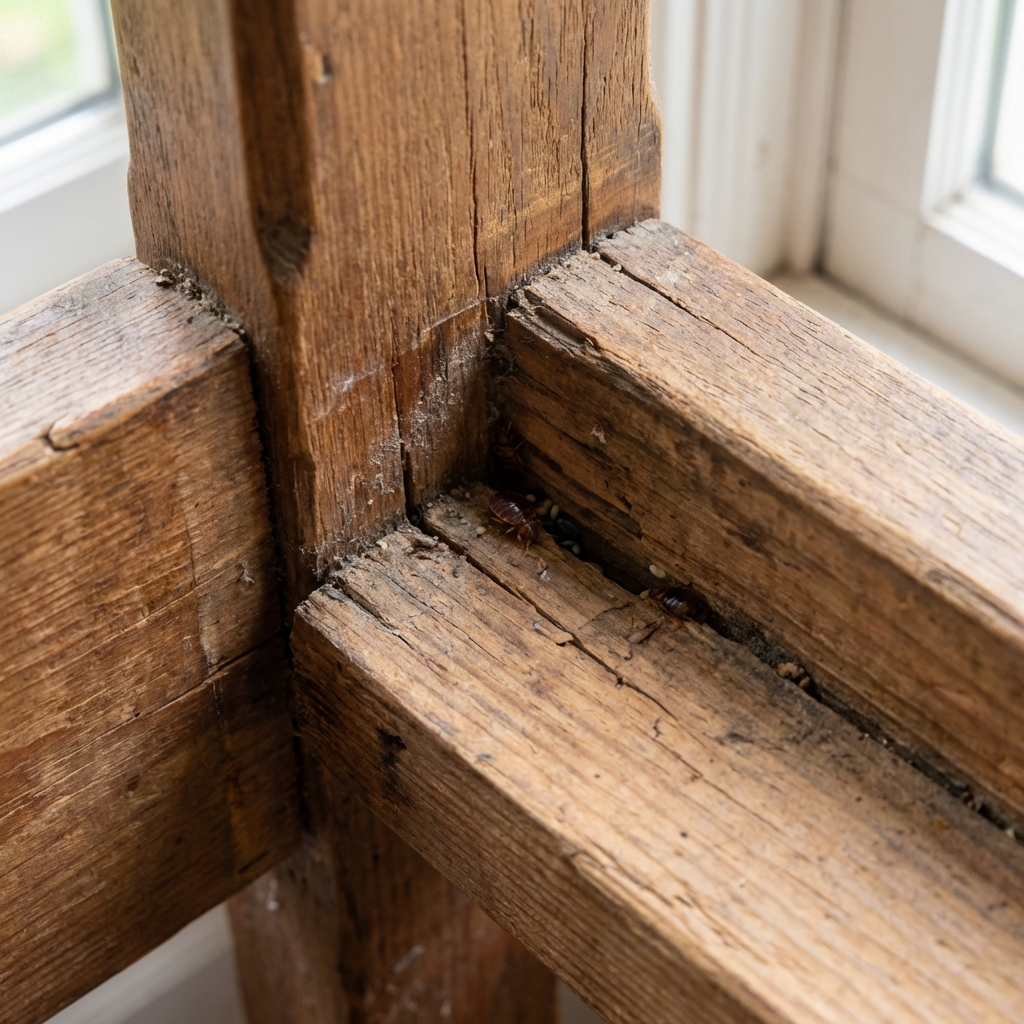
- Small dark spots along mattress seams, bed frame joints, or headboard cracks (often bed bug droppings that look like ink dots).
- Tiny rust-colored smears on sheets or pillowcases (can happen when a fed bug is crushed).
- Shed skins that look like pale, papery shells near hiding spots.
- Live bugs hiding in tight seams or cracks, especially near where you sleep.
- Musty, sweet odor in heavier infestations (not always present and not diagnostic on its own).
- New bites that show up after sleeping (but bites alone are not proof).
What bed bugs look like (and what they do not)
Adults
Adult bed bugs are about the size of an apple seed, flat and oval, and reddish-brown. After feeding, they look more swollen and darker.
Nymphs (young bed bugs)
Nymphs are smaller and lighter in color, sometimes almost translucent, which makes them harder to spot unless you use a flashlight and look along seams.
Eggs
Eggs are tiny and pearly white, often tucked into cracks or fabric seams. They can look like a grain of rice that got cut into a tenth of its size.
Common lookalikes
- Carpet beetles: often found near windowsills and baseboards; their larvae are fuzzy and bristly, not flat and oval.
- Fleas: jump and usually target ankles and lower legs; bed bugs do not jump.
- Ticks: rounder body, clingy “latch-on” behavior; usually from pets or tall grass.
- Roach droppings: can resemble dark specks, but roach evidence usually shows up in kitchens and bathrooms more than mattress seams.
Bites: what they can tell you (and what they cannot)
People want bites to be the answer, but bites are the least reliable clue. Some people react strongly, some barely react at all, and bites can mimic mosquitoes, fleas, no-see-ums, and even skin irritation from detergent.
Patterns people often notice
- Bites that appear overnight or after a nap.
- Clusters or lines of bites on arms, shoulders, neck, or torso (areas exposed during sleep).
- Itching that may start hours or days later.
When bites are more likely something else
- Mostly ankles: fleas are a top suspect, especially with pets.
- Only after gardening: chiggers, mosquitoes, or plant-related irritation can fit better.
- One or two random welts: that can be almost anything.
If you have bites and no other evidence, treat it as “possible” and inspect thoroughly before you spend money or panic-clean the whole house.
When to get medical advice: If you have swelling, hives, blistering, signs of infection from scratching, or any trouble breathing, contact a clinician right away.
Where to look first (the highest payoff spots)
Bed bugs like tight spaces close to where people rest. If you only have 10 minutes, focus on these.
1) Mattress and box spring
- Check piping, seams, tags, and corners.
- Lift the mattress and inspect the top edge of the box spring.
- If you can, look underneath the box spring fabric cover. Bed bugs love that sheltered space.
2) Bed frame and headboard
- Inspect screw holes, joints, slats, and cracks.
- Check the back of the headboard if it sits against a wall.
3) Nearby clutter and fabrics
- Nightstands, especially drawer corners and underside.
- Upholstered chairs, couch seams, and throw pillows if you nap there.
- Backpacks, laundry baskets, and the clothes pile that always seems to happen.
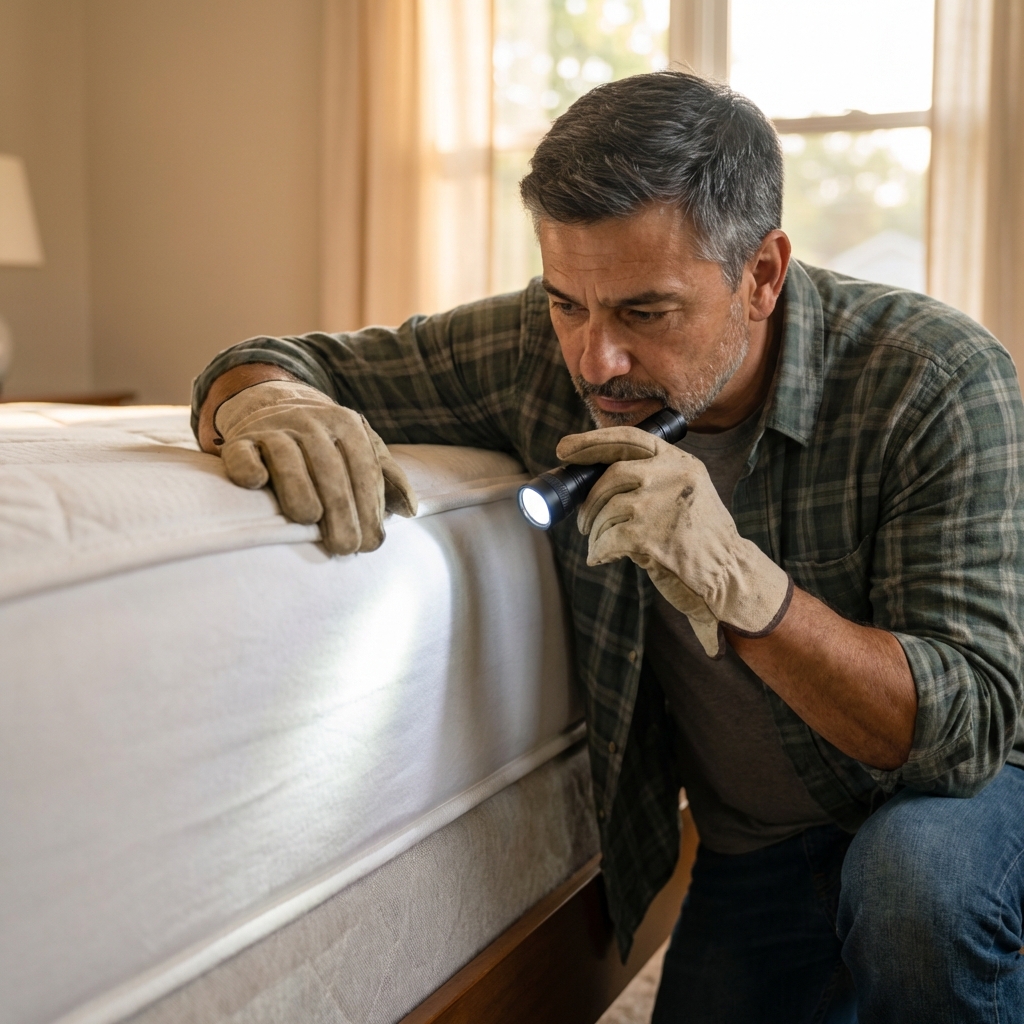
A simple inspection method that actually works
You do not need fancy tools, but you do need to be systematic.
What to grab
- A bright flashlight
- A credit card or old gift card (for gently running along seams)
- Disposable gloves
- Clear tape and a small zip bag (for collecting a suspect bug)
How to check
- Slow down. Bed bugs are good at hiding in a seam that looks clean at first glance.
- Use the flashlight at an angle so shadows reveal bumps, shed skins, or insects.
- Run the card along folds and piping to coax anything out.
- Look for multiple types of evidence: spots, skins, eggs, and bugs.
If you find a bug and can safely collect it, sealing it in a bag helps with identification. Many local extension offices and pest pros can confirm what it is from a clear photo too.
Simple monitoring (to confirm activity)
If you are stuck in the “maybe” zone, monitoring helps you get out of guesswork mode.
- Interceptor cups under bed and furniture legs can catch bugs as they crawl up or down.
- Keep the bed isolated: pull it a few inches from the wall and keep bedding from touching the floor.
- Re-check weekly: bed bugs can be sneaky in the early stages, so one clean inspection does not always close the case.
Garden-friendly angle: can bed bugs come from the garden?
Bed bugs do not live in soil, mulch, or on plants the way many garden pests do. Outdoors, they struggle without steady access to a host and the stable conditions of an indoor space.
But gardeners can still bring them inside indirectly because we move items back and forth constantly, especially items that have been inside other buildings (garden centers, swaps, workshops, rentals, and guest spaces).
Common “hitchhike” scenarios for home growers
- Thrifted benches, cushions, or patio furniture that later comes indoors.
- Harvest baskets, tool totes, or reusable shopping bags stored in shared areas or carried into other indoor spaces.
- Visitors and helpers who set bags or jackets on your couch or spare bed.
- Travel for plant swaps, garden shows, or visiting family, then unpacking in the bedroom.
Easy prevention habits
- Keep a dedicated hook or bin near the entry for jackets and bags instead of the bed or sofa.
- After travel, put clothes straight into the washer and dryer, and keep luggage off the bed.
- Be cautious with used furniture. Inspect seams and joints before it enters your home.
What to do if you confirm bed bugs
The goal is to contain first, then eliminate. The biggest mistake is dragging items room to room and spreading them.
Step 1: Contain the area
- Reduce clutter around the bed so you can clean and monitor.
- Bag bedding and clothing in sealed trash bags before moving it to laundry.
- Keep items from the affected room in that room until they are treated.
Step 2: Heat and laundry (your best home tool)
- Follow fabric labels, but prioritize a full high-heat dryer cycle when the item can safely handle it.
- As a practical rule, a high-heat dry for 30 to 60 minutes is commonly recommended for killing bed bugs and eggs, depending on the load and dryer performance.
- Washing helps, but dryer heat is what does the real work.
- For items you cannot wash, a dryer cycle alone can help if the item tolerates it.
Step 3: Vacuum and isolate
- Vacuum mattress seams, bed frame cracks, and baseboards. Empty the vacuum into a sealed bag immediately.
- Consider a bed-bug-rated mattress encasement to trap bugs and simplify future inspections. Keep it on for a long stretch (often months) so anything trapped inside cannot bite and eventually dies.
- Move the bed slightly away from the wall and keep bedding from touching the floor.
Step 4: Avoid spread mistakes
- Do not move unbagged laundry through the house.
- Do not start sleeping on the couch or in another room. It often spreads the problem.
- Avoid bug bombs and foggers. They are widely discouraged for bed bugs and can make them scatter deeper into hiding spots.
Step 5: Consider professional help
Bed bugs are tough. If you are seeing live bugs, multiple rooms are involved, you live in an apartment or shared building, or you see repeated signs after cleaning, it is often worth calling a licensed pest professional. Ask what methods they use (heat, targeted insecticides, monitoring) and what prep they require. If you rent, loop in your landlord or management early so neighboring units can be checked too.
A quick safety note: Avoid using outdoor garden insecticides indoors. Many products are not labeled for indoor use, and misapplication can be hazardous. Stick to methods designed for indoor bed bug control, or hire a pro.
When it is probably not bed bugs
Here are a few situations where I would widen the search.
- You have itching but zero spotting on the bed after a careful inspection.
- The “bites” happen after time outdoors and not after sleep.
- You find tiny bugs on windowsills and light fixtures, but none near sleeping areas (often other insects).
If you are unsure, take clear, close photos and get an identification before you treat aggressively.
Fast checklist to keep
- Inspect mattress seams, box spring edges, and headboard cracks with a flashlight.
- Look for a mix of signs: dark specks, rust stains, shed skins, eggs, and live bugs.
- Do not rely on bites alone.
- Use interceptor cups and weekly re-checks if you are not sure yet.
- Contain and run a full high-heat dry cycle if confirmed.
- Avoid foggers and unapproved indoor chemical use and consider a professional if evidence persists.

Jose Brito
I’m Jose Britto, the writer behind The Country Store Farm Website. I share practical, down-to-earth gardening advice for home growers—whether you’re starting your first raised bed, troubleshooting pests, improving soil, or figuring out what to plant next. My focus is simple: clear tips you can actually use, realistic expectations, and methods that work in real backyards (not just in perfect conditions). If you like straightforward guidance and learning as you go, you’re in the right place.