Groundhogs can mow down a garden fast, especially tender seedlings, beans, peas, and leafy greens. The good news is that you can often solve the problem with a well-placed live trap and a little patience. That said, some yards have more than one groundhog or multiple active burrows, so plan on trapping until the damage stops for several days in a row. Below is a practical, step-by-step approach that works in real yards, plus what to do after you catch one.
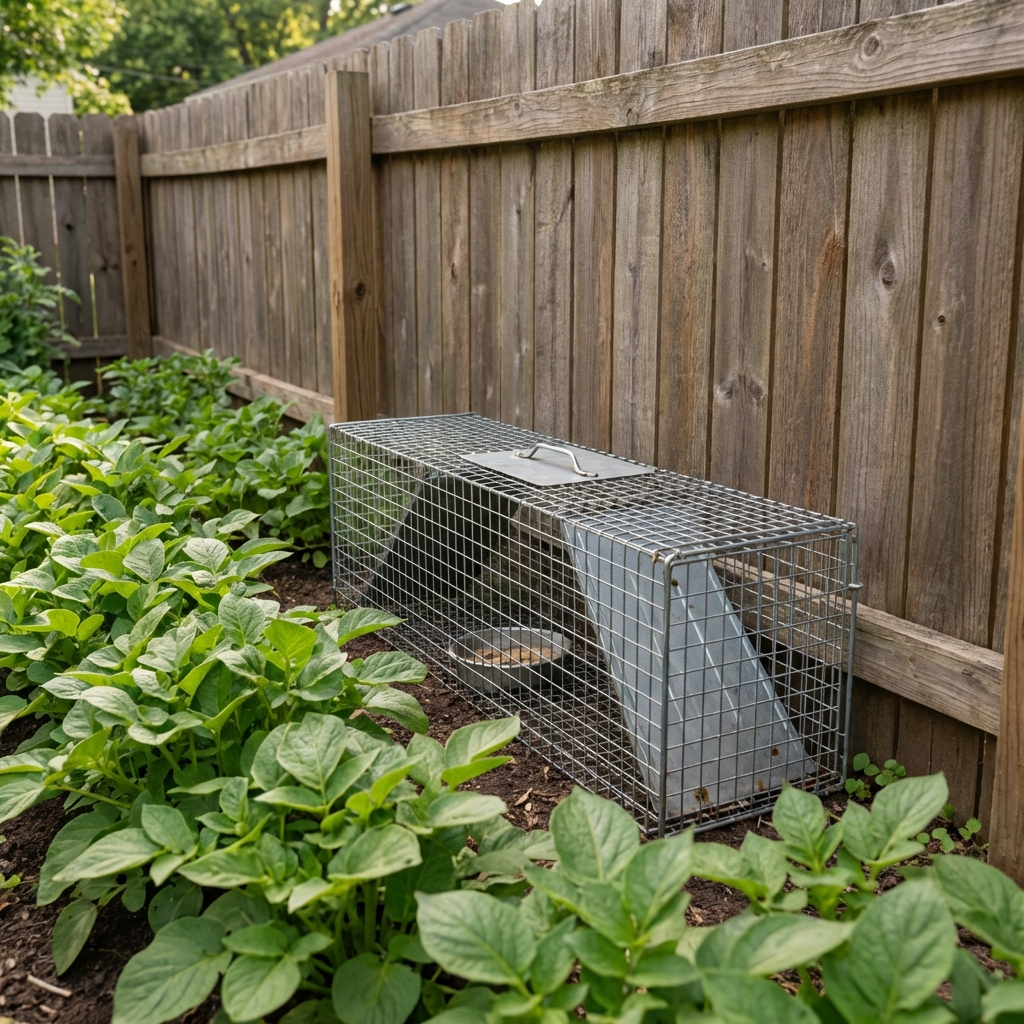
First: make sure it is a groundhog
Before you trap anything, confirm what you are dealing with. Groundhog damage and habits are pretty specific.
- Common damage: cleanly clipped stems, plants bitten off low to the ground, and broad nibbling on leafy crops.
- Burrow clues: a roughly basketball-sized hole (often about 8 to 12 inches wide), sometimes with a mound of soil nearby. Entrances are commonly along fences, sheds, woodpiles, or foundation edges.
- Timing: most feeding is early morning and late afternoon, but they may also feed during the day.
If you are seeing shallow tunnels under turf, that is more often moles or voles. If fruit is disappearing at night, that can be raccoons or opossums. Knowing the target matters because bait and trap placement change.
Know the rules before you set a trap
Groundhog trapping and relocation laws vary a lot by state and even by county. Some areas allow landowners to trap but do not allow relocation. Others require permission from the property owner where the animal is released, or they only allow euthanasia by approved methods.
- Check your state wildlife agency website for rules on live trapping, transport, and release.
- If you live in a neighborhood, double-check local ordinances and HOA rules.
- When in doubt, call a licensed wildlife control operator. It can save you time and legal headaches.
What you need for a clean, humane catch
Choose the right trap
For groundhogs, a single-door or double-door live cage trap is the standard. Look for a trap that is large and sturdy enough for an 8- to 12-pound animal, and follow the manufacturer’s setup instructions so the trigger works properly.
- Size to aim for: about 32 to 42 inches long, 10 to 12 inches wide, and 12 to 15 inches tall.
- Wire gauge: heavier is better. Groundhogs are strong and can bend flimsy wire.
- Door style: double-door traps can work well on travel paths, but single-door traps are simpler to bait.
Helpful extras
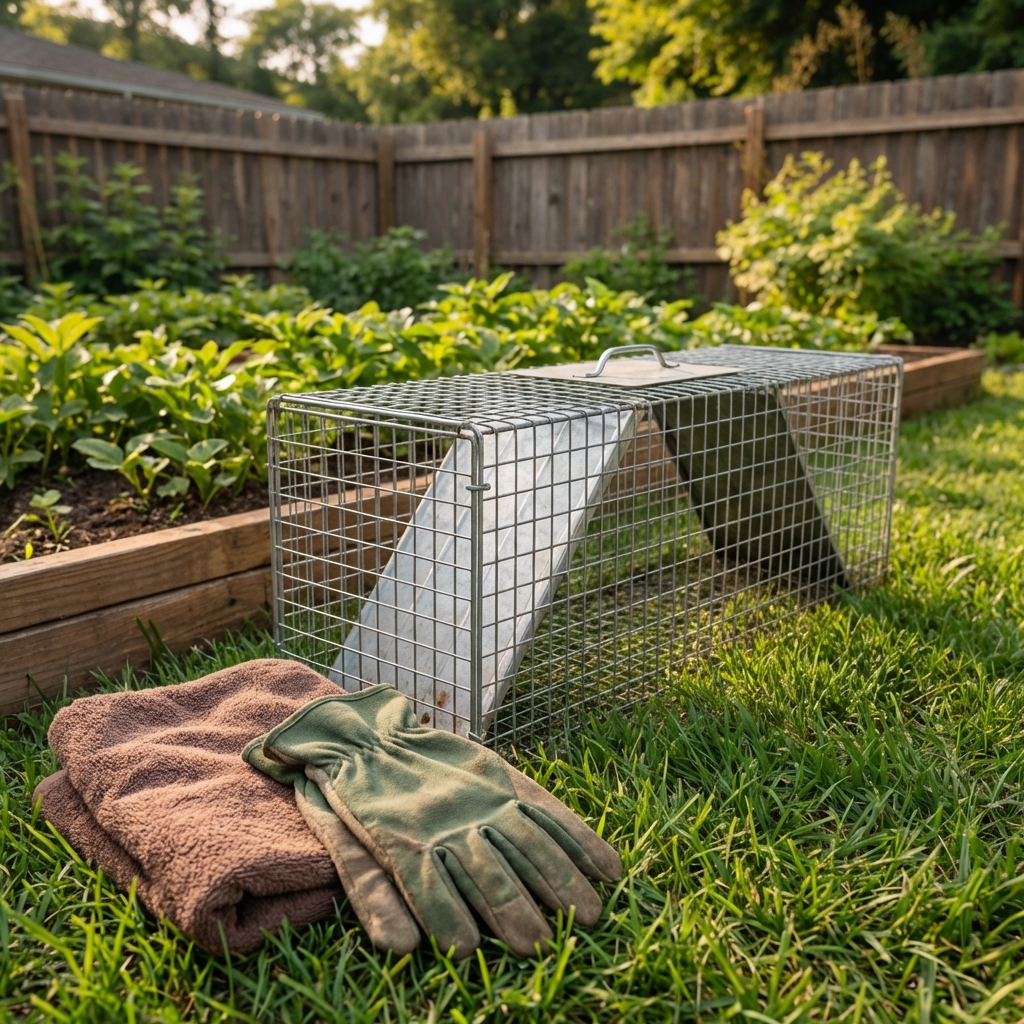
- Thick gloves for handling the trap. Never put fingers near the wire.
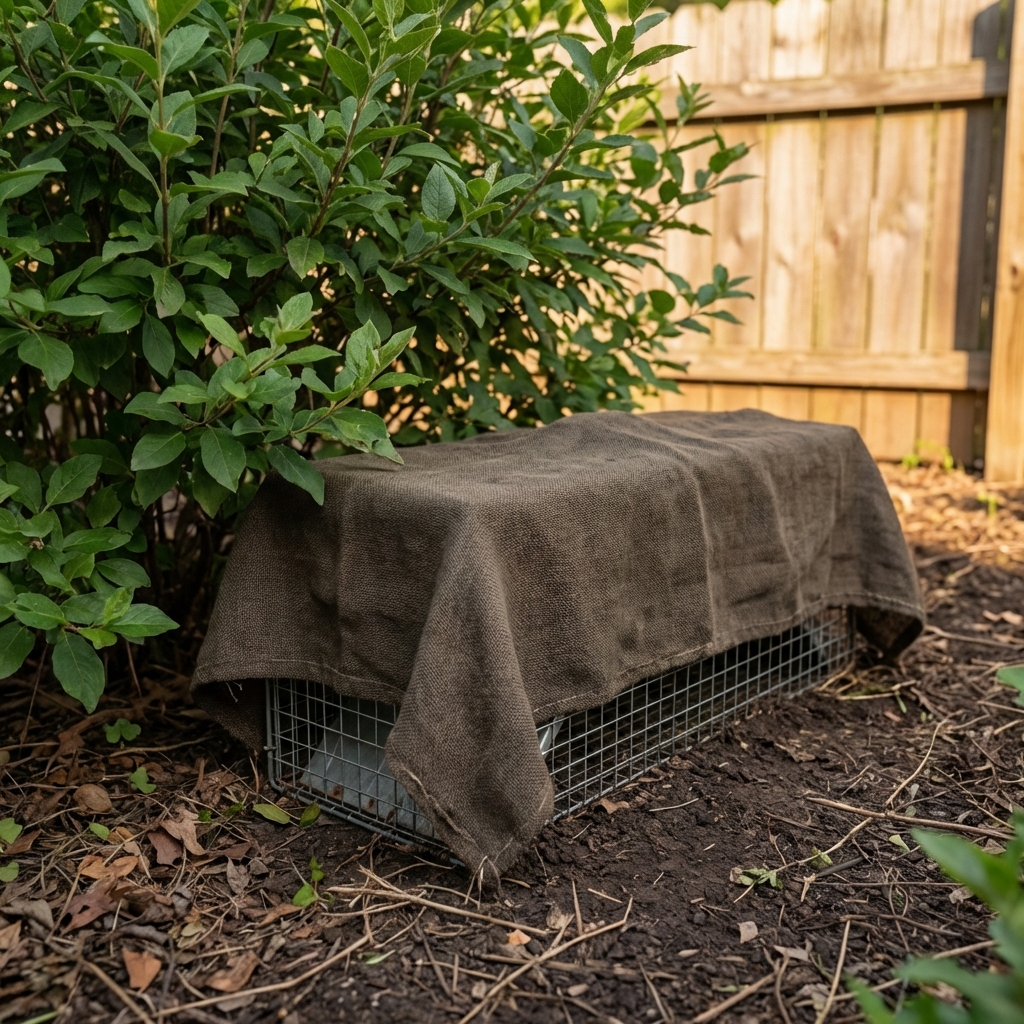
- A trap cover like an old towel or small tarp. Darkness keeps animals calmer.
- Stakes or bricks to keep the trap from rocking or shifting.
Best baits for groundhogs (and how to use them)
Groundhogs are primarily herbivores, so you will usually do better with produce than with peanut butter or meat-based baits that attract raccoons and skunks.
Reliable bait options
- Cantaloupe or melon: high scent, high success. My top pick when you can get it.
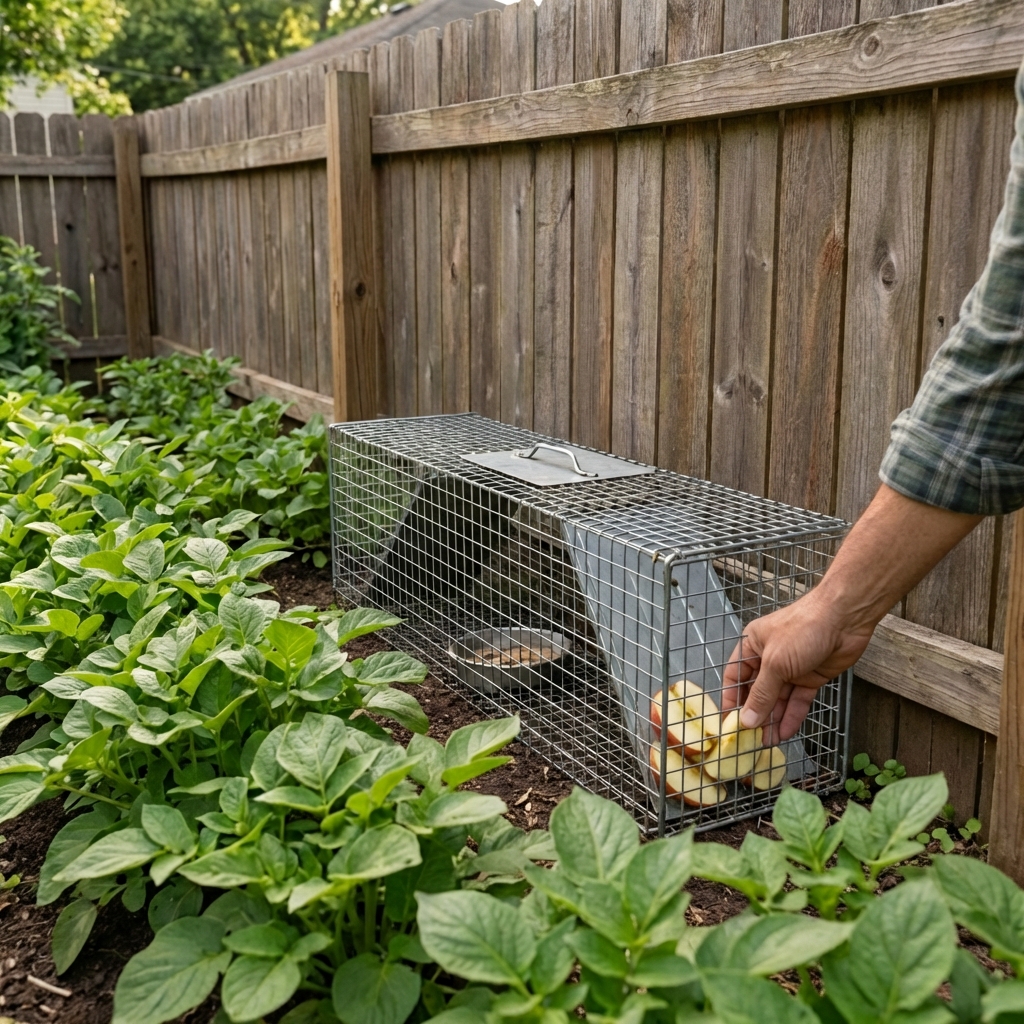
- Apple slices: easy and effective.
- Corn on the cob: good visual and scent attractant.
- Lettuce or cabbage leaves: helps if the groundhog is already targeting greens.
Bait placement that improves catches
- Place a small “trail” of tiny pieces leading into the trap.
- Put the main bait behind the trigger plate so the animal must step fully in.
- If ants are a problem, set bait on a small piece of cardboard or a leaf to reduce mess and keep the trigger working.
Tip: If you keep catching the wrong animal, switch bait. Melon and apple can reduce (but not eliminate) non-target catches compared with smelly, oily baits, though they may still attract raccoons, opossums, or rodents in some areas.
Where to set the trap (this matters more than bait)
Most trapping fails because the trap is set where the gardener wants it, not where the groundhog already travels. Your goal is to set it on the animal’s routine route.
High-percentage locations
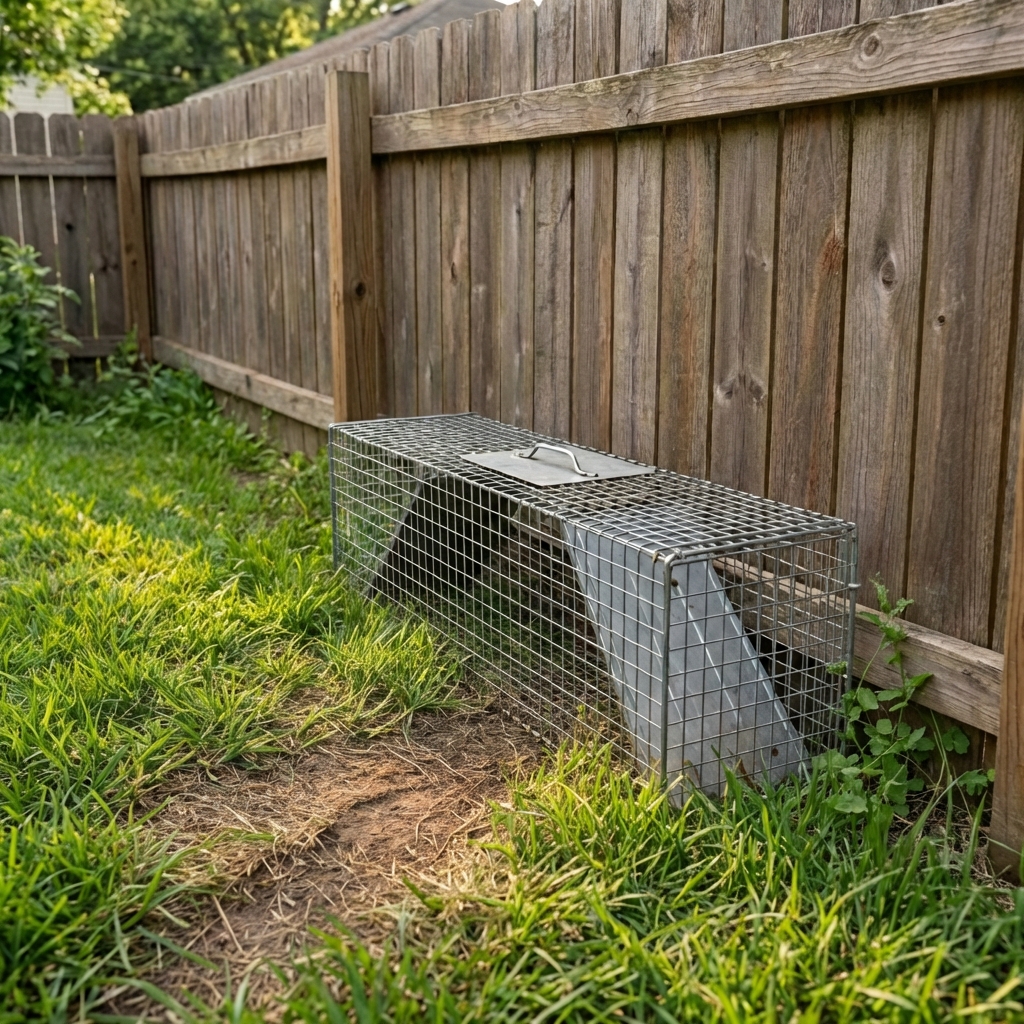
- Along a fence line: groundhogs love edges and tend to hug barriers.
- Near the burrow entrance: set the trap 5 to 15 feet from the main hole, not right on top of it.
- Between burrow and food: find the worn path in grass or the opening under a fence.
How to place it
- Set the trap on level ground so the trigger is stable.
- Use bricks or tent stakes to prevent wobble.
- For a single-door trap, position the back of the trap against a solid barrier or vegetation so the animal naturally enters from the open end.
- Place traps where kids and pets cannot access the trap or the bait.
Pre-baiting: the easiest way to catch a cautious groundhog
If a groundhog is trap shy or you have missed a few times, pre-baiting can flip the odds in your favor.
- Day 1 to 2: wire the trap door open (or disable it safely) and place bait inside.
- Day 3: move bait farther back, behind the trigger area.
- Day 4: set the trap normally.
This teaches the animal that the trap is a safe tunnel with food, not a threat.
Daily checks and humane handling
A live trap is not a set-it-and-forget-it tool. For the animal’s welfare and your own safety, check traps frequently.
- Check at least morning and evening, and more often in hot weather.
- As soon as you see a catch, cover the trap with a towel or tarp to calm the animal.
- Keep kids and pets away from the trap.
- Never try to feed or handle a trapped groundhog. They can bite and scratch.
Weather warning: In direct sun, a trapped animal can overheat quickly. Shade the trap or avoid trapping on very hot days. In cold, windy, or driving rain, check even more often and consider pausing trapping during severe weather.
What to do after you catch one
This is where local rules matter most. In many areas, relocation is restricted because it can spread disease and often leads to the animal not surviving. Follow your wildlife agency guidance, and do not leave an animal confined in a trap longer than necessary.
If relocation is legal where you live
- Get landowner permission for the release site. Do not release in parks or public land unless your local rules explicitly allow it.
- Choose a suitable habitat far from homes, gardens, and roads.
- Transport the covered trap securely in a vehicle with good ventilation.
- Stand behind the trap when opening the door and give the animal a clear exit path.
If relocation is not legal
Contact animal control or a licensed wildlife professional for next steps that comply with your area’s regulations. Avoid inhumane DIY methods (for example, drowning) and stick to legal, humane options.
Stop the next groundhog from moving in
Trapping solves the immediate problem. Prevention keeps you from repeating the same battle next month.
Fence it the groundhog way
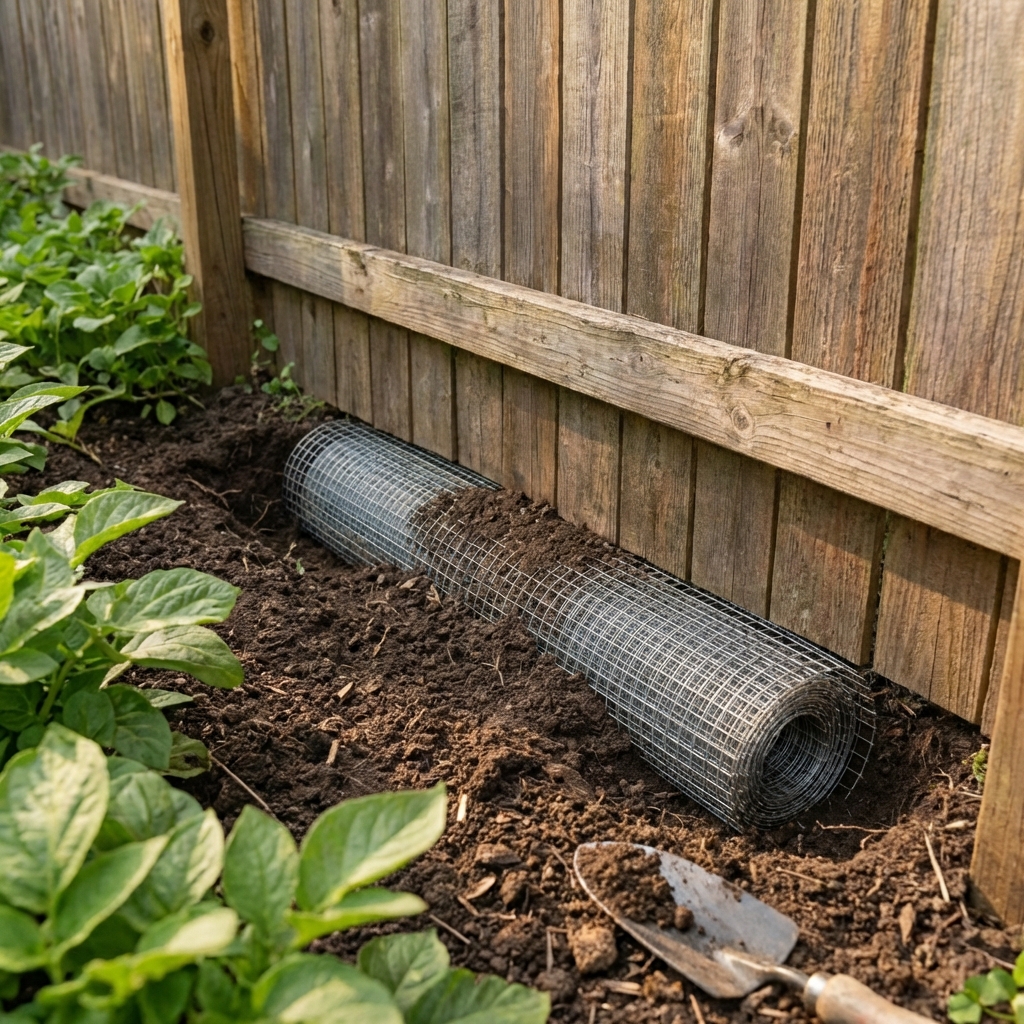
- Use hardware cloth or welded wire with openings 2 inches or smaller (smaller is better if juveniles are an issue).
- Make the fence at least 3 to 4 feet tall.
- Bury the bottom 10 to 12 inches or bend it outward in an L shape underground to block digging.
- If they are climbing, add a slight outward flare or overhang at the top, or an electric strand where permitted.
Remove easy shelter
- Keep weeds trimmed along fences and shed edges.
- Elevate woodpiles and clean up brush piles.
- Block access under decks and sheds with buried hardware cloth.
Protect the plants they target first
While you trap, protect your most vulnerable crops so you are not losing the whole season.
- Use temporary mesh or row cover over greens and seedlings.
- Install small wire cloches around young plants.
- Harvest ripe produce promptly to reduce attractants.
Troubleshooting: why your trap is not working
The groundhog walks around the trap
- Move the trap onto the travel path and snug it against a fence or hedge.
- Add a short guide using a board or a piece of chicken wire to funnel the animal toward the opening.
Bait disappears but the trap does not fire
- Make sure bait is behind the trigger plate, not beside it.
- Level the trap and remove debris under it.
- Test the trigger sensitivity according to the manufacturer’s instructions.
You keep catching the wrong animal
- Switch to melon or apple and avoid peanut butter.
- Set traps during daylight and check frequently.
- Adjust placement closer to the burrow path rather than near compost or bird feeders.
You caught one but damage continues
- Assume there may be more than one groundhog, or a second active burrow nearby.
- Keep trapping until you see no fresh damage for several days.
- Start exclusion (hardware cloth, L-footer, blocking under sheds) while you trap so the next one cannot move in.
Quick checklist
- Confirm groundhog activity and find the main travel path.
- Use a sturdy 32 to 42 inch live cage trap.
- Bait with melon, apple, or corn and place bait behind the trigger plate.
- Set trap level, stable, and tight to a fence or edge.
- Check at least twice daily and cover the trap after a catch.
- Follow local rules for relocation or disposal.
- Harden your garden with buried hardware cloth and reduced shelter.
If you want the simplest start-here plan: set a sturdy trap along the fence line on the worn path, bait it with cantaloupe, and commit to checking it morning and evening. Then keep at it until the feeding damage stops.

Jose Brito
I’m Jose Britto, the writer behind The Country Store Farm Website. I share practical, down-to-earth gardening advice for home growers—whether you’re starting your first raised bed, troubleshooting pests, improving soil, or figuring out what to plant next. My focus is simple: clear tips you can actually use, realistic expectations, and methods that work in real backyards (not just in perfect conditions). If you like straightforward guidance and learning as you go, you’re in the right place.