Hydrangeas are generous shrubs, but they are also honest. If the soil is off, the watering is inconsistent, or the pruning timing is wrong, they show it fast. The good news is you can fix most hydrangea problems with simple, natural solutions that focus on steady moisture, living soil, and a little patience.
In this guide, “natural care” means low-input, soil-first routines and least-toxic controls when you actually need them. We will cover day-to-day care, seasonal habits, and practical organic fixes for common issues like drooping leaves, poor blooms, pests, and leaf diseases.
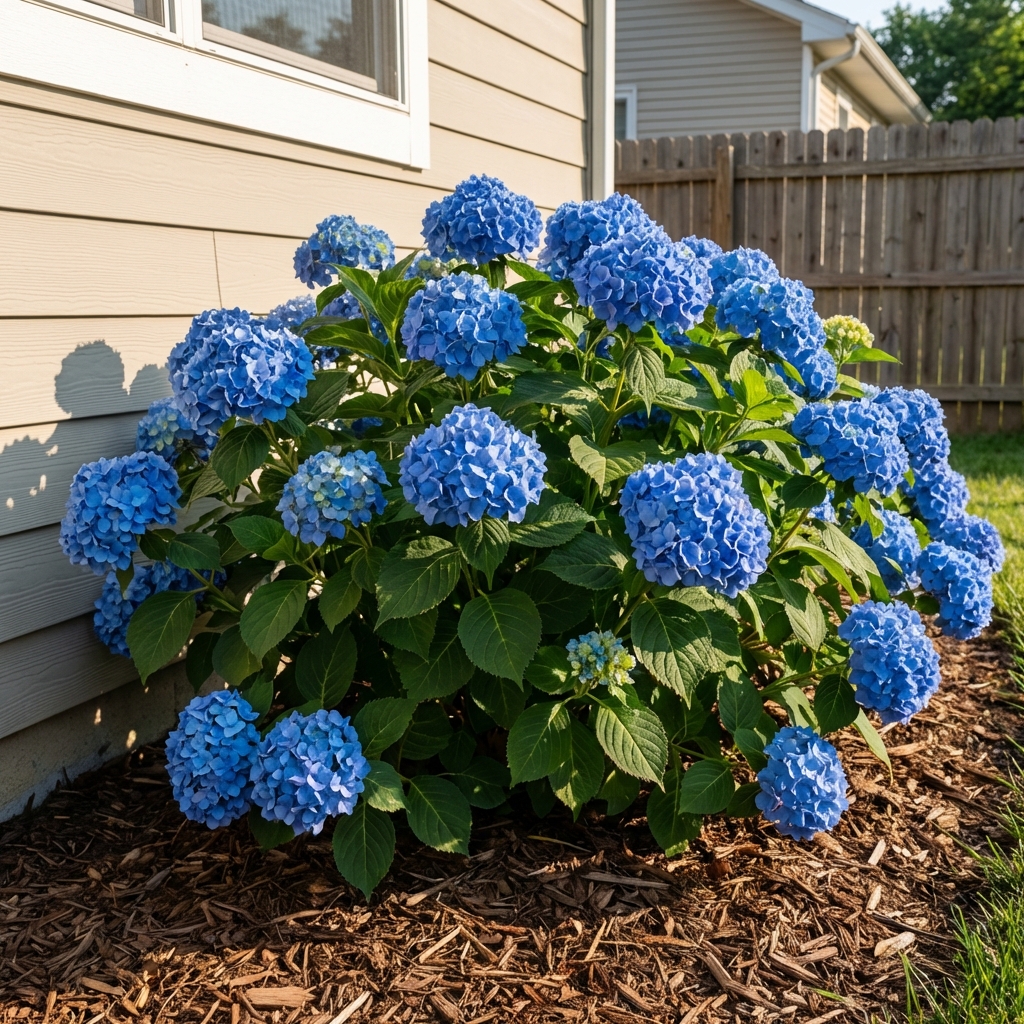
Know what kind of hydrangea you have
Start with ID. Hydrangeas vary in sunlight needs and, most importantly, when they set flower buds. If you prune at the wrong time, you can cut off next season’s blooms.
- Bigleaf (Hydrangea macrophylla): Mophead or lacecap blooms. Often changes color based on soil. Many bloom on old wood, and some bloom on both old and new wood (reblooming types).
- Mountain (Hydrangea serrata): Similar to bigleaf but often more cold-tolerant and delicate-looking. Many varieties also shift blue to pink with soil conditions.
- Panicle (Hydrangea paniculata): Cone-shaped flowers. More sun tolerant. Blooms on new wood.
- Smooth (Hydrangea arborescens): Round white blooms like ‘Annabelle’. Blooms on new wood.
- Oakleaf (Hydrangea quercifolia): Oak-shaped leaves, white blooms, great fall color. Blooms on old wood.
If you are not sure, look at the bloom shape and leaf shape, then compare to the list above. When in doubt, do light pruning only until you confirm the type.
Planting and location basics
Light: morning sun, afternoon shade
Most hydrangeas prefer gentle morning sun and shade during the hottest part of the day. Too much hot afternoon sun can scorch leaves and stress blooms, especially in warm climates.
- Bigleaf, mountain, and oakleaf typically do best with partial shade, especially in hotter regions.
- Panicle hydrangeas can often take more sun (even full sun in many areas) and may bloom better with it, as long as moisture stays steady.
- Smooth hydrangeas usually handle part sun to sun with consistent watering.
Spacing and airflow matter
Hydrangeas like moisture, but stagnant humid air can invite leaf spots and mildew. Give them room to breathe and avoid pressing them up against walls or dense hedges.
Soil texture: hold moisture, drain well
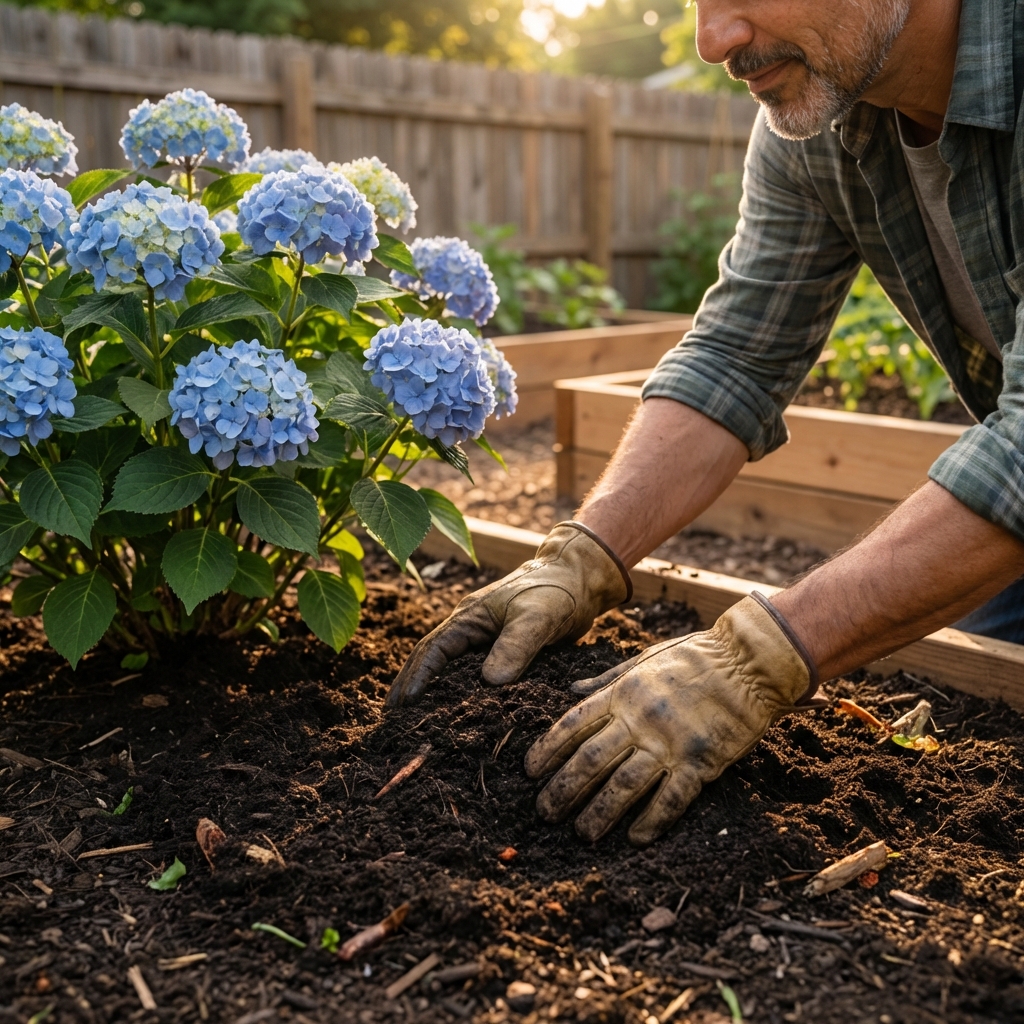
The healthiest hydrangeas grow in soil that stays evenly moist without becoming swampy. If your soil is heavy clay, improve it with compost and a 2 to 3 inch mulch layer. If your soil is sandy, compost and mulch help hold water.
Watering the natural way
Hydrangeas are not drought-lovers. Some midday droop in heat can be normal. The key is recovery. If your plant perks back up by evening, it is usually fine. If it stays limp, it is a sign the roots are running dry or stressed.
How much to water
- Newly planted: water deeply 2 to 4 times per week depending on heat and soil type.
- Established shrubs: aim for deep watering about once a week, more often during heat waves.
- Container hydrangeas: expect to water more often, sometimes daily in summer heat, because pots dry out fast.
A simple rule: water when the top 2 inches of soil feel dry. If it is still cool and damp below the surface, wait a day.
Best practices (and what to avoid)
- Water at the base to keep foliage drier and reduce fungal issues.
- Water slowly so moisture reaches deeper roots.
- Avoid frequent light sprinkling. It trains shallow roots and increases stress.
Natural moisture booster: mulch
Mulch is one of the most effective natural “treatments” you can give a hydrangea. Use shredded leaves, pine needles, bark fines, or wood chips. Keep mulch 2 to 3 inches deep and pull it a couple inches back from the stems.
Feeding with gentle organics
Hydrangeas do not need heavy feeding. Overfertilizing often causes lush leaves with fewer blooms. A soil-first approach works best: compost, slow-release organics, and occasional mineral support if needed.
Best natural fertilizers
- Compost: top-dress 1 to 2 inches in spring.
- Worm castings: a thin layer around the drip line for mild, steady nutrition.
- Balanced organic granular fertilizer (slow-release): apply in spring following label rates.
- Fish emulsion or seaweed: good for stressed plants, but use lightly and not in the heat of the day.
When to fertilize
- Early spring: compost plus a light organic feed if your soil is lean.
- After first flush of blooms (reblooming types): a small follow-up feeding can help.
- Stop by late summer: you do not want tender new growth heading into cold weather.
If blooms are weak year after year, consider a soil test. It is the quickest way to avoid guessing and over-correcting.
Pruning without losing blooms
Pruning is where most hydrangea heartbreak happens. The natural approach here is simple: prune less, prune at the right time, and focus on plant health instead of forcing a shape.
Old wood bloomers (bigleaf, mountain, oakleaf)
- When: right after flowering, or not at all except for dead wood.
- What to do: remove spent flowers and weak, damaged, or crossing stems. Avoid hard cutbacks.
Reblooming bigleaf types
Some bigleaf hydrangeas (often marketed as reblooming) can flower on both old and new wood. On these, heavy pruning can still reduce blooms. Keep it minimal: dead wood first, then light shaping right after the first flush if needed.
New wood bloomers (panicle, smooth)
- When: late winter to early spring, before new growth takes off.
- What to do: you can cut back by about one-third to shape and encourage strong new stems.
Always do this first
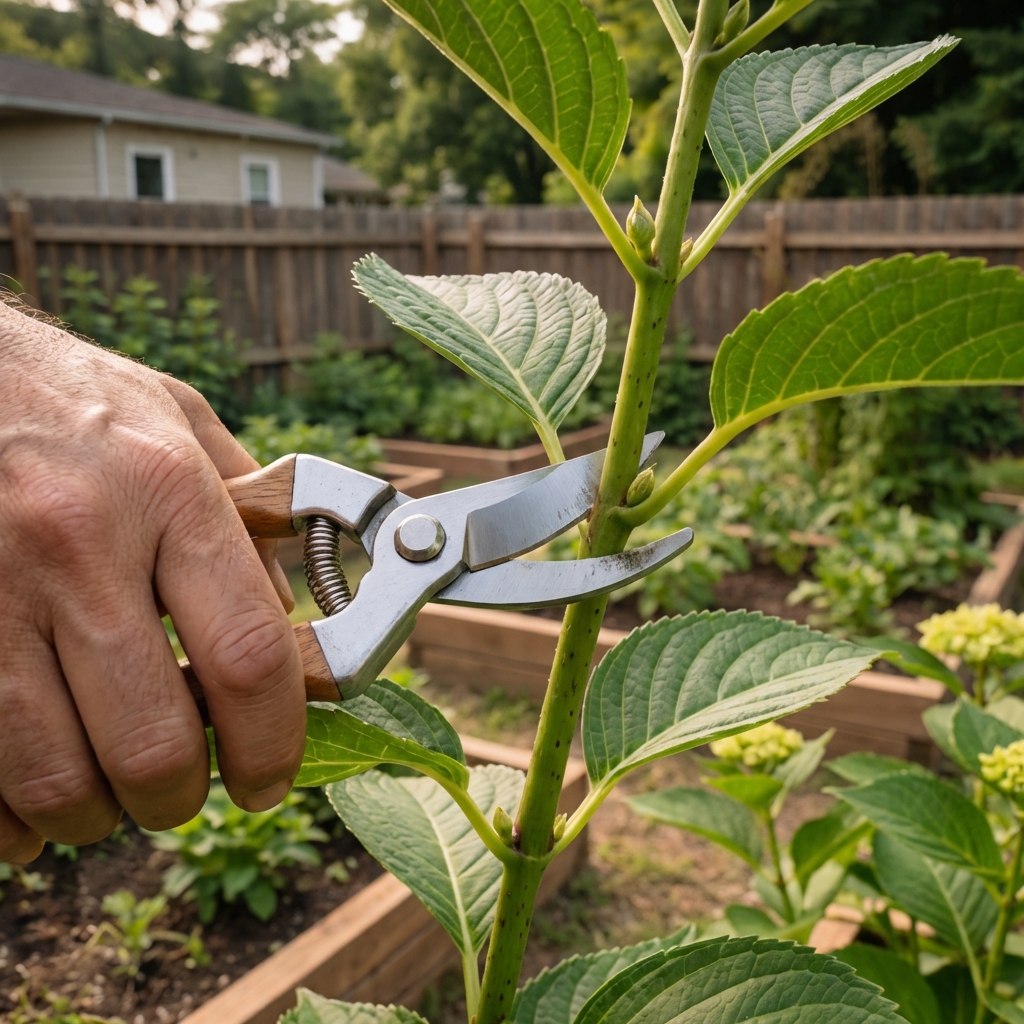
Start by removing dead, broken, or diseased wood. Make clean cuts just above a healthy node. Keep pruning tools clean, especially if you are dealing with leaf spots or blight.
Natural pest control
Most hydrangea pests can be handled with observation and gentle interventions. The goal is to protect blooms and leaves while keeping beneficial insects safe.
Aphids
- Spray off with a strong stream of water.
- If needed, use insecticidal soap in the evening and repeat weekly until controlled.
- Encourage ladybugs and lacewings by planting small-flowered natives nearby.
Spider mites (common in hot, dry conditions)
- Keep plants less stressed with mulch and consistent watering. Avoid letting pots or beds dry hard between waterings.
- Rinse leaf undersides with water every few days during outbreaks.
- If powdery mildew is an issue in your garden, skip any habit of misting foliage. Stick to targeted rinsing and soil-level watering.
Japanese beetles
- Hand-pick early in the morning and drop into soapy water.
- Try beetle traps placed away from hydrangeas so they lure pests away, not toward your shrubs.
- Avoid broad insecticides that can harm pollinators and beneficials. If you use a least-toxic product (like neem or pyrethrin), apply at dusk, avoid open blooms when possible, and follow the label exactly.
Slugs and snails
- Clean up thick debris where they hide.
- Use iron phosphate bait if needed, which is generally considered lower risk for pets and wildlife when used as directed.
Deer and rabbits
- Use temporary fencing or netting during peak browsing.
- Rotate scent-based repellents and reapply after rain.
- In high-pressure areas, plan for protection in spring when new growth is most tempting.
Natural disease prevention and fixes
Most hydrangea leaf problems come down to moisture sitting on leaves, poor airflow, or stressed roots. Focus on prevention first.
Powdery mildew
- Improve airflow by thinning crowded stems.
- Water at soil level.
- If it persists, use a labeled organic fungicide like sulfur or potassium bicarbonate, applied according to instructions.
Leaf spot
- Remove heavily spotted leaves that have fallen and discard them. Do not compost diseased material.
- Keep mulch fresh to reduce splash-up from soil.
- Water in the morning so plants dry quickly.
Root rot (from soggy soil)
If your hydrangea is yellowing and staying limp even when watered, check drainage. Natural fix options include regrading the area, planting on a slight mound, or moving the shrub to a better-drained spot.
Changing bloom color naturally
Bigleaf and mountain hydrangeas (Hydrangea macrophylla and Hydrangea serrata) can often shift between blue and pink, and the change depends mostly on soil pH and aluminum availability. White hydrangeas stay white, and panicles do not turn blue.
For bluer flowers
- Aim for more acidic soil.
- Use elemental sulfur to gradually lower pH, following label rates.
- Some gardeners use soil acidifiers formulated for hydrangeas. Results take time.
For pinker flowers
- Aim for a more neutral to slightly alkaline soil.
- Garden lime can raise pH gradually. Apply based on a soil test when possible.
Expect changes over months, not days. Small, steady adjustments are more natural and less stressful for the plant.
Seasonal care checklist
Spring
- Top-dress with compost and refresh mulch.
- Prune new-wood types before growth takes off.
- Check irrigation and fix dry spots early.
- In deer-heavy areas, start protection early before buds and shoots get nibbled.
Summer
- Water deeply during heat and drought.
- Deadhead spent blooms if you want a tidier look, but it is optional.
- Watch for mites and beetles during hot spells.
- Container plants may need daily checks.
Fall
- Stop fertilizing by late summer to early fall.
- Keep watering until the ground cools, especially for new shrubs.
- Leave some dried blooms for winter interest if you like.
Winter
- Protect roots with extra mulch at the root zone.
- For bigleaf and mountain hydrangeas in cold, windy climates, protect the buds on stems too. Leave stems intact, and consider burlap or wind protection if winter bud loss is common in your yard.
- Avoid pruning bigleaf, mountain, and oakleaf in late fall or winter.
- Gently knock heavy snow off branches to prevent breakage.
Troubleshooting: quick natural fixes
Leaves droop in the afternoon
Common in heat. If they perk back up in the evening, it is usually normal. If they stay droopy, water deeply and improve mulch coverage.
Lots of leaves, no flowers
- Possible overfertilizing, especially high nitrogen.
- Pruning at the wrong time on old-wood types.
- Too much shade, or late frost and winter bud damage on old-wood buds.
Brown edges on leaves
Often drought stress, hot sun, or inconsistent watering. Add mulch, water earlier in the day, and provide afternoon shade if possible.
Flowers turn brown fast
Hot sun and dry wind can age blooms quickly. Some browning is normal as blooms mature, but you can extend bloom quality with consistent moisture and a bit more shade during peak heat.
A simple natural routine
If you want a no-fuss approach, this is the routine I use most often for home gardens:
- Compost top-dress in spring.
- 2 to 3 inches of mulch, refreshed as it breaks down.
- Deep watering when the top couple inches dry out.
- Light pruning only, timed to your hydrangea type.
- Water spray and insecticidal soap as needed, not as a habit.
Hydrangeas reward consistency more than they reward complicated schedules. Get the soil and moisture right, and most of the “problems” clear up on their own.

Jose Brito
I’m Jose Britto, the writer behind The Country Store Farm Website. I share practical, down-to-earth gardening advice for home growers—whether you’re starting your first raised bed, troubleshooting pests, improving soil, or figuring out what to plant next. My focus is simple: clear tips you can actually use, realistic expectations, and methods that work in real backyards (not just in perfect conditions). If you like straightforward guidance and learning as you go, you’re in the right place.