Succulents are marketed as “easy plants,” and they can be, once you match their care to indoor conditions. The biggest indoor challenges are not enough light and watering on a schedule. Get those two right and most other issues become minor.
This guide walks you through a reliable setup and a simple routine that works in real homes with average windows, changing seasons, and the occasional forgotten watering.
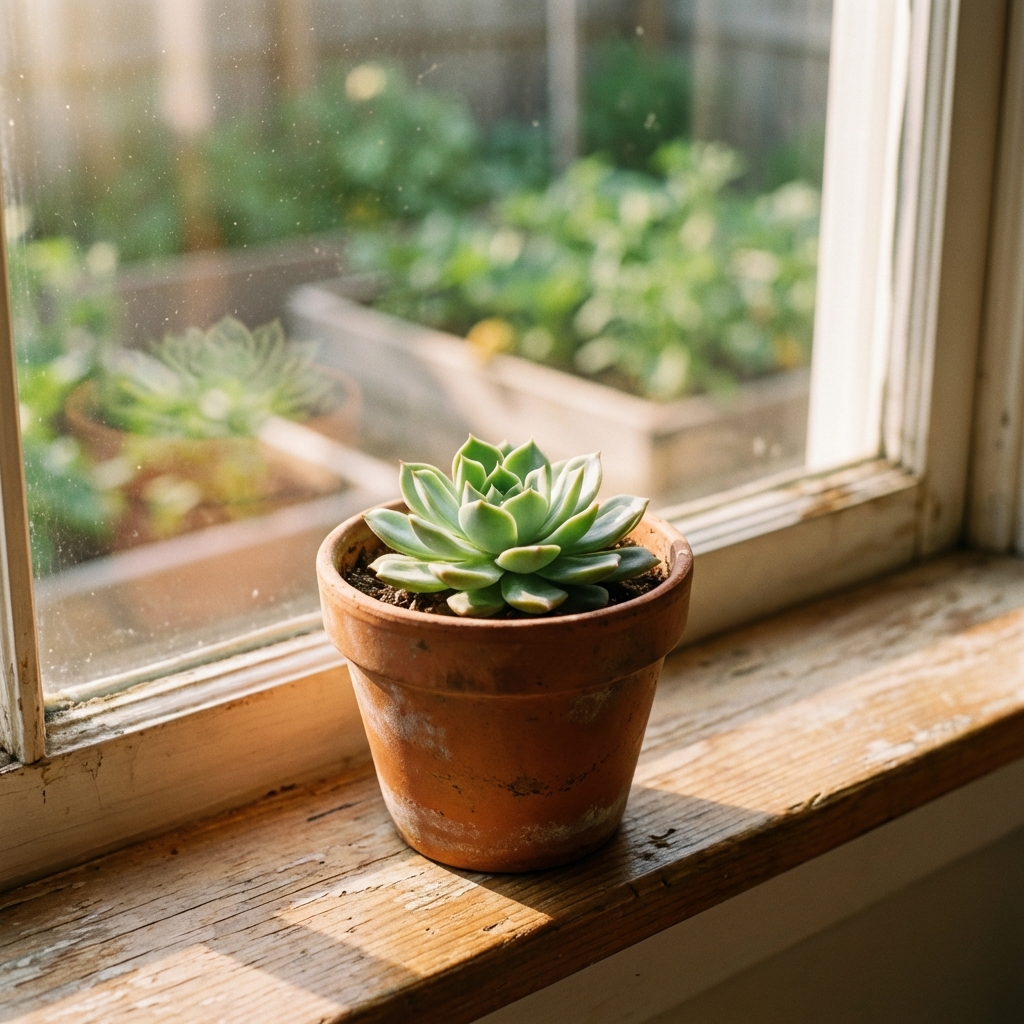
Know what succulents need indoors
Succulents store water in their leaves and stems. Indoors, that means they want:
- Bright light for steady growth and tight, compact shape.
- Fast-draining soil so roots can breathe.
- Deep, infrequent watering followed by a full dry-out.
- Airflow and a pot with a drainage hole to reduce rot.
Think “soak and dry,” not “sip and stay damp.”
Light: the make-or-break factor
If your succulents are struggling indoors, light is usually the reason. Most popular house succulents (Echeveria, many Crassula, sedums, kalanchoe) want more sun than people expect.
Best window locations
- South-facing (Northern Hemisphere): usually best. Brightest, most consistent.
- West-facing: strong afternoon sun, good for sun-lovers.
- East-facing: gentler morning light, fine for lower-light succulents, may be weak in winter.
- North-facing: often too dim for most succulents without a grow light.
Signs your succulent needs more light
- Stretching (long gaps between leaves, leaning toward the window)
- Flattening or “opening up” instead of a tight rosette
- Color fading from vibrant tones to plain green
Grow lights that actually help
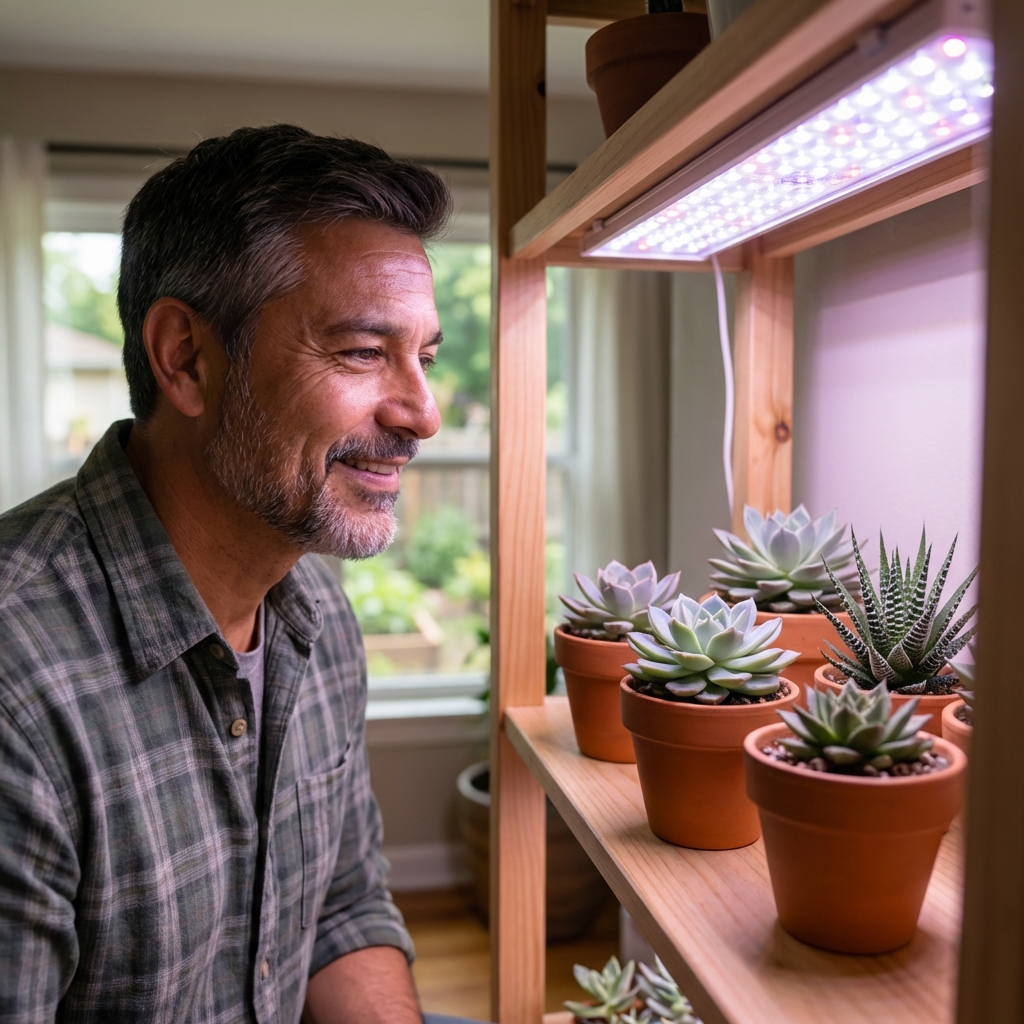
If you do not have a bright window, a grow light is the simplest fix. Look for a full-spectrum LED grow light and keep it close enough to matter.
- Distance: often 6 to 12 inches above the plant (follow your light’s guidance, then adjust based on growth).
- Duration: 10 to 14 hours per day for most succulents.
- Tip: use a timer so you are not guessing.
Watering: a simple method that prevents rot
Indoor succulents die from too much water far more often than too little. The trick is watering based on dryness, not the calendar.
The soak-and-dry routine
Wait until the soil is fully dry all the way down. The top inch being dry is not enough.
Water thoroughly until water runs out the drainage hole.
Empty the saucer so the pot is not sitting in water.
Do not water again until the soil dries completely.
How to tell if it is truly dry
- Lift the pot: dry pots feel noticeably lighter.
- Use a skewer: insert a wooden skewer and pull it out. If it comes out cool or dark, wait.
- Check the leaves: slightly softer, less plump leaves can mean it is time. Mushy leaves are a warning sign of rot, not thirst.
Typical indoor watering frequency
This varies a lot by light, pot size, and season, but a rough starting point:
- Spring and summer: every 10 to 21 days
- Fall and winter: every 3 to 6+ weeks
If your home is cool and your light is weak in winter, they may barely drink at all.
Soil: why “cactus mix” alone often fails
Many bagged cactus soils still hold too much moisture indoors, especially in plastic pots or low light. You want a mix that drains fast and dries evenly.
A reliable indoor succulent soil mix
Use one of these easy options:
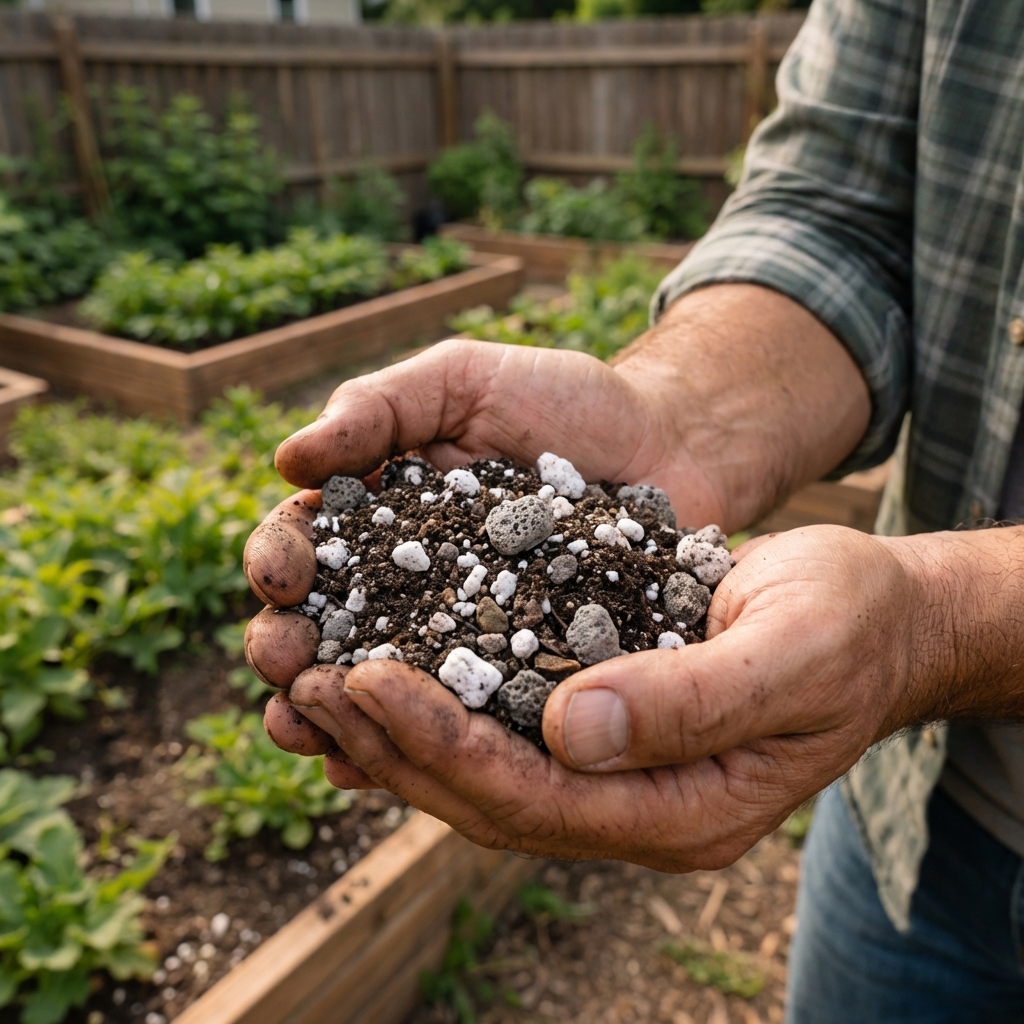
- Option A (fast and easy): 1 part cactus soil + 1 part perlite or pumice
- Option B (extra gritty): 1 part cactus soil + 2 parts pumice/perlite (great for heavy waterers)
Avoid adding sand from the yard. It can compact and slow drainage.
Pots and drainage: choose the right container
The pot is part of your watering system. Indoors, the safest setup is a pot with a drainage hole and a soil mix that does not stay wet.
Terracotta vs plastic
- Terracotta: breathable and dries faster. Great for beginners and low-light homes.
- Plastic: holds moisture longer. Works well if you have strong light and you are careful with watering.
Pot size matters
Succulents like to be slightly snug. A pot that is too large holds excess wet soil that roots cannot use. Choose a pot that is about 1 to 2 inches wider than the root ball.
What about pots without drainage?
If you love a decorative pot without holes, use it as a cachepot:
- Keep the plant in a nursery pot with drainage.
- Set that pot inside the decorative container.
- After watering, let it drain fully before placing it back.
Temperature, humidity, and airflow
Most succulents are comfortable in normal indoor temperatures.
- Best range: roughly 60 to 80°F (16 to 27°C)
- Keep away from: cold window drafts, heat vents, and radiators
- Humidity: average indoor humidity is fine. High humidity plus wet soil is where problems start.
Airflow helps the soil dry and discourages fungus. You do not need a fan, just avoid cramming pots tightly together in a dark corner.
Fertilizer: less is more
Succulents do not need heavy feeding. Over-fertilizing can cause weak, floppy growth.
Simple feeding plan
- Fertilize only during active growth (often spring and summer).
- Use a balanced fertilizer at 1/4 to 1/2 strength.
- Feed once a month or even once every 6 to 8 weeks.
If your plant is in low light or resting in winter, skip fertilizer.
Repotting without the drama
Repot when roots fill the pot, the plant dries out extremely fast, or the soil has broken down and stays soggy.
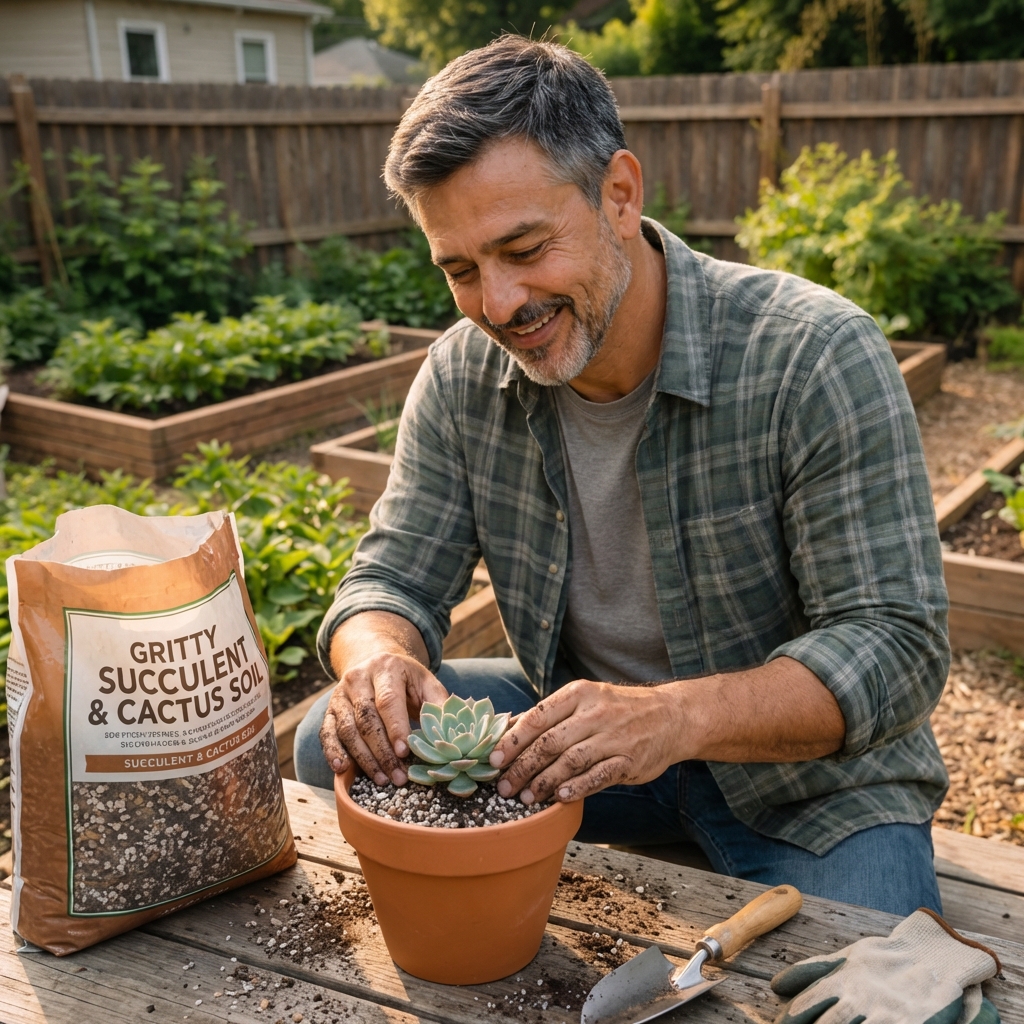
How to repot indoor succulents
Wait for dry soil before repotting. Wet roots tear easily.
Gently remove the plant and shake off loose old soil.
Trim dead, black, or mushy roots with clean scissors.
Place in fresh gritty mix at the same depth as before.
Wait 3 to 7 days before watering to let any root damage callus over.
Common indoor problems and quick fixes
1) Stretching (etiolation)
Cause: not enough light.
Fix: move to a brighter window or add a grow light. Rotate the pot weekly. If the plant is badly stretched, you can behead and re-root the top once it is growing in better light.
2) Mushy leaves or a collapsing base
Cause: overwatering, poor drainage, or soil staying wet too long.
Fix: stop watering, check roots, repot into a gritty mix, and use a pot with drainage. If the base is rotting, take healthy cuttings and restart.
3) Wrinkled leaves
Cause: often thirst, but can also happen if roots are damaged and cannot absorb water.
Fix: confirm the soil is dry, then water deeply. If wrinkles persist and the soil stays wet, inspect roots for rot.
4) Leaves dropping
Cause: stress from sudden changes, overwatering, low light, or temperature swings.
Fix: stabilize the plant’s spot, improve light, and adjust watering.
5) White fuzz, webbing, or sticky residue
Cause: common pests like mealybugs, spider mites, or scale.
Fix: isolate the plant. Dab mealybugs with 70% isopropyl alcohol on a cotton swab. For mites, rinse the plant, improve airflow, and treat with insecticidal soap as needed.
Seasonal care: what changes through the year
Winter
- Light is weaker, days are shorter, growth slows.
- Water less often, sometimes much less often.
- Keep plants closer to the window or use a grow light.
Spring
- Increase watering gradually as growth picks up.
- Great time to repot or start cuttings.
Summer
- Watch for hot glass and sun scorch near intense windows.
- Water may increase, but still let the soil fully dry.
Fall
- Start backing off watering as light drops.
- Stop fertilizing as the plant slows down.
Easy indoor succulent routine
If you want a no-fuss plan, this is the one I recommend for most homes:
- Weekly: rotate pots a quarter turn. Check for pests. Look at new growth and color.
- Every 1 to 3 weeks: test soil dryness, then water deeply only when fully dry.
- Monthly (spring and summer): light feeding at low strength.
- Seasonally: adjust watering for winter, and move plants closer to light as needed.
Succulents reward consistency. Put them in the brightest spot you have, use gritty soil, and water only when they earn it by drying out. That is the indoor combo that keeps them alive for the long haul.

Jose Brito
I’m Jose Britto, the writer behind The Country Store Farm Website. I share practical, down-to-earth gardening advice for home growers—whether you’re starting your first raised bed, troubleshooting pests, improving soil, or figuring out what to plant next. My focus is simple: clear tips you can actually use, realistic expectations, and methods that work in real backyards (not just in perfect conditions). If you like straightforward guidance and learning as you go, you’re in the right place.