Kalanchoe is one of those plants that rewards you for leaving it alone. Give it strong light, a pot that drains fast, and a watering routine that respects its succulent leaves, and it will keep looking good for months. Most kalanchoe problems come from one thing: staying wet for too long.
Know what you are growing
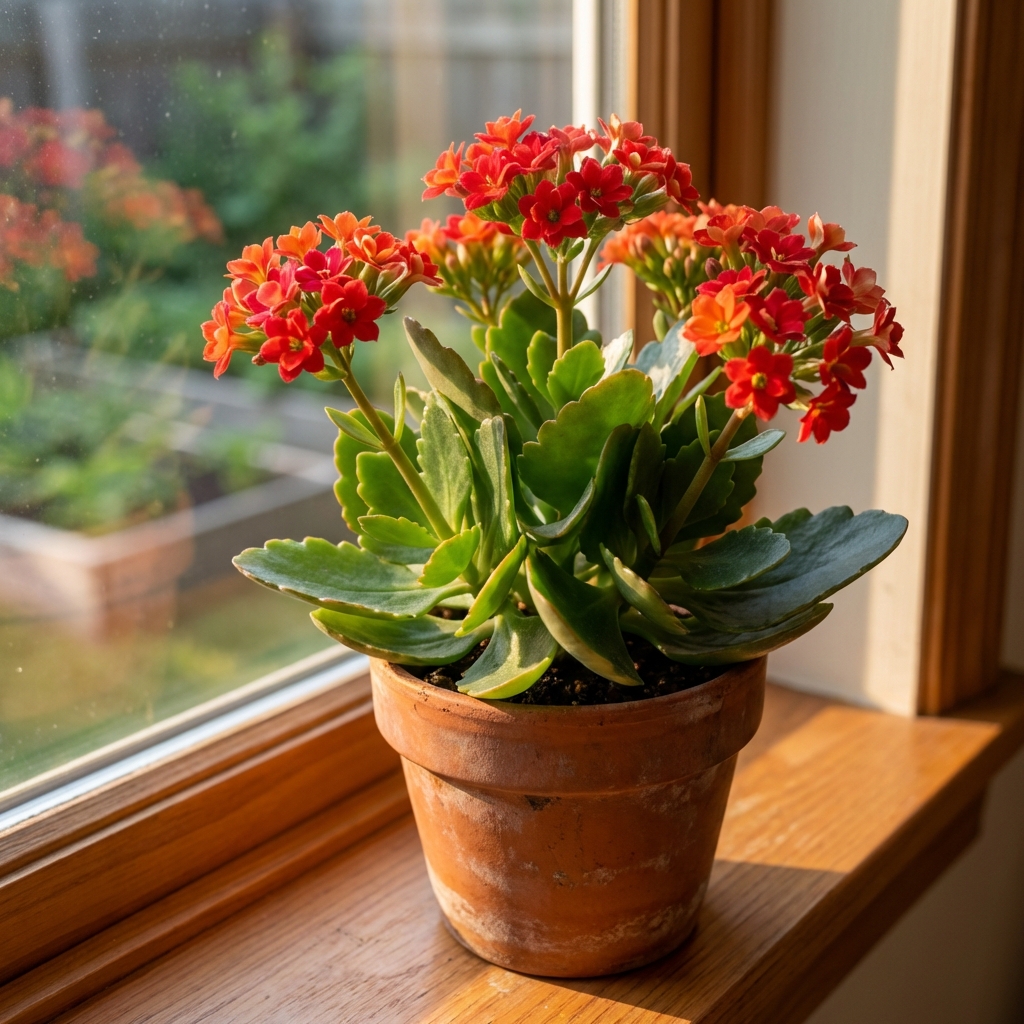
Most houseplant kalanchoes are Kalanchoe blossfeldiana, sold in bright clusters of red, orange, pink, yellow, or white blooms. It is a succulent, which means it stores water in its leaves and stems. That storage is why it tolerates missed waterings, but it also means it can rot if the soil stays soggy.
If you are growing a different type like “mother of thousands” or a fuzzy-leaved variety, the same basic rules apply: bright light, quick drainage, and watering only after the soil dries.
Light: the make or break factor
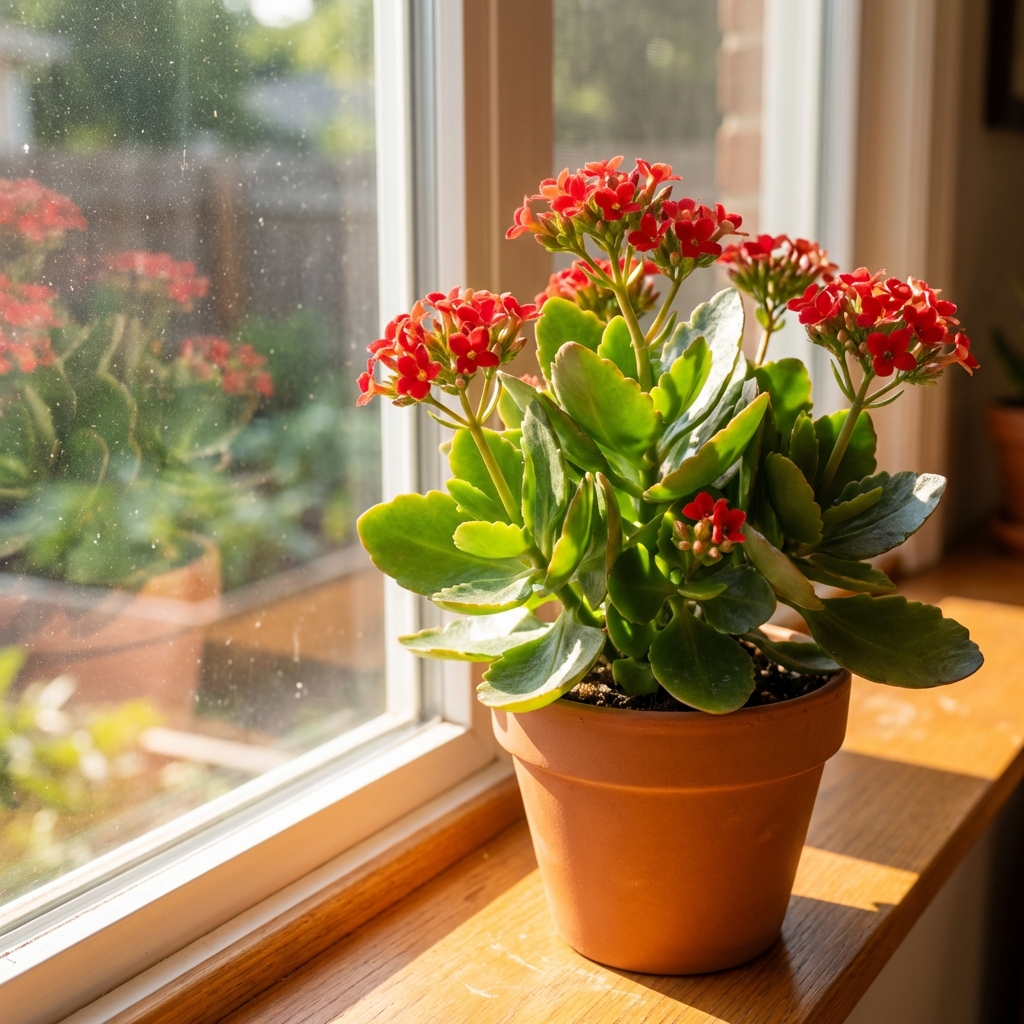
Kalanchoe wants strong bright light. Indoors, the easiest win is placing it right near your brightest window.
- Best indoor spot: The brightest window you have. In the Northern Hemisphere, that is often a south-facing or west-facing window with several hours of sun. In the Southern Hemisphere, it is often north-facing.
- Good alternative: Bright east light with some direct morning sun.
- If it is stretching or leaning: It needs more light. Rotate the pot weekly so it grows evenly.
- If leaves look scorched: Hot afternoon sun through glass can burn. Pull it back a foot or use a sheer curtain.
Watering: less often, more thoroughly
The goal is a simple cycle: fully wet the soil, then let it dry down before watering again. Do not “sip” water a little every day. That keeps the root zone damp and invites rot.
How to water the right way
- Check the soil with your finger. If the top 1–2 inches are dry, you are usually safe to water. In deeper pots, wait until the mix is dry at least halfway down.
- Another easy check: lift the pot. If it feels noticeably light, it is probably time.
- Water until it runs out the drainage hole, then empty the saucer.
- In winter or low-light homes, watering may drop to every 2–4 weeks.
- In bright summer conditions, it may be closer to every 7–14 days.
Practical rule: If you are unsure, wait another 2 days. Kalanchoe handles slight dryness better than staying wet.
Soil and pots: drainage is the whole game
Kalanchoe needs a mix that dries quickly and pulls oxygen into the root zone.
- Best soil: Cactus or succulent mix.
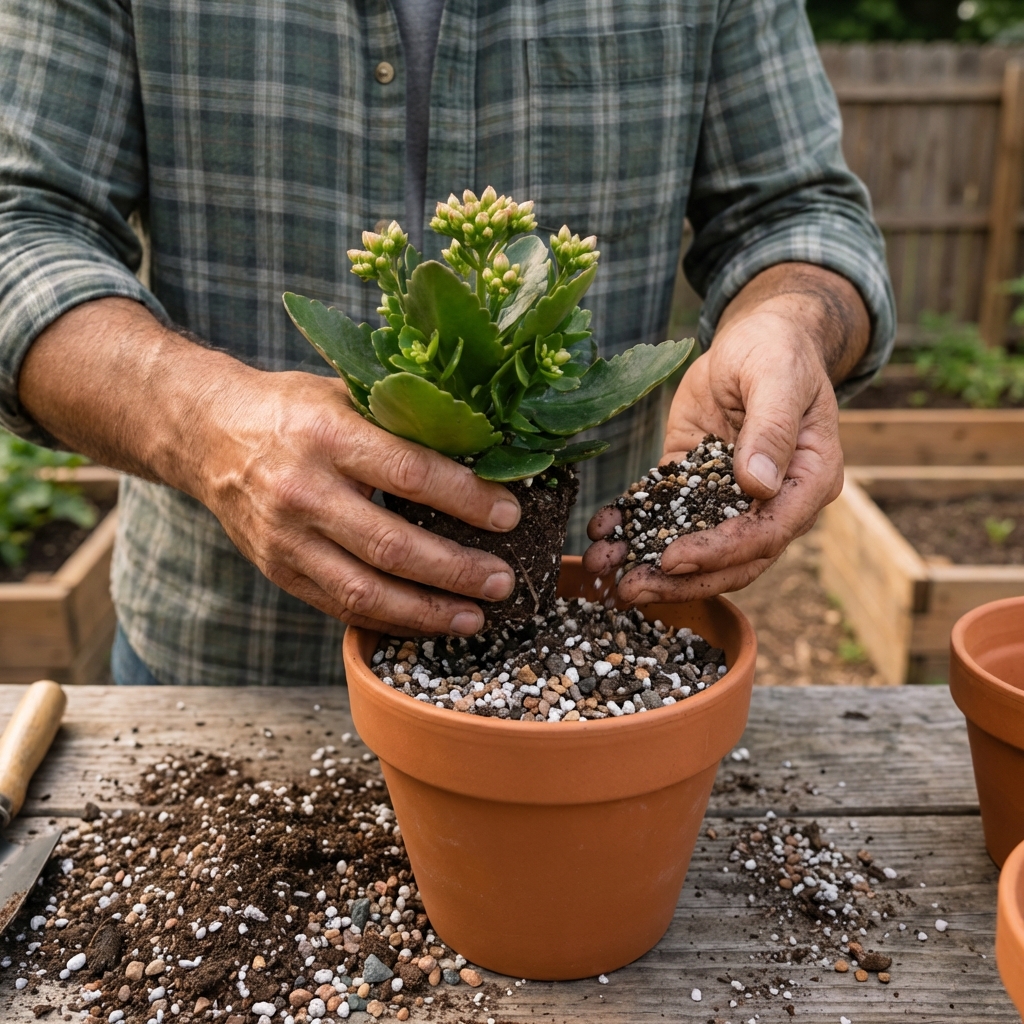
- Even better: Succulent mix plus extra perlite or pumice for faster drainage.
- Pot choice: Use a pot with a drainage hole. Terracotta is forgiving because it breathes and helps soil dry faster.
Avoid heavy “moisture control” mixes for this plant. They stay wet too long.
One common note: Store-bought kalanchoes are often sold in peat-heavy nursery mix that holds water. If yours stays wet for days, consider repotting after it finishes blooming.
Repotting basics
Kalanchoe does not need frequent repotting. It actually prefers being a bit snug.
- When: After flowering is a good time, or anytime it dries very slowly, smells sour, or the roots are circling the pot.
- How often: Typically every 1–2 years is plenty.
- Size rule: Go up just 1 pot size. Oversized pots hold extra wet soil and raise rot risk.
Temperature and humidity
Kalanchoe is comfortable in typical home conditions.
- Ideal range: About 60–80°F (16–27°C).
- Cold warning: Protect from temps below 50°F (10°C), especially near drafty windows.
- Humidity: Average household humidity is fine. High humidity plus wet soil is when problems start.
Fertilizer: light feeding, not heavy
Kalanchoe does not need much fertilizer. Too much can lead to weak growth and fewer blooms.
- Feed during active growth in spring and summer, about once a month.
- Use a balanced houseplant fertilizer at half strength, or a succulent fertilizer following label rates.
- Skip feeding in late fall and winter when growth slows.
Pruning and deadheading
Pruning keeps kalanchoe compact and encourages fresh growth. If yours is blooming, the easiest improvement is deadheading.
After or during bloom
- Pinch or snip off spent flower clusters down to the first healthy leaves.
- Trim leggy stems back by up to one third to encourage branching.
- Remove any yellowing leaves at the base so air can move around the plant.
Always use clean scissors or pruners. Sticky sap is normal on cut stems.
How to get kalanchoe to rebloom
This is the part most people never hear at the store: many kalanchoes are short-day plants. They set buds when nights are long.
Simple rebloom routine
- For about 6–10 weeks, give the plant 12–14 hours of uninterrupted darkness each night.
- During the day, keep it in bright light as usual.
- Do not let indoor lamps hit it at night. Even a little light can interrupt bud set.
- A practical setup: move it to a closet, or cover it with a box that blocks light but still allows airflow.
- Keep watering normally during this period, just less often than summer. Do not forget it completely.
- Once you see buds, return to normal light and enjoy the bloom cycle. Slightly cooler nights can also help with bud set.
Realistic expectation: Reblooming is doable, but it is easier if the plant is healthy, not root rotted, and getting enough daytime light.
Common kalanchoe problems and quick fixes
Yellow leaves
- Most common cause: Overwatering or slow draining soil.
- Fix: Let soil dry further between waterings, confirm a drainage hole, and consider repotting into a gritty succulent mix.
Drooping or soft stems
- Cause: Root rot from staying wet, sometimes paired with low light.
- Fix: Stop watering, move to brighter light, and check roots. If roots are black and mushy, take healthy cuttings and restart.
Leggy growth with spaced out leaves
- Cause: Not enough light.
- Fix: Move closer to a sunny window or add a grow light. Prune back to promote branching.
Leaves dropping
- Cause: Stress from cold drafts, sudden light change, or inconsistent watering.
- Fix: Stabilize conditions, avoid cold windows at night, and water only when the pot is mostly dry.
No blooms
- Cause: Too little light, too much nitrogen, or no long nights.
- Fix: Increase light, reduce feeding, and use the 12–14 hour darkness routine for 6–10 weeks.
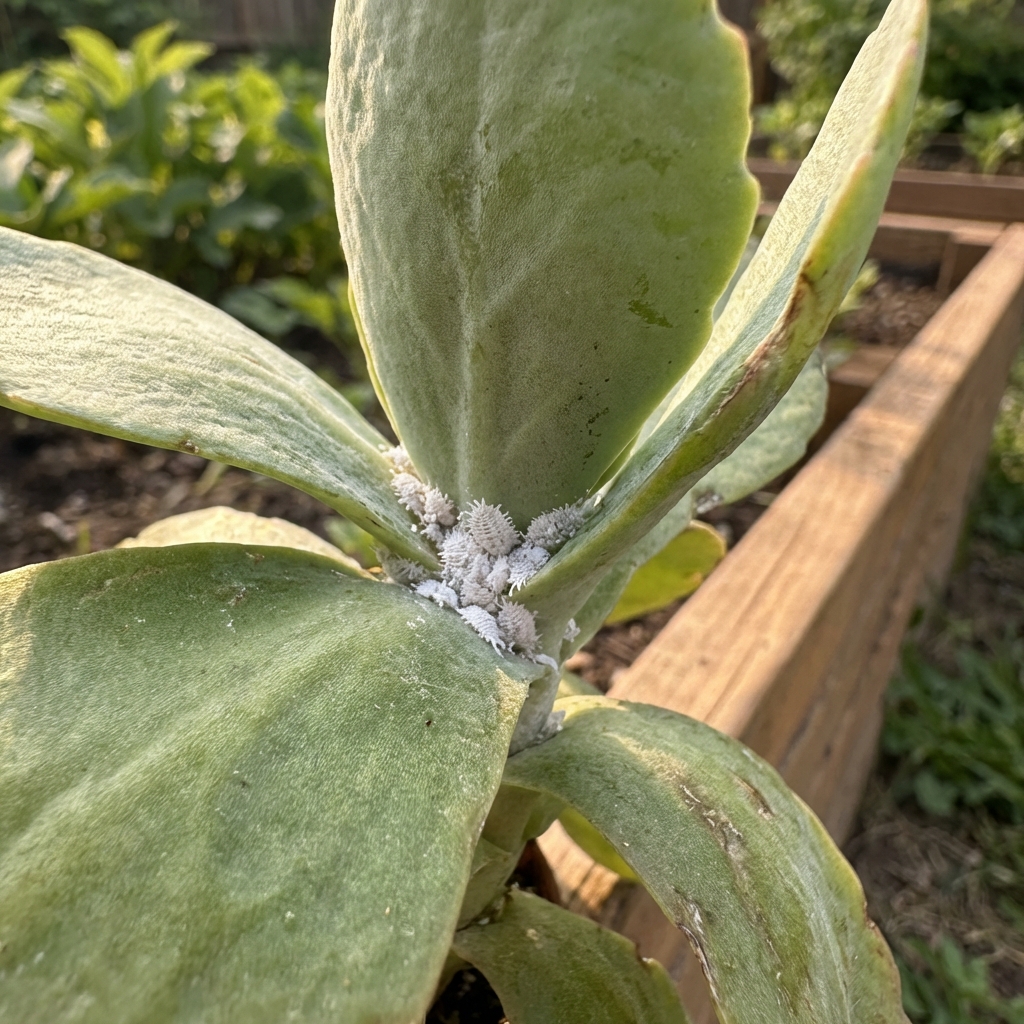
Pests: mealybugs, aphids, spider mites
- Inspect leaf joints and undersides regularly.
- For mealybugs, wipe pests off with a cotton swab dipped in 70% isopropyl alcohol.
- Caution: Test alcohol on a small area first, and avoid dripping it into the soil or soaking the plant.
- Use insecticidal soap for aphids and mites, repeating weekly for a few rounds.
- Isolate the plant while treating to avoid spreading pests.
Propagating kalanchoe the easy way
If your plant gets leggy or you want backups, propagation is straightforward.
- Take a healthy stem cutting 3–5 inches long.
- Remove the bottom leaves.
- Let the cutting sit out for 1–2 days so the cut end dries and calluses.
- Plant in lightly moist succulent mix.
- Keep in bright, indirect light until it roots, then gradually increase sun.
Water sparingly until you see new growth. Overwatering fresh cuttings is the most common mistake.
Outdoor time: summering outside
Kalanchoe can enjoy a summer vacation outdoors, but it needs a slow transition.
- Acclimate: Start in bright shade for a few days, then gradually increase sun to avoid sunburn.
- Weather: Keep it out of frost and cold snaps. Bring it in when nights dip near 50°F (10°C).
- Rain: Shelter it from heavy rain so the pot does not stay soaked.
Safety note for pets and kids
Kalanchoe is considered toxic if ingested by pets, especially cats and dogs. It contains compounds that can affect the heart in severe exposures. If you have curious nibblers, keep it out of reach or choose a pet-safe plant instead. If ingestion happens and symptoms show up like vomiting, lethargy, or weakness, contact a veterinarian promptly.
Quick care checklist
- Light: Bright light, some direct sun
- Water: Soak, then dry out well
- Soil: Cactus or succulent mix with extra drainage
- Pot: Drainage hole required, terracotta preferred
- Fertilizer: Light monthly feeding in spring and summer
- Rebloom: 12–14 hours of darkness nightly for 6–10 weeks
If you get those right, kalanchoe becomes one of the easiest flowering houseplants to keep looking sharp year-round.

Jose Brito
I’m Jose Britto, the writer behind The Country Store Farm Website. I share practical, down-to-earth gardening advice for home growers—whether you’re starting your first raised bed, troubleshooting pests, improving soil, or figuring out what to plant next. My focus is simple: clear tips you can actually use, realistic expectations, and methods that work in real backyards (not just in perfect conditions). If you like straightforward guidance and learning as you go, you’re in the right place.