Avocados are one of those foods that go from “not ready yet” to “brown and sad” in what feels like five minutes. The good news is you can slow that down with a few simple habits and a couple of smart DIY methods.
This guide is beginner-friendly and realistic. No fancy gadgets required, and I’ll tell you when a popular tip is more hype than help.
- Big idea: Less air + a little acid + cold (when appropriate) = slower browning.
- Skim-friendly plan: Ripen on the counter, refrigerate when ripe, and seal cut surfaces tightly.
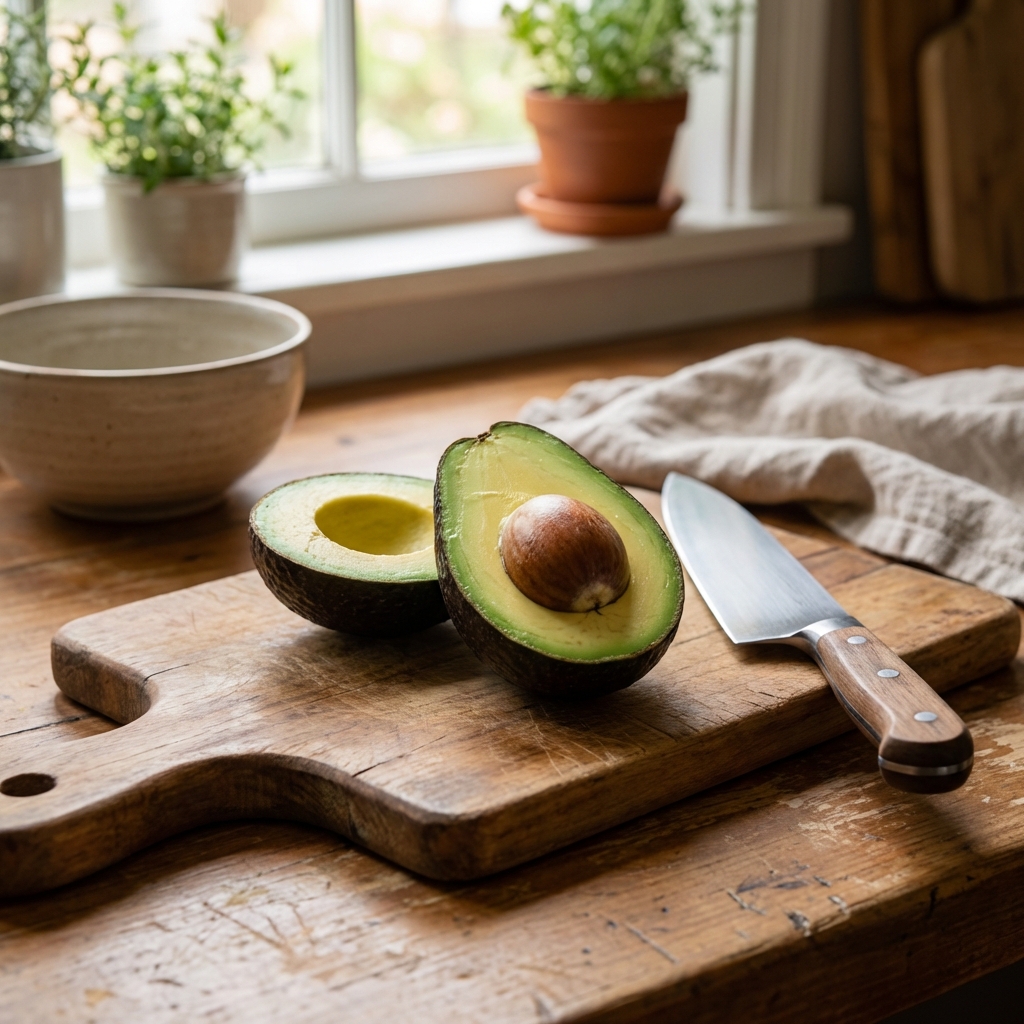
Quick ripeness check
Storage depends on ripeness, so here’s the fast way to tell where you’re at.
- Gentle squeeze: Ripe avocados give slightly. If it’s hard, it needs time. If it feels very soft or mushy, it’s past its prime.
- Stem-cap peek (if it has one): Flick off the little nub at the top. Green underneath usually means good. Brown underneath often means overripe inside.
Why avocados turn brown
The browning is mostly enzymatic oxidation. When the avocado flesh is exposed to air, an enzyme (polyphenol oxidase) reacts with oxygen and forms brown pigments. Two key takeaways:
- Less air contact means slower browning.
- More acidity (like lemon or lime juice) slows the enzyme down.
Temperature matters too. Cold storage slows oxidation and softening, but putting unripe avocados in the fridge can slow ripening a lot. Texture issues are more likely if they stay cold for several days or get chilled too long before they are ready.
Pick your situation
1) Whole avocado
If it’s unripe: keep it on the counter at room temperature. The fridge will slow ripening significantly, and if it sits cold for several days it can lead to uneven ripening or a less pleasant texture.
If it’s ripe: move it to the fridge. This is the easiest DIY win. A ripe avocado in the fridge often buys you 2 to 3 extra days, sometimes up to about 5, depending on how ripe it was and how cold your fridge runs.
Quick ripening tip: place an unripe avocado in a paper bag with a banana or apple. The fruit releases ethylene gas, which speeds ripening.
2) Cut avocado (halved or sliced)
Once it’s cut, your goal is to reduce air contact and add a little acid.
- Brush or rub with lemon or lime juice (or a thin layer of vinegar if that’s what you have).
- Keep it as intact as possible. A half browns slower than chopped chunks.
- Seal it well. Tight wrap or an airtight container matters more than any “special” gadget.
3) Mashed avocado (guacamole or spread)
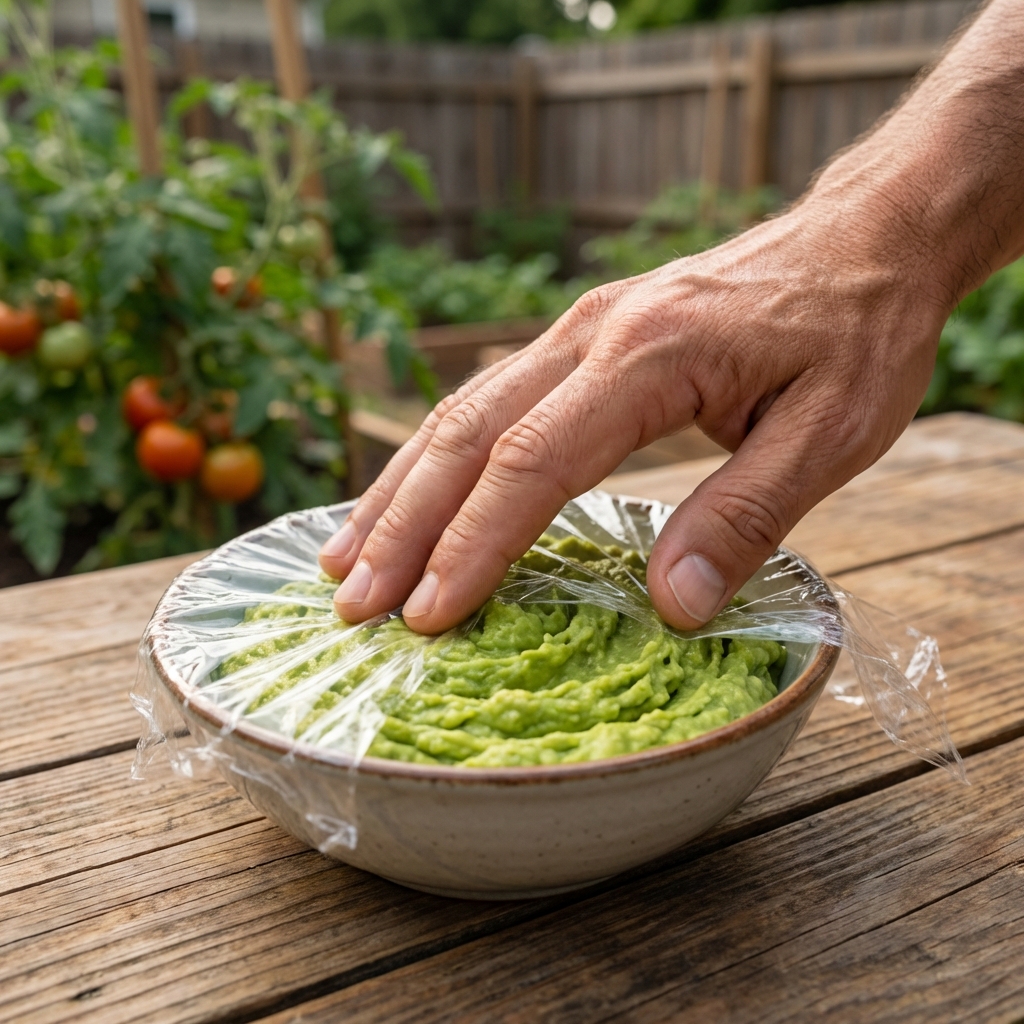
Mashed avocado has a lot of surface area, so it browns fastest. The trick is creating a barrier between the avocado and the air.
Best beginner method: press plastic wrap directly onto the surface (no air pockets) and then cover with a lid.
DIY methods that work
Method A: Citrus + wrap
This is my go-to for a half avocado you want tomorrow.
- Cut the avocado and remove what you need.
- Leave the pit in the remaining half if it’s already there. It only protects the spot it covers, but it can help a little.
- Brush the exposed flesh lightly with lemon or lime juice.
- Wrap so the wrap touches the flesh (no gaps).
- Refrigerate. If you’re using a container, store cut-side down.
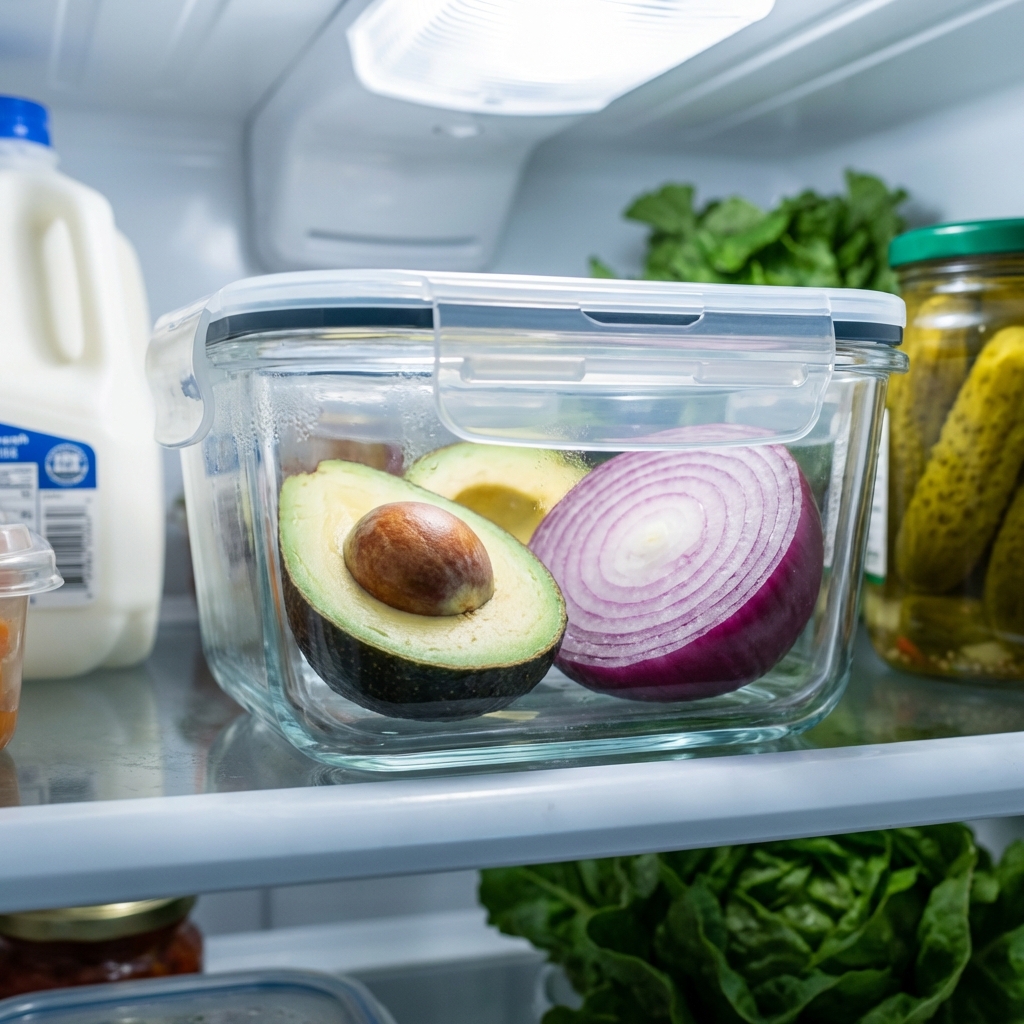
Method B: Airtight container + onion (a mixed-evidence hack)
This one sounds odd, but it can work well for short storage. Some people credit onion compounds, but honestly, a lot of the benefit is likely from tight storage with less air space.
- Place a thick slice of red or yellow onion in the bottom of a small airtight container.
- Set the avocado half on top. Cut-side down often browns slower.
- Seal and refrigerate.
Note: The avocado can pick up onion smell. If that bothers you, skip this method.
The water method
You may have seen the “store avocado in water” tip. Here’s the honest version.
For a cut avocado
Submerging a cut avocado half in water can reduce browning by blocking oxygen, but it’s not my first recommendation. It can dull flavor and mess with texture.
If you do it anyway, keep it cold, clean, and short term:
- Use a clean container and clean water.
- Place the avocado half in a small container.
- Add cold water to cover the exposed flesh.
- Seal, refrigerate at 40°F/4°C or below, and use within 24 hours.
For a whole avocado
Storing a whole avocado submerged in water is not recommended for home storage. The concern is bacterial growth on the skin that can be transferred to the flesh when you cut it later. Stick to counter ripening, then fridge storage once ripe.
Containers and wraps
Airtight beats “special”
You don’t need a dedicated avocado saver, but you do need a good seal.
- Small glass container: great because it reduces extra air space.
- Reusable silicone bag: works well if you press out the air.
- Plastic wrap: still one of the best for direct surface contact.
- Beeswax wrap: okay for short periods, but it often doesn’t seal as tightly as plastic wrap.
How long it stays fresh
- Whole, unripe (counter): typically 2 to 7 days to ripen.
- Whole, ripe (fridge): often 2 to 3 extra days, sometimes up to about 5.
- Cut half (citrus + wrap, fridge): usually 1 to 2 days with minimal browning.
- Mashed (wrap pressed to surface, fridge): about 1 day, sometimes 2 if well sealed and acidic.
Even with perfect storage, the very top layer might darken slightly. You can often scrape off a thin brown layer and the avocado underneath is still fine. If browning is deep, the texture is slimy, or it smells off, don’t try to save it.
Common mistakes
- Refrigerating unripe avocados for days: slows ripening a lot and can lead to uneven ripening or texture issues.
- Leaving lots of air in the container: extra oxygen speeds browning.
- Storing chopped pieces instead of a half: more surface area equals faster browning.
- Using too much citrus: a little slows browning, a lot can make it taste sharp and “cooked.”
- Trying to rescue an overripe avocado: once it’s stringy or has large brown areas inside, storage tricks won’t save it.
Quick steps: save a half for tomorrow
- Keep the avocado half intact (don’t dice it).
- Rub or brush a thin layer of lemon or lime juice on the cut face.
- Wrap so the wrap touches the flesh, then place it in the fridge.
- Use within 24 to 48 hours for best taste and texture.
FAQ
Does leaving the pit in stop browning?
Only partially. The pit blocks air where it touches, but the exposed flesh still browns. It helps a little, but sealing the surface matters more.
Does plastic wrap really make a difference?
Yes, when you press it directly onto the avocado. That direct contact blocks oxygen better than a loose cover or a big container full of air.
Can I freeze avocado?
Yes. Freeze mashed avocado with a little lemon or lime juice in an airtight bag with the air pressed out. Freeze in portions so you can thaw only what you need. Thaw overnight in the fridge. Texture will be softer after thawing, so it’s best for smoothies, spreads, or guacamole, not neat slices.
Is brown avocado unsafe?
Light surface browning from oxidation is usually a quality issue, not a safety issue. Toss it if it smells sour or fermented, has visible mold, feels slimy, or tastes “off.”
My simple rule
If you want avocados to last longer, focus on three things: ripen on the counter, refrigerate when ripe, and when it’s cut, acid + airtight contact. Do that and you’ll waste fewer avocados without making it complicated.

Jose Brito
I’m Jose Britto, the writer behind The Country Store Farm Website. I share practical, down-to-earth gardening advice for home growers—whether you’re starting your first raised bed, troubleshooting pests, improving soil, or figuring out what to plant next. My focus is simple: clear tips you can actually use, realistic expectations, and methods that work in real backyards (not just in perfect conditions). If you like straightforward guidance and learning as you go, you’re in the right place.