Bananas are one of those groceries that feel like they go from green to brown in just a few days. The good news is you do not need fancy gadgets to slow them down. You just need to understand what makes bananas ripen, then use a few simple habits that work in a normal kitchen.
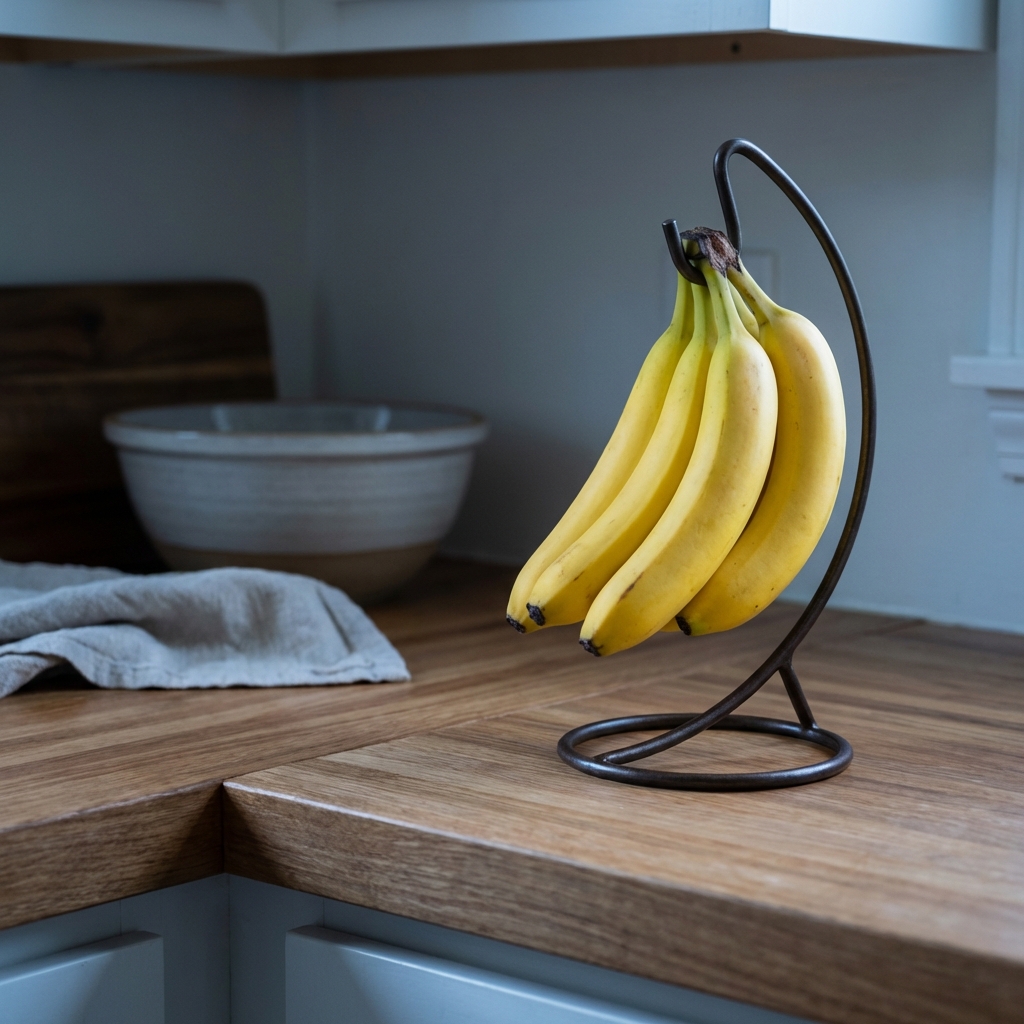
Why bananas ripen so fast
Bananas are heavy producers of ethylene gas, a natural plant hormone that triggers ripening. As bananas ripen, they produce more ethylene, which speeds ripening even more. Heat and trapped ethylene (like in a closed bag) speed it up, too.
If your bananas are ripening too quickly, one or more of these is usually happening:
- They are warm (near an oven, sunny window, on top of the fridge, or close to a heater).
- They have low airflow (packed in a fruit bowl, piled under other groceries, or stored in a closed container).
- They are stored with ethylene-producing fruits like apples, avocados, pears, peaches, and tomatoes.
Rule of thumb: cool + separate + breathable wins.
The best everyday method
1) Keep them cool, but not cold
For bananas that are still green to just turning yellow, aim for a spot that stays around normal room temperature but away from heat sources. A shaded counter is usually better than a fruit bowl that sits in sun.
- Good spots: a shaded counter, pantry shelf with airflow.
- Bad spots: near the stove, next to a coffee maker, above the dishwasher vent, in direct sun.
2) Separate bananas from other fruit
If you keep bananas in the same bowl as apples or avocados, you are basically speeding everything up. Give bananas their own space.
3) Split the bunch (optional, but helpful)
Splitting a big bunch into smaller clusters (even 2 or 3 bananas) can help slightly. It reduces crowding around the crown and improves airflow, which may slow ripening a bit. Temperature and fruit separation still matter more.
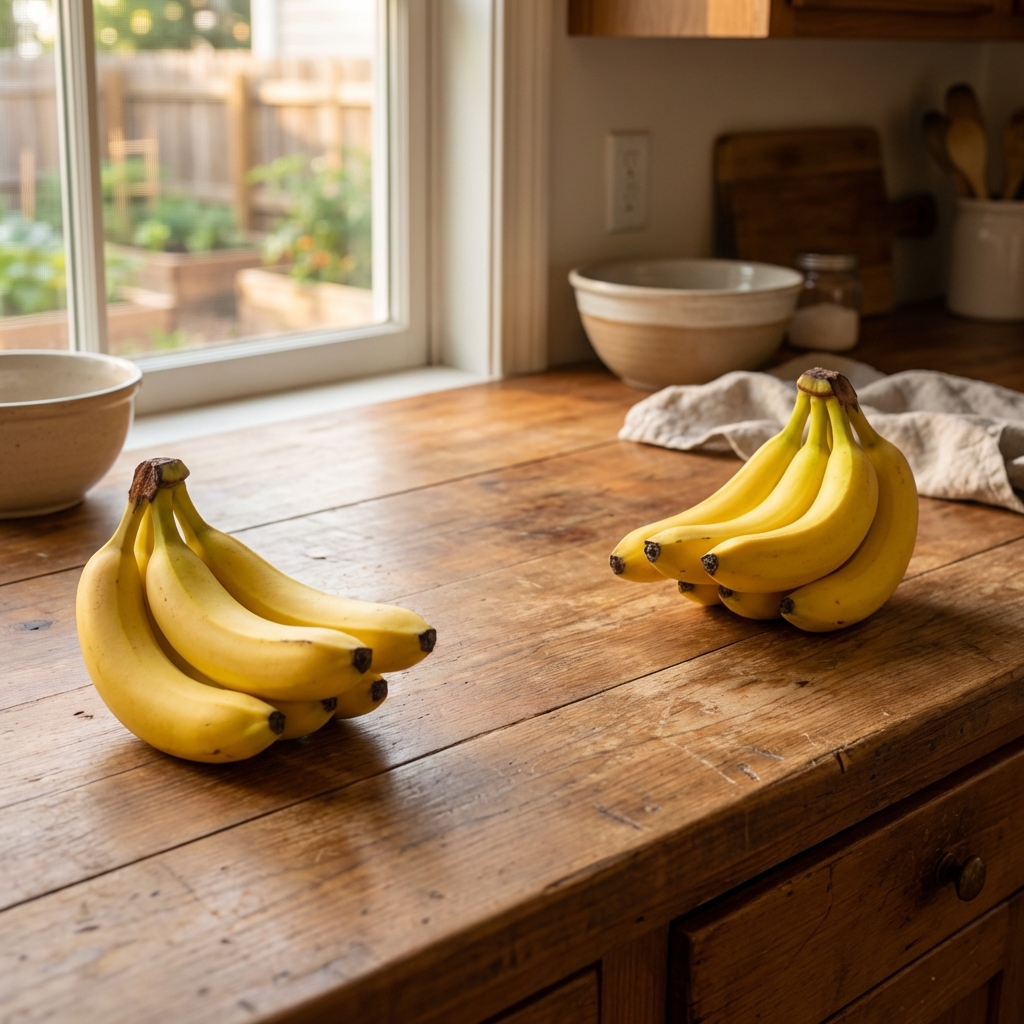
4) Add airflow
Do not store bananas in a sealed plastic bag unless you are trying to ripen them faster. A closed bag traps ethylene and moisture and can speed ripening (especially in a warm kitchen). If you need to contain them, use a breathable option like a bowl with open air around it.
Does wrapping the stems work?
Wrapping banana stems can help a little, especially when bananas are already fairly ripe, but results vary. The idea is to reduce how much ethylene escapes from the stem area and circulates around the fruit.
If you want to try it:
- Wrap the crown (where the bananas join) with plastic wrap or foil.
- Make it snug, and rewrap if it loosens.
- Combine this with splitting the bunch for the best chance of a small improvement.
Realistic expectation: this might buy you a day or two, not a full week.
When to use the fridge
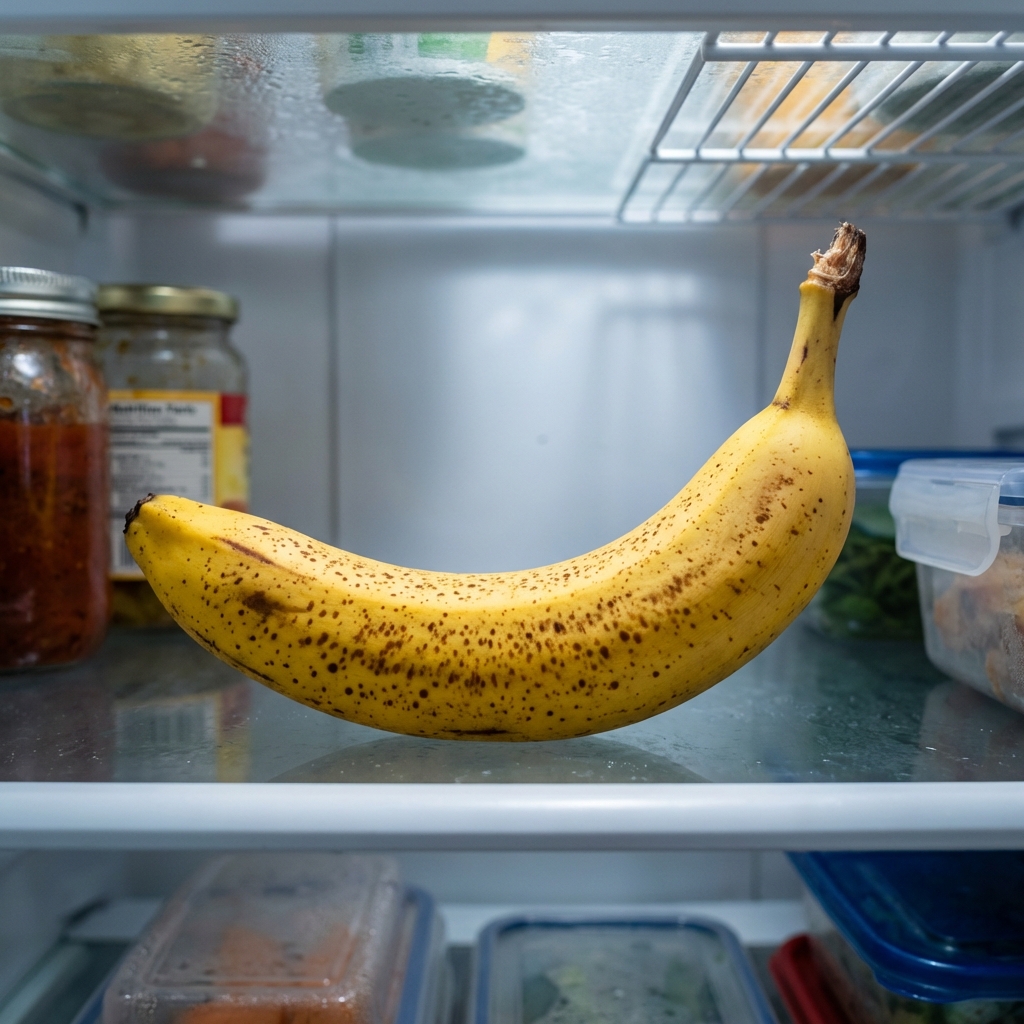
Once bananas are the ripeness you like, the fridge is your friend. Cold temperatures slow ripening dramatically.
- Yes, the peel will turn brown. That is normal in the fridge.
- The inside stays good longer. The fruit can hold at that ripeness for several days.
Best time to refrigerate: when bananas are mostly yellow and you want to pause them there. (If yours are still very green, see the FAQ below. Refrigerating too early can lead to darker peels and uneven ripening.)
Freezing bananas for zero waste
If your bananas are already heading toward overripe and you will not eat them in time, freezing is the easiest save. Frozen bananas are perfect for smoothies, banana bread, muffins, oatmeal, and ice-cream-style blends (sometimes called “nice cream”).
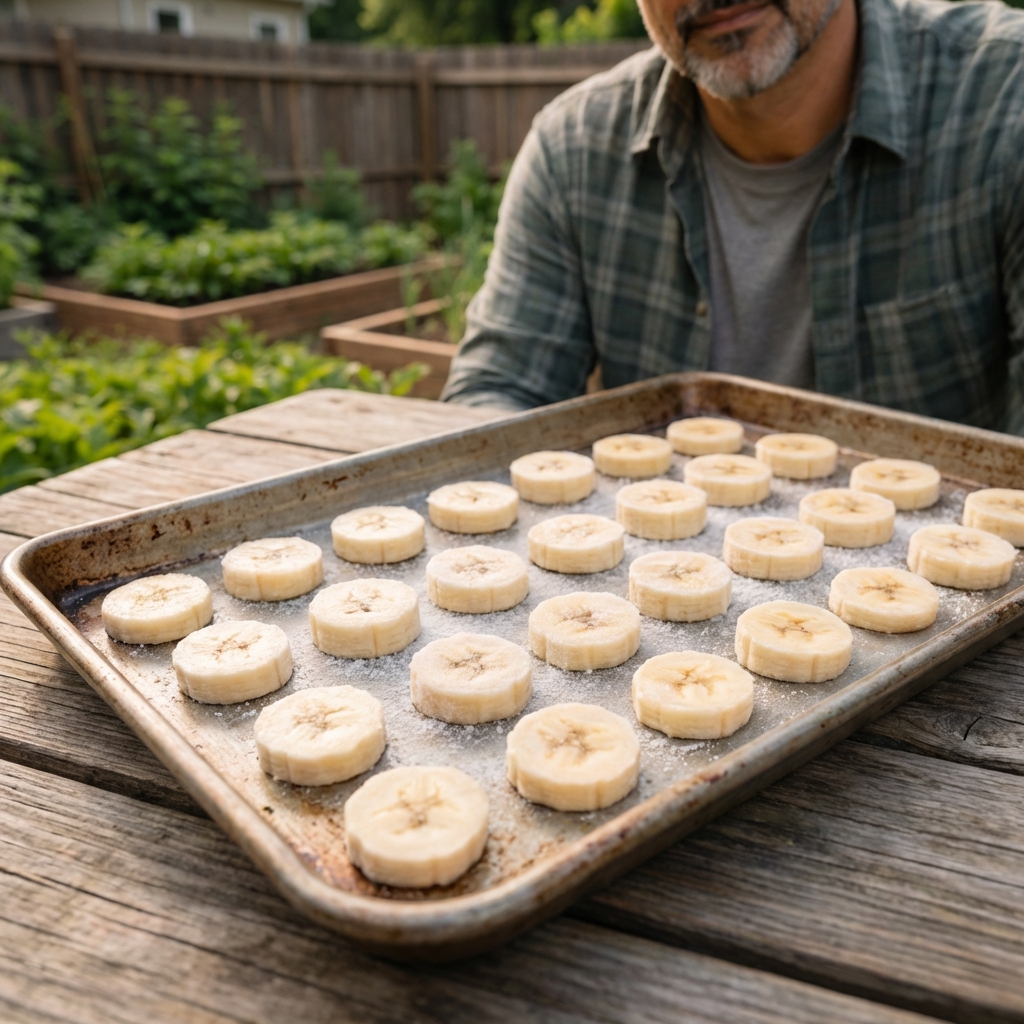
How to freeze bananas the clean way
- Peel them first (frozen peels are a pain).
- Slice into coins if you want easy measuring later.
- Freeze on a tray for 1 to 2 hours, then move to a freezer bag or container.
Tip: write the date on the bag. Best quality is usually within 2 to 6 months, but they remain safe longer if stored well.
Quick fixes
Bananas are yellowing faster than expected
- Move them away from other fruit.
- Get them out of sun and away from warm appliances.
- Improve airflow (do not seal them in a bag).
- If they are already at your preferred ripeness, refrigerate them.
Bananas are getting brown spots overnight
- They are probably warm or getting extra ethylene from nearby produce.
- Refrigerate to slow the speed-ripening cycle.
- Use the ripest ones first, and freeze the extras.
Bananas are bruising and turning brown in patches
That is often handling, not ripening. Bananas bruise easily. Try not to stack heavy items on them and avoid tossing them into bags unprotected.
How to buy bananas
Storage helps, but your best trick is buying a mix of ripeness so you are not racing the clock.
- For later in the week: buy more green bananas.
- For quick eating: buy a couple that are already yellow.
- For baking soon: choose bananas with brown speckles.
If you only see green bananas at the store and need some sooner, keep a couple near apples to speed ripening, and keep the rest away to slow it down.
Common storage mistakes
- Storing them in a closed bag: traps ethylene and moisture.
- Keeping them in direct sun: warmth pushes ripening fast.
- Leaving them next to apples or avocados: ethylene adds up.
- Waiting too long to refrigerate: if they are perfect today, chill them today.
When to toss bananas
A brown peel alone does not mean a banana is bad. Discard bananas if you notice mold (especially fuzzy spots), a strong fermented smell, leaking liquid, or the fruit is fully mushy with an off taste.
FAQ
Should I put green bananas in the fridge to keep them green?
It is not ideal. Very green bananas can have trouble ripening normally after getting too cold, and the peel may darken early. For green bananas, keep them cool and shaded at room temperature instead. Refrigerate when they reach the ripeness you want to hold.
Do banana hangers actually help?
They can. Hanging reduces bruising and improves airflow around the fruit. It will not stop ripening completely, but it helps bananas stay nicer longer.
Why do bananas turn brown in the fridge if the inside is fine?
The peel is more sensitive to cold than the fruit inside. Cold triggers peel darkening, but it does not mean the banana is spoiled.
A simple routine
If you want an easy system, do this:
- Day 1: keep bananas out of sun, away from other fruit, with airflow.
- When bananas hit your ideal ripeness: move what you will not eat in the next day or two into the fridge.
- When bananas go very speckled: peel and freeze for baking and smoothies.
That routine keeps you eating bananas at their best, without the “everything is brown at once” problem.

Jose Brito
I’m Jose Britto, the writer behind The Country Store Farm Website. I share practical, down-to-earth gardening advice for home growers—whether you’re starting your first raised bed, troubleshooting pests, improving soil, or figuring out what to plant next. My focus is simple: clear tips you can actually use, realistic expectations, and methods that work in real backyards (not just in perfect conditions). If you like straightforward guidance and learning as you go, you’re in the right place.