Raccoons are smart, strong, and wildly persistent. If they can reach your feeder, they will. The good news is you do not need fancy gadgets to win this battle. You need two things: a setup they cannot climb past, and habits that stop you from feeding raccoons by accident.
This guide walks you through a beginner-friendly plan that works in real backyards, not just in perfect conditions.
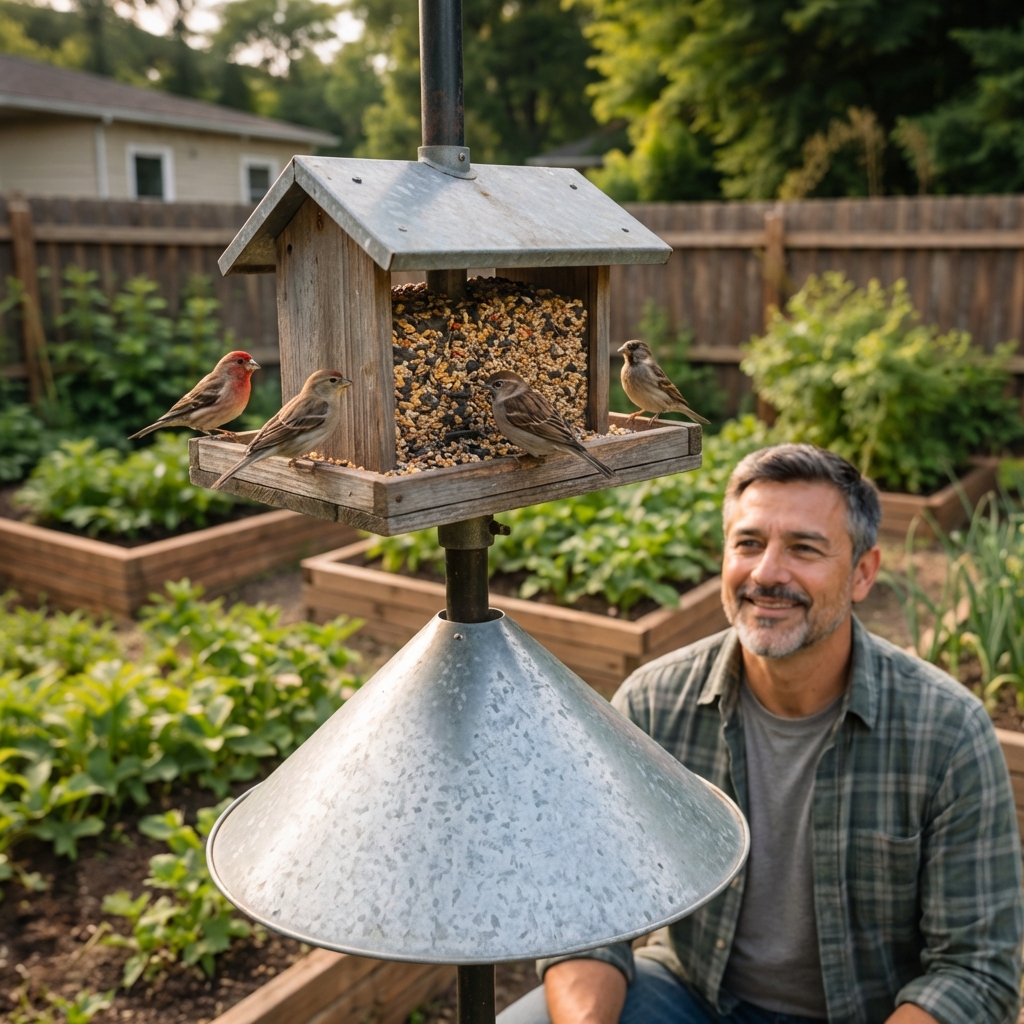
Why raccoons target bird feeders
Bird seed is high-calorie food in an easy-to-find container. Once a raccoon learns your yard has a reliable snack, it will come back and bring friends or young with it.
- They are night feeders. Most raids happen after dark when birds are not using the feeder.
- They climb well. Wood posts, rough poles, deck railings, and nearby trees all become ladders.
- They are problem solvers. If a feeder swings, they brace it. If it spins, they hang on. If it is “locked,” they pry.
That is why raccoon control is mostly about denying access and removing the reward.
The simplest plan that works
Step 1: Move the feeder to the right spot
Placement fixes more problems than any spray or noise device. Use these spacing rules:
- 10 feet from anything they can jump from like a tree trunk, fence, shed roof, deck railing, or stacked firewood.
- At least 4 feet off the ground so they cannot just stand and reach it.
- Use a smooth metal pole if possible. Avoid wood posts and rough surfaces.
If you cannot get 10 feet of clearance, go higher on your baffle and reduce nearby launch points by trimming branches.
Step 2: Add a baffle, and size it correctly
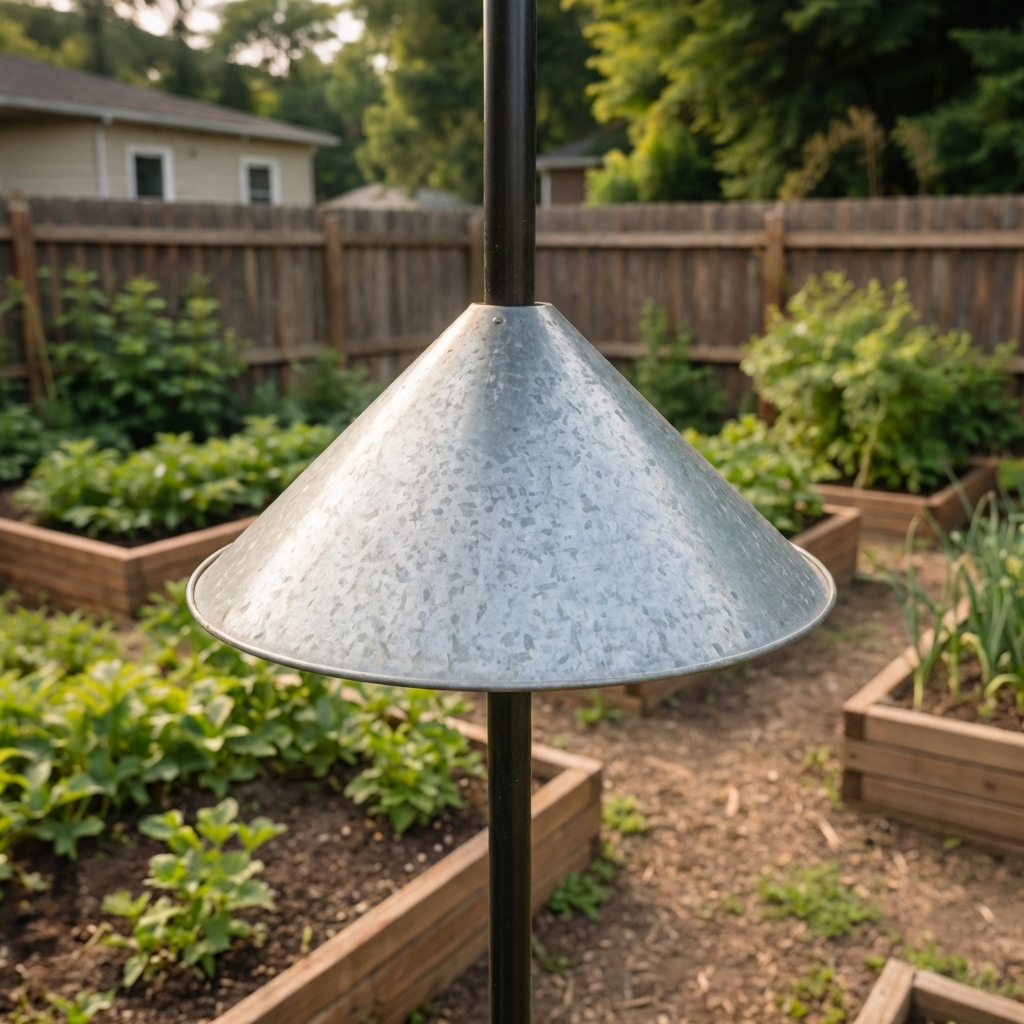
A baffle is the single most effective raccoon-proof upgrade. It is a barrier on the pole that blocks climbing. The key detail is that cone and cylinder baffles need very different sizes.
- If you use a cylinder (stovepipe) baffle: Aim for about 8 inches or wider in diameter, and use a sturdy, smooth metal style.
- If you use a cone baffle: Go much larger. Raccoon-rated cone baffles are typically 18 to 24 inches across. Smaller cones are easy for raccoons to reach around.
- Place it high enough: The bottom of the baffle should be about 4 feet above the ground so raccoons cannot simply reach over it.
- Use a pole-mounted cone or cylinder: Hanging baffles can help, but a solid pole baffle is usually more dependable.
Step 3: Choose feeders that are harder to raid
Raccoons do best with big platform feeders and any feeder mounted to a deck rail. They struggle more with compact feeders on poles when the baffle and spacing are correct. Also, do not underestimate how hard they can pull. Cheap plastic can fail fast.
- Better choices: tube feeders and small hopper feeders on a pole, especially models with metal tops and bottoms or other sturdy construction.
- About caged feeders: A cage can help, but raccoons have long, dexterous fingers and can reach through many standard cages. Cages work best when the mesh sits well away from the seed ports, and they still do best with a proper pole baffle.
- Hard mode: platform feeders, feeders hanging from low branches, feeders on shepherd hooks without a baffle, and anything mounted to a deck or railing.
Step 4: Set a feeding schedule
If raccoons are a regular problem, stop running a 24-hour buffet.
- Fill in the morning. Birds eat most actively early in the day.
- Bring feeders in at dusk for 1 to 2 weeks if you are trying to break a raccoon habit.
- Or feed less. Put out just enough seed that it is mostly gone by late afternoon.
This is the fastest way to reset your yard if raccoons have already learned the routine.
Cleanup: the part most people skip
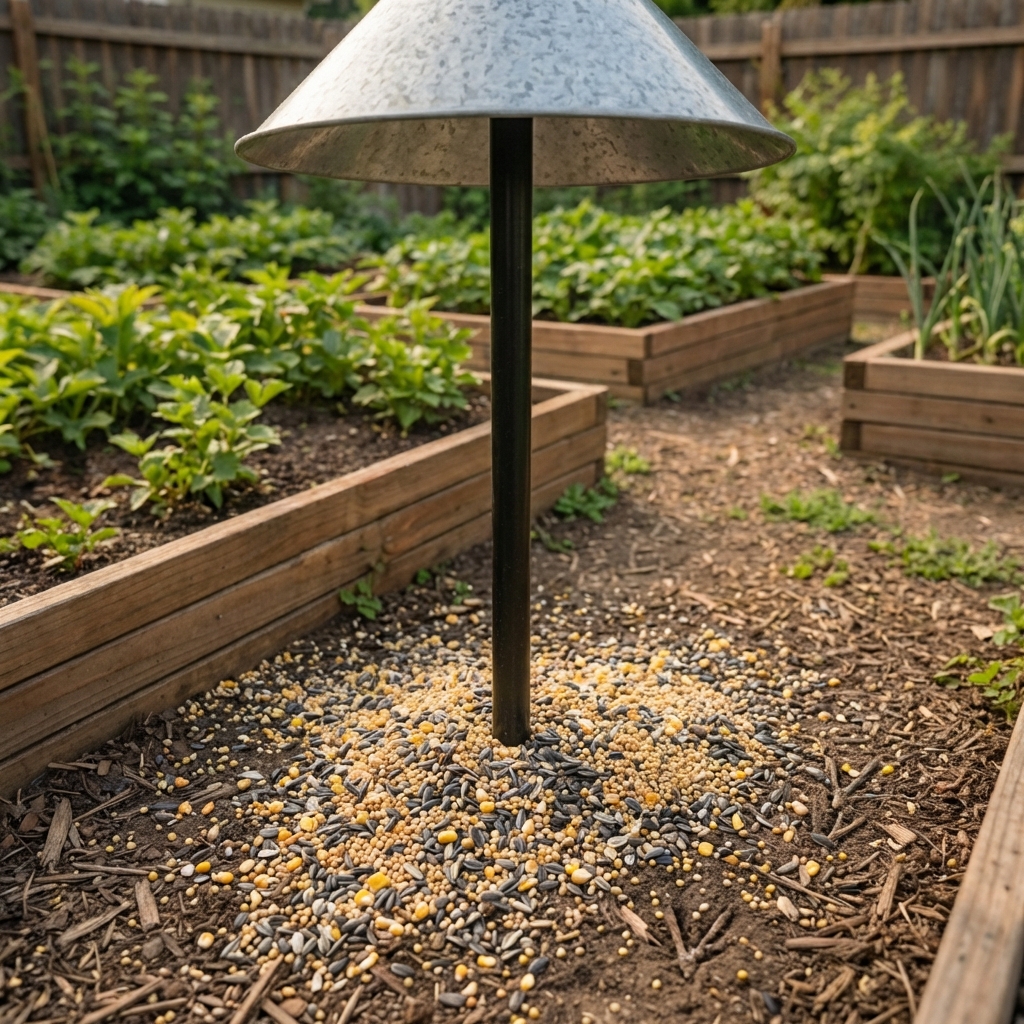
Spilled seed is basically raccoon bait. Even if your feeder is perfect, the ground below can keep them coming back.
- Use a seed tray if your feeder allows it, or place a catch pan underneath.
- Rake or sweep weekly under the feeder, especially in warm months.
- Do not leave pet food outside overnight. This one keeps raccoons in more yards than bird seed does.
- Secure trash cans with tight lids or bungee cords so your feeder is not the “dessert” after garbage night.
Deterrents that can help (and what to avoid)
Worth trying
- Motion-activated sprinkler: Very effective in many yards because it surprises them without harming them. Aim it toward the feeder approach path, not directly at the feeder.
- Light management: Motion lights sometimes help, but raccoons often get used to them. Sprinklers tend to work better.
- Make climbing unpleasant: A properly installed baffle does this best. Slippery pole covers can help, but do not rely on them alone.
Usually a waste of money
- Ultrasonic devices: Mixed results and often ignored after a short time.
- Predator urine: Washes away and can attract curiosity more than fear in some cases.
What not to do
- Do not use poison. It is dangerous, often illegal, and can harm pets and wildlife.
- Do not use sticky products on poles. They can injure animals and catch feathers and fur.
- Avoid DIY electrical solutions. Besides safety issues, they are not necessary when a baffle and placement are correct.
Raccoon-proof setup checklist
If you want a quick “did I do it right?” list, here it is:
- Feeder is on a smooth metal pole, not a tree or deck rail
- Feeder is 10 feet from jump points in every direction
- Feeder hangs or sits 4 to 5+ feet high
- Baffle is raccoon-sized and mounted with the bottom about 4 feet off the ground
- If using a cone baffle, it is 18 to 24 inches across
- If using a cylinder baffle, it is about 8 inches or wider in diameter
- Seed is put out in the morning, not overnight
- Spilled seed is cleaned up weekly
Common problems and easy fixes
“They still reach the feeder from the ground.”
You may need to adjust your heights. In most cases you want the feeder higher and the baffle bottom around 4 feet so they cannot reach over. Also check if the feeder is too close to a stump, bench, or planter they can stand on.
“They climb the pole anyway.”
Your baffle may be too small, too low, or installed with a gap. Upgrade to a larger baffle and make sure it is firmly mounted and cannot be pushed up.
“They jump from a tree.”
Move the feeder farther out or trim branches back. If you cannot, consider bringing feeders in at dusk for a couple weeks while you reset their routine.
“They destroy the feeder.”
Raccoons can rip the bottoms off cheap plastic feeders and bend thin metal parts. Switch to a sturdier feeder with metal tops and bottoms or reinforced hardware, and stop leaving food available overnight. If damage is happening repeatedly, treat it like a schedule issue, not just a hardware issue.
How long does it take to stop raccoon visits?
If you fix access and remove night feeding, you often see results in a few nights to a couple weeks. Raccoons are habitual. If they have been getting food for months, expect them to test your setup multiple times before they give up.
Stay consistent. If they get one successful raid, it teaches them to keep trying.
Beginner-friendly FAQ
Will a squirrel baffle work on raccoons?
Sometimes, but many squirrel baffles are too small. For raccoons, you want a large, sturdy baffle and proper spacing from jump points. Also note that cone baffles need to be much wider than cylinder baffles to be raccoon-rated.
Is it okay to just bring the feeder in at night?
Yes, and it is one of the most humane and effective options, especially if you are dealing with a persistent visitor. It also prevents other nighttime animals from being attracted.
Do raccoons hurt birds?
They can. They are opportunistic. Most of the time they are after the seed, but a raccoon that can reach a roosting bird or a nest may take advantage.
Should I trap and relocate?
Relocation is often restricted and can be inhumane if the animal cannot find resources. In many areas it is not recommended. Focus on removing the food reward and blocking access.

Jose Brito
I’m Jose Britto, the writer behind The Country Store Farm Website. I share practical, down-to-earth gardening advice for home growers—whether you’re starting your first raised bed, troubleshooting pests, improving soil, or figuring out what to plant next. My focus is simple: clear tips you can actually use, realistic expectations, and methods that work in real backyards (not just in perfect conditions). If you like straightforward guidance and learning as you go, you’re in the right place.