Cucumbers are one of those garden and grocery staples that feel like they should last a week, then suddenly you find a soft spot, a slimy end, or the whole thing turns dull and watery. The good news is you do not need fancy containers or special gadgets. A few small storage habits make a big difference.
This guide walks you through what actually keeps cucumbers crisp, where most people go wrong, and how to store whole cucumbers, sliced cucumbers, and garden-fresh cucumbers with realistic expectations.
Why cucumbers go bad fast
Cucumbers are mostly water, and their skin is thin compared to other produce. That means they dehydrate quickly and bruise easily. Two things usually cause the fastest decline:
- Too much moisture sitting on the skin, which encourages sliminess and mold.
- Too cold storage, which can cause chilling injury and leads to pitting, watery spots, and faster breakdown.
The goal is simple: cool, dry, and protected from condensation.
Best temperature and location
If you have a cool pantry or cellar around 50 to 55°F (10 to 13°C), that is ideal for cucumbers. Most of us do not, so the fridge is usually the practical choice.
Just keep in mind that many home fridges run around 37 to 40°F (3 to 4°C), which is cold enough to cause chilling injury if cucumbers sit there too long. If your fridge runs extra cold, plan to buy fewer at a time and store them in the warmest spot.
Best spot in the fridge
Use the warmer zones, not the coldest back wall.
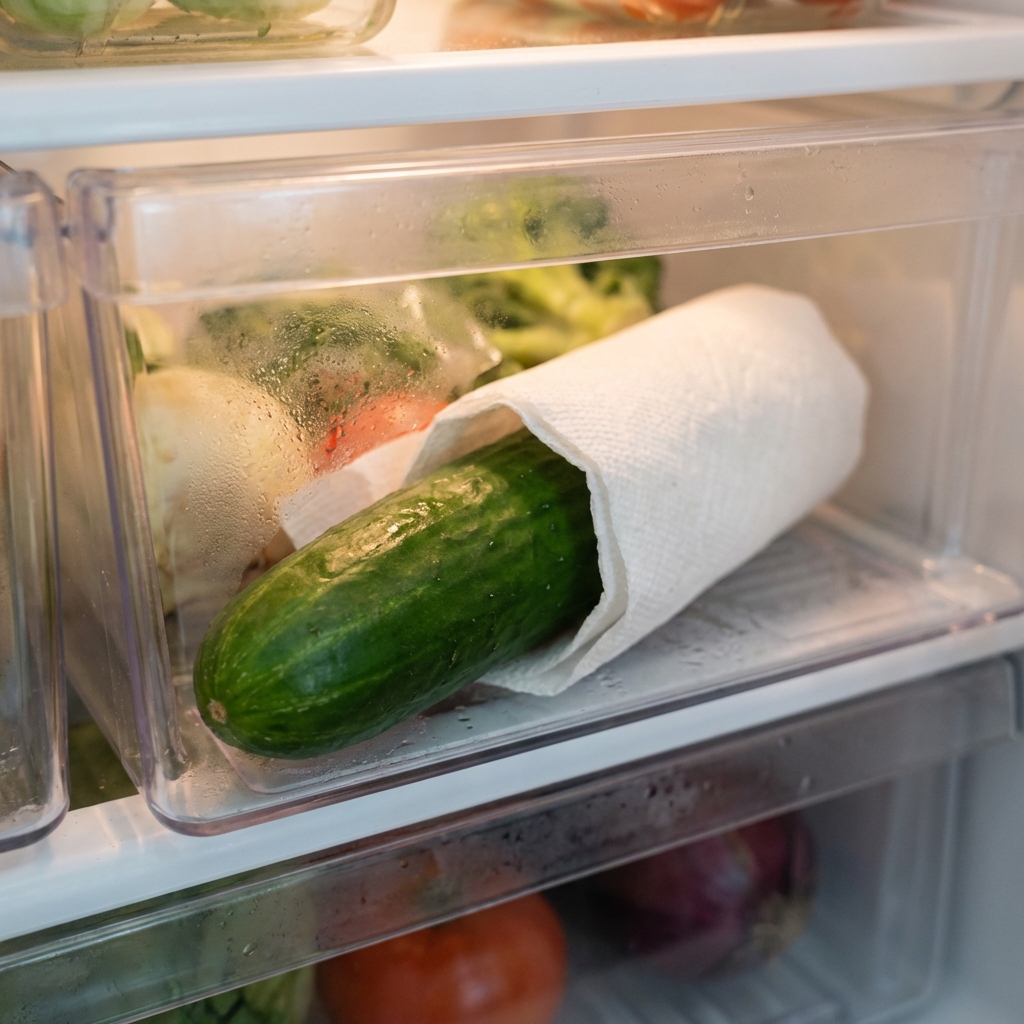
- Best spot: front of the produce drawer or a middle shelf near the front.
- Avoid: the back of the fridge, bottom back corners, and anywhere items freeze or get frosty.
If your crisper drawer has a humidity slider, avoid the coldest or highest-humidity setting for cucumbers. You want “not too wet” more than “extra humid.”
Easy DIY storage for whole cucumbers
This is the method I recommend for most beginners because it is cheap, low-effort, and works in real kitchens.
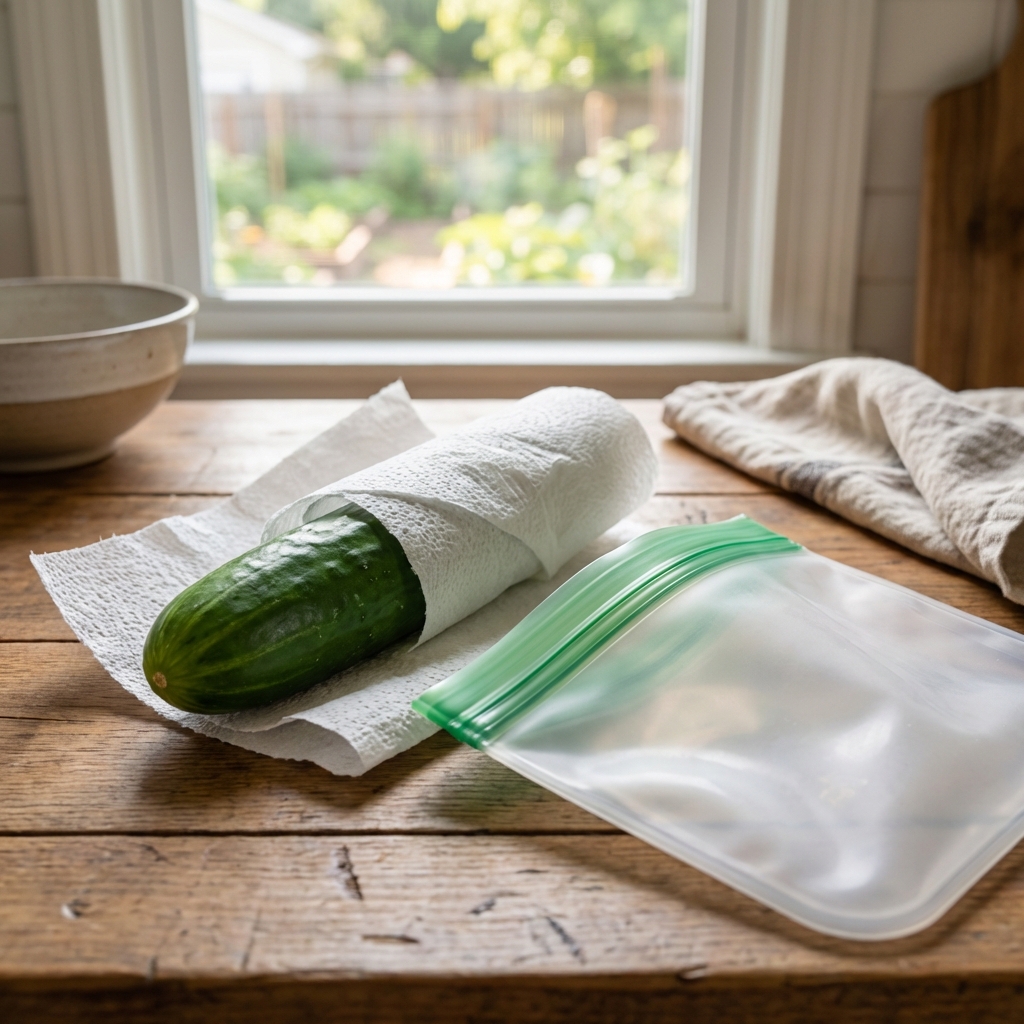
Paper towel and bag method
- Make sure the cucumber is dry.
- Wrap it loosely in a dry paper towel or clean tea towel.
- Put it in a partially closed plastic bag or reusable bag.
- Store in the produce drawer toward the front (or on a front middle shelf).
The towel absorbs condensation, and the bag slows dehydration. Leaving the bag slightly open helps prevent trapped moisture.
What about wrapped cucumbers?
Some English or seedless cucumbers come tightly plastic-wrapped. That wrap is there to slow dehydration.
- If it is still sealed: keep the store wrap on until you are ready to use it.
- Once opened: switch to the paper towel and bag method above.
Persian and field cucumbers usually have thinner skin and dry out faster, so the towel method helps even more.
Should you wash before storing?
For store-bought cucumbers, I recommend do not wash until you are ready to eat. Extra surface moisture speeds up slimy spoilage.
For garden cucumbers with visible dirt, you have two options:
- Best for storage: Brush off dirt dry and store unwashed. Wash right before eating.
- If you must wash: Wash quickly, then dry very thoroughly before wrapping.
One damp cucumber can make the whole bag go downhill.
Keeping cut cucumbers fresh
Once cut, cucumbers lose moisture fast and absorb fridge odors. They also get slippery at the cut edges. Here is the easiest approach.
For halves or spears
- Pat the cut side dry.
- Wrap the cut end with paper towel.
- Place in an airtight container or bag.
Tip: Swap the paper towel if it gets wet.
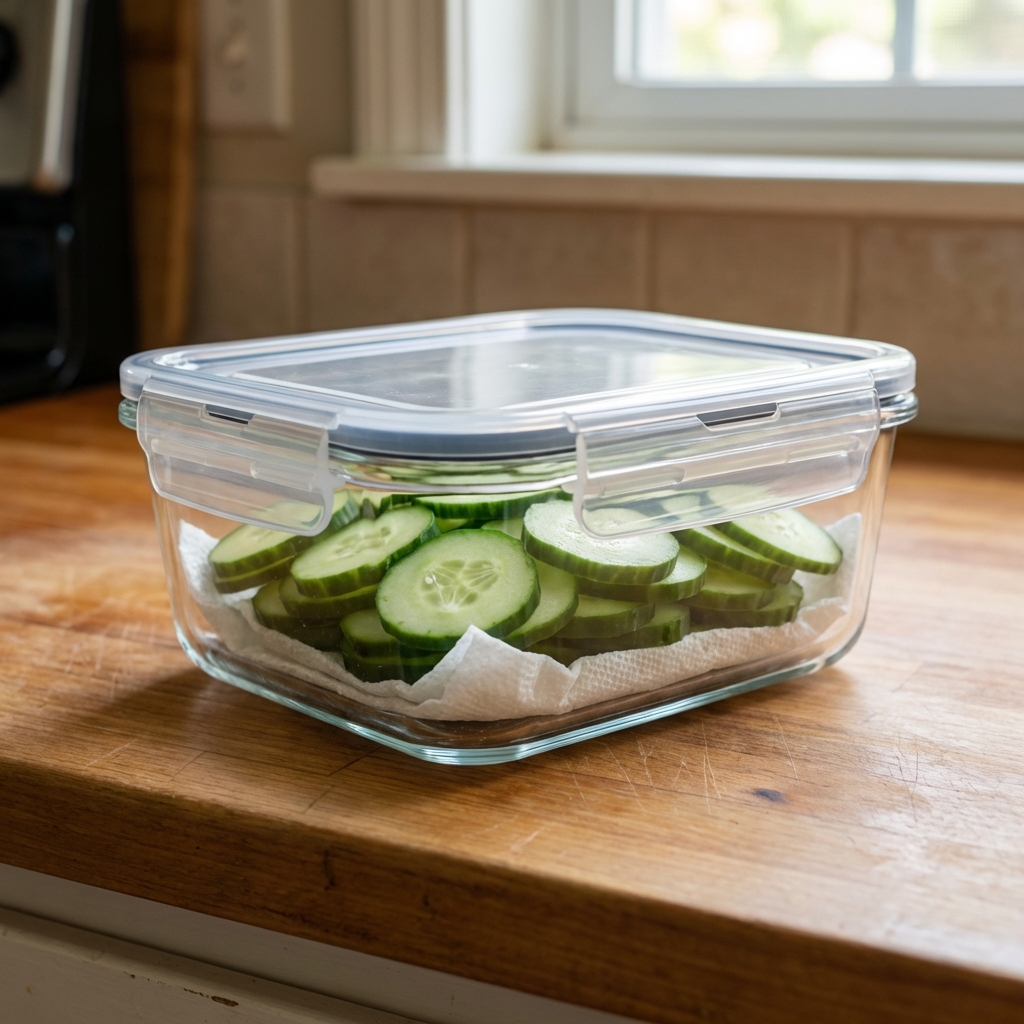
For slices
Slices are tricky because they sweat. Store them in a container lined with a paper towel, then place another paper towel on top before closing the lid.
- Use within 1 to 2 days for best crunch.
- If they look wet, drain and replace the towel.
Food safety note: Keep cut cucumbers refrigerated. If they sit out more than 2 hours (or 1 hour in hot weather), it is safest to toss them.
Mistakes that spoil cucumbers faster
- Storing next to ripening fruit. Keep cucumbers away from ethylene producers, especially apples, bananas, and ripe tomatoes. Ethylene speeds yellowing and softening.
- Sealing them wet in an airtight bag. Trapped moisture leads to slime.
- Leaving them loose and uncovered. They dehydrate and get rubbery.
- Putting them in the coldest spot. Chilling injury looks like pitted skin and watery breakdown.
How long do cucumbers last?
It depends on freshness, variety, and how they were handled. Here are realistic ranges:
- Whole, store-bought: about 5 to 10 days with good storage.
- Whole, garden-fresh: often 3 to 7 days. Garden cucumbers can have thinner skins and usually do not have a protective wax coating, so they may dehydrate faster.
- Cut: 1 to 3 days depending on how dry they are kept.
If you are picking from the garden, harvest in the cool morning and get them out of direct sun quickly. Heat is a freshness killer.
How to revive a limp cucumber
If it is not slimy or rotten, you can often perk it back up.
Cold water soak
- Trim a thin slice off the ends.
- Soak the cucumber in a bowl of cold water for 30 to 60 minutes.
- Dry it well, then use it soon.
Want faster results? Use ice water, or wrap the cucumber in a damp towel and chill it for 30 minutes. These tricks work best when the cucumber is limp from dehydration, not when it is breaking down internally.
When to toss it
Use your senses and do not try to “save” one that is clearly going bad.
- Toss if it is slimy, moldy, smells sour, or has large soft, wet spots.
- Use ASAP if it is slightly dull, a little flexible, or has minor wrinkling.
If only the end is soft and the rest is firm, you can trim generously and use the good portion the same day, especially in salads or quick pickles.
Quick checklist
- Store cucumbers dry.
- Wrap in a paper towel.
- Keep in a bag that is not sealed tight.
- Place in the warmest part of the fridge, not the back.
- Keep away from ripening fruit like apples and bananas.
- For slices, use a container + paper towel and eat within 1 to 2 days.
If you want one habit to start with today, do the paper towel wrap. It is the simplest change that saves the most cucumbers.

Jose Brito
I’m Jose Britto, the writer behind The Country Store Farm Website. I share practical, down-to-earth gardening advice for home growers—whether you’re starting your first raised bed, troubleshooting pests, improving soil, or figuring out what to plant next. My focus is simple: clear tips you can actually use, realistic expectations, and methods that work in real backyards (not just in perfect conditions). If you like straightforward guidance and learning as you go, you’re in the right place.