Mushrooms popping up in grass can look alarming, but in most lawns they are a symptom, not the real problem. Fungi are doing cleanup work, breaking down buried wood, old roots, heavy thatch, and other organic material. If you only knock the mushrooms down, you will likely see them again after the next wet spell. If you remove them and fix the conditions that favor fungi, you can usually cut outbreaks down to a rare occasional pop-up.
Quick reassurance: Mushrooms themselves rarely harm turf. The main concern is safety for kids and pets, plus the soggy conditions that can weaken grass over time.
Below is a practical, backyard-tested approach that prioritizes safety for kids, pets, and beneficial life in the soil.

First: decide if you need to act
Most lawn mushrooms are not harmful to the grass itself. The bigger concerns are:
- Pet or child safety: Some mushrooms are toxic if eaten. It can be hard to identify them correctly.
- Slippery mess: Mushrooms can get slimy when mowed and spread spores around.
- Underlying lawn issues: Persistent mushrooms often point to excess moisture, shade, compacted soil, or thick thatch.
If you have curious kids or dogs, treat any mushroom as potentially poisonous. Remove them promptly and restrict access until you are confident the area is clear.
Note on identification: Do not rely on a quick visual ID for edibility or toxicity. Many toxic species look similar to harmless ones.
Quick removal (same-day fix)
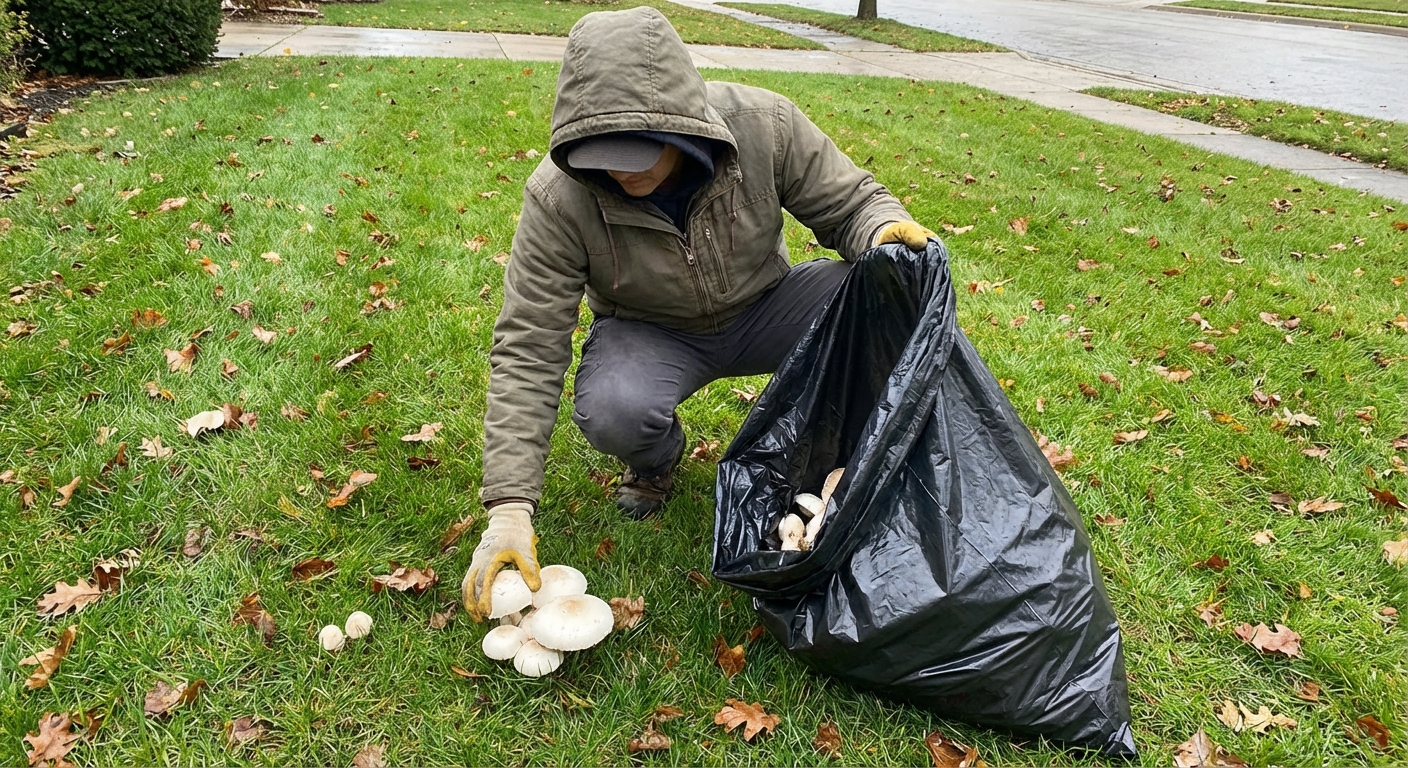
1) Pick and bag the mushrooms
For an immediate cleanup, physical removal works best.
- Put on gloves.
- Gently twist and pull each mushroom at the base, or cut it at ground level.
- Place them directly into a plastic bag, seal it, and put it in the trash.
- Compost note: If you are trying to reduce mushrooms fast, skip composting unless you run a true hot compost pile. Cold or passive compost can allow spores to persist and hitch a ride back into the yard.
Tip: If a mushroom is very dry or dusty, lightly misting it can reduce spore or dust clouds for some types as you pick. This is optional and not necessary in most cases.
2) Rake the area lightly
After picking, lightly rake to remove slimy bits and break up surface organic debris. This is especially helpful if mushrooms were mowed and smeared into the turf.
3) Mow with the right settings
Avoid scalping. Scalped grass struggles and can invite weeds and disease. If mushrooms were widespread, consider bagging clippings once to reduce the mess and spore spread.
Height guide: Mow at the upper end of the recommended range for your grass type. Many cool-season lawns do well around 3 to 4 inches, while many warm-season lawns are typically shorter. When in doubt, raise the mower one notch and avoid removing more than one-third of the blade at a time.
Why mushrooms keep coming back
Mushrooms appear when fungal growth below ground has the right combination of food and moisture. Common triggers in home lawns include:
- Overwatering or frequent irrigation: Especially evening watering that leaves grass wet overnight.
- Poor drainage: Low spots, clay soil, compacted ground, or downspout runoff.
- Heavy shade and low airflow: Grass stays damp longer under trees and along fences.
- Thatch buildup: A thick layer of dead stems and roots holds moisture like a sponge.
- Buried wood or decaying roots: Old tree roots, construction lumber, or a removed stump can fuel mushrooms for years.
- Extra organic buildup: Thick mulch blown into grass, heavy topdressing, or piles of leaves left in place.
- Pet waste: Not a common primary driver of mushrooms by itself, but it can create wet, nutrient-rich hot spots that make turf problems more likely overall.
Long-term plan to stop lawn mushrooms
Step 1: Fix watering habits
- Water early morning so blades dry quickly.
- Water deeply, less often. Aim for about 1 inch per week total (rain plus irrigation), adjusted for your climate and soil.
- Skip watering if the lawn still feels damp 1 to 2 inches down.
Step 2: Improve drainage and airflow
If mushrooms cluster in one spot, treat it like a drainage clue.
- Fill shallow depressions gradually and regrade if needed so water sheds away from the area.
- Topdressing tip: Use quality topsoil or a topsoil-compost blend that matches your existing soil. Avoid adding straight sand to heavy clay unless you are following a tested topdressing program, since the wrong mix can create a dense, concrete-like layer.
- Redirect downspouts away from turf.
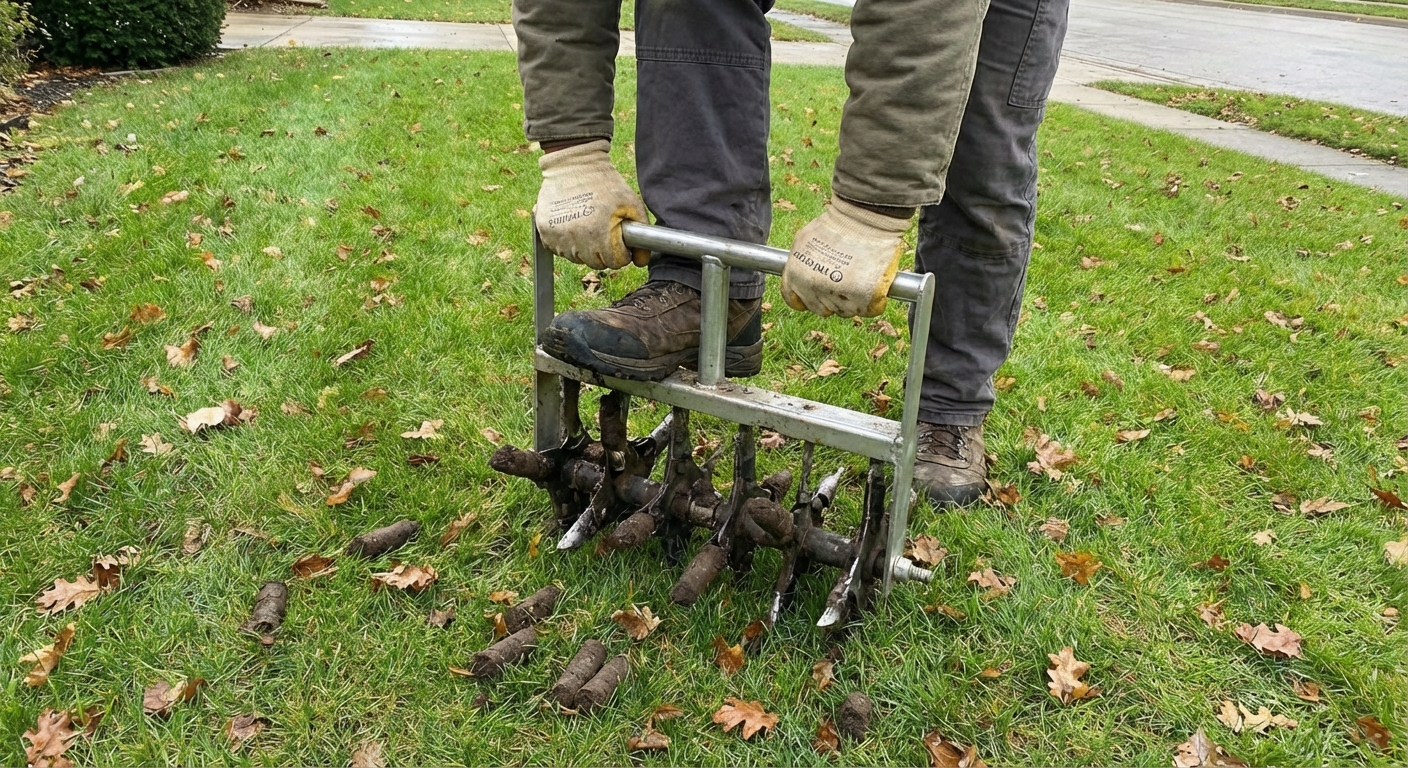
- Core-aerate compacted areas so water can move through instead of pooling.
- Prune low tree branches or thin dense shrubs to increase sun and airflow.
Step 3: Reduce thatch and excess organic matter
Thatch over about half an inch can trap moisture and feed fungi.
- Use a thatch rake for small lawns or schedule mechanical dethatching if the layer is thick.
- Core aeration also helps break down thatch over time.
- Rake up heavy leaf litter promptly in fall.
- Keep mulch out of the lawn edge so it does not get blown into the grass.
Step 4: Check for buried wood or old roots
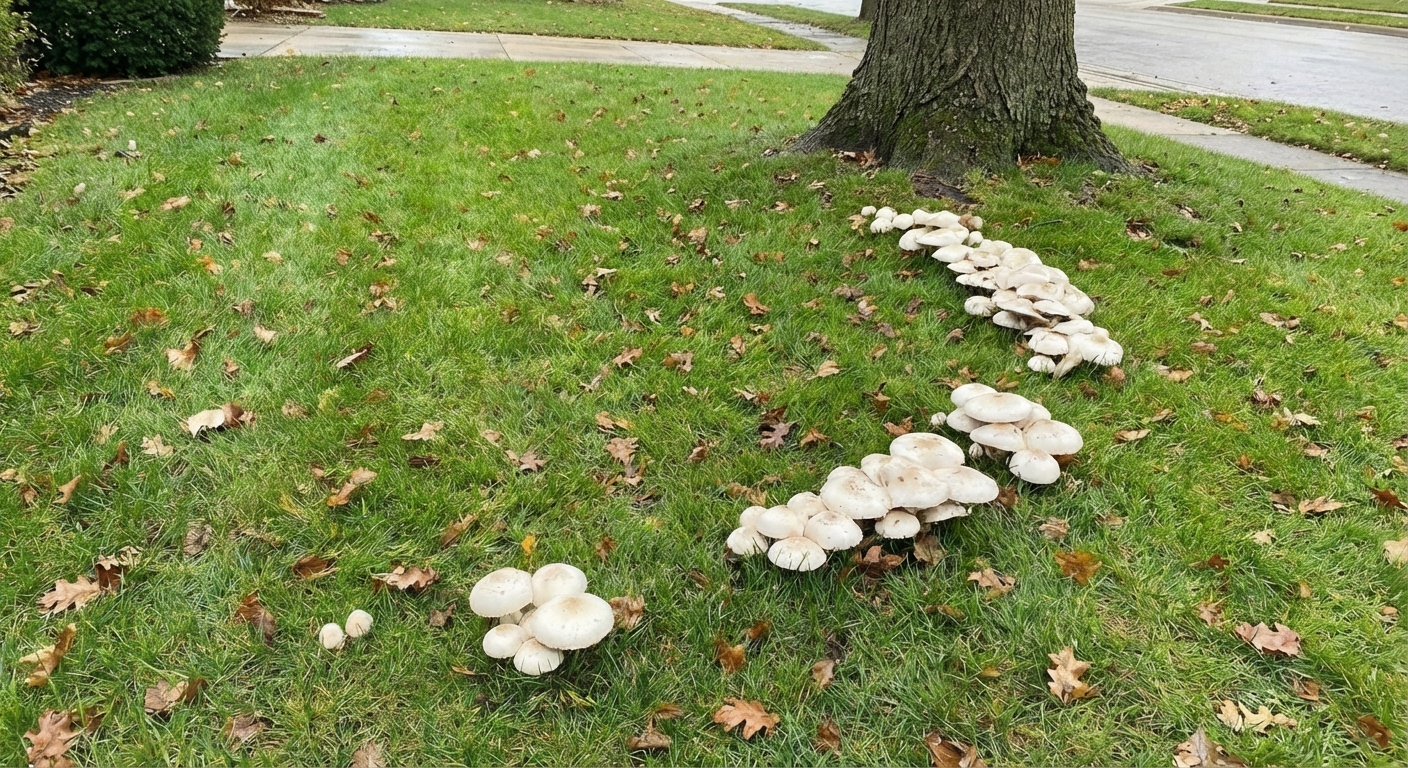
If you see mushrooms in a line, ring, or repeating pattern, you might have decaying roots or buried lumber below.
- Probe the soil with a screwdriver in the problem area.
- If you hit wood or spongy material, you likely found the food source.
- For small pieces, dig them out.
- For large roots or buried debris, remove what you can, then focus on drying the area and improving turf health. Some fungal food sources take time to fully break down.
Step 5: Strengthen the turf so it dries faster
- Fertilize based on your grass type and season, and ideally a soil test.
- Mow at the recommended height for your grass. Taller blades shade soil and help roots, but in deep shade you may need to balance height with airflow.
- Overseed thin spots so water does not sit on bare soil.
Should you use fungicide?
In most lawns, fungicides are not the best tool for mushrooms. Here is why:
- Mushrooms are the fruiting bodies. Spraying the visible mushroom does not remove the fungal network feeding on organic matter below.
- Results are inconsistent. Mushrooms often return after the next wet period.
- Collateral impact is possible. Depending on the product and how it is used, fungicides can affect beneficial soil fungi and other non-target organisms.
If you need rapid suppression for a high-risk area (pets, daycare yard, frequent foot traffic), consider a targeted lawn product labeled for your grass type and follow the label exactly. Treat it as a short-term assist while you fix drainage, shade, and organic buildup. If you are unsure, your local extension office can recommend options for your region.
Natural approaches that help
Raking, drying, and aeration
This trio solves the most common causes. It is not flashy, but it works.
Pick up pet waste
Pet waste is more of a general lawn sanitation issue than a main mushroom cause, but removing it promptly helps prevent wet nutrient patches and keeps the lawn healthier overall.
Use compost carefully
Compost is great for soil, but heavy topdressing or piles left on grass can keep things damp. Apply thin layers, rake in evenly, and avoid smothering the turf.
What about vinegar, bleach, or salt?
I do not recommend them for lawns.
- Vinegar can burn grass and does not fix the cause below ground.
- Bleach can damage soil life and turf roots and can move with water.
- Salt can sterilize soil and create long-term dead patches.
Common mushroom patterns
After rain, scattered across the lawn
Usually a short moisture spike plus organic matter. Pick them, let things dry, and check watering schedules.
In a ring or arc (fairy ring)
Fairy rings can cause a dark green ring and sometimes dry patches. The fungus can make soil water-repellent in spots, so water runs off instead of soaking in.
- Core aeration and steady deep watering (not frequent light watering) often help.
- Topdress lightly with compost or quality topsoil to improve infiltration.
- Consider a lawn wetting agent (surfactant) if the soil is hydrophobic and water beads up or runs off. This is a common extension recommendation.
- In stubborn cases, the ring can be persistent for seasons. Major renovation (removing turf and some of the affected soil) can help, but it is hit-or-miss unless you remove the underlying organic layer feeding it. Start with aeration, moisture management, and wetting agents first.
Clustered near a stump, old tree, or construction area
This points strongly to buried wood or old roots. Remove debris if feasible, then improve drainage and airflow while the remaining material decomposes.
Safety notes
- Assume unknown mushrooms are toxic if eaten.
- Keep pets on leash in mushroom-prone spots right after wet weather.
- Dispose of mushrooms in sealed bags in the trash.
- If ingestion is suspected, call your veterinarian, Poison Control, or a local emergency number immediately. If safe to do so, take a clear photo of the mushroom and note where it was growing.
When to get help
- Recurring large fairy rings with dead or severely thinned turf.
- Standing water problems that do not improve with aeration and simple grading.
- Possible lawn disease symptoms (leaf spots, widespread browning, greasy-looking patches) that go beyond mushrooms.
- Pet or child ingestion risk that you cannot manage with quick removal.
Your local extension office can help with region-specific advice, and a lawn pro can assess drainage, compaction, and shade issues on-site.
FAQ
Will mushrooms kill my grass?
Typically no. Mushrooms are feeding on decaying organic matter, not living grass. The conditions that allow them, like soggy soil or thick thatch, can contribute to weak turf though.
Why do I get mushrooms even though I do not water much?
Shade, compacted soil, poor drainage, or buried wood can hold moisture even when irrigation is minimal. Check low spots, downspouts, and heavily shaded areas.
How long does it take to get rid of them for good?
Picking removes them immediately, but reducing repeat outbreaks can take a few weeks to a full season depending on drainage, shade, and how much organic material is in the soil.
Can I just mow them down?
You can, but it is messy and may spread spores. If you have pets or kids, picking and bagging is safer.
Simple checklist
- Pick and bag mushrooms right away
- Water in the morning, not at night
- Fix drainage and aerate compacted areas
- Dethatch if the layer is thick
- Remove buried wood or debris when possible
- Thin shade and improve airflow
- Keep the lawn dense and healthy with proper mowing and seasonal feeding
If you tell me your grass type, general region, and whether the mushrooms are scattered or forming a ring, I can help narrow down the most likely cause and the fastest fix.

Jose Brito
I’m Jose Britto, the writer behind The Country Store Farm Website. I share practical, down-to-earth gardening advice for home growers—whether you’re starting your first raised bed, troubleshooting pests, improving soil, or figuring out what to plant next. My focus is simple: clear tips you can actually use, realistic expectations, and methods that work in real backyards (not just in perfect conditions). If you like straightforward guidance and learning as you go, you’re in the right place.