Salt and vinegar is one of those home remedies that can work, but only when you use it in the right place. Think cracks in pavement, gravel paths, and along hard edges where you do not want anything growing. Used in a garden bed, it can backfire by lingering in the soil and stressing the plants you actually want.
Below is a practical, realistic breakdown: what this mix does, simple recipes, application tips, and what to do if you need longer-lasting control.
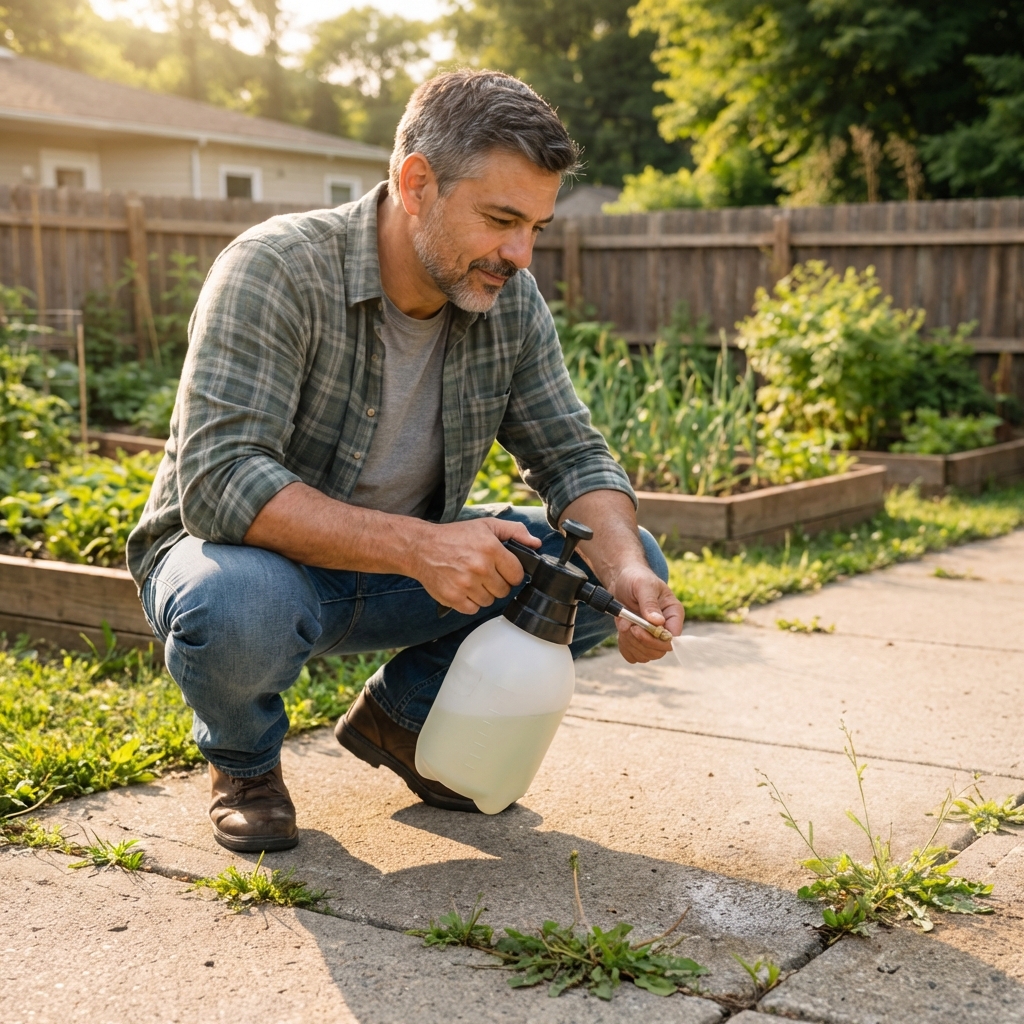
Does salt and vinegar really kill weeds?
Yes, it can kill many small weeds and can burn down top growth quickly. Here is what is happening:
- Vinegar (acetic acid) damages plant tissue on contact. It works best on young weeds with small, tender foliage and limited energy reserves.
- Salt (sodium chloride) pulls water out of plant cells and can make it harder for plants to take up water. The big issue is that salt can also affect the soil for a while, especially where water does not wash it away.
Important expectation: this is usually a top-kill treatment. If you have deep-rooted perennials like dandelion, plantain, bindweed, Bermuda grass, or nutsedge, you may see regrowth unless you repeat treatments or use a different method.
Where this method works best
Use salt and vinegar where you want a mostly bare surface and where overspray and runoff will not reach plants you want to keep.
- Sidewalk and driveway cracks
- Gravel driveways and paths
- Patio edges and paver joints
- Along fence lines where runoff will not reach shrubs, trees, or lawn roots
Skip it in vegetable beds, flower beds, and around trees. Salt can move with water and can affect nearby roots. Even if you spot spray, salt can accumulate over time in the same area.
What you will need
- White vinegar (5 percent acetic acid is the common household type)
- Table salt or pickling salt
- Spray bottle or pump sprayer clearly labeled for weed use only
- Dish soap (optional as a surfactant)
- Gloves and eye protection
Tip: pickling salt dissolves more cleanly than table salt and is less likely to clog a sprayer.
Simple recipes (use sparingly)
Recipe 1: Vinegar only (best first try)
If you are working near plants you care about, start here because it avoids adding salt to the area.
- Use straight white vinegar in a spray bottle.
- Spray until leaves are evenly wet, not dripping.
This is often enough for tiny weeds in cracks, especially in hot, sunny weather.
Recipe 2: Vinegar + a little soap (better coverage)
- 1 quart (4 cups) white vinegar
- 1 teaspoon liquid dish soap
The soap helps the vinegar stick to waxy leaves instead of beading up and rolling off. Use a light hand with soap. Too much makes foam and can reduce spray control.
Recipe 3: Vinegar + salt + soap (hardscape only)
Reserve this for sidewalk cracks and gravel areas, not planting beds. This is a strong mix. Use the smallest amount needed, avoid repeat salting in the same strip, and keep it away from storm drains and waterways.
- 1 gallon white vinegar
- 1 cup salt
- 1 tablespoon liquid dish soap
Mix salt into the vinegar until fully dissolved, then add soap last. Apply carefully and avoid runoff.
Local note: Some areas restrict or discourage salting for weed control due to runoff. If you live near sensitive landscaping, wells, or drainage systems, check local guidelines and consider skipping salt.
How to apply it so it works
- Pick a dry day. You want at least 24 hours without rain or irrigation.
- Spray in full sun. Heat and sun speed up the burn-down effect.
- Target the leaves. Vinegar is a contact killer. It does not travel through the plant like systemic herbicides.
- Use a shield near borders. A piece of cardboard makes a quick, effective spray guard.
- Do not drench the soil. Especially if you are using salt, keep it on the weed foliage and the crack area.
How fast it works and what to expect
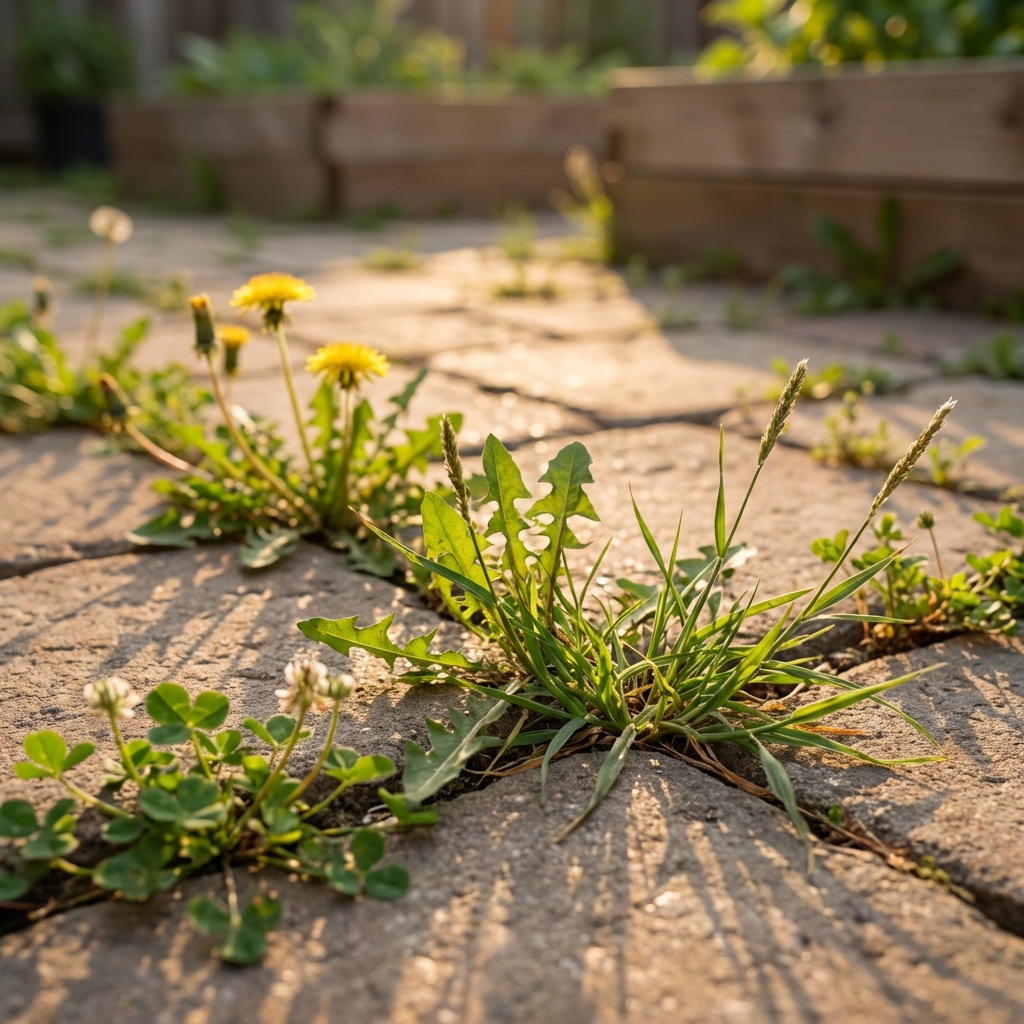
Most young weeds show wilting within a few hours and look browned out by the next day. Tougher weeds may only get scorched and can regrow from the crown or roots.
If you still see green after 48 hours and the weather stayed dry, do a second spot treatment. For established perennials, plan on a repeat schedule or switch tactics.
Reapplication tip: Wait at least 2 to 3 days between vinegar-only treatments so you can see what actually died back. If you used salt, treat it like an occasional tool, not a weekly routine in the same spot.
Big mistakes to avoid
1) Using it in garden beds
Vinegar alone can still harm nearby plants if you drift or splash it. Adding salt raises the risk because it can linger and affect soil health.
2) Spraying on windy days
Overspray is the number one way people accidentally burn ornamentals, herbs, and veggie starts. If you feel a breeze, wait.
3) Treating the same strip over and over with salt
Repeated salting can create a dead zone that stays stubbornly bare. That might sound good on a driveway edge, but it can creep into adjacent soil with runoff and drainage.
4) Ignoring the seed bank
Salt and vinegar kills what you see, not the weed seeds already in the crack or gravel. That is why weeds seem to “come right back” a couple weeks later.
Safety notes and surface tips
- Wear eye protection. Vinegar stings badly if it splashes.
- Protect pets and kids. Keep them off treated areas until dry.
- Be careful on stone. Vinegar is acidic and can etch natural stone like limestone and marble.
- Concrete varies. Some concrete finishes can dull or etch over time. If you care about the look, spot test first.
- Label your sprayer. Do not reuse it for fertilizers or pesticides for plants you want to keep.
- Keep it away from drains. Avoid spraying where runoff can wash into storm drains, creeks, or planted areas.
Better long-term control
If you are tired of repeating vinegar treatments, focus on prevention. It is usually the difference between “constant battle” and “quick touch-ups.”
For cracks and pavers
- Pull or scrape big weeds first, then treat the small regrowth.
- Refill joints with polymeric sand where appropriate to reduce space for seeds to settle.
- Blow debris off regularly. Dust and organic crumbs become soil in the cracks.
For gravel paths
- Use a weed barrier under gravel if you are rebuilding a path.
- Rake and top up gravel to keep a thick layer that blocks light.
- Spot treat early. Young weeds are dramatically easier to knock out.
Other low-chemical options
- String trimmer or edging: Quick for driveway and fence lines, but you will need repeats.
- Crack weeder tool: Great for pavers and sidewalks when you want to avoid sprays.
- Flame weeder: Effective on small weeds in hardscape cracks, but use extreme caution and follow local fire rules. Avoid dry mulch, leaf litter, and windy days.
For garden beds (skip salt and vinegar)
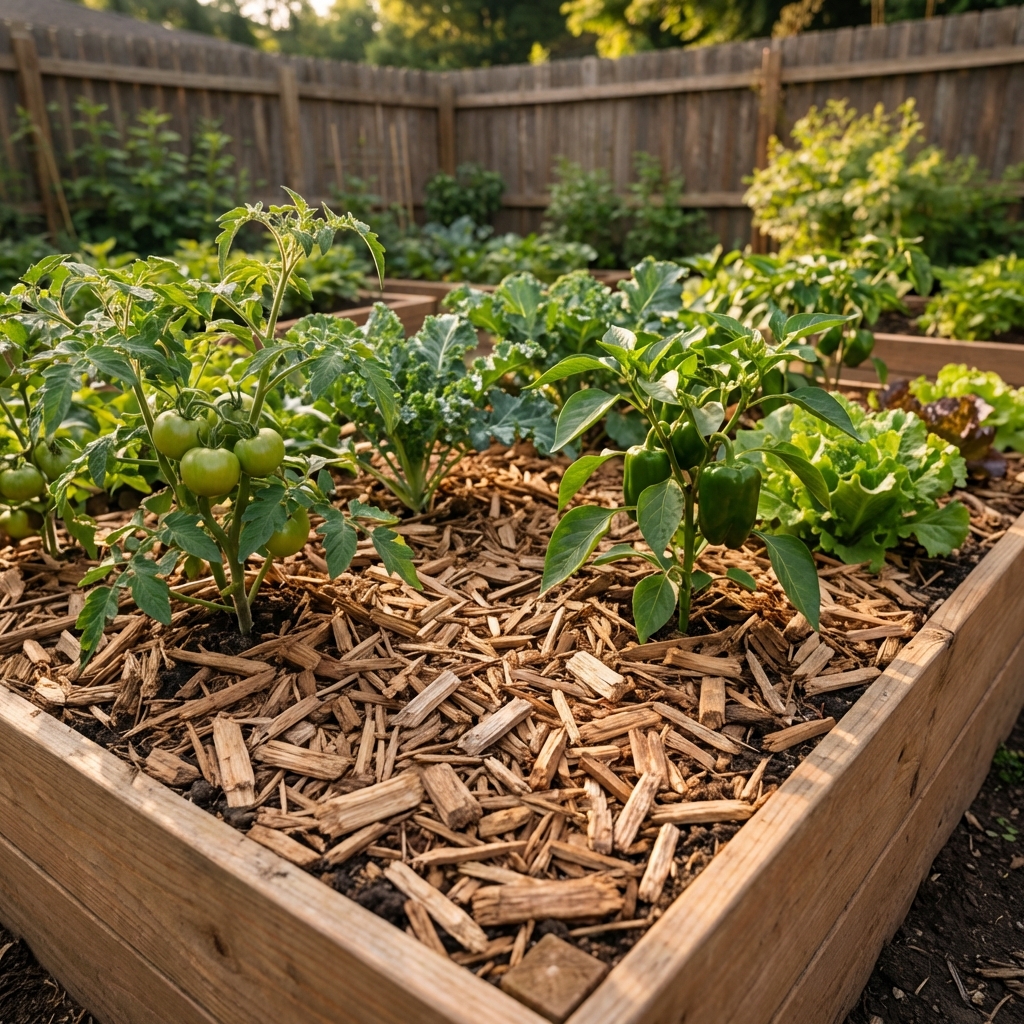
- Mulch 2 to 4 inches with wood chips, shredded leaves, or straw depending on the bed.
- Hand pull after rain when roots release easily.
- Use cardboard under mulch for new beds to smother existing weeds.
Quick FAQ
Will this kill grass?
Yes. Vinegar burns grass blades and salt can damage roots. Keep it far from lawns if you do not want brown patches.
Does boiling water work better?
For cracks and small areas, boiling water can be just as effective as vinegar and avoids salt buildup. It leaves no lingering chemical residue, but it can still injure nearby desirable roots and soil life if you repeatedly pour it in the same spot. The downside is the hassle and the burn risk.
Will vinegar kill weeds to the root?
Usually not. It is a contact burn. Deep-rooted perennials often resprout unless you repeat or physically remove the root.
Can I use cleaning vinegar?
Stronger vinegar can burn plants faster, but it is also harsher on skin and eyes and can increase risk to nearby plants and surfaces. If you use it, keep it strictly to hardscape, wear proper protection, and avoid drift and runoff.
What about horticultural vinegar (20 percent)?
It can work faster, but it is much more hazardous than kitchen vinegar and can cause serious skin and eye burns. Treat it like a real chemical: gloves, eye protection, long sleeves, and careful application only in hardscape areas where you can control overspray and runoff.
My bottom line
Salt and vinegar is best treated like a spot tool, not an all-purpose weed solution. Use vinegar (with a touch of soap) for quick knockdown, and only add salt when you are working in cracks and gravel where you truly want a low-growth zone and where runoff will not travel into planted soil or drains. If weeds keep returning, prevention steps like joint sanding, thicker gravel, and regular cleanup will save you more time than any spray mix.

Jose Brito
I’m Jose Britto, the writer behind The Country Store Farm Website. I share practical, down-to-earth gardening advice for home growers—whether you’re starting your first raised bed, troubleshooting pests, improving soil, or figuring out what to plant next. My focus is simple: clear tips you can actually use, realistic expectations, and methods that work in real backyards (not just in perfect conditions). If you like straightforward guidance and learning as you go, you’re in the right place.