Knock Out roses are popular for one big reason: they bloom like crazy with less fuss than many traditional roses. But “low maintenance” does not mean “no maintenance.” If your shrub is getting leggy, blooming less, or showing leaf spots, a few simple adjustments usually get it back on track.
This guide covers three things in one place: how to identify a Knock Out rose, a step-by-step care routine you can follow through the year, and practical pest and disease control that works in real yards.
How to identify a Knock Out rose
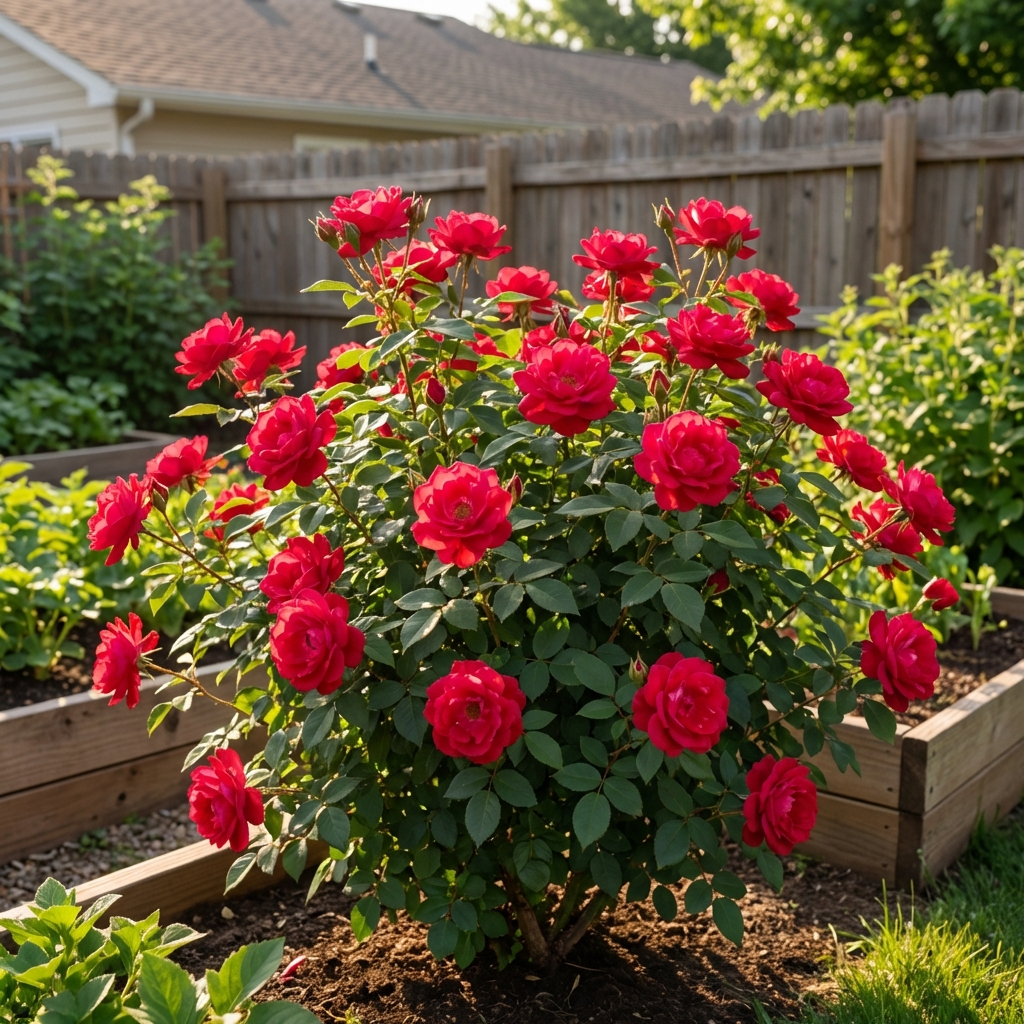
Knock Out is a family of shrub roses (not a single variety). They share a similar growth habit and care needs, and most have strong repeat bloom from spring through frost.
Hardiness note: Most Knock Out roses are commonly grown in USDA Zones 5 to 11 (sometimes listed as 5 to 10 depending on the cultivar and winter conditions). In colder zones, you may see winter dieback, but the plant often rebounds well with a spring prune.
Common signs you have a Knock Out
- Growth habit: A rounded, bushy shrub, often 3 to 5 feet tall and wide (some newer types stay smaller).
- Continuous flowering: Blooms come in flushes over and over, not just one big spring show.
- Flower form: Singles are common, and many popular cultivars are semi-double to double flowers in clusters.
- Leaves: Medium green, often glossy. New growth may show reddish tones.
- Thorns: Present, but usually not as intimidating as many hybrid tea roses.
Quick ID tips for popular types
- Original Knock Out: Cherry red blooms (they can read a bit pinkish in certain light or heat).
- Double Knock Out: Fuller, more petal-packed blooms (often red or pink).
- Pink Knock Out: Clear pink blooms, similar form to the original.
- Rainbow Knock Out: Typically coral-pink blooms that often age to softer pink, usually with a yellow center (color can shift with weather).
- White Knock Out: White blooms, sometimes with a soft blush in cool weather.
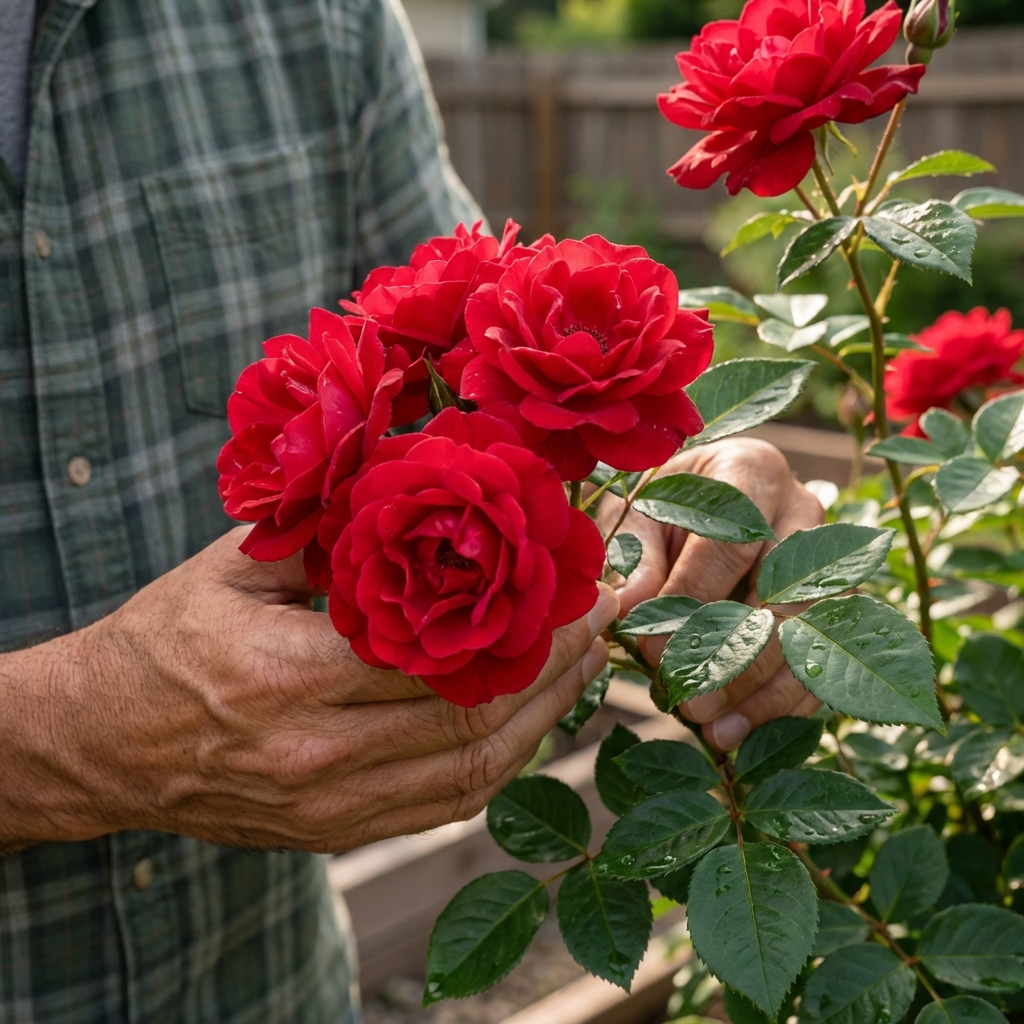
Best way to confirm: If you still have the plant tag, great. If not, check bloom color and whether the flower is single or double. That usually narrows it down enough for care purposes.
Planting basics
Good care starts with the right spot. Knock Out roses forgive a lot, but they perform best when you meet these basics.
USDA zones
Most Knock Out roses are commonly listed for USDA Zones 5 to 11. If you garden in Zone 5 (or a windy, exposed microclimate), expect some winter dieback and plan to prune after you see spring bud swell.
Sunlight
Aim for 6 to 8 hours of direct sun. Less sun usually means fewer blooms and more disease pressure.
Soil and drainage
- They like soil that drains well and stays evenly moist, not soggy.
- If water sits after rain, improve drainage first (raise the bed, add compost, loosen compacted soil).
Planting depth
Plant so the crown (where stems meet roots) sits at or slightly above the soil line. Backfill, water in well, and mulch after planting. Most Knock Out roses are sold on their own roots, so you usually do not need to worry about a graft union depth.
Spacing and airflow
Give shrubs room. Tight spacing traps humidity and encourages black spot and mildew. A practical rule: space 3 to 4 feet apart if you do not mind occasional shaping, or 4 to 5 feet if you want more mature spread with minimal pruning.

Step-by-step care routine
If you do just a few things consistently, you will get 90 percent of the results. Here is the routine I use for most home gardens.
Step 1: Water the right way
- Newly planted (first 2 to 8 weeks): Water deeply 2 to 3 times per week, depending on heat and rainfall.
- Established plants: About 1 inch of water per week from rain and irrigation combined.
- How to water: Soak the base of the plant. Try not to wet the leaves, especially late in the day.
How to measure 1 inch: Set an empty tuna can or a small straight-sided container near the shrub while you water. When it fills to about 1 inch, you are in the right ballpark.
Backyard reality check: In a hot spell, sandy soil might need watering every 2 to 3 days. In heavy clay, you may only need to water once a week. Always check soil moisture 2 to 3 inches down before you add more.
Step 2: Mulch for steadier moisture and fewer weeds
- Apply 2 to 3 inches of mulch (shredded bark, pine fines, or composted mulch).
- Keep mulch 2 inches away from the canes to prevent rot and pests hiding against stems.
Step 3: Feed lightly and consistently
Knock Out roses are not heavy feeders compared to fussier roses, but they bloom best with some nutrition.
- When to fertilize: Start in spring when new growth is 3 to 6 inches long. Repeat every 4 to 6 weeks through mid-summer.
- When to stop: About 6 to 8 weeks before your first expected frost so the plant can slow down and harden off.
- What to use: A balanced rose fertilizer, slow-release shrub fertilizer, or compost plus an organic granular (follow label rates).
Avoid: Overfeeding with high nitrogen. You can end up with big leafy shrubs and fewer blooms, plus softer growth that attracts aphids.
Step 4: Prune for shape and blooms
These roses bloom primarily on new growth. Pruning encourages fresh canes and lots of flowers.
Major prune (late winter to early spring)
- Wait until the worst freezes are over and buds are swelling. In many areas this lines up with forsythia blooming.
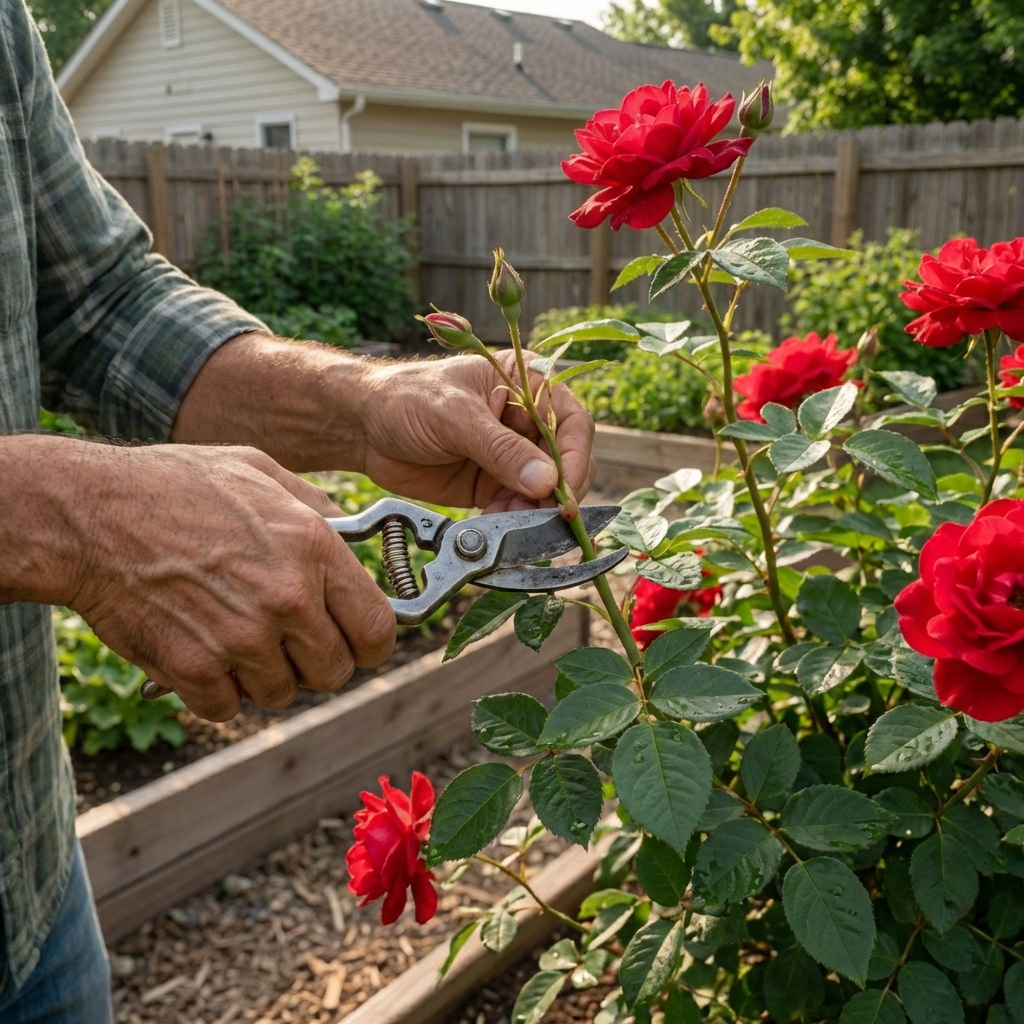
- Remove dead, damaged, and crossing canes first.
- Then reduce the shrub by about 1/3 to 1/2 for a fuller plant.
- Make cuts just above outward-facing buds when possible.
Light prune (during the season)
- Trim long shoots that stick out to keep the mound shape.
- Deadheading is optional. Knock Outs self-clean fairly well, but removing spent clusters can speed up the next flush.
Tool tip: Use sharp pruners and disinfect if you are cutting out diseased material.
Step 5: Do a quick weekly check
Five minutes a week prevents most “mystery problems.” Look for:
- New insects on tender tips
- Leaf spots starting low in the shrub
- Yellowing leaves that could signal watering issues
- Stem dieback that needs pruning
Common problems
Most issues fall into two buckets: pests and diseases. Before you spray anything, confirm what you are dealing with and fix the conditions that helped it show up.
Quick safety note: Any time you use a spray (even “gentle” ones), follow the label, wear basic protection, and avoid spraying in high heat. Aim for early morning or dusk, and try not to spray open blooms to reduce pollinator exposure.
Aphids
How to identify: Small green, yellow, or black insects clustered on new growth and buds. Leaves may curl. You might see sticky honeydew.
Control:
- Blast them off with a firm stream of water in the morning.
- Encourage beneficial insects (lady beetles, lacewings) by avoiding broad-spectrum sprays.
- If needed, use insecticidal soap or horticultural oil, coating leaf undersides. Follow label directions and avoid spraying in heat.
Spider mites
How to identify: Fine webbing and stippled, dusty-looking leaves, often during hot, dry weather.
Control:
- Rinse foliage, especially the undersides, every few days during outbreaks.
- Use horticultural oil or insecticidal soap if pressure stays high.
- Reduce plant stress with consistent watering and mulch.
Thrips (bloom damage)
How to identify: Buds that open deformed, petals with brown edges or streaking, tiny slender insects inside blooms.
Control:
- Remove badly damaged blooms and dispose of them.
- Keep weeds down, since thrips often build up nearby.
- If needed, use a product labeled for thrips on roses and apply at dusk to reduce impact on pollinators.
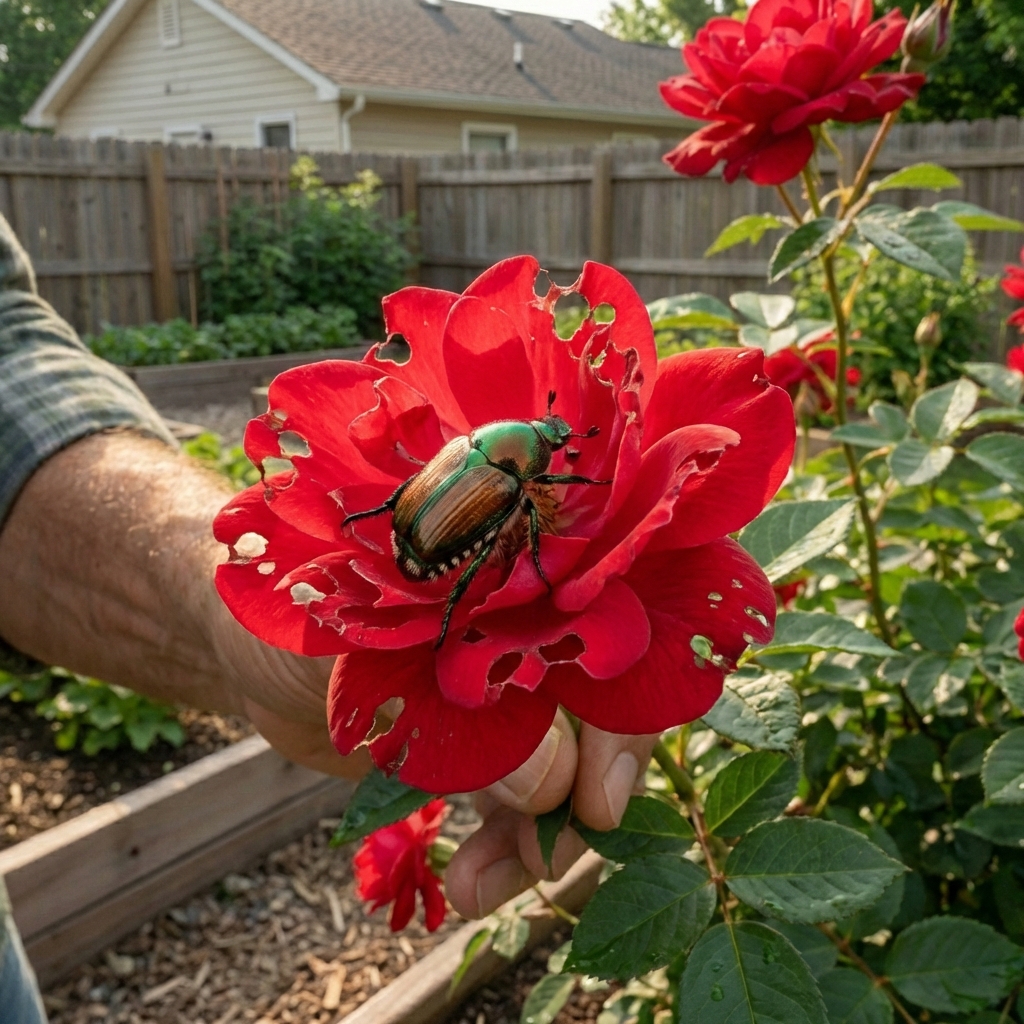
Japanese beetles
How to identify: Metallic green and bronze beetles feeding on flowers and leaves, leaving a lace-like skeleton.
Control:
- Hand-pick early in the morning and drop into soapy water.
- Avoid beetle traps near your roses. They can attract more beetles to your yard.
- If damage is severe, consider targeted controls labeled for Japanese beetles. Follow label timing and protect pollinators.
Black spot
How to identify: Round black spots with feathery edges, usually starting on lower leaves. Leaves yellow and drop. Even Knock Outs can get black spot in humid, rainy seasons or tight plantings.
Control (start with the basics):
- Water at the soil line, not overhead.
- Prune for airflow and avoid crowding.
- Clean up fallen leaves, especially in fall. Do not compost infected leaves unless your compost gets hot.
- Mulch to reduce soil splash onto leaves.
If you need to spray: Use a fungicide labeled for black spot on roses and follow the schedule on the label. Preventative spraying works better than trying to rescue heavily infected plants.
Powdery mildew
How to identify: White powdery coating on leaves and shoots, often when days are warm and nights are cool.
Control:
- Increase airflow and avoid heavy nitrogen fertilizing.
- Water in the morning and keep plants evenly moist.
- Use a labeled fungicide if it spreads quickly.
Rose rosette disease (RRD)
How to identify: Distorted growth, excessive thorniness, and “witches’ broom” clusters of shoots. New growth may be very red and malformed. It is spread by tiny eriophyid mites and is unfortunately not curable.
Control:
- If you strongly suspect RRD, remove the entire plant, including as much root as possible.
- Bag it and dispose of it. Do not compost.
- Disinfect pruners and any tools used during removal.
- Keep spacing between roses and remove nearby wild multiflora rose if present, since it can host the disease.
Important: Normal red new growth is common on Knock Out roses. Worry more about deformed growth and broom-like clusters than color alone.
Seasonal checklist
Early spring
- Major prune and remove dead wood
- Refresh mulch
- Start fertilizing once growth begins
- Check for leftover diseased leaves and clean up
Late spring to summer
- Deep water during dry spells
- Light shaping trims as needed
- Fertilize every 4 to 6 weeks until mid-summer
- Weekly pest and disease checks
Late summer to fall
- Stop fertilizing 6 to 8 weeks before frost
- Keep watering if fall is dry
- Clean up fallen leaves to reduce disease next year
Winter
- In colder zones, maintain mulch and protect the root zone
- Avoid heavy pruning late in fall. Save major cuts for late winter or early spring
FAQ
Do Knock Out roses need deadheading?
Not strictly. They are known for being “self-cleaning,” but removing spent clusters can make the plant look tidier and may encourage faster rebloom.
Why are my Knock Out rose leaves turning yellow?
Most commonly it is either black spot (yellow leaves plus spots) or watering stress (too wet or too dry). Check for spotting first, then check soil moisture 2 to 3 inches down.
Can I prune Knock Out roses in summer?
Light shaping is fine. Avoid severe pruning in extreme heat, and avoid heavy pruning late in the season when the plant should be slowing down.
What is the easiest way to prevent disease?
Sun, airflow, and dry leaves. Plant in full sun, do not crowd shrubs, water at the base, and clean up fallen leaves.
Bottom line
Knock Out roses are tough, but they still respond to the basics: enough sun, deep watering, a little feeding, and a confident spring prune. Add a quick weekly check for pests and leaf spots, and you will usually stay ahead of problems before they turn into a season-long headache.

Jose Brito
I’m Jose Britto, the writer behind The Country Store Farm Website. I share practical, down-to-earth gardening advice for home growers—whether you’re starting your first raised bed, troubleshooting pests, improving soil, or figuring out what to plant next. My focus is simple: clear tips you can actually use, realistic expectations, and methods that work in real backyards (not just in perfect conditions). If you like straightforward guidance and learning as you go, you’re in the right place.