Money trees (Pachira aquatica) are one of those houseplants that can look fancy while being pretty forgiving. They are also a little misunderstood. Many money tree issues come down to two things: light that is too low and soil that stays wet too long.
This guide keeps it practical. You will learn what the plant actually wants, how to water without guessing, and what to do when leaves start yellowing or dropping.
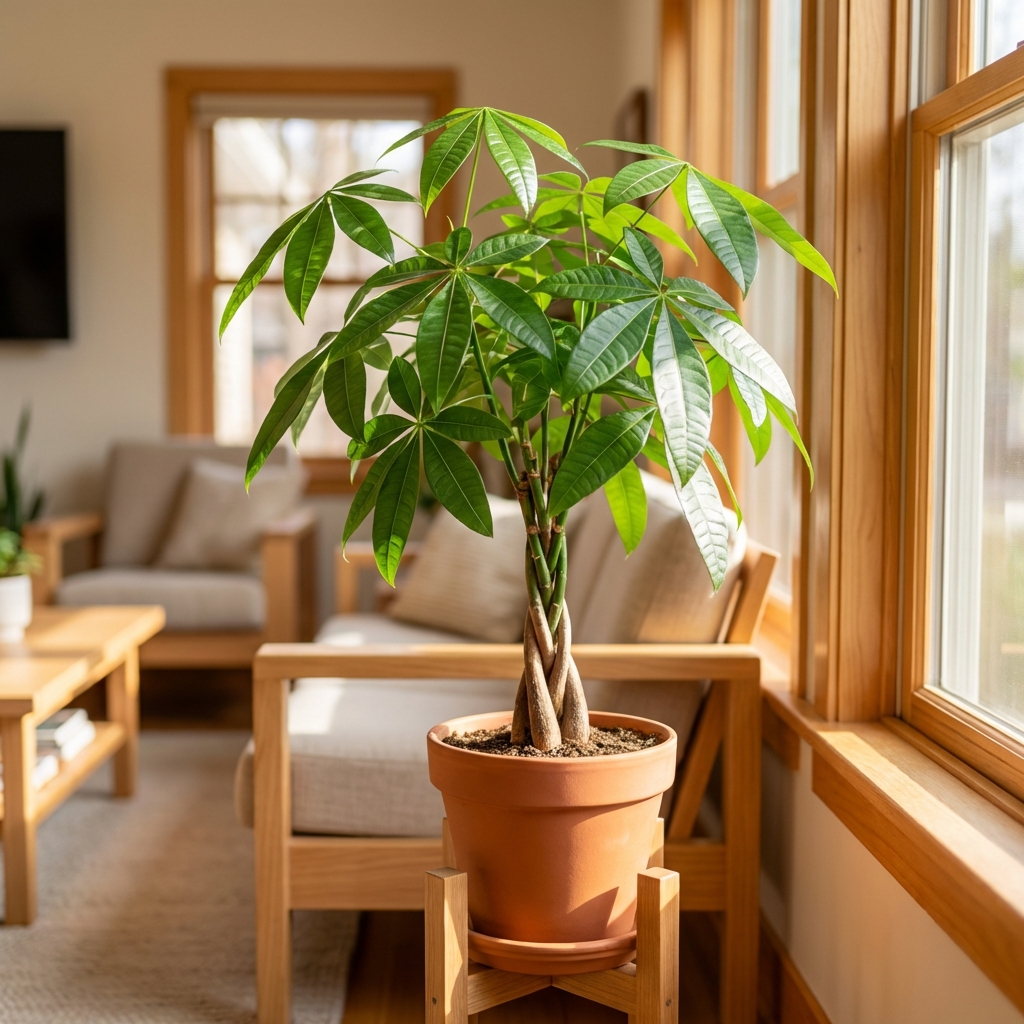
Quick facts: what a money tree likes
- Light: bright, indirect light is the sweet spot
- Water: soak, then let the pot dry partially before watering again
- Soil: airy and fast-draining, never dense and soggy
- Temperature: comfortable indoor temps, away from cold drafts
- Humidity: average home humidity is fine, higher is better in winter
Light: the difference between surviving and thriving
A money tree will tolerate medium light, but it grows stronger and keeps better leaf color in bright, indirect light. Think: near an east window, a bright north window (especially if unobstructed), or a few feet back from a sunny south or west window with sheer curtains.
Signs the light is off
- Too little light: slow growth, leggy stems, smaller new leaves, more leaf drop
- Too much direct sun: scorched patches, crispy edges, faded leaves
Simple fix: move the plant closer to a window in small steps over a week. Sudden changes can cause leaf drop.
Watering: a reliable method that prevents root rot
Money trees hate sitting in water. The goal is to water thoroughly, then let the soil dry enough that roots can breathe.
The finger test (works better than a schedule)
- Stick your finger about 2 inches into the soil.
- If it feels damp, wait.
- If it feels dry at that depth, water.
How to water correctly
- Water until you see runoff from the drainage holes.
- Empty the saucer or decorative outer pot (cachepot) after 10 to 15 minutes.
- Avoid small sips every few days. It keeps the upper soil layer damp, which can attract fungus gnats and leads to uneven watering.
Season reality check: in winter, most homes have less light, so money trees often need less water. In brighter summer conditions, they may need more.
Soil and pot: your best defense against overwatering
If your money tree struggles even when you think you are watering correctly, the soil might be the issue. Many store-bought plants sit in peat-heavy mixes that stay wet too long indoors.
A good money tree mix
- Base: quality indoor potting mix
- Add drainage: perlite, pumice, or orchid bark to make it airy
A simple, workable blend for most homes is 2 parts potting mix + 1 part perlite. If your home runs cool or low light, add a little more perlite or bark.
Pick the right pot
- Use a pot with drainage holes.
- Choose a pot that matches the root ball. Oversized pots hold extra wet soil.
- Terracotta can help the soil dry faster if you tend to overwater.
A quick drainage myth to skip
Do not add rocks or gravel to the bottom of the pot. It does not improve drainage and can keep roots sitting in wet soil. Use a well-draining mix and a pot with holes instead. If you want the look of a decorative pot, keep the plant in a nursery pot and set it inside a cachepot, then empty any collected water.
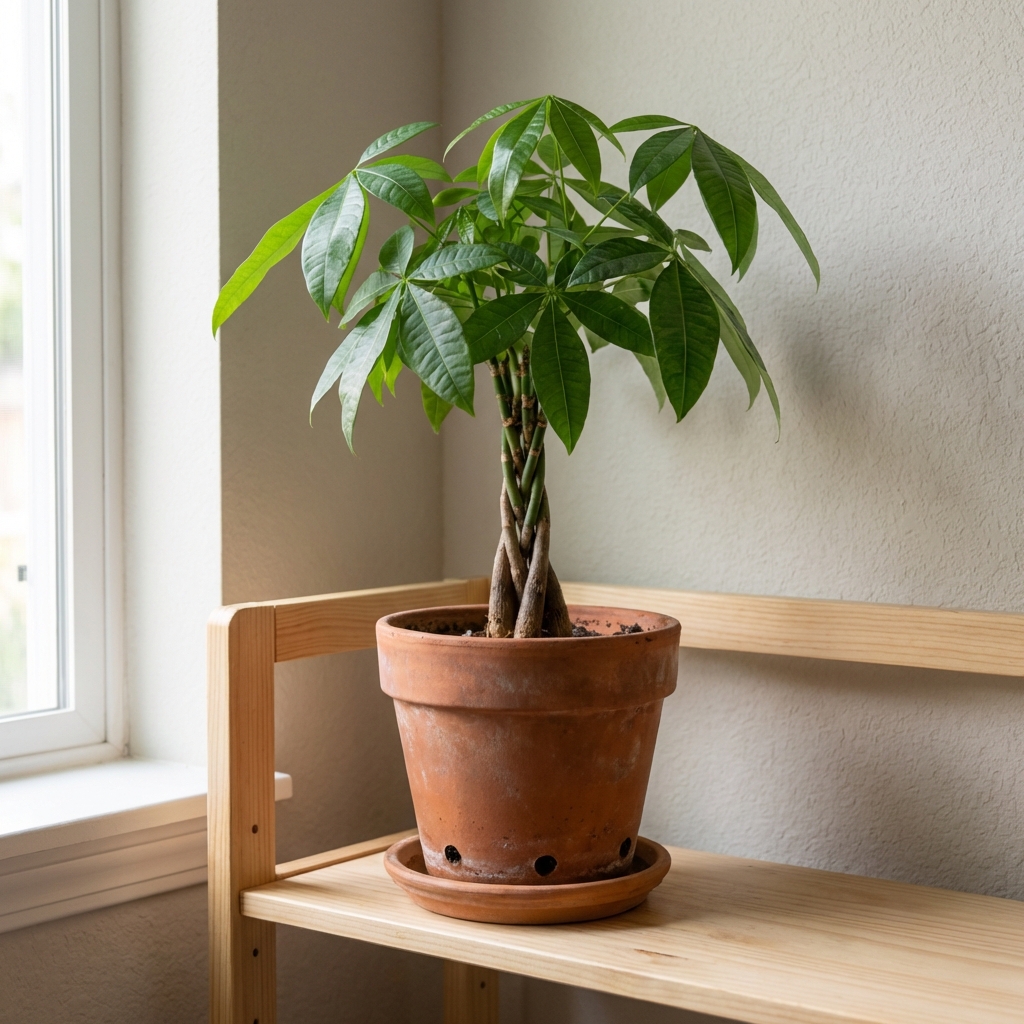
Humidity and temperature
Money trees handle normal household humidity, but they look their best with a bit more, especially during heating season.
- Temperature: aim for roughly 65 to 80°F, avoid cold windowsills in winter
- Humidity help: run a small humidifier nearby or group plants together
- Avoid: blasts from heating vents and AC units, which dry leaves fast
Fertilizing: keep it light
Money trees are not heavy feeders. Too much fertilizer can cause weak growth and leaf edge burn.
A simple feeding plan
- Feed in spring and summer when growth is active.
- Use a balanced houseplant fertilizer at half strength every 4 to 6 weeks.
- Skip fertilizer in fall and winter unless the plant is clearly growing.
Tip: if you see white crust on soil or pot edges, flush the pot with water to rinse salts, then let it drain fully.
Pruning and shaping
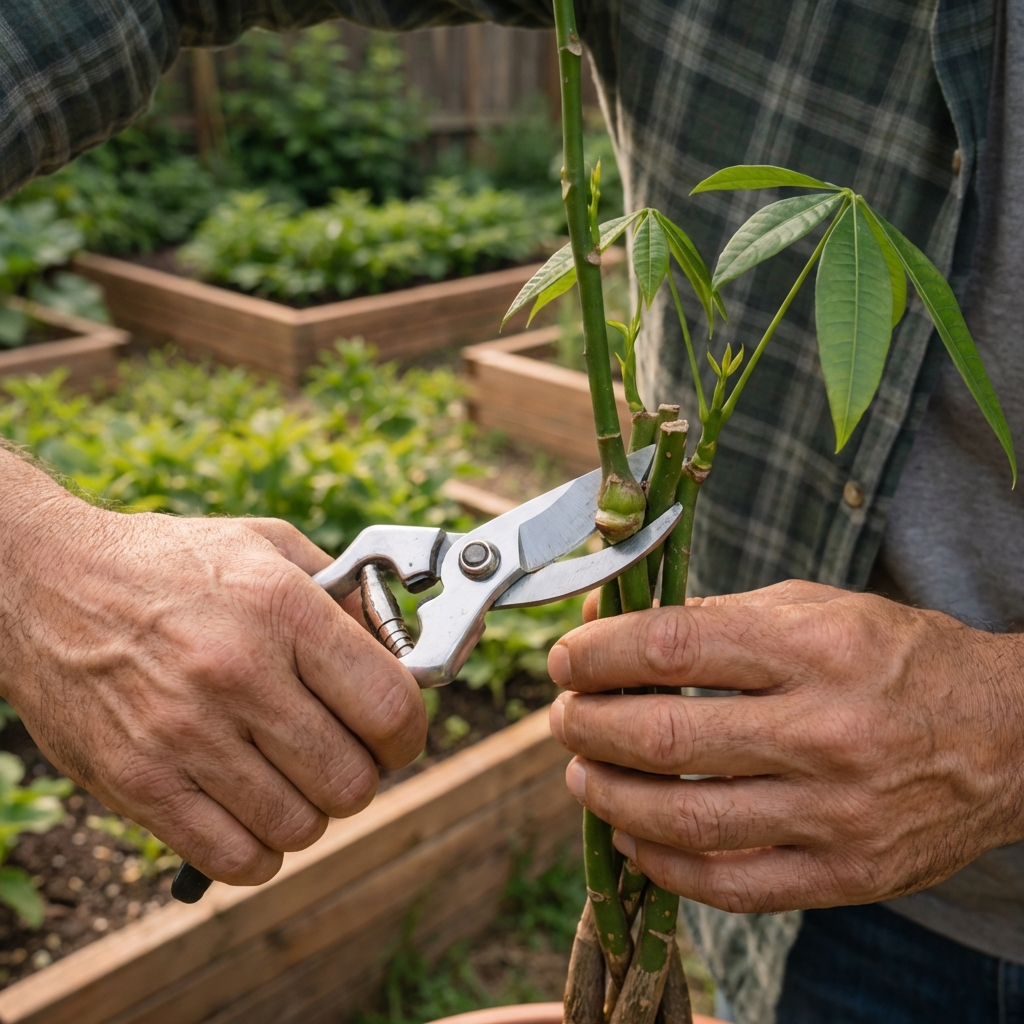
Pruning keeps a money tree bushier and prevents it from turning into a tall, bare stick with leaves only at the top.
When and how to prune
- Best time: spring through mid-summer.
- Use clean, sharp pruners.
- Cut just above a leaf node to encourage branching.
About braided trunks
Many money trees are sold with braided stems tied near the top. Over time, ties can dig into bark and restrict growth.
- Check for tight ties and remove or loosen them if they are biting in.
- If stems look swollen above a tie, that is a sign it is too tight.
Repotting: when to do it and step-by-step
Money trees do not need frequent repotting. Most do well every 2 to 3 years, or when roots are circling the pot and watering becomes tricky.
Best time
Late spring to early summer, when the plant can recover quickly.
Repotting steps
- Choose a new pot 1 to 2 inches wider than the current one.
- Gently slide the plant out and loosen circling roots.
- Trim only clearly dead, mushy roots with clean scissors.
- Set the plant at the same soil level as before.
- Backfill with an airy mix and lightly firm it.
- Water once to settle soil, then let it dry a bit before watering again.
Common problems and easy fixes
Yellow leaves
- Most common cause: overwatering or soil staying wet too long
- Also possible: low light, sudden temperature swings, natural aging of older leaves, fertilizer buildup, pests
Fix: increase light, check drainage, and let the pot dry more between waterings. If soil smells sour or stays wet for many days, consider repotting into a better-draining mix.
Drooping leaves
- Underwatering: soil feels dry 2 inches down, pot feels light, leaves droop and may look a bit dull
- Overwatering: soil feels wet, pot feels heavy, droop plus yellowing, soft stems
Fix: confirm with the finger test. If bone dry, water thoroughly and let drain. If wet, pause watering and improve light and airflow.
Leaf drop after moving it
Money trees can drop leaves when light, temperature, and humidity change suddenly.
Fix: keep it in one stable spot, avoid drafts, and do not make up for leaf loss with extra water.
Brown tips and crispy edges
- Common causes: dry air, missed waterings, fertilizer salts
Fix: water more consistently, consider a humidifier in winter, and flush the pot occasionally.
Root rot
Root rot shows up as yellowing, limp growth, and soil that stays wet with a musty smell.
Fix: unpot the plant, remove mushy roots, repot in fresh fast-draining soil, and reduce watering. If most roots are gone, take healthy stem cuttings as backup.
Pests to watch for
Money trees are not pest magnets, but dry indoor air can invite a few usual suspects.
Common pests
- Spider mites: fine webbing, speckled leaves, worse in dry air
- Mealybugs: white cottony clusters at nodes and leaf undersides
- Scale: small brown bumps on stems and leaf veins
Simple treatment
- Rinse the plant in the shower or with a gentle spray to knock pests back.
- Wipe leaves and stems with a soft cloth.
- Use insecticidal soap or horticultural oil, repeating every 7 to 10 days for a few rounds.
- Isolate the plant until pests are gone.
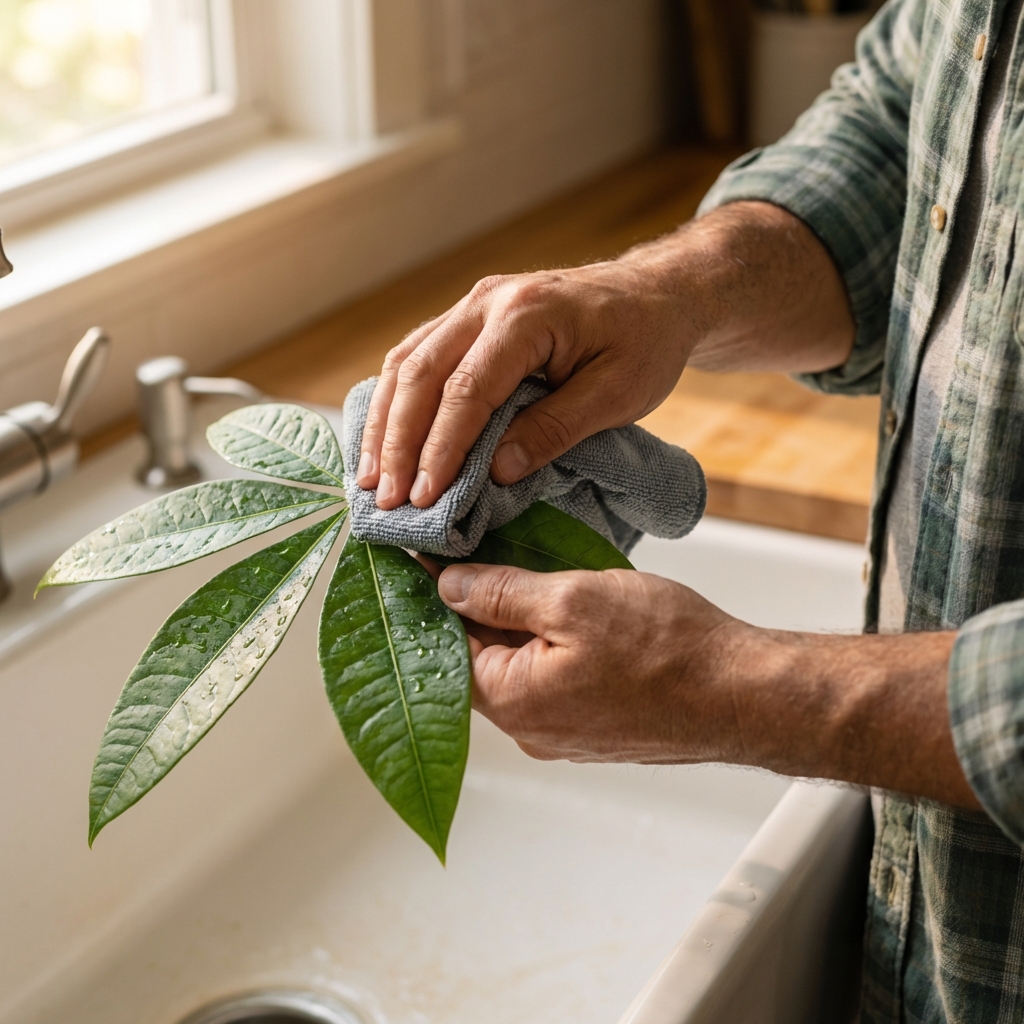
Leaf cleaning
Dusty leaves do not photosynthesize as efficiently. A quick wipe keeps the plant looking better and helps you spot pests early.
- Wipe leaves with a soft, damp cloth every few weeks (more often if your home is dusty).
- Skip leaf shine products. They can clog leaf pores.
Propagation
If you want a backup plant or you had to trim a struggling stem, money trees can be propagated from cuttings.
- Take a healthy cutting with at least 1 to 2 nodes, and remove the lower leaves.
- Root it in water or in a lightly moist, fast-draining mix. Bright, indirect light helps.
- When you see a small root system (or the cutting resists a gentle tug in soil), pot it up and water sparingly at first.
Pet safety note
Pachira aquatica is generally considered non-toxic to cats and dogs by major pet safety references. That said, chewing any plant can still cause mild stomach upset (drooling, vomiting, or diarrhea) in some pets. If you have a cat or dog that snacks on greenery, keep the plant out of reach and contact your veterinarian if symptoms appear after ingestion.
Money tree care checklist
- Bright, indirect light near a window
- Water only when the top 2 inches of soil are dry
- Fast-draining soil and a pot with drainage holes
- Fertilize lightly in spring and summer
- Rotate the pot monthly for even growth
- Check for tight trunk ties and common pests
If you keep those basics steady, a money tree usually rewards you with steady new growth and a fuller canopy over time. It is not about perfection. It is about avoiding the handful of issues that cause most indoor plant headaches.

Jose Brito
I’m Jose Britto, the writer behind The Country Store Farm Website. I share practical, down-to-earth gardening advice for home growers—whether you’re starting your first raised bed, troubleshooting pests, improving soil, or figuring out what to plant next. My focus is simple: clear tips you can actually use, realistic expectations, and methods that work in real backyards (not just in perfect conditions). If you like straightforward guidance and learning as you go, you’re in the right place.