Mosquito-repellent plants get a lot of hype. Here is the honest truth from a backyard gardener’s point of view: plants can help, especially when you brush past them, crush a leaf, or place them where you spend time. But plants alone rarely solve a mosquito problem if you have standing water nearby, shady damp corners, or still air.
This guide shows you the plants that are actually worth growing outdoors, how to use them so they matter, and the practical steps that reduce bites fast.

How mosquito-repellent plants really work
Mosquitoes find you mainly by carbon dioxide from your breath, body heat, and skin odors. Many aromatic plants produce oils that mosquitoes do not like, but outdoors those scents disperse quickly.
Bottom line: think inches and feet, not yards. These plants help most when they are close enough to smell and touch, not when they are out in a far garden bed.
When plants help the most
- Close range: pots beside chairs, doorway planters, or a tight border around a sitting area
- When leaves are disturbed: brushing against them, pinching a sprig, pruning, or harvesting
- When you combine several: mixed plantings may create a stronger overall scent right where you sit (outdoor evidence is limited, but it is a common-sense way to boost aroma)
When plants barely help
- Wide open yards: one lavender plant in a big lawn is not a shield
- Heavy mosquito pressure: near marshes, drainage ditches, birdbaths, clogged gutters, or neighbors with standing water
- No airflow management: still, humid air is mosquito heaven
Top mosquito-repellent plants for outdoor spaces
These are good picks because they are common, useful, and aromatic enough to make sense near patios and walkways.
Quick note: hardiness varies by variety and climate. If you are not sure what survives your winters, choose container plants you can move, or pick varieties suited to your USDA zone.
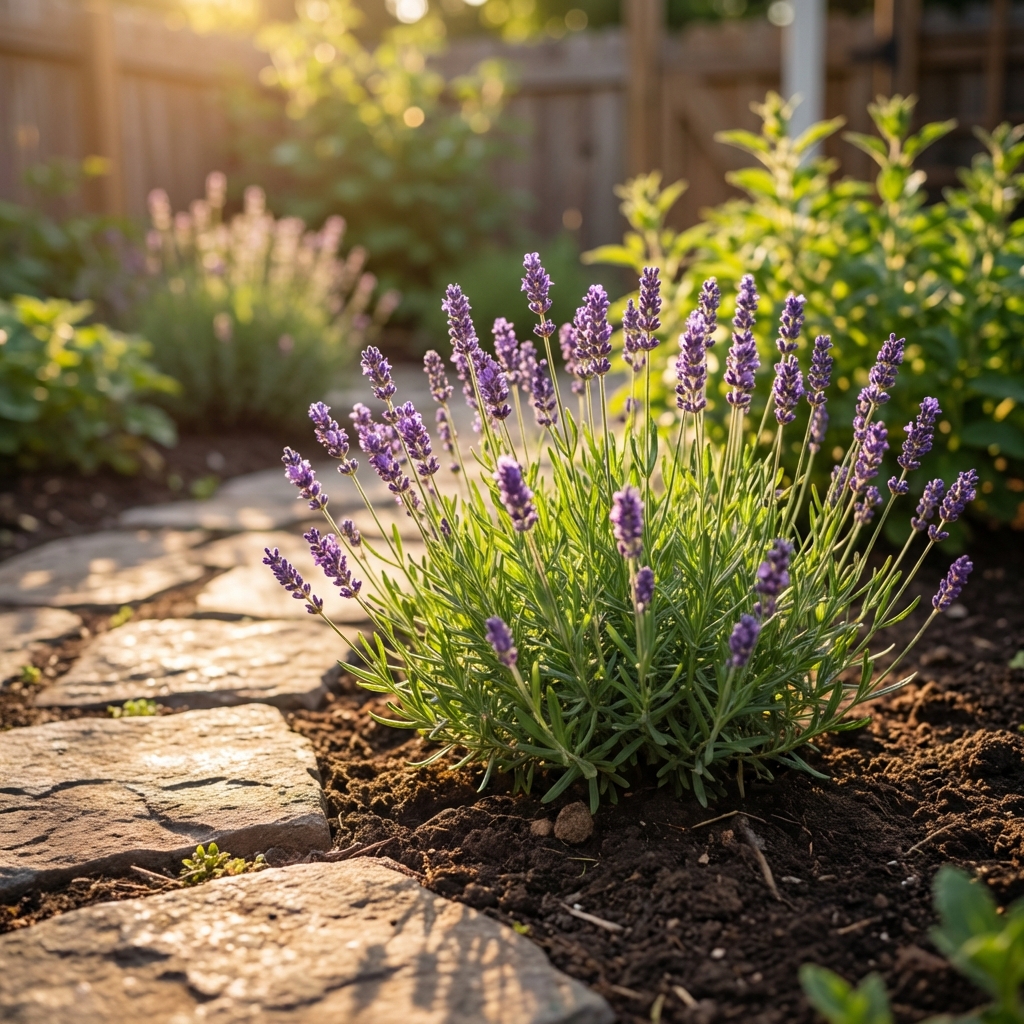
Lavender (Lavandula)
Why it is worth planting: strong fragrance, drought-tolerant once established, attracts pollinators.
- Best placement: sunny edges of patios, along paths, near doorways
- Growing notes: needs full sun and well-drained soil, hates wet feet
Basil (Ocimum basilicum)
Why it is worth planting: one of the most useful patio herbs, strong smell, easy in pots.
- Best placement: right next to seating, grill area, outdoor kitchen
- Growing notes: warm weather, consistent watering, pinch often to keep it bushy
Rosemary (Salvia rosmarinus)
Why it is worth planting: tough, fragrant, good in containers, can be brought indoors in cold zones.
- Best placement: pots by doors and on steps, sunny patio corners
- Growing notes: full sun, let soil dry slightly between waterings
Mint (Mentha)
Why it is worth planting: strong scent, fast growth, great for pots near people.
- Best placement: containers only, unless you want it everywhere
- Growing notes: keep evenly moist, trim regularly to encourage fresh, bushy growth (legginess is usually a light issue, so give it decent sun if you can)
Lemongrass (Cymbopogon)
Why it is worth planting: it has that citronella-like aroma, and big clumps give you more “plant volume” around seating areas.
Reality check: the living plant’s scent is pleasant, but it is not the same as concentrated citronella-type oils used in products.
- Best placement: large pots or bed edges in full sun
- Growing notes: heat lover, appreciates water and feeding, can be overwintered indoors in containers
Marigolds (Tagetes)
Why it is worth planting: easy annual color and a strong scent. Useful as a companion plant and border near where you sit.
- Best placement: borders, pots, and around patios
- Growing notes: full sun is best, deadhead for more blooms
Catnip (Nepeta cataria) and catmint (Nepeta)
Why it is worth planting: very aromatic. Catmint is usually the better behaved landscape plant.
- Best placement: sunny borders and pots near seating
- Growing notes: drought-tolerant once established, shear after flowering for a second flush
Heads up: catnip can attract neighborhood cats. If that is a problem, choose catmint varieties instead.
Where to put repellent plants so they matter
Placement is the difference between “cute herbs” and “this is helping.” Think like this: put plants where mosquito and human paths overlap.
Best locations
- At entry points: one pot on each side of a door
- At chair height: planters beside seating, not twenty feet away in a bed
- Along walkways: where you brush leaves as you pass
- On the upwind side: so breezes carry scent toward you
Container recipes that work
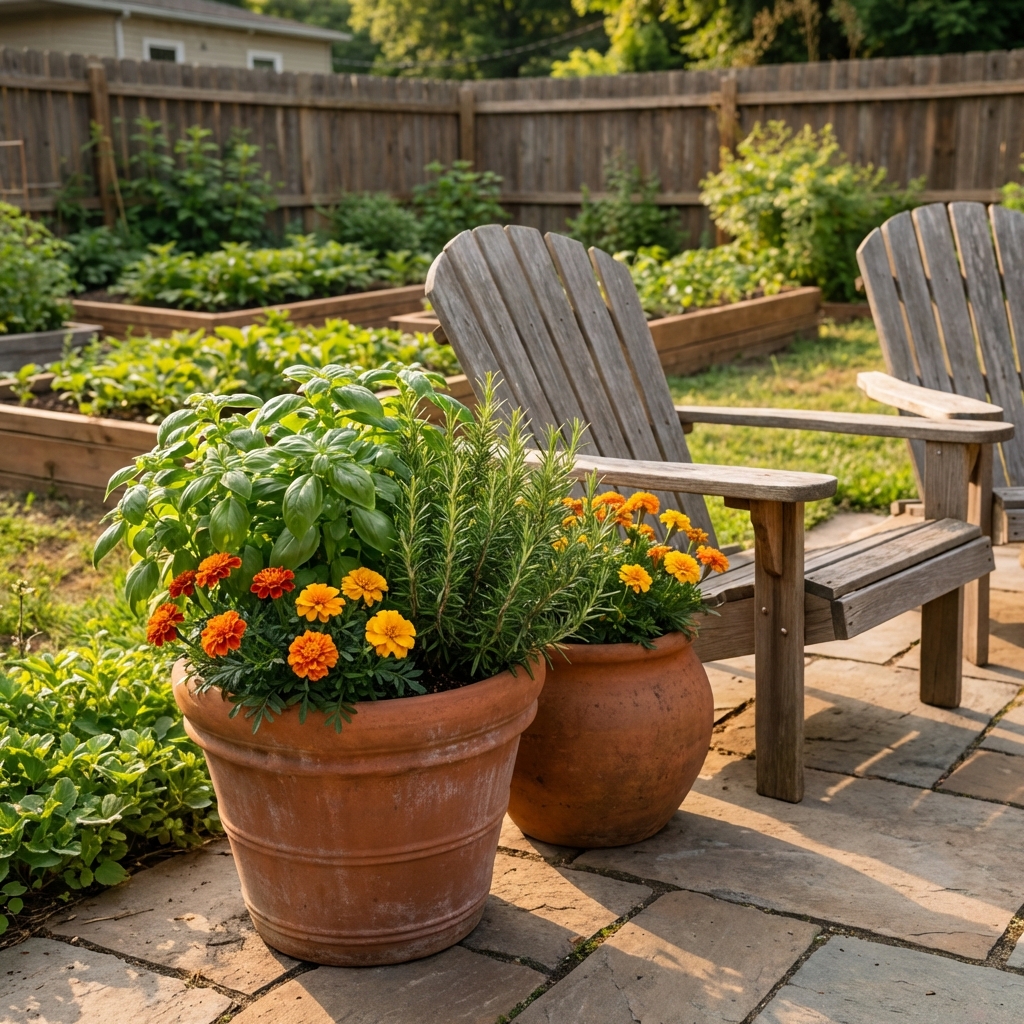
If you want a simple setup, start with a few big pots rather than lots of small ones.
- Sunny patio pot: basil + rosemary + marigolds
- Heat lover pot: lemongrass + basil + marigolds
- Low water border: lavender + rosemary (in ground, well-drained)
- Shadier porch pot: mint (alone) + a second pot with basil if you get a few hours of sun
Plants called “mosquito plants” and what to know
Citronella geranium (Pelargonium citrosum)
Often sold as the “mosquito plant.” It can smell lemony, but outdoors it is not a force field. It is still a fine container plant if you like it, just keep expectations realistic.
Lemon eucalyptus and PMD
The repellent ingredient PMD (p-menthane-3,8-diol) is known for repelling mosquitoes when it is formulated for skin use. PMD is typically derived from distilled and processed lemon eucalyptus oil (or made to match it). Growing a eucalyptus in the yard, or crushing a few leaves, does not automatically create a patio-sized protective zone. Also, eucalyptus is not a great fit for many climates and can get large.
Garlic
Garlic is great in the garden and kitchen. As a mosquito fix, results are mixed. If you love growing it, keep doing it, but do not count on it as your primary defense.
What reduces bites the fastest (use with plants)
If you want a noticeable difference, pair your plants with these practical moves. This is where most “mosquito results” come from.
1) Remove standing water, then recheck often
Mosquitoes can breed in surprisingly small amounts of water, and development can be faster in warm weather. Do a quick lap around your yard twice a week in peak season, and after big rains.
- Dump water from saucers, buckets, toys, tarps, and wheelbarrows
- Clean gutters and downspout splash blocks
- Refresh birdbaths every 2 to 3 days
- Fix low spots that hold puddles after rain
2) Add airflow where you sit
One of the most underrated mosquito solutions is a simple box fan on a patio. Mosquitoes are weak fliers. Moving air makes it harder for them to land and harder for them to track you. Aim the fan so it blows across your seating area.
3) Keep vegetation trimmed near gathering areas
Mosquitoes rest in cool, shaded, humid spots during the day. If your sitting area is surrounded by dense, wet greenery, thin it out.
- Prune shrubs up off the ground a bit
- Keep grass and groundcover from forming a thick, damp edge
- Open up airflow under decks and around patios
4) Use targeted traps and larval control when needed
If you have unavoidable water features, consider mosquito dunks or bits that use Bti, a biological control that targets mosquito larvae. Use it in standing water you cannot dump, like rain barrels, ponds, and catch basins. For adult control, traps can help in some yards, but placement and brand matter.
Note: Always follow label directions for any control product.
5) Personal protection for immediate relief
If you need bite prevention right now, plants are not the fastest tool. Consider an EPA-registered repellent like DEET, picaridin, IR3535, or PMD on exposed skin. For clothing, permethrin-treated options can be very effective. Follow label directions and keep products away from eyes and mouths.
What not to do
- Do not rely on one plant: a single “mosquito plant” on the deck is rarely noticeable.
- Do not accidentally create breeding sites: plant saucers and decorative containers that hold water undo a lot of your effort. Drill drainage, dump water, or swap to self-draining setups.
- Do not expect candles or incense to fix a still yard: scent products work best when combined with airflow and smart placement.
Make a “brush-by” mosquito barrier
This is a practical way to get more benefit from plants without turning your yard into a perfume factory.
Step-by-step
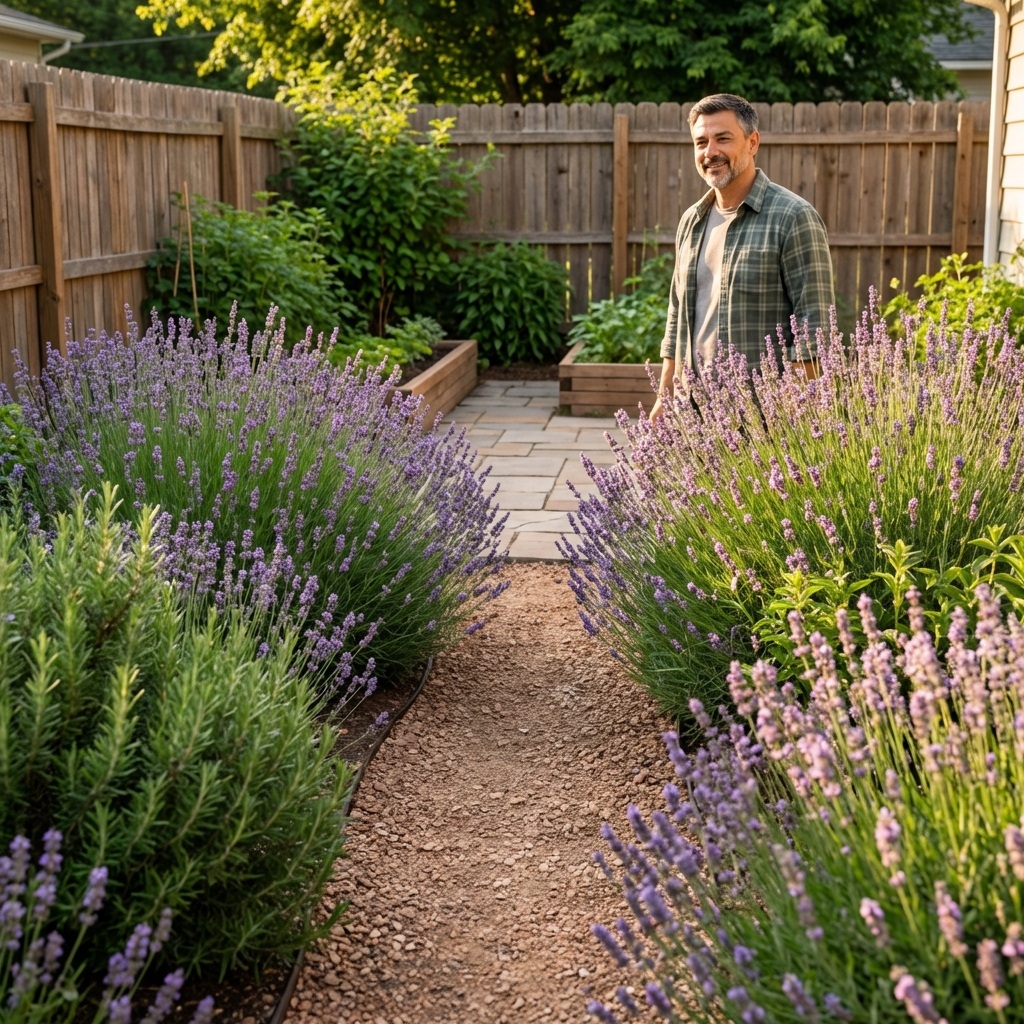
- Pick a route: from the door to the patio or grill
- Use sturdy aromatics: lavender, rosemary, basil, catmint
- Plant close enough to touch: so leaves lightly brush legs as you pass
- Trim often: harvest and prune to keep aroma strong
Outdoor mosquito-repellent plant safety notes
- Pets: some essential oils and plants can bother pets if chewed. If your dog or cat eats plants, keep pots out of reach and ask your vet about specific concerns.
- Kids: teach kids not to rub plant oils into eyes, especially with strong aromatics.
- Allergies: strong fragrances can trigger sensitivities. Start with one or two plants near seating before you plant a whole border.
- Bees and butterflies: many of these plants are pollinator-friendly. That is a plus, just place flowering pots where they will not crowd your eating area.
Quick plan: what to plant for results
If you want a simple shopping list that works in most backyards:
- 2 large pots near seating: basil + marigolds
- 1 pot near the door: rosemary
- 1 sunny bed edge near the patio: lavender (only if soil drains well)
- 1 box fan for evenings on the patio
- Twice-weekly water check during warm months
That combo is realistic, useful, and it stacks the odds in your favor.
Common questions
Do mosquito-repellent plants work outdoors?
They can help in close range, especially in containers near people and when leaves are disturbed. They are not a complete solution on their own.
What is the strongest mosquito-repellent plant?
Lemongrass, basil, mint, and catmint are strong-smelling options that make sense for patios. “Strongest” depends on your climate and how close you place the plant to where you sit.
Should I plant citronella?
You can, but treat it like a nice-scented container plant, not a guaranteed mosquito fix. You will get better results pairing plants with standing-water control and airflow.

Jose Brito
I’m Jose Britto, the writer behind The Country Store Farm Website. I share practical, down-to-earth gardening advice for home growers—whether you’re starting your first raised bed, troubleshooting pests, improving soil, or figuring out what to plant next. My focus is simple: clear tips you can actually use, realistic expectations, and methods that work in real backyards (not just in perfect conditions). If you like straightforward guidance and learning as you go, you’re in the right place.