Fleas are stubborn because you are not just dealing with the bugs you see on your cat. You are dealing with eggs, larvae, and pupae in the house, bedding, and carpet too. The good news is you can make a big dent fast with a classic, natural routine that is safe, affordable, and realistic for busy households.
This guide focuses on what works quickly without using harsh chemicals. I will also be clear about the moments when natural methods are not enough and you should call your vet.
First, check if your cat has fleas
If you are not sure, do a quick check before you treat:
- Look for flea dirt: pepper-like black specks, usually around the neck, lower back, and base of the tail.
- Do the wet paper towel test: put the specks on a damp white paper towel. If they smear reddish-brown, that is digested blood.
- Watch behavior: frequent scratching, over-grooming, small scabs, and hair thinning can all be flea-related.
If you see pale gums, extreme lethargy, or your kitten seems weak, skip home treatment and call a vet the same day. Fleas can cause anemia, especially in kittens.
Quick safety notes (read this first)
If you skim, skim this section. A few common flea mistakes can seriously harm cats.
- Never use dog flea products on cats. Some contain permethrin or concentrated pyrethroids that can be toxic to cats.
- Skip essential oils on cats. Tea tree, peppermint, eucalyptus, clove, and many others can be dangerous even in small amounts.
- Be extra cautious with kittens, seniors, pregnant cats, or cats with chronic illness. Call your vet before you try anything beyond combing and laundry.
The quick, classic natural way: comb, trap, and repeat
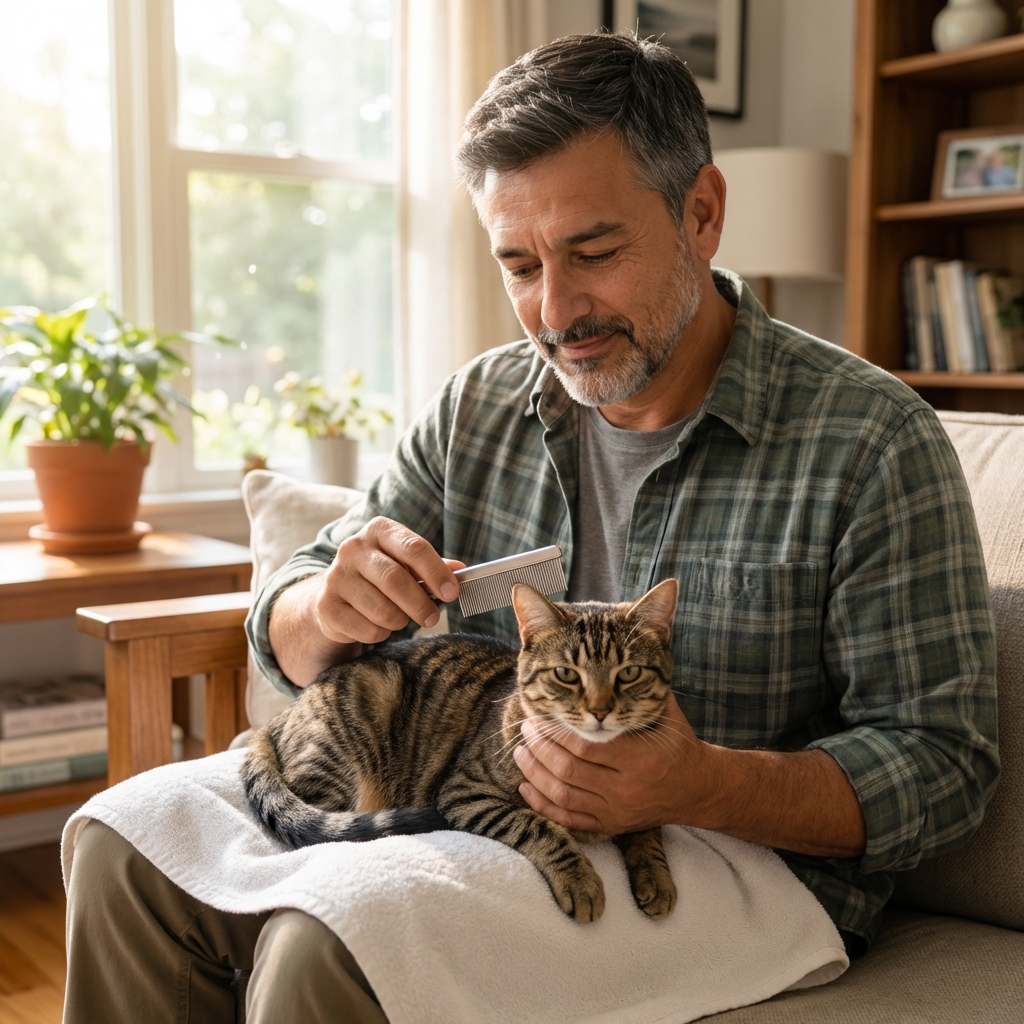
If you only do one thing today, do this. Flea combing physically removes adult fleas right now. It is simple, but it works best when you do it like a routine, not a one-time event.
What you need
- A metal flea comb with tight teeth
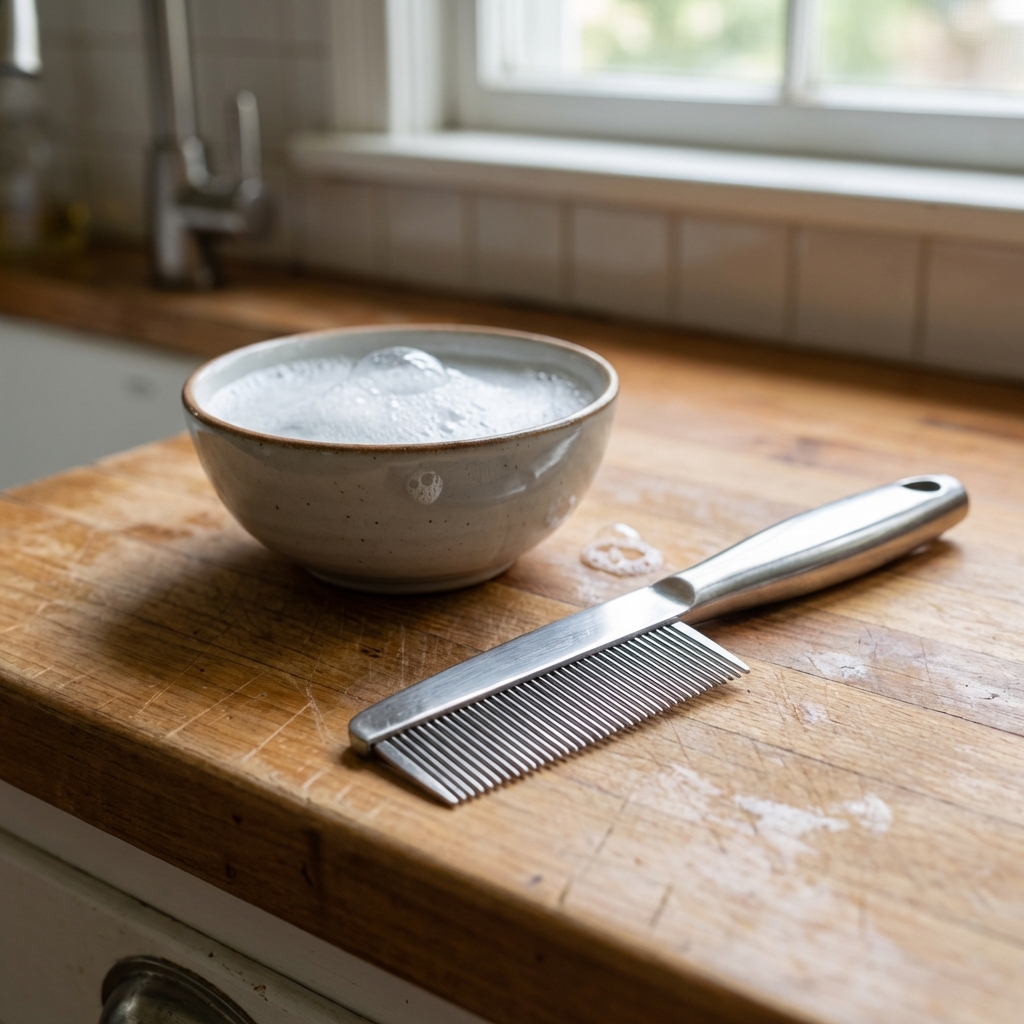
- A shallow bowl of warm water with a few drops of mild dish soap
- A towel to sit your cat on
- Treats to keep things calm
How to do it
- Set up the bowl: The soapy water helps trap fleas by breaking surface tension so they sink and drown.
- Comb slowly: Focus on neck, behind ears, under the front legs, belly, and base of tail.
- Dip the comb: After every pass or two, dip the comb into the soapy water to knock off fleas and flea dirt.
- Do 10 to 15 minutes: Once or twice daily for at least 7 days.
Realistic expectation: combing can knock down adults fast, but it does not kill eggs. That is why the home steps later in this guide matter so much.
Safe bathing options that can help
A bath can help remove fleas and soothe irritated skin, but cats do not always tolerate bathing. If your cat panics, do not force it. Go back to combing and focus on home cleanup.
Option A: Mild soap bath (use carefully)
A small amount of mild, unscented dish soap can help remove and kill some adult fleas during a bath, mostly by helping them drown and rinse away. It is not a perfect flea treatment and it can dry out feline skin, so use it sparingly.
- Use only a tiny amount and rinse extremely well.
- Avoid eyes, ears, and mouth.
- Do not bathe frequently. Over-bathing can worsen irritation or cause dermatitis. If your cat is already inflamed, combing is often the gentler choice.
- Do not use on very young kittens unless your vet says it is okay.
Tip: Put a ring of soap around the neck first (like a collar) before bathing the body. It can help slow fleas from racing up toward the face.
Option B: Oatmeal rinse for itch relief
Oatmeal does not kill fleas, but it can calm irritated skin after combing or bathing. Use finely ground plain oats (no sugar or flavors) mixed into warm water, then rinse lightly.
Avoid essential oils: Tea tree, peppermint, eucalyptus, clove, and many other essential oils can be toxic to cats even in small amounts. Skip them.
The part most people miss: fleas in your home
If you want fleas gone quickly, you have to break the life cycle indoors. Adult fleas are only a small part of the problem. Eggs, larvae, and pupae can be everywhere your cat rests.
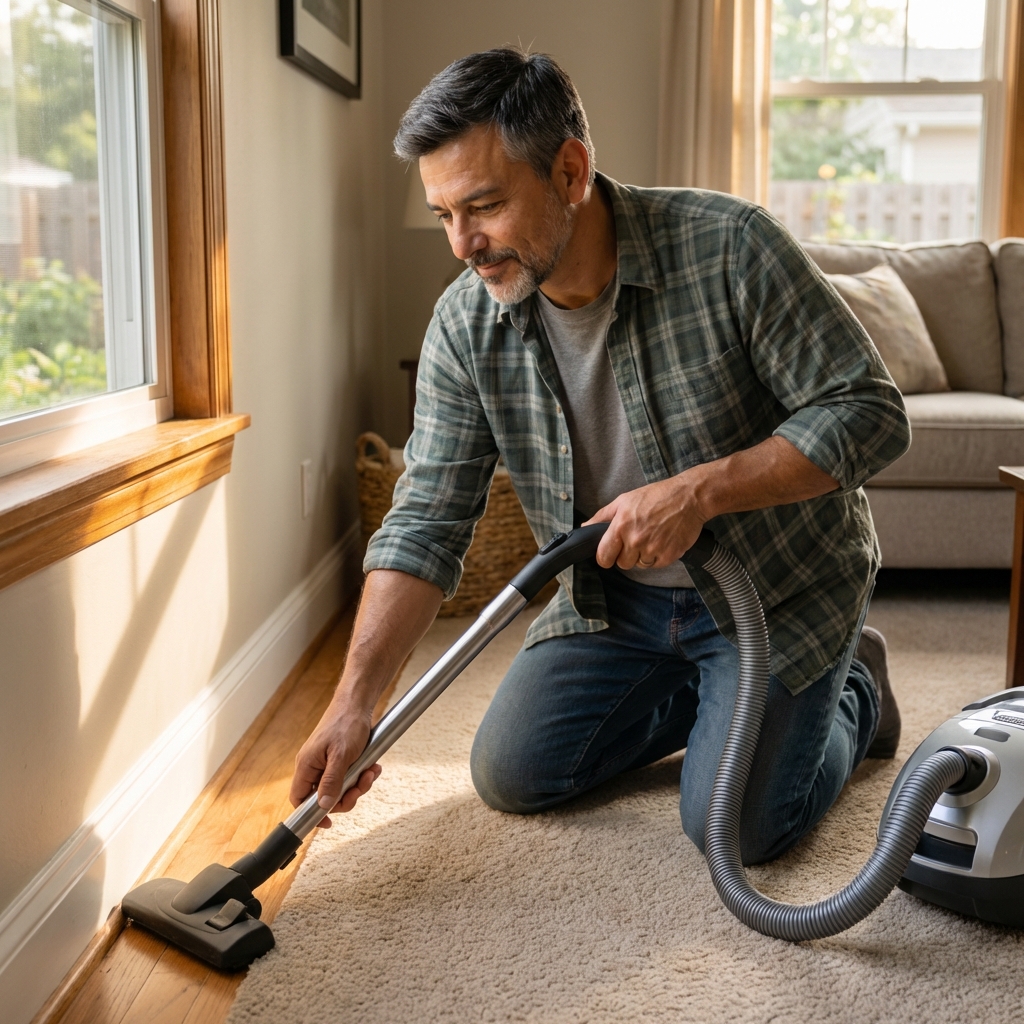
1) Vacuum like you mean it
- Vacuum carpets, rugs, couches, baseboards, and under furniture.
- Go slow and make multiple passes in high-traffic areas.
- Do it daily for 7 to 10 days if you can, then every other day for two more weeks.
- Empty the canister outside right away, or tie up and toss the vacuum bag.
Vacuuming is one of the most effective non-chemical flea controls because it can help remove adults, larvae, and some eggs, and it can also stimulate pupae to emerge so you can pick them up in the next rounds.
2) Wash bedding on hot
- Wash your cat’s bedding, your bedding, throw blankets, and washable couch covers.
- Use hot water and dry on high heat if the fabric can handle it.
- Do this every few days for 2 weeks during an active infestation.
3) Treat favorite resting spots
If your cat has a favorite chair or corner, that is a flea hotspot.
- Vacuum first.
- Use a washable blanket as a “decoy cover” and wash it often.
- Steam cleaning carpets and upholstery can help if you have access to a steamer.
Natural add-ons that can help (and what to avoid)
Food-grade diatomaceous earth, used carefully
Food-grade diatomaceous earth (DE) can damage fleas by drying them out. It can help in dry indoor areas, but results in real homes are mixed, and it is messy and dusty. Dust is not great for lungs, especially in cats.
- Only use food-grade DE, never pool grade.
- Use a very light dusting in cracks, crevices, and along baseboards, not on pet bedding or areas your cat will roll in.
- Keep your cat out of the room while applying and let dust settle.
- Vacuum it up after 24 to 48 hours and repeat if needed.
If anyone in the home has asthma or breathing issues, skip DE and focus on vacuuming and washing instead.
Skip these common “natural” flea ideas
- Essential oils on cats: high risk of toxicity.
- Garlic or supplements: can be harmful and are not reliable flea control.
- Apple cider vinegar sprayed on fur: may irritate skin and does not reliably kill fleas.
A simple 7-day schedule that works
Here is a quick plan you can actually follow.
Day 1
- Flea comb for 10 to 15 minutes
- Optional mild soap bath if your cat tolerates it
- Vacuum floors and furniture
- Wash bedding on hot
Days 2 to 7
- Flea comb daily (twice daily if fleas are heavy)
- Vacuum daily
- Wash cat bedding every 2 to 3 days
Weeks 2 to 4
- Flea comb every other day
- Vacuum every other day
- Wash bedding weekly
Most homes see a big improvement in the first week, but complete control often takes 3 to 8 weeks, and it can take longer in heavy infestations or humid environments because of the flea life cycle.
When natural methods are not enough
Sometimes you need backup. Call your vet if:
- Your cat is a kitten, elderly, pregnant, or has chronic health issues
- You see scabs, hot spots, hair loss, or signs of infection
- Your cat seems weak, pale-gummed, or unusually tired
- Fleas keep coming back after 2 to 3 weeks of consistent home treatment
Also remember: some cats have flea allergy dermatitis and can react intensely to just a few bites. In those cases, “mostly gone” is not good enough, and vet guidance can make everyone’s life easier.
Modern vet-recommended preventives (topical or oral) are often the most reliable way to stop the cycle, especially when used correctly for every pet in the home. Be careful with over-the-counter products, and never use a dog-only medication on a cat.
Dogs in the household can keep fleas going, and even indoor-only cats can pick up fleas from people, other pets, or wildlife visiting your yard.
Quick health note: tapeworms
Fleas can transmit tapeworms. If you notice rice-like segments near your cat’s rear or in bedding, ask your vet about deworming. Treating fleas without addressing tapeworms can lead to an unpleasant repeat problem.
Quick FAQs
What kills fleas on cats immediately, naturally?
The fastest natural approach is flea combing with a bowl of soapy water to trap and kill what you remove. A carefully done mild soap bath can also help remove and kill some adult fleas, but combing is usually less stressful for cats.
How do I stop fleas from coming back?
You have to treat the environment: vacuum frequently, wash bedding, and keep up the routine for several weeks so you outlast the life cycle. Consistency is what makes it work.
Can I use lemon spray?
Many citrus oils and citrus-based sprays are not cat-safe, and cats are sensitive to a lot of plant oils and extracts. If you use any spray in the home, keep it off the cat and only use products labeled as cat-safe. When in doubt, stick with vacuuming and washing, or ask your vet.
The bottom line
If you want the classic natural method that works fast, start with daily flea combing and pair it with aggressive vacuuming and hot-wash laundry. That one-two punch handles the fleas you see and the ones still developing in your home.
Stay consistent for a few weeks, watch your cat’s skin, and do not hesitate to involve your vet if your cat is struggling or the infestation is heavy.

Jose Brito
I’m Jose Britto, the writer behind The Country Store Farm Website. I share practical, down-to-earth gardening advice for home growers—whether you’re starting your first raised bed, troubleshooting pests, improving soil, or figuring out what to plant next. My focus is simple: clear tips you can actually use, realistic expectations, and methods that work in real backyards (not just in perfect conditions). If you like straightforward guidance and learning as you go, you’re in the right place.