Mealybugs are one of those pests that can sneak up on you. One week your plant looks fine, the next you notice little white cottony clumps in leaf joints and sticky residue on the pot rim. The good news is you can usually get mealybugs under control with natural methods if you act early and stay consistent.
This page walks you through what actually works in real homes and backyards, from quick spot treatments to safer sprays and long-term prevention.
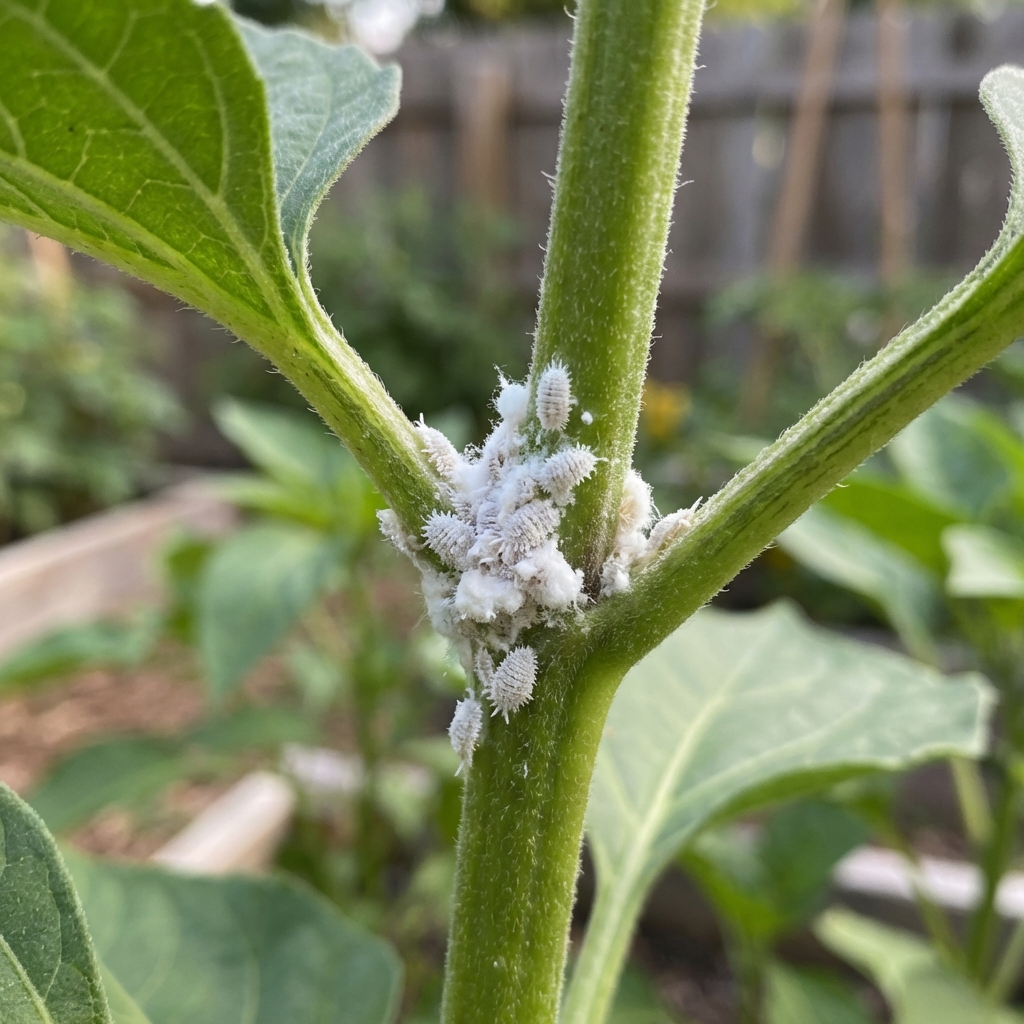
How to tell it's mealybugs
Mealybugs are soft-bodied insects that feed by sucking sap. They protect themselves with a white waxy coating, which is why they look like bits of cotton or fuzz.
Common signs
- White cottony clusters on stems, leaf nodes, under leaves, and along the midrib.
- Sticky honeydew on leaves, pots, windowsills, or nearby furniture.
- Sooty mold, a dark film that grows on honeydew.
- Yellowing, curling, or stunted growth from sap loss.
- Ant activity outdoors, since ants farm mealybugs for honeydew.
They love hiding places. Always check tight spots like leaf joints, the base of stems, and where stems meet the soil line.
Quick look-alikes
- Scale insects: usually look like flat, brown bumps and do not look fluffy.
- Mineral deposits: white crusty spots from hard water that do not wipe away like insects.
- Mildew or fuzzy mold: tends to spread as a film on leaf surfaces instead of clustering at nodes.
If you are unsure, touch a “cottony” spot with a damp swab. Mealybugs smear and come off; mineral deposits feel gritty.
First steps that make every remedy work better
Before you spray anything, do these basics. They make natural treatments much more effective.
1) Isolate the plant
Mealybugs spread easily, especially between houseplants that touch. Move the plant away from others and inspect nearby plants too.
2) Prune the worst areas
If a few stems or leaves are heavily covered, prune and bag them. Do not compost infested material unless your compost reliably heats up.
3) Rinse what you can
A strong stream of water can remove a surprising number of bugs, especially outdoors. For houseplants, rinse in a shower or sink if the plant tolerates it.
4) Clean the area
Wipe honeydew off pots, saucers, shelves, and nearby surfaces. It helps you spot new activity and removes the sticky residue that attracts ants and mold.
Natural mealybug remedies (ranked by reliability)
There is no single “one and done” natural cure. The best approach is a quick knockdown plus a follow-up spray schedule.
Safety basics
- Spot-test first: try any spray on a small area and wait 24 hours.
- Avoid heat and strong sun: spray early or late to reduce leaf burn.
- Ventilate indoors: especially with alcohol and oils.
- Keep away from flames: rubbing alcohol is flammable until fully dry.
- Store safely: keep products away from kids and pets.
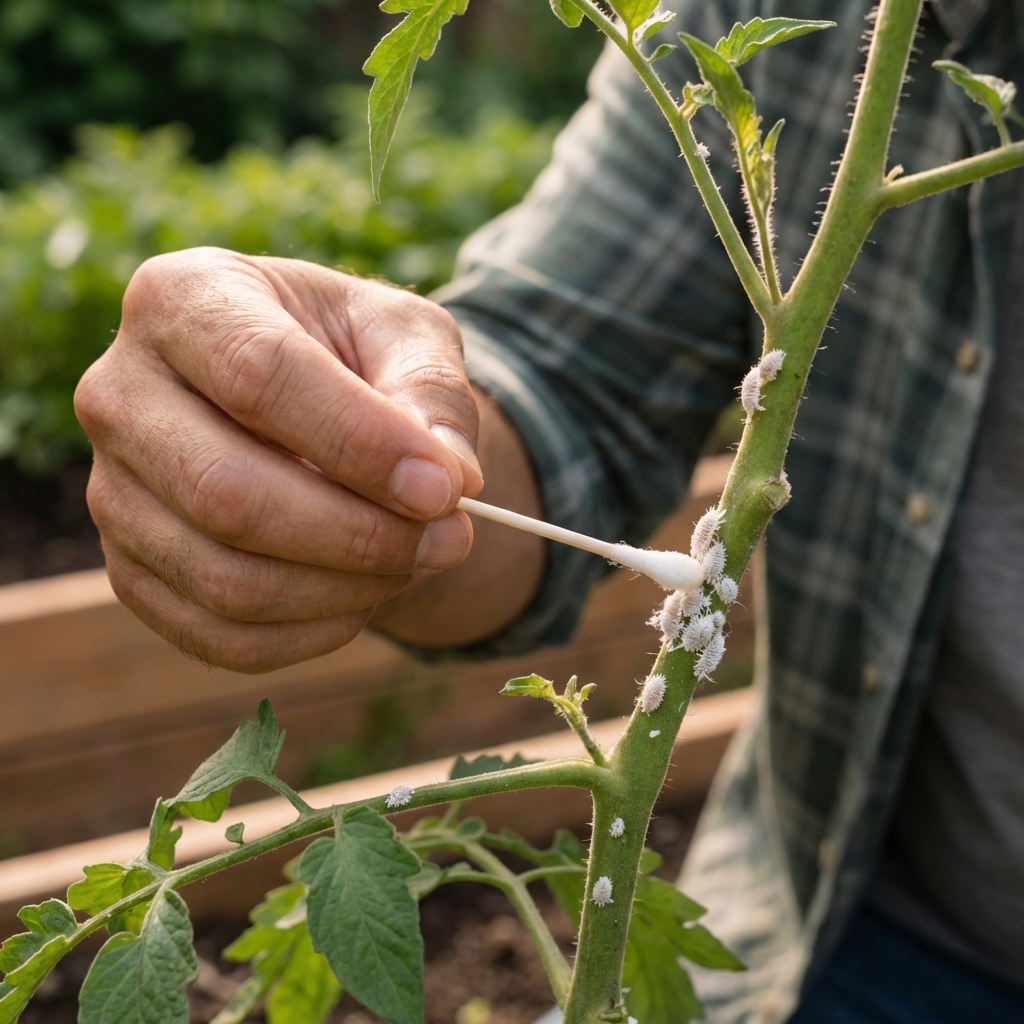
1) Rubbing alcohol wipe (best for houseplants and small infestations)
For most indoor plants, this is the fastest, most satisfying method.
- Use a cotton swab or soft cloth dipped in 70% isopropyl alcohol.
- Touch each mealybug cluster to dissolve the waxy coating and kill the insect.
- Re-check every 2 to 3 days for two weeks and repeat.
Tip: Spot-test alcohol on a small leaf area first, especially on sensitive plants like ferns or thin-leaved tropicals. Some plants can show spotting.
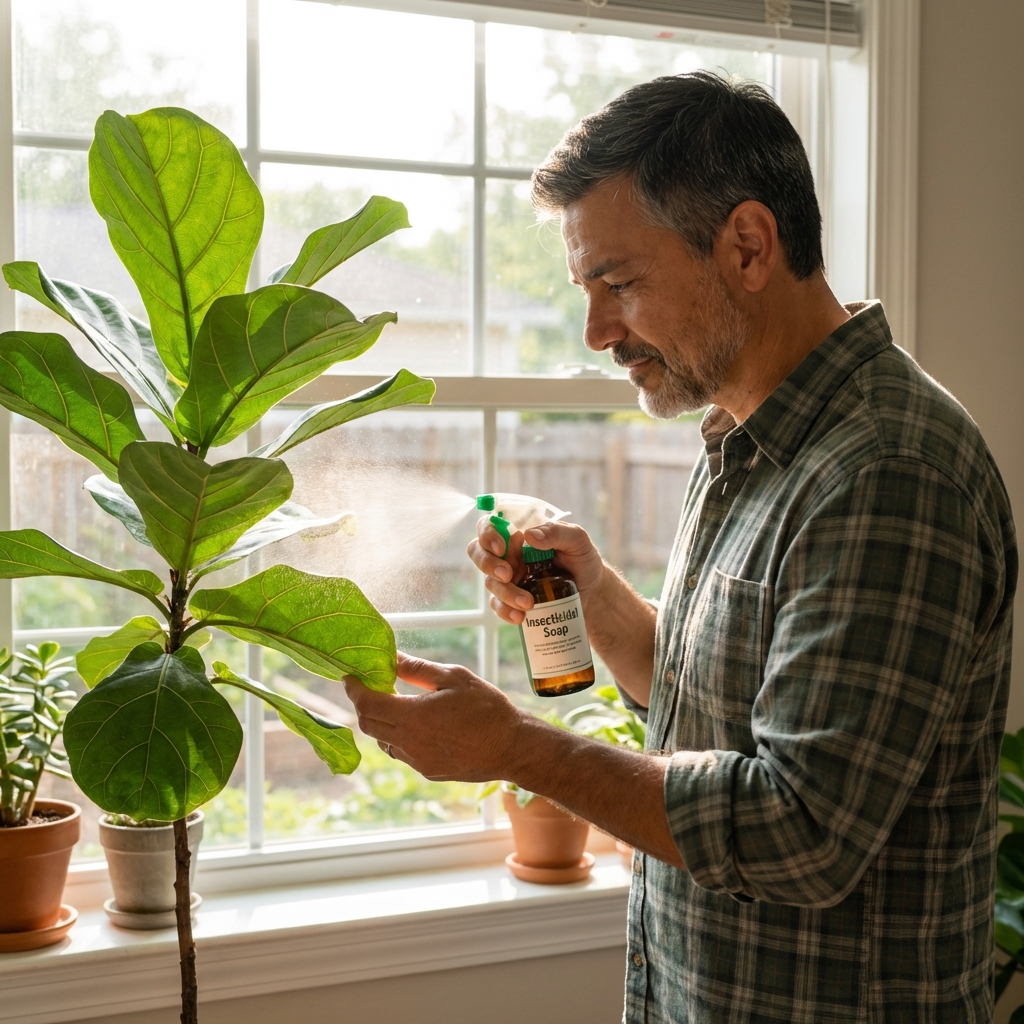
2) Insecticidal soap spray (great follow-up treatment)
Insecticidal soap is a contact killer that helps disrupt insect cell membranes and the protective outer layer. It has to hit the bug directly.
- Use a store-bought insecticidal soap for the most predictable results.
- Spray the plant thoroughly, focusing on leaf undersides, nodes, and crevices.
- Spray until evenly wet (not dripping), and make sure you reach hidden joints.
- Repeat every 5 to 7 days for at least 3 rounds.
DIY note: A gentle starting mix people use is 1 teaspoon of mild liquid soap per 1 quart of water, but DIY mixes vary and can burn plants. Avoid degreasers, antibacterial soaps, and heavy detergents. When possible, follow the product label and choose a true insecticidal soap (potassium salts of fatty acids) for consistency.
3) Neem (best when you need longer-term support)
Neem can help reduce feeding and disrupt life cycles, but results depend on the product. Some neem products are mainly oil for smothering, while others contain growth-regulating compounds (like azadirachtin). Either way, it works best when used consistently and with good coverage.
- Use a ready-to-spray neem product or mix a concentrate according to the label.
- Spray in the early morning or evening to reduce leaf burn risk.
- Repeat every 7 to 10 days for 3 to 4 treatments.
Heads up: Neem can cause leaf spotting on some plants, and it can harm beneficial insects if sprayed directly on them. Use it carefully, especially outdoors.
4) Horticultural oil (smothers pests, effective outdoors)
Horticultural oils work by smothering mealybugs. Like soap, the oil must coat the insect.
- Follow label directions closely for dilution and temperature limits.
- Do not spray heat-stressed plants or in hot midday sun.
- Coat stems and nodes well, since that is where mealybugs like to hide.
5) Beneficial insects (best for greenhouses and outdoor gardens)
If you are dealing with recurring mealybugs outdoors, biological control can be a long-term solution.
- Mealybug destroyer lady beetle (Cryptolaemus montrouzieri) is a well-known predator used in greenhouses.
- Lacewings and some parasitic wasps also help reduce populations.
Beneficials work best when you avoid broad-spectrum pesticides and reduce ants that protect mealybugs. In a typical living room, they are not practical.
Remedies people try that usually disappoint
Some methods are popular online but tend to underperform, or they create new problems.
- Vinegar sprays: can damage leaves and does not reliably control mealybugs.
- Essential oils: inconsistent results and can burn foliage if mixed too strong.
- “More soap is better” mixes: too much soap often scorches plants.
If you want simple and effective, stick to alcohol for spot removal and soap or oil for follow-up coverage.
Step-by-step plan (easy routine that works)
If you are not sure where to start, use this schedule.
Day 1
- Isolate the plant.
- Prune heavily infested parts.
- Wipe visible mealybugs with 70% alcohol swabs.
- Spray with insecticidal soap or horticultural oil, covering all surfaces (especially undersides and nodes).
Day 5 to 7
- Inspect closely, especially new growth and hidden nodes.
- Dab any survivors with alcohol.
- Re-spray soap or oil.
Repeat 2 more times
Most stubborn infestations need 3 to 4 total spray rounds. The goal is to catch newly hatched crawlers before they mature and reproduce.
Special situations
Mealybugs in the soil (root mealybugs)
If the plant keeps declining but you rarely see bugs on leaves, check the root zone. Root mealybugs look like tiny white cottony bits around roots and inside the pot.
- Remove the plant from the pot and gently shake off soil.
- Rinse roots and trim badly damaged roots.
- Repot into fresh potting mix and a cleaned pot.
- Clean the surrounding area (saucers, shelves) and monitor closely for crawlers moving up the stems.
Important: Foliar sprays do not solve a root infestation by themselves. For severe root mealybugs, you may need to repeat the repot and sanitation step, discard the plant, or use a labeled product intended for root-zone pests. Always follow label directions, especially for edible plants.
Succulents and cacti
Mealybugs love succulents. Alcohol swabbing is usually the safest first step. If you spray, go lighter and test first since thick, waxy leaves can hold residues.
Outdoor fruit trees and ornamentals
Outdoors, control often depends on breaking the ant and honeydew cycle.
- Use sticky barriers or ant baits where appropriate to reduce ants protecting mealybugs.
- Use horticultural oil for thorough coverage when temperatures are within label limits.
- Encourage beneficial insects by planting small-flowered plants nearby and avoiding harsh sprays.
Prevention that actually matters
Mealybugs tend to hit plants that are stressed or crowded. A few small habits go a long way.
- Quarantine new plants for 10 to 14 days before placing them with your collection.
- Inspect weekly, especially leaf joints, undersides, and new growth.
- Avoid over-fertilizing. Soft, lush growth can attract sap-suckers.
- Improve airflow and do not let plants press tightly together.
- Clean sticky honeydew off leaves so you can spot new activity quickly.
FAQ
How long does it take to get rid of mealybugs naturally?
Light infestations can improve in a few days, but complete control usually takes 2 to 4 weeks of re-checking and repeat treatments.
Will dish soap kill mealybugs?
Sometimes, but results depend on the soap and the concentration. Too strong can burn leaves. If you can, use a true insecticidal soap product for more predictable results.
Can I use rubbing alcohol spray instead of swabs?
You can, but it is easier to damage leaves with a spray. Swabbing is safer for most houseplants. If you spray, test a small area first and keep the plant out of direct sun until it dries.
Do mealybugs come back?
They can. Eggs and tiny crawlers hide in crevices and can survive a single treatment. That is why repeat applications and weekly inspections matter more than finding the “strongest” remedy.
When natural methods are not enough
If a plant is heavily infested, declining fast, and you have other plants at risk, it is okay to make a practical call. Sometimes the best move is to discard the plant, clean the area, and protect the rest of your collection. If the plant is valuable or irreplaceable, consider a labeled systemic product as a last resort and follow all directions carefully, especially for edible plants.

Jose Brito
I’m Jose Britto, the writer behind The Country Store Farm Website. I share practical, down-to-earth gardening advice for home growers—whether you’re starting your first raised bed, troubleshooting pests, improving soil, or figuring out what to plant next. My focus is simple: clear tips you can actually use, realistic expectations, and methods that work in real backyards (not just in perfect conditions). If you like straightforward guidance and learning as you go, you’re in the right place.