Mice are persistent because they do not need much: a crumb trail, a warm hideout, and a gap about 1/4 inch wide (roughly the width of a pencil). Natural repellents can help, but they work best as part of a bigger plan. If you only add peppermint and skip the sealing and cleanup, you usually just end up with a peppermint scented mouse problem.
This how-to gives you a realistic, layered approach that works in everyday homes, garages, sheds, and garden outbuildings.
Before you start: safety and expectations
Natural does not mean harmless. Essential oils can irritate skin and lungs, and some are toxic to pets if misused. Use gloves, ventilate the area, and keep oils and food-based ingredients away from kids and animals.
- If you see droppings: Do not sweep or vacuum them dry. Wear gloves, open windows, and avoid stirring dust (there is a hantavirus risk in some regions). Spray with an EPA-registered disinfectant (or a bleach product used per label directions), let it sit for the label-listed contact time (often about 5 minutes), then wipe up with paper towels and dispose in a sealed bag.
- Expectations: Results vary. Scent-based repellents are typically short-lived and localized. They can push mice away from preferred routes and nesting spots, but sealing and sanitation are what prevent re-entry.
- When to call a pro: You hear constant scratching in walls, you find many droppings daily, you see damage to wiring, or you suspect rats. Big infestations need a faster, more aggressive plan.
Step 1: Confirm it is mice and find hotspots
Different pests leave different clues. Before you spend time on repellents, make sure you are dealing with mice.
Signs you have mice
- Droppings: Small, dark, rice-shaped pellets, usually clustered near walls, behind appliances, or in drawers.
- Gnaw marks: On cardboard, food packaging, plastic bins, or wiring.
- Grease rub marks: Smudgy streaks along baseboards where they travel.
- Nesting material: Shredded paper, insulation, dryer lint, or fabric tucked into quiet corners.
Mice vs rats (quick check)
- Droppings: Rat droppings are larger and thicker. Mouse droppings are small and pointed like a grain of rice.
- Noise and sightings: Rats tend to be louder and you may see larger footprints or tail drags in dusty areas.
- Damage: Both gnaw, but heavy gnawing and larger holes can point to rats.
If you suspect rats, skip the guessing and consider professional help. Control methods and risks can change.
Quick tracking tip
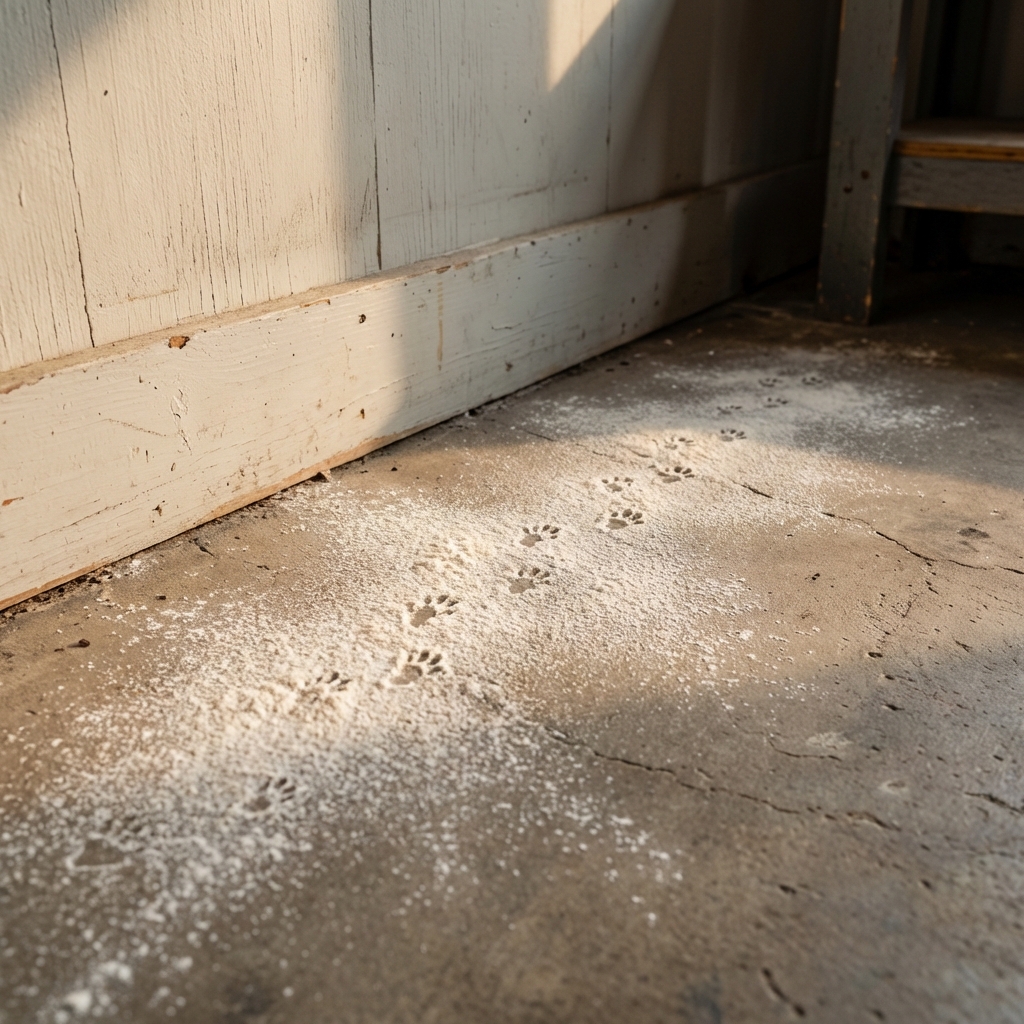
At night, sprinkle a light dusting of flour or baby powder along suspected runways (behind the stove, along garage walls). In the morning, look for tiny tracks and tail drags. That tells you exactly where to focus sealing and repellents.
Step 2: Remove what attracts mice
If food and shelter are easy, mice will tolerate a lot of smells. This step makes every repellent method stronger.
Kitchen and pantry
- Move dry goods (cereal, flour, rice, pet food) into hard plastic or glass containers with tight lids.
- Clean under the stove, fridge, and toaster area. Crumbs collect there fast.
- Do not leave fruit on the counter overnight if mice are active.
- Take trash out nightly and rinse recyclables.
Garage, shed, and basement
- Store birdseed, grass seed, and pet food in lidded metal cans or heavy-duty sealed bins.
- Get clutter off the floor. Mice love cardboard and stacks that create hidden runways.
- Keep firewood at least 18 inches off the ground and away from the wall if possible.
Stored items and nesting materials
- Move fabrics, paper goods, and seasonal decorations into sealed bins. Cardboard is basically an invitation.
- Check insulation and stored blankets for nesting. Replace heavily soiled material safely.
- Seal gaps around utility chases and behind storage shelves where nesting starts unnoticed.
Garden and outdoor areas
- Pick up fallen fruit and keep compost managed. Bury food scraps and avoid adding meat, grease, or large amounts of grain.
- Trim tall weeds and dense ground cover near the foundation. It acts like a mouse highway.
Step 3: Seal entry points
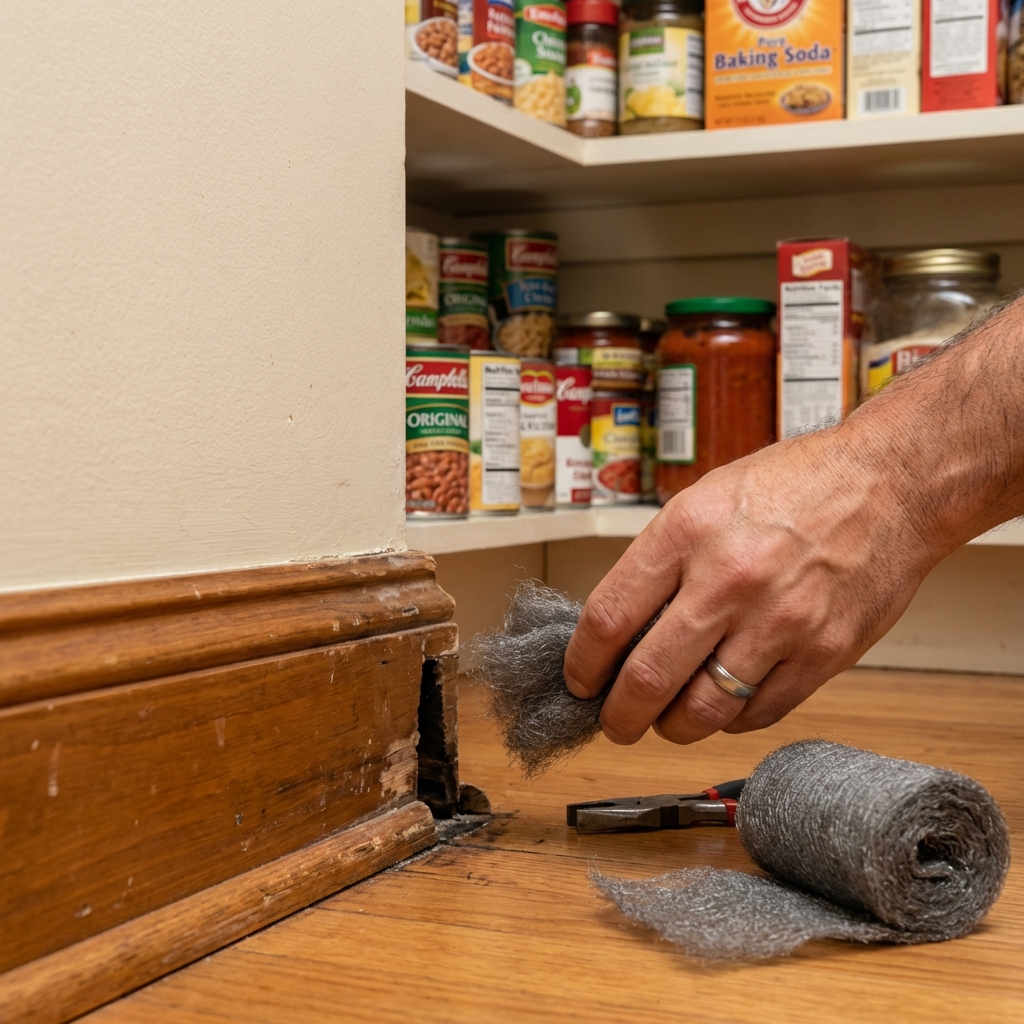
Mice can squeeze through gaps as small as about 1/4 inch. Quick rule: if you can fit a pencil into it, treat it like an entry point.
What to use
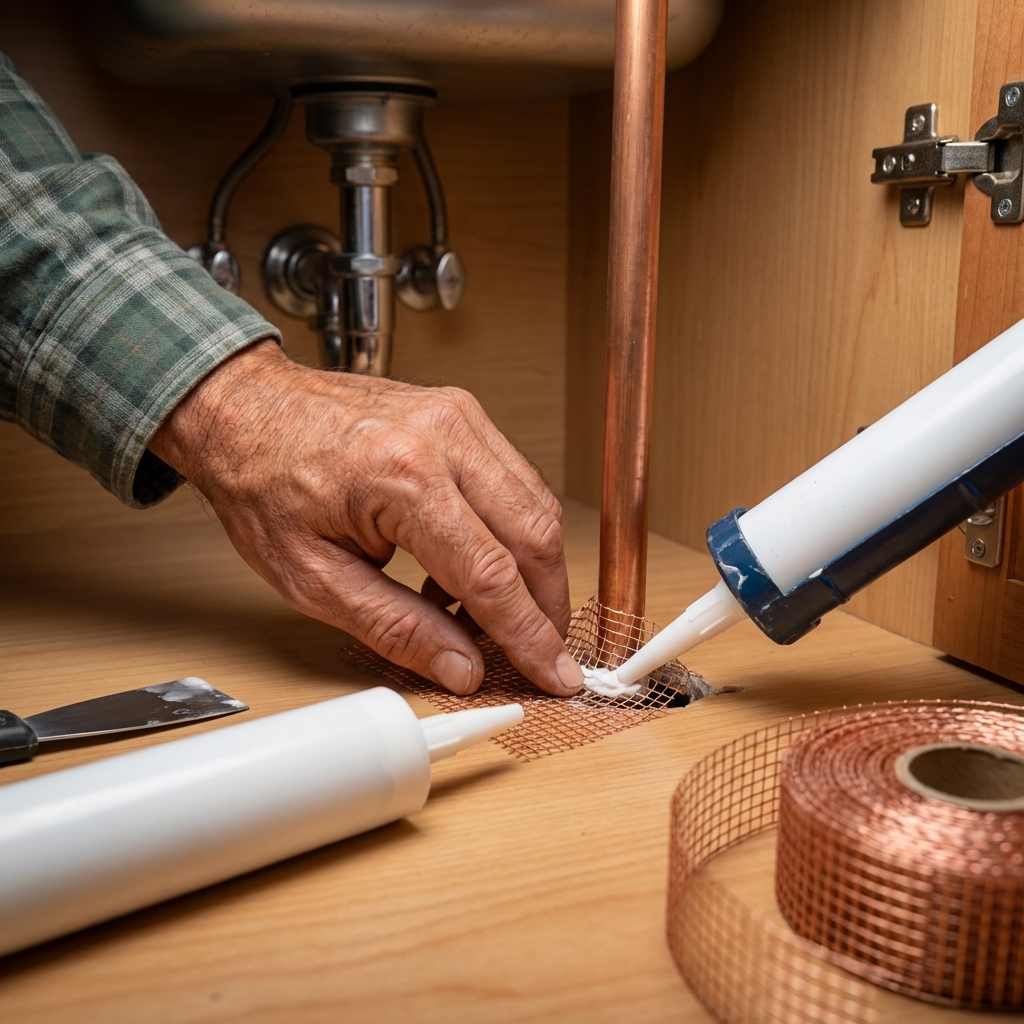
- Steel wool + caulk: Pack steel wool into the gap, then seal edges with caulk. Mice hate chewing through it.
- Copper mesh: Similar to steel wool but does not rust as easily in damp spots.
- Expanding foam: Best when paired with mesh (foam alone can be chewed).
- Door sweeps: Fix the daylight under doors, especially garage side doors.
Where to look
- Where pipes enter walls under sinks
- Behind stoves and refrigerators
- Dryer vents and HVAC penetrations
- Garage corners, sill plates, and gaps under siding
- Foundation cracks and crawlspace vents
Step 4: Choose natural repellents
Think of repellents as pressure that makes your home less comfortable for mice. Rotate methods and refresh them regularly. Also, keep your expectations realistic: essential oils may deter briefly in small zones, but they are not a reliable standalone fix for an active infestation.
Peppermint oil cotton balls (small zones)
Peppermint is the most common natural option. It works best in enclosed areas like cabinets, pantries, and corners where mice travel.
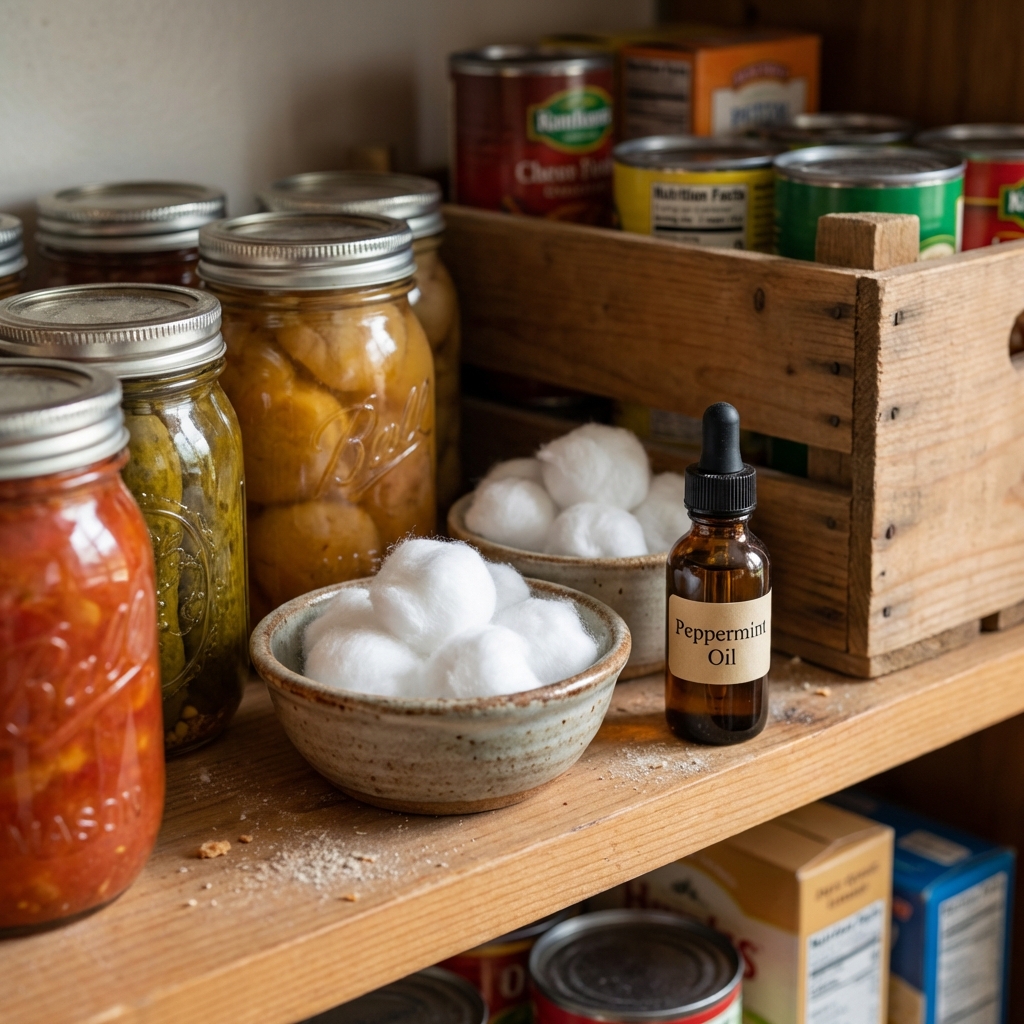
- Add 10 to 15 drops of peppermint essential oil to a cotton ball.
- Place cotton balls in shallow lids or small dishes so oil does not stain wood.
- Put them along runways (behind appliances, under sinks, along garage walls).
- Refresh every 3 to 7 days, or sooner if the smell fades.
Pet note: Keep essential oil cotton balls out of reach of cats and dogs. Do not put them where pets sleep or groom.
Clove oil or whole cloves (longer scent)
Clove is often more stubborn than peppermint, especially in garages and sheds where airflow makes peppermint fade fast.
- Use whole cloves in breathable sachets, or apply 5 to 10 drops of clove oil to cotton balls.
- Place near entry points, corners, and storage areas.
- Replace every 1 to 2 weeks for whole cloves, and weekly for oil.
Vinegar wipe-down (resets scent trails)
Mice use scent cues. A vinegar wipe does not repel forever, but it helps remove the welcome back trail.
- Mix equal parts white vinegar and water in a spray bottle.
- Wipe baseboards, cabinet floors, and garage shelf edges where you see droppings or rub marks.
- Let dry, then follow with peppermint or clove placements.
Cayenne or chili powder (low evidence, high annoyance)
This is more anecdotal than proven, and it can irritate eyes and lungs. If you use it at all, keep it limited and only in out-of-the-way, non-living areas.
- Dust a very thin line in cracks and voids you will not be sweeping daily (like behind a workbench).
- Avoid areas with airflow that can blow it around.
- Do not use where pets can sniff or where kids play.
Step 5: Make a repellent map
The biggest reason natural repellents fail is inconsistency. Make it easy to keep up.
Simple layout
- Entry points: Clove (longer lasting) within 1 to 3 feet of the sealed area
- Runways: Peppermint every 4 to 6 feet along walls in problem rooms
- Nesting zones: Vinegar cleanup plus declutter, then peppermint or clove placements
Refresh schedule
- Weekly: Replace peppermint cotton balls and refresh clove oil cotton balls
- Every 1 to 2 weeks: Replace whole cloves (sooner in hot garages)
- Monthly: Re-check door sweeps, vents, and any foam or caulk for new gaps
Step 6: Add non-scent deterrents
Scent is only one tool. These steps are supportive, especially in garages, sheds, and basements.
Light and disturbance
- In a shed, use a motion light if power is available.
- Reduce quiet corners by keeping items up on shelves and leaving space between stacks and walls.
Snap traps (optional, often necessary)
If you have active mice indoors, traps are often part of a humane plan because they shorten the problem. Natural repellents alone can push mice into walls, ceilings, or other rooms.
- Place traps along walls, perpendicular to the wall, with the trigger side toward the wall.
- Use a small amount of peanut butter or chocolate spread.
- Check daily.
What to avoid
- Poison indoors: It can lead to dead-in-wall odor and secondary poisoning risk for pets and wildlife.
- Glue traps: They are widely considered inhumane and create a messy, stressful situation for both you and the animal.
If you prefer not to trap, focus extra hard on sealing and food removal, and expect the timeline to be slower.
Natural repellent recipes
Peppermint spray for baseboards
- 1 cup water
- 1 tablespoon rubbing alcohol or vodka (helps disperse oil)
- 15 to 25 drops peppermint oil
Shake well. Lightly mist baseboards, then wipe. Reapply weekly. Test in a hidden spot first to avoid staining. Avoid using this on porous, unsealed wood.
Clove and peppermint entry jar
- A small glass jar
- 2 tablespoons whole cloves
- 10 drops peppermint oil
- A breathable cover (coffee filter or cloth secured with a rubber band)
Set it near an entry hotspot where it will not get knocked over. Refresh oil weekly.
Where repellents help most
They work best in:
- Small, enclosed spaces like cabinets, pantries, and closets
- Targeted problem zones like a garage corner where mice enter
- After sealing and cleanup, when you are preventing re-entry
They struggle in:
- Large open basements and airy garages, where scents dissipate fast
- Heavy infestations with constant food access
- Outdoor areas with wind and rain (you will be refreshing constantly)
Troubleshooting after a week
You still see droppings
- Double-check food storage, especially pet food and birdseed.
- Increase trap placement or move traps to confirmed runways.
- Re-check sealing. One missed gap can keep the problem going.
You smell peppermint but activity continues
- Move cotton balls closer to runways and entry points.
- Switch some placements to clove.
- Clean rub marks with vinegar, then reapply repellents.
They moved to another room
This happens when you apply repellents in one area but do not seal and trap. Expand your sealing check and use the flour tracking trick again to identify the new route.
Timeline: what to expect
- First 2 to 3 days: After cleanup and sealing, you may still see activity as mice follow old routes.
- Within 7 to 10 days: Activity should noticeably drop if sealing is solid and traps are placed on confirmed runways.
- 2 to 3 weeks: Many small household problems resolve fully with consistent follow-through. If not, assume you have a missed entry point or a larger population and escalate your plan.
Prevention checklist
- Seal any gap larger than about 1/4 inch
- Install door sweeps and fix torn screens on vents
- Store all dry goods and pet food in sealed containers
- Keep counters and floors crumb-free, especially at night
- Reduce clutter and cardboard storage in garages and sheds
- Trim vegetation away from the foundation
- Inspect monthly, especially in fall when mice look for warmth
Quick recap
If you want the ultimate natural approach, focus on the order:
- Clean up food and nesting materials
- Seal entry points with mesh and caulk
- Target runways with peppermint and clove (short-lived support, not the main fix)
- Maintain with a simple refresh schedule
Do those four consistently, and most home mouse problems shrink fast instead of dragging on for months.


Jose Brito
I’m Jose Britto, the writer behind The Country Store Farm Website. I share practical, down-to-earth gardening advice for home growers—whether you’re starting your first raised bed, troubleshooting pests, improving soil, or figuring out what to plant next. My focus is simple: clear tips you can actually use, realistic expectations, and methods that work in real backyards (not just in perfect conditions). If you like straightforward guidance and learning as you go, you’re in the right place.