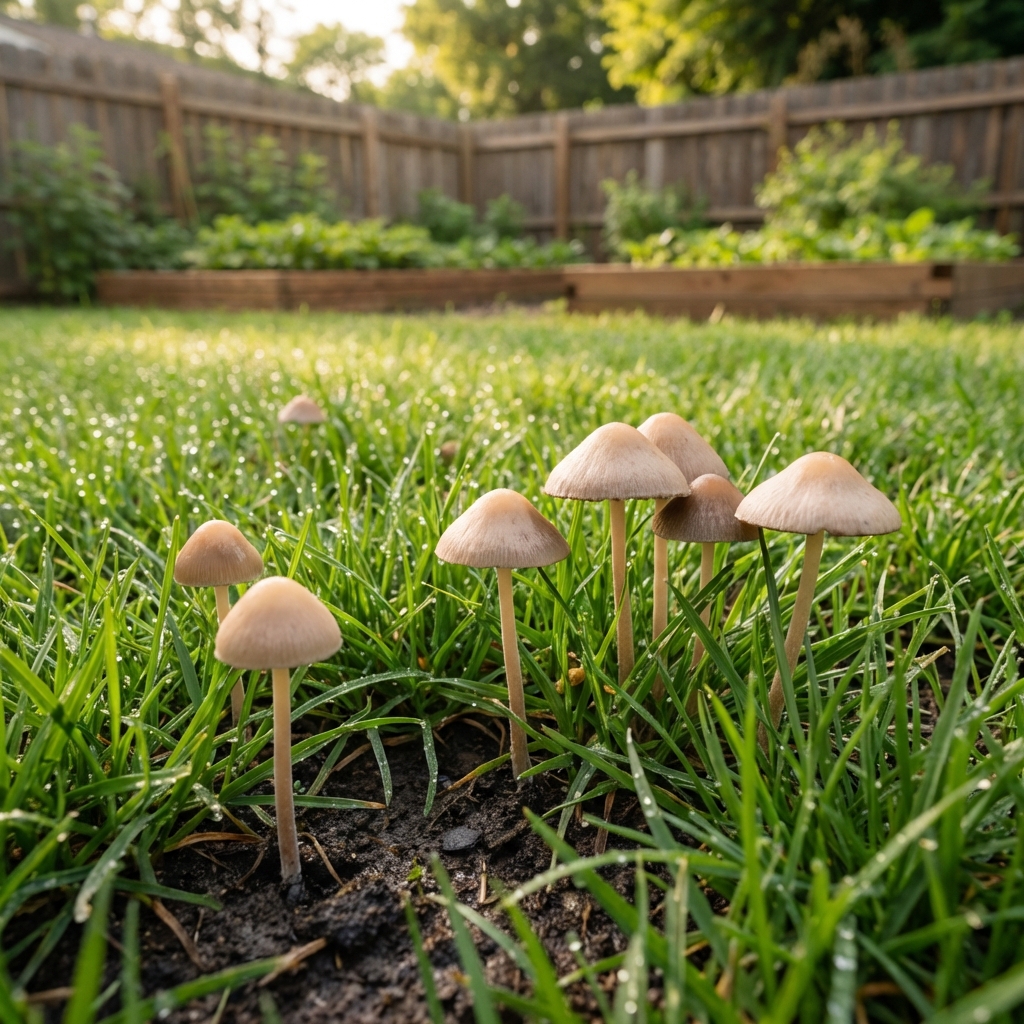
Mushrooms in the lawn tend to show up at the worst times. Right before a backyard party, right after you finally mowed, or right when the kids want to run barefoot. The good news is that in most cases, mushrooms are not a “lawn disease.” They are the fruiting bodies of fungi that are already in your soil (or were introduced through mulch, topsoil, or sod), doing the job of breaking down organic matter.
So if you are seeing mushrooms, your lawn is basically telling you two things: there is moisture, and there is something underground that fungi want to decompose. Natural remedies work best when you focus on changing those conditions rather than trying to “kill” every mushroom you see.
Are lawn mushrooms bad?
Most lawn mushrooms are more annoying than harmful. They often pop up after rainy weather, heavy irrigation, or humid nights. In many yards they come and go in a day or two. And in most cases, the mushrooms themselves do not harm grass. The bigger issue is usually the damp conditions that allowed them to fruit.
When they are mostly harmless
- Scattered small mushrooms that appear after rain and disappear quickly.
- Healthy-looking turf with no dead patches around the mushrooms.
- Mushrooms near trees or mulched beds where there is extra organic matter.
When to take it more seriously
- Pets or kids might eat them. Many mushrooms are toxic and identification is tricky.
- Fairy rings or repeating circles of mushrooms with greener or browner grass in a ring.
- Constant mushrooms in the same spot that suggest chronic drainage, compaction, or buried wood.
If you have children or pets, the safest approach is to remove mushrooms as they appear and address the moisture and organic matter that fuels them.
What causes mushrooms in a lawn?
Fungi do not usually appear out of nowhere. The “roots” of the fungus, called mycelium, are often already in the soil, or they can be introduced via mulch, topsoil, compost, or sod. Mushrooms show up when conditions are right.
- Too much moisture: overwatering, frequent rain, shady areas that stay damp, or poor drainage.
- Hidden organic material: old tree roots, buried wood, decaying mulch, thatch, or heavy leaf litter.
- Compacted soil: holds water longer and limits oxygen, creating damp conditions that encourage fungal activity and fruiting.
- Thick thatch layer: a spongy layer that holds moisture near the surface.
Natural remedies that reduce mushrooms
There is no single “spray and done” natural remedy that permanently stops mushrooms, because fungi are part of soil life. But you can reduce how often they show up by making your lawn drier at the surface and less inviting to fruiting.
1) Pick them early
Removing mushrooms does not eliminate the fungus in the soil, but it helps in two important ways: it lowers the chance of kids or pets getting into them, and it reduces spore release.
- Wear gloves or use a small shovel.
- Bag them and toss them in the trash, especially if you cannot ID them (and to avoid spreading unknown mushrooms around the yard or compost).
- If mushrooms are slimy or falling apart, scoop a bit of the surrounding soil too.
2) Water less often, but more deeply
Frequent light watering keeps the top inch of soil damp. That is perfect mushroom weather. A better routine for most established lawns is deeper watering less often so the surface dries between irrigation.
- Water early morning so the lawn dries fast.
- Aim for around 1 inch per week total (rain + irrigation) as a starting point, then adjust for heat, grass type, and soil. A simple “tuna can” catch test or checking how deep the soil is moist can help you dial it in.
- If your yard stays wet, reduce irrigation first before trying anything else.
3) Improve drainage in problem spots
If mushrooms always show up in the same low area, the issue is usually drainage. Focus on moving water and relieving compaction.
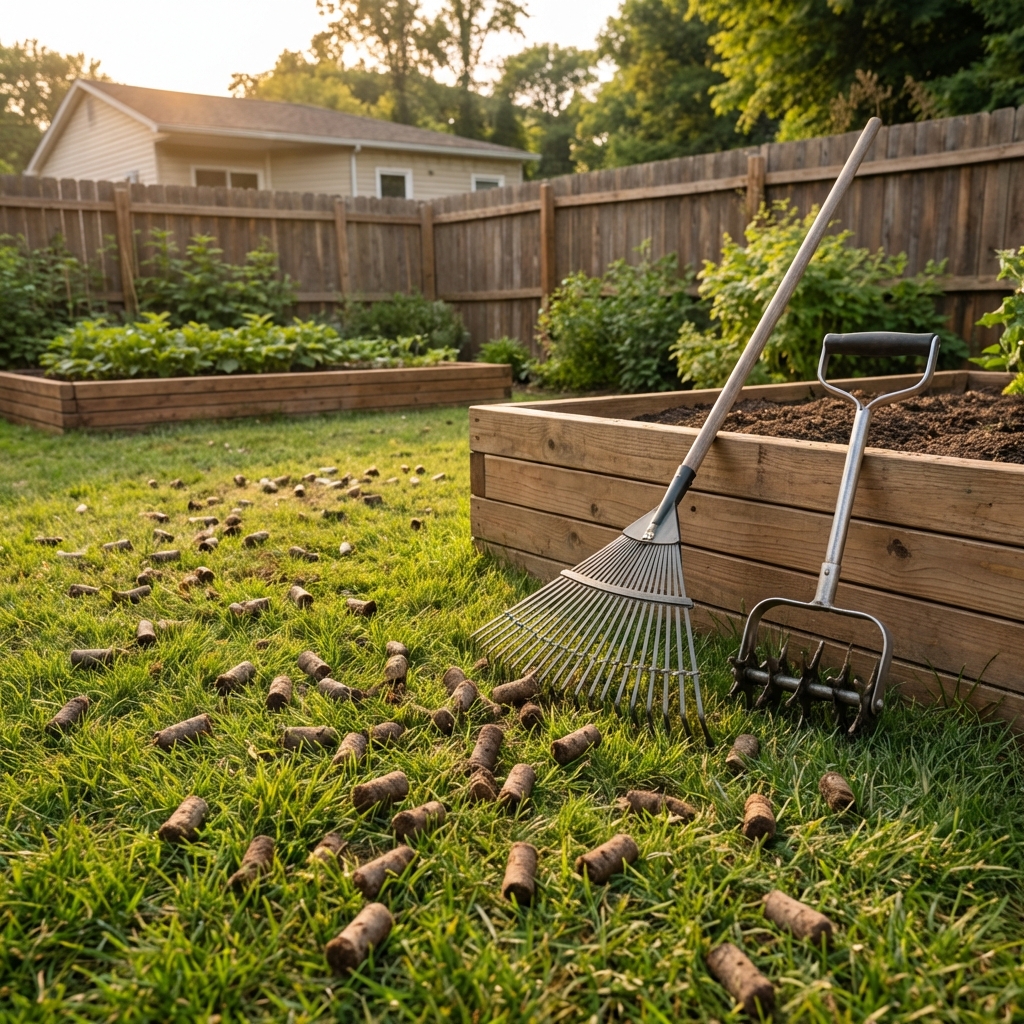
- Core aerate compacted turf so water can soak in rather than sit.
- Topdress with compost after aeration to improve soil structure over time.
- Level small depressions where water puddles using a soil and compost mix.
- Redirect downspouts and runoff away from the lawn if that is the real source.

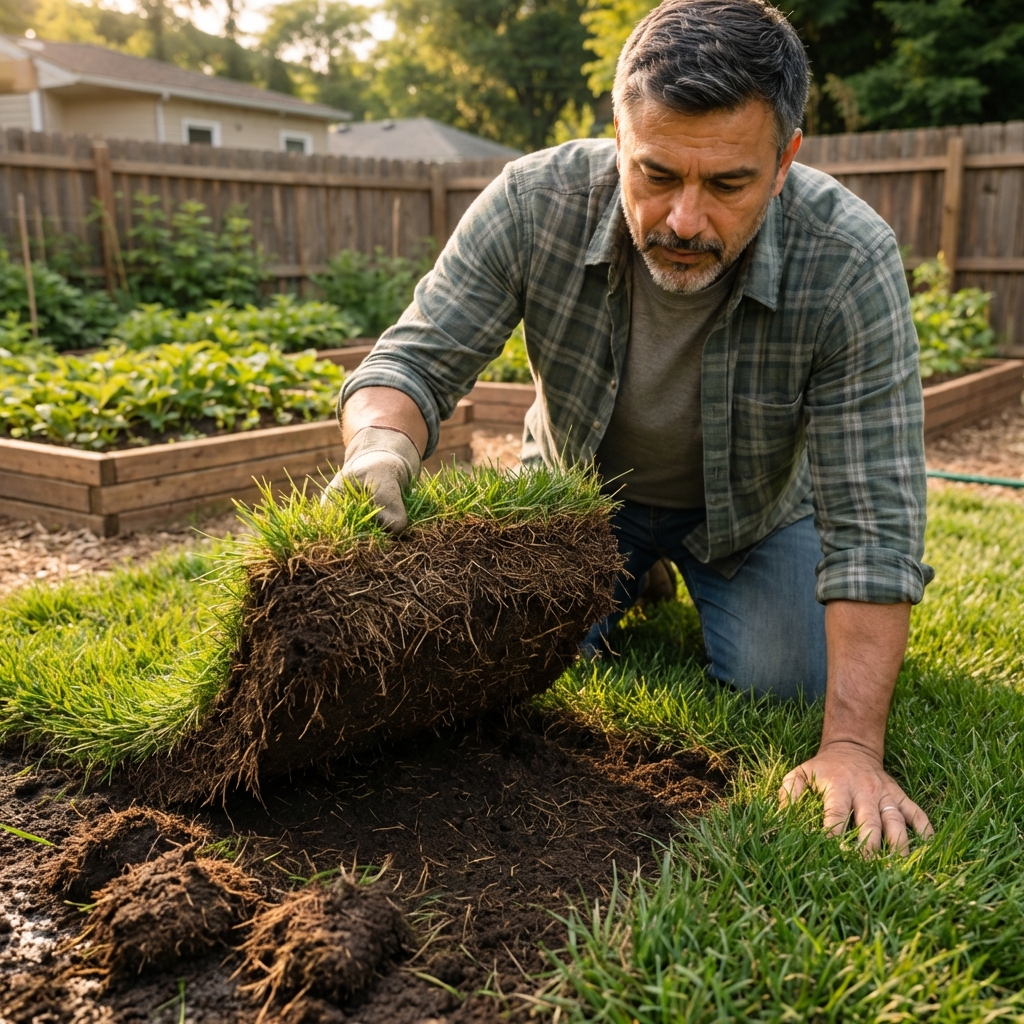
4) Dethatch if the lawn feels spongy
Thatch is a layer of dead grass and roots between the green blades and the soil. A little is normal. Too much holds moisture and feeds fungi.
- If you can easily peel back a thick mat, or it feels bouncy underfoot, dethatching can help.
- Rake out thatch with a dethatching rake or rent a power dethatcher for larger lawns.
- Best timing depends on grass type, but generally during active growth when the lawn can recover.
5) Remove the food source when possible
Sometimes mushrooms are feeding on buried wood from an old tree, construction debris, or old roots. You cannot always remove it without tearing up the lawn, but if you are doing yard work anyway, it is worth addressing. If a stump or large root mass is buried, you may see mushrooms in that area for years until it fully breaks down.
- When digging for a garden bed or edging, pull out buried sticks and chunks of wood.
- Rake up heavy leaf litter in fall and do not let it mat down in shady areas.
- Do not pile fresh wood chips onto turf at the edge of the lawn.
6) Let in more sun and airflow
Shady lawns stay damp. If mushrooms cluster under a tree canopy, thinning can make a noticeable difference.
- Prune low branches to increase light and air movement.
- Keep grass slightly taller in shade, but avoid overwatering to compensate.
7) Mow smart
Mowing can knock mushrooms down fast, but it can also spread bits of mushroom around.
- If you are dealing with lots of mushrooms (or you have pets and kids), pick them first when you can.
- If you mow over mushrooms, consider bagging clippings that day for a cleaner result.
Natural treatments: what helps, what does not
What can help
- Aeration + compost topdressing: improves soil structure and reduces surface wetness over time.
- Manual removal: best immediate “natural” option for safety and appearance.
- Fixing irrigation scheduling: often the biggest win.
What to be careful with
- Vinegar solutions: vinegar can burn grass and nearby plants. Spot applications may kill the mushroom, but you will likely damage turf and it will not fix the cause.
- Bleach: not lawn-safe and can harm soil biology. Avoid.
- Dish soap “hacks”: sometimes suggested for fairy rings, but it can stress grass and the results are inconsistent. Fixing moisture and compaction is more reliable.
If you want a natural approach, think “yard conditions” first, not “homemade fungicide.” Mushrooms are symptoms.
Fairy rings: a special case
Fairy rings are circles or arcs of mushrooms, sometimes with greener grass on the ring and stressed grass inside it. They can be stubborn because the fungal growth can change how water moves through soil and create dry, water-repellent zones next to damp areas.
Natural steps that often help
- Core aerate the ring to break up water-repellent soil and improve infiltration.
- Water slowly and deeply after aeration to re-wet dry zones, then return to normal deep and infrequent watering.
- Rake and remove mushrooms as they appear.
- Topdress lightly with compost to help the soil recover.
Fairy rings can take a season or more to calm down. If turf is dying, the ring keeps expanding, or you cannot get water to soak in, a professional may recommend a wetting agent or targeted treatment. Natural measures can work, but they are usually slower.
Safety tips for kids and pets
- Assume lawn mushrooms are poisonous unless identified by a professional.
- Remove mushrooms promptly and dispose in the trash.
- Supervise pets after rain or irrigation, when mushrooms pop up fastest.
- If ingestion is suspected, contact your veterinarian or local poison control right away.
When to call a pro
- You suspect buried wood or a buried stump and mushrooms keep returning year after year in one spot.
- You have a severe fairy ring with dead grass, very dry patches, or a ring that keeps spreading.
- The yard stays wet and you suspect grading, downspouts, or drainage issues that need a bigger fix.
- You need mushroom ID for safety reasons and want a local expert opinion.
A simple 7-day plan
Day 1
- Pick and bag all visible mushrooms.
- Check your irrigation schedule and pause watering for 2 to 3 days if the soil is already damp.
Days 2 to 4
- Observe where mushrooms return. Those spots are your “why.”
- Rake up any matted leaves or thick clippings.
Days 5 to 7
- If the area stays wet, plan for core aeration (or do it if you have access).
- In low spots, add a light topdressing to level and improve drainage.
Keep expectations realistic: you can reduce mushrooms a lot, but you will still see them occasionally after long wet spells. That is normal soil life doing its thing.

Jose Brito
I’m Jose Britto, the writer behind The Country Store Farm Website. I share practical, down-to-earth gardening advice for home growers—whether you’re starting your first raised bed, troubleshooting pests, improving soil, or figuring out what to plant next. My focus is simple: clear tips you can actually use, realistic expectations, and methods that work in real backyards (not just in perfect conditions). If you like straightforward guidance and learning as you go, you’re in the right place.