Roaches are survivors, but they are not magic. In most homes, infestations keep going for three reasons: easy food, steady water, and plenty of hiding spots close to both. The best natural approach is a simple one-two punch: reduce food and moisture to make every other step work better, then apply residual powders and baits in harborages so roaches keep contacting them.
This guide walks you through remedies you can use right now, how to apply them safely, and how to prevent the next wave.
Quick definition: When this guide says “natural,” it means mineral-based or plant-based options and lower-toxicity IPM habits. Some “natural” tools (like boric acid and DE) are still pesticides and should be treated with real care.
Before you treat: confirm what you are dealing with
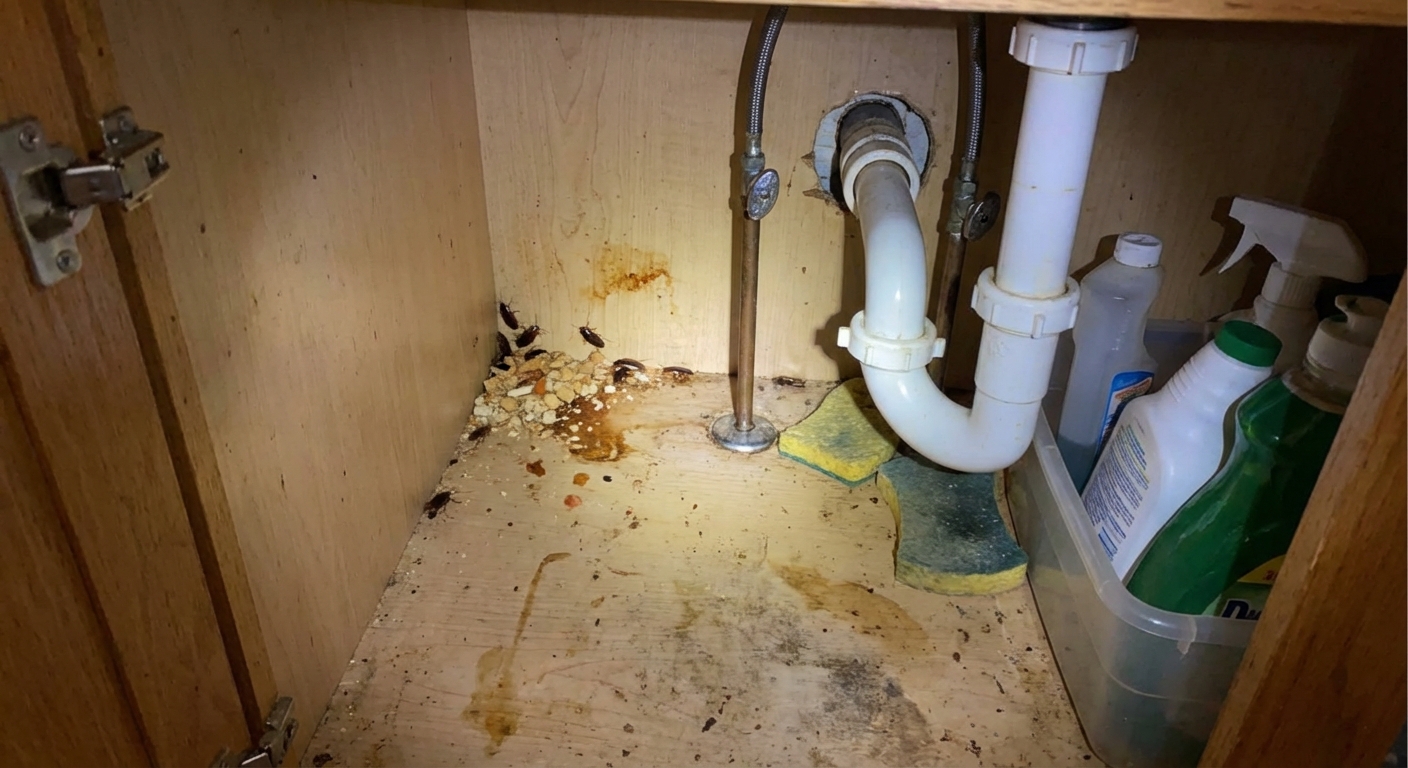
Natural remedies work best when you know where the activity is. Spend one evening doing a quick check with a flashlight:
- Hotspots: under sinks, behind the fridge, the gap beside or behind the stove, pantry corners, around trash, and bathroom vanities.
- Signs: pepper-like droppings (small roaches), larger droppings or dark smears (larger species), egg cases (small brown capsules), shed skins, and a musty odor in severe cases.
- Best time to look: 1 to 2 hours after lights out. Roaches are mostly nocturnal.
If you see roaches during the day, that often means the population is high or their hiding places are disturbed.
Why species matters (quick ID)
You can still follow this plan without perfect identification, but it helps to know what you are up against.
- German roaches: small, light brown, often with two dark stripes behind the head. Usually found in kitchens and bathrooms. They breed fast and often require tighter baiting and monitoring.
- American or smokybrown roaches: larger and darker. More likely to come from basements, crawl spaces, garages, drains, and outdoors, then wander inside.
If you are seeing lots of tiny roaches (nymphs) indoors, assume German roaches and take baiting seriously.
Step 1: Remove what roaches need (this matters more than any spray)
Roaches can nibble on almost anything, but they need water even more than food. Drying the place out will not usually solve a serious infestation by itself, but it can make baits and dusts work faster and reduce survival.
Quick wins in 30 minutes
- Wipe counters and the stovetop nightly, including the grease film behind burners.
- Sweep and vacuum crumbs along baseboards and under appliances.
- Put all pantry foods in sealed containers. Cardboard packaging is not protection.
- Take out trash nightly. Rinse recyclables.
- Fix leaks and wipe sinks dry before bed. Use drain stoppers overnight.
- Do not leave pet food out overnight. If you must, put the bowl on a tray and clean up after.
Hideout reduction
- Declutter paper bags, cardboard, and piles of stuff in cabinets.
- Pull the fridge and stove out if you can and clean the sides and floor edges.
Humidity check
High humidity and damp cabinets can keep roaches comfortable and can reduce how well powders perform. If you have moisture issues, prioritize leak repair, ventilation, and a dehumidifier before going heavy on dusts.
Step 2: Use long-lasting natural killers where roaches travel
The goal is not to chase roaches around with a strong smell. It is to place treatments where they walk and hide so they contact it repeatedly.
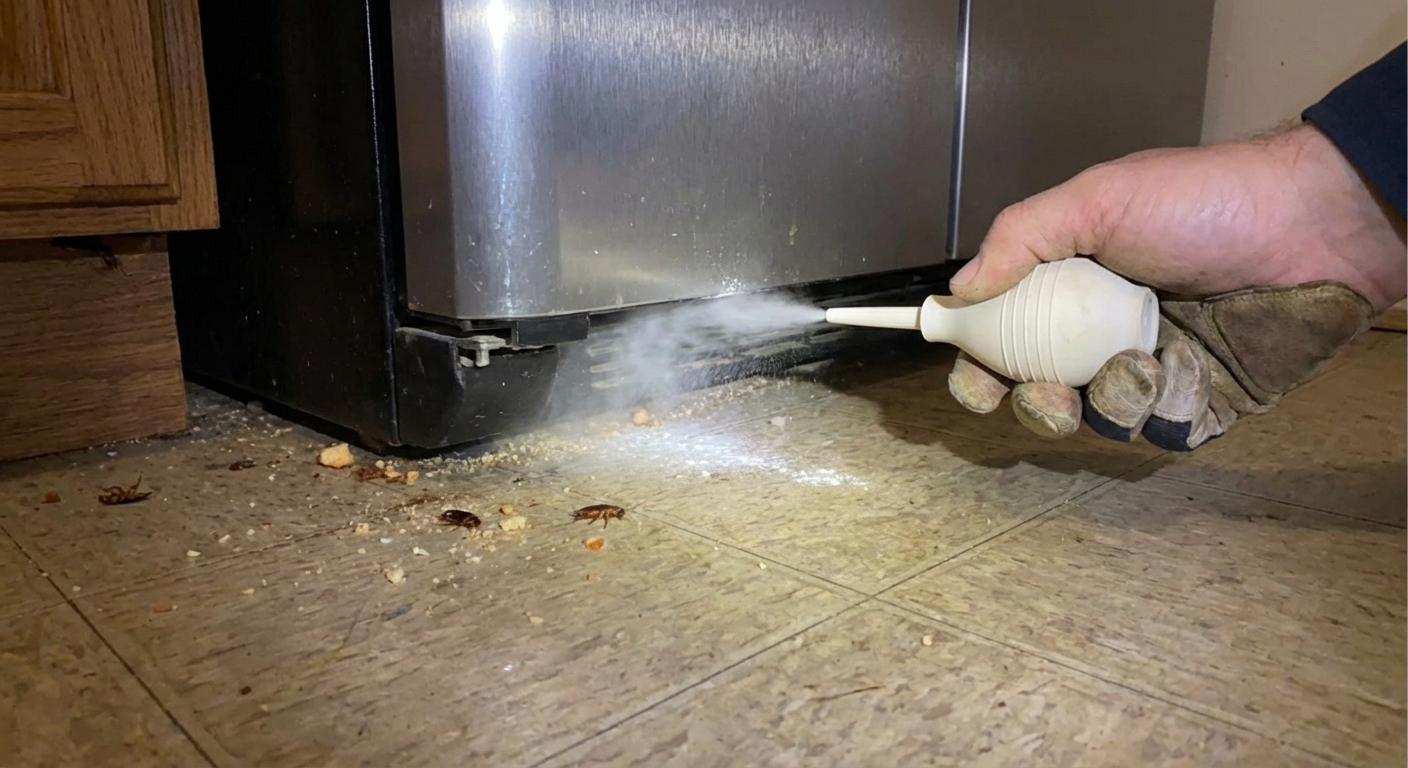
Diatomaceous earth (food grade)
How it works: Food grade diatomaceous earth (DE) can damage the insect’s protective outer coating and contribute to dehydration. It works best in dry areas and with a light, barely-there dusting.
- Where to apply: under appliances, behind the fridge, along cabinet toe-kicks, under sinks (only if dry), in wall voids (lightly), and around pipes.
- How to apply: Use a duster or a dry paintbrush. You want a thin layer, not piles.
- Timing: You may see results in a few days, but it often takes 1 to 3 weeks for a noticeable drop. In humid areas, it can take longer.
Safety note: Use food grade only. Even food grade DE is a lung irritant. Avoid creating airborne dust and consider wearing a mask during application. Keep it out of reach of kids and pets by applying it in cracks, voids, and behind appliances, not in open areas. Do not apply near air returns, fans, or anywhere it could blow around.
Boric acid (powerful, handle with care)
How it works: Boric acid is a mineral that acts as a slow-acting poison when ingested and can also damage insects externally. Roaches can spread small amounts through grooming and contact.
- Where to apply: inside wall voids, under appliances, behind toilets, and in cracks where you cannot easily touch.
- How to apply: A very light dusting. If you can see thick white lines, it is too much and roaches may avoid it.
Important: Boric acid is “low toxicity” compared to many pesticides, but it is still a poison if swallowed. Keep it away from children and pets and never put it on countertops or food-prep surfaces. Avoid using it where it can be disturbed or tracked into living areas.
Step 3: Natural bait strategies that reduce the colony
Roaches do not all die at once. The best results come from a slow kill that reaches deep into the population. That is what baits are for.
Bait placement rules (do this every time)
- Use many small placements: lots of tiny dots beat one big pile.
- Place near harborages: cabinet corners, hinges, toe-kicks, behind appliances, and along edges where traps show activity.
- Keep bait clean: do not place bait where you just sprayed strong cleaners, essential oils, or any repellent.
- Refresh on a schedule: check weekly and replace if it dries out, gets dusty, or gets eaten.
- Do not mix methods in the same exact spot: repellents and strong-smelling residues can reduce feeding.
Baking soda and sugar bait (mixed evidence)
Mix: 1 part baking soda + 1 part sugar (or flour as an alternative attractant).
- Put small amounts in shallow lids or on index cards near hiding spots, not in the open middle of a room.
- Replace every few days, especially if it gets damp.
Some people see results, but the evidence is mixed and it is often unreliable for larger infestations. Treat it as a support tool, not your main plan.
Boric acid bait (often more effective than dusting)
Why baiting works: Roaches prefer to eat and retreat. A bait keeps the active ingredient where they feed, and it is less likely to get scattered.
Basic homemade option: Use a tiny amount of boric acid mixed into a food attractant like peanut butter or mashed potato. The key is very little boric acid. If it is too concentrated, roaches can detect it and avoid it.
- Place pea-sized dots inside cabinet corners and behind appliances where kids and pets cannot access.
- Refresh weekly until activity drops.
Safety reminder: Keep any boric acid bait secured and out of reach. If you cannot guarantee that, skip homemade boric baits and focus on exclusion, sanitation, and DE in inaccessible areas.
Store-bought gel baits (lowest fuss, often highest success)
If you are committed to “natural only,” you may avoid these. But if your main goal is to solve the problem with minimal risk, a quality gel bait is often the fastest route with targeted use. Place tiny dots near harborages and do not use strong-smelling cleaners or essential oils directly over bait placements since that can reduce feeding.
Essential oils: short-term deterrent, not a cure
Essential oils can make an area less inviting for a while, but they rarely eliminate an infestation by themselves. Also, repellency can make roach movement less predictable, so use oils cautiously and keep your focus on baits, dusts in voids, and monitoring.
Common options
- Peppermint oil: common and sometimes effective as a deterrent.
- Tea tree oil: may deter, but the scent is strong and can irritate.
- Eucalyptus oil: may deter temporarily when refreshed often.
Simple spray recipe
- 2 cups water
- 1 teaspoon mild dish soap (helps oil mix)
- 10 to 20 drops peppermint oil
Shake well and lightly spray along baseboards, around door thresholds, and exterior entry points. Avoid spraying directly on bait placements and keep sprays away from food-prep surfaces.
Pet note: Essential oils can be risky for pets, especially cats. If you have animals, skip oils or use them sparingly, in well-ventilated areas, and never where pets lick or rub.
Traps to monitor and catch stragglers
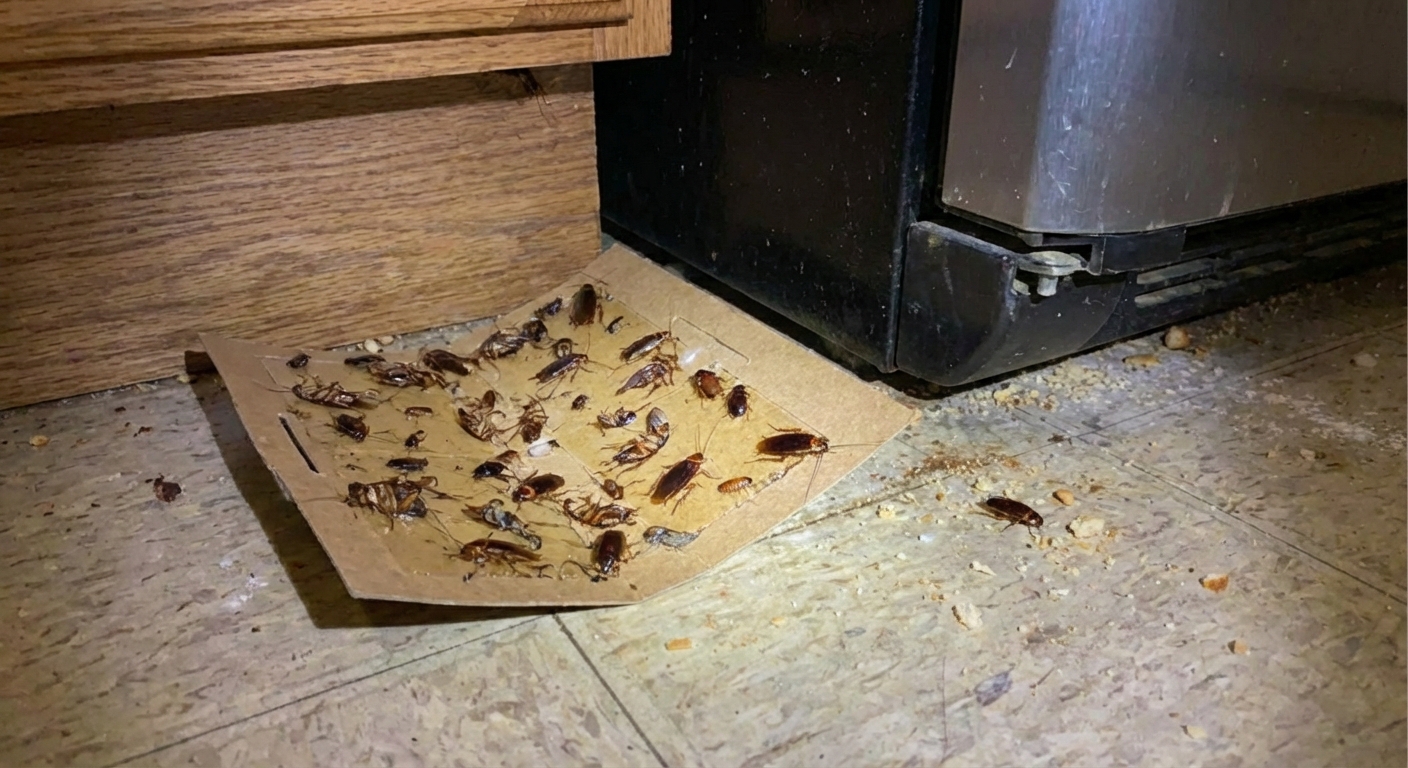
Even if you prefer natural methods, sticky traps are one of the best tools for finding the problem and measuring progress.
- Place traps under the sink, behind the fridge, near the stove, and near the trash.
- Check weekly and replace as needed.
- If one trap is packed and others are clean, you just found the main travel lane.
Seal entry points so the problem does not restart
Roaches squeeze through very small gaps, often around 1/16 to 1/8 inch depending on species and life stage. Sealing does not kill roaches already inside, but it stops reinforcements and helps your treatments work faster.
What to seal
- Gaps around pipes under sinks and behind toilets
- Cracks where cabinets meet walls
- Baseboard gaps and floor transitions
- Gaps around window and door trim
- Weep holes and vents (use appropriate screens, do not block airflow)
Best materials
- Caulk: for small cracks and seams
- Steel wool + caulk: for larger holes around plumbing (pests hate chewing through it)
- Foam sealant: for larger voids, then trim and cover if needed
Room-by-room plan
Kitchen
- Deep clean under and behind stove and fridge first.
- Dust DE lightly under appliances and along toe-kicks (dry areas only).
- Set traps to confirm the main routes.
- Keep sinks dry overnight and store food sealed.
Bathroom
- Fix drips and condensation issues.
- Dust DE behind the toilet and under the vanity in dry spots.
- Seal pipe penetrations in the wall or floor.
Garage and laundry area
- Reduce cardboard storage and clutter.
- Keep pet food and bird seed sealed tight.
- Use traps to monitor and dust DE along edges where it stays dry.
Apartment and shared-wall note
If you live in a multi-unit building, you can do everything right and still get reinfested through shared walls, plumbing chases, and hallways. Coordinate with your landlord or property management, ask neighbors to report issues, and focus on sealing pipe penetrations, baiting near entry points, and monitoring with traps.
What not to do (mistakes that backfire)
- Do not over-apply powders. Thick piles make roaches avoid the area. Thin and invisible is the goal.
- Do not rely on deterrents alone. Oils can change roach behavior, but they do not remove the breeding population.
- Do not mix bait and strong sprays in the same spot. Repellent residues can reduce bait feeding.
- Do not skip water control. A single leaky pipe can keep a colony going even with good baiting.
- Do not apply DE or boric acid in open, high-traffic areas. Avoid use near food-prep surfaces, inside drawers that hold utensils, near HVAC returns, or anywhere kids and pets can reach.
How long natural remedies take
Expect a realistic timeline. Roach control is usually a process, not a one-night fix.
- First 48 hours: You may see more activity as you clean and disturb hiding spots.
- 1 to 2 weeks: Traps should start showing fewer roaches if your placements are good.
- 3 to 6 weeks: Many households see major improvement if sanitation and moisture control stay consistent.
If you are seeing no change after two weeks, you likely have one of these issues: treatments placed in the wrong locations, too much moisture, too much clutter, or an outside source reinfesting the home.
When to call a pro
Natural methods are worth trying, but you should consider professional help if:
- You see roaches during the day regularly.
- You are finding lots of egg cases or baby roaches consistently.
- You live in an apartment and suspect activity from shared walls.
- Someone in the home has asthma or severe allergies triggered by roach debris.
You can still ask for a lower-toxicity approach. Many companies offer integrated pest management (IPM), which focuses on sealing, sanitation, and targeted treatments instead of heavy spraying. You can also ask about insect growth regulators (IGRs). They are not “natural,” but they are commonly used in IPM to reduce breeding with minimal odor and low exposure when applied correctly.
Quick checklist: the natural roach plan
- Clean crumbs and grease nightly, seal food, and take out trash.
- Fix leaks and keep sinks and drains dry overnight.
- Place sticky traps to find travel lanes.
- Dust food grade DE lightly in dry, hidden areas.
- Use boric acid carefully in inaccessible cracks or controlled bait placements.
- Seal gaps around plumbing and baseboards.
- Re-check traps weekly and reapply treatments as needed.

Jose Brito
I’m Jose Britto, the writer behind The Country Store Farm Website. I share practical, down-to-earth gardening advice for home growers—whether you’re starting your first raised bed, troubleshooting pests, improving soil, or figuring out what to plant next. My focus is simple: clear tips you can actually use, realistic expectations, and methods that work in real backyards (not just in perfect conditions). If you like straightforward guidance and learning as you go, you’re in the right place.