Weeds are opportunists. Give them a crack in the driveway, a thin spot in the lawn, or bare soil in a garden bed, and they move in fast. The good news is you do not need harsh chemicals to get results. You just need to match the method to the location, hit weeds at the right time, and follow up with prevention.
This guide covers simple DIY weed killers and natural methods that work for most home gardens, with clear safety notes so you do not accidentally damage the plants you actually want.
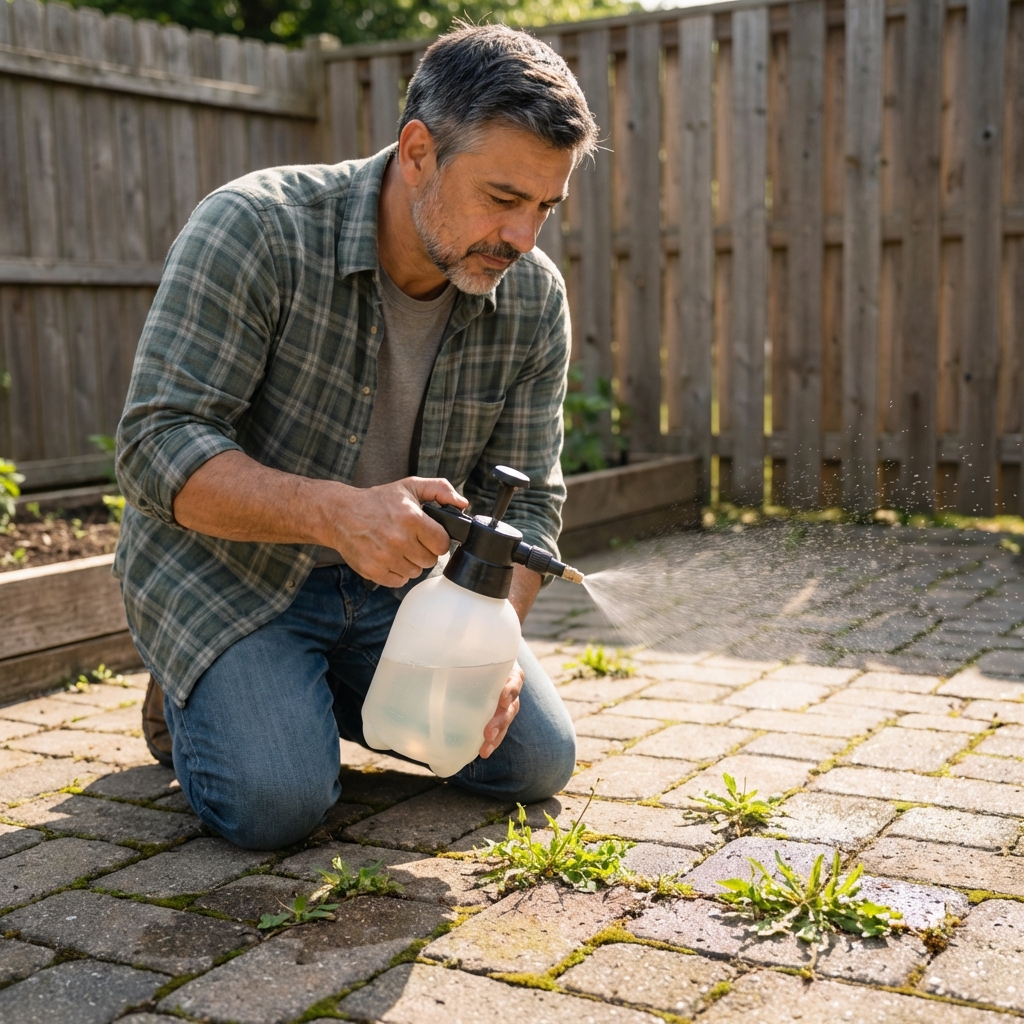
Before you start: identify where the weeds are
Most frustration comes from using the right tool in the wrong place. Pick your approach based on the surface.
- Cracks in hardscapes (pavers, driveway, sidewalk): contact killers like vinegar mixes, boiling water, and flame weeding work well because collateral damage is usually less of a concern. Keep in mind that roots from nearby plants can still reach under edges.
- Garden beds (around flowers and vegetables): physical removal, smothering, and careful spot treatments are safest. Overspray is the main risk.
- Lawns: DIY sprays that burn leaves will also burn grass. For lawns, focus on thick turf, proper mowing, and hand removal of isolated weeds.
Quick reality check: Most natural sprays are non-selective and mostly contact weed killers. That means they damage whatever green tissue they touch. They also often do not kill deep roots on the first try. Plan on repeat treatments, especially for perennials.
Why weeds come back: Annual weeds usually die if you kill the top growth before they set seed. Perennials (and anything with deep taproots, rhizomes, or runners) can resprout from stored energy underground, so you win by repeating treatments and cutting off regrowth.
DIY natural weed killers (what works and where)
1) Vinegar + soap spray (best for cracks and gravel)
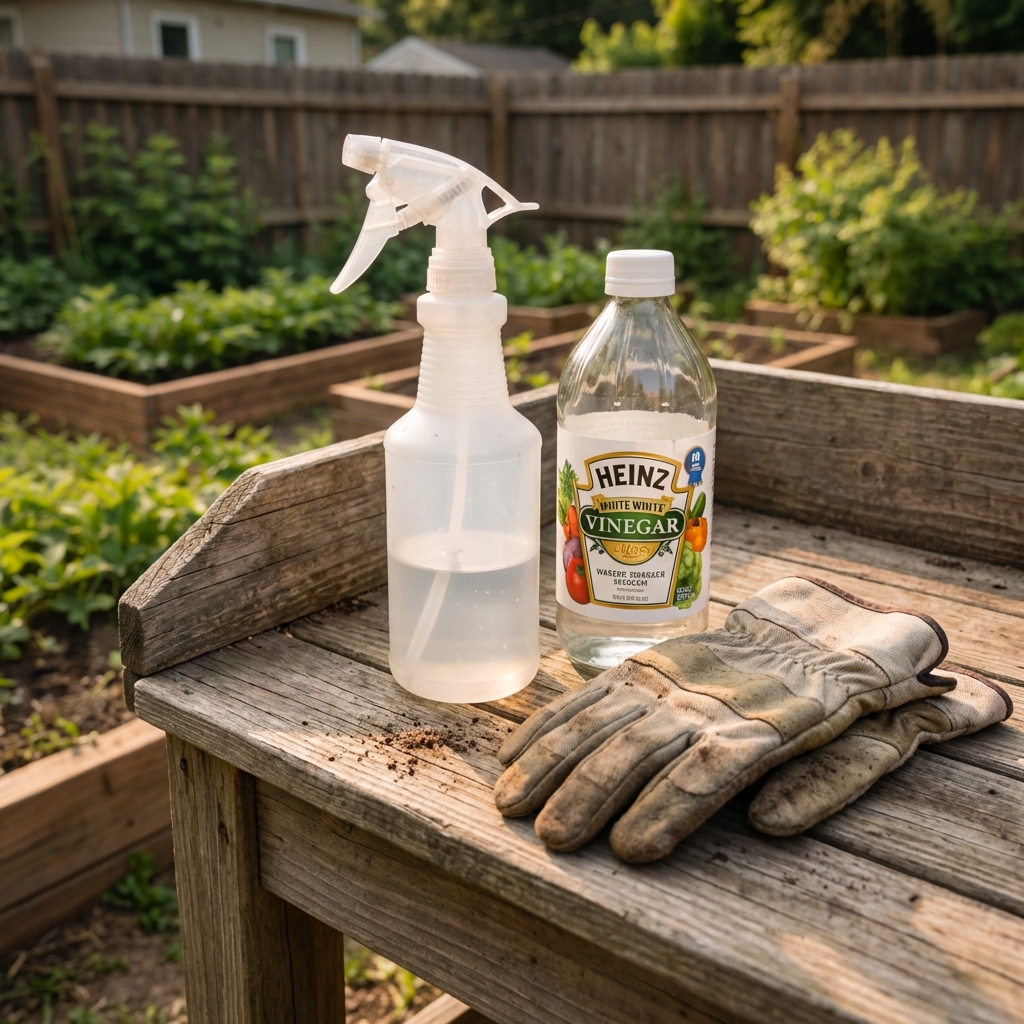
This is the classic DIY option because it is simple and fast. Vinegar dries out leaf tissue. Soap helps it spread and stick (a mild surfactant), which improves contact.
Simple recipe (household strength):
- 1 quart (4 cups) white vinegar (5% acidity)
- 1 teaspoon liquid dish soap
How to use it: Spray directly on weed leaves until wet, ideally on a hot, dry, sunny day. Avoid windy conditions. For best results, apply later in the morning or early afternoon after dew has dried. Avoid spraying right before rain or right after watering.
You should see wilting within hours and browning by the next day.
Where it shines: Weeds between pavers, along fence lines, in gravel, and anywhere you do not care about nearby plants.
Limitations: It often top-kills perennial weeds (like dandelion, plantain, bindweed) and they can regrow from roots. Reapply when you see new green growth.
Safety note: Vinegar is an acid. It can irritate eyes and skin. Wear gloves and eye protection, and keep it off prized plants and lawn edges. If it gets in eyes, rinse with clean water for several minutes and seek medical advice if irritation continues.
Surface and gear note: Vinegar can dull some stone and certain concrete finishes and may speed corrosion on some metal parts. Spot-test if you are unsure, and rinse your sprayer after use.
2) Vinegar + salt + soap (use cautiously)
Salt can make vinegar sprays look stronger because it disrupts plant water balance. It also builds up in soil, which can make it hard to grow anything there later.
Use this only in areas you truly want bare, like deep cracks in concrete or along the edge of a driveway, not in garden beds.
Careful recipe:
- 1 gallon white vinegar
- 1 cup salt
- 1 tablespoon dish soap
Important: Do not use this near tree roots, beds, lawns, or anywhere runoff could wash into planting areas. Salt does not break down quickly. It can also move with rain and damage adjacent turf and ornamentals even if you apply it “only in cracks.”
3) Boiling water (fast and cheap)
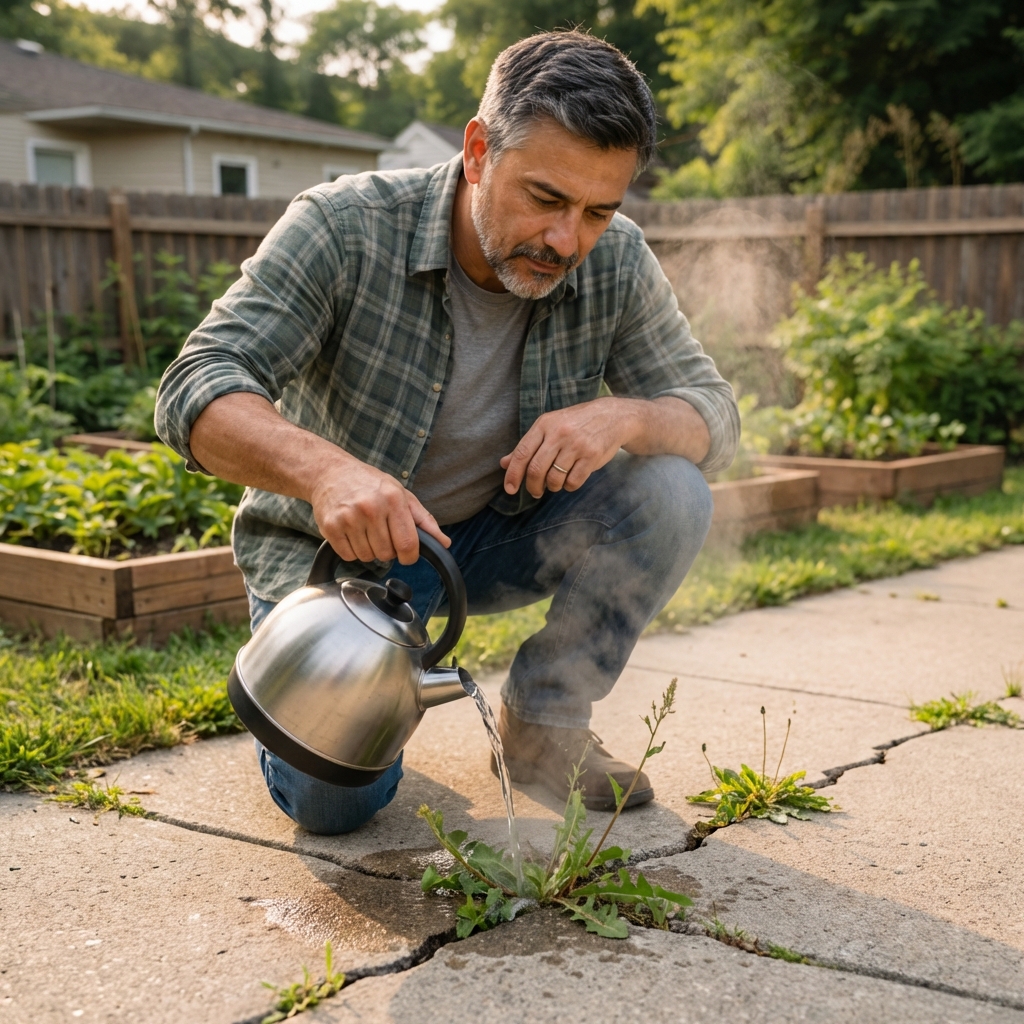
Boiling water kills by cooking plant tissue. It is one of the best low-effort options for small weeds in cracks and along curb lines.
- Bring water to a rolling boil.
- Carefully pour directly onto the crown (the center where stems meet the ground).
- Repeat in 7 to 10 days for tough perennials.
Best for: driveways, sidewalk cracks, brick edging, and gravel paths.
Watch outs: It can scald you and it will damage any plant tissue and roots it hits. This includes grass crowns along edges. Pour slowly and aim tightly. Keep kids and pets well away while you work.
4) Smothering with cardboard + mulch (best for beds)
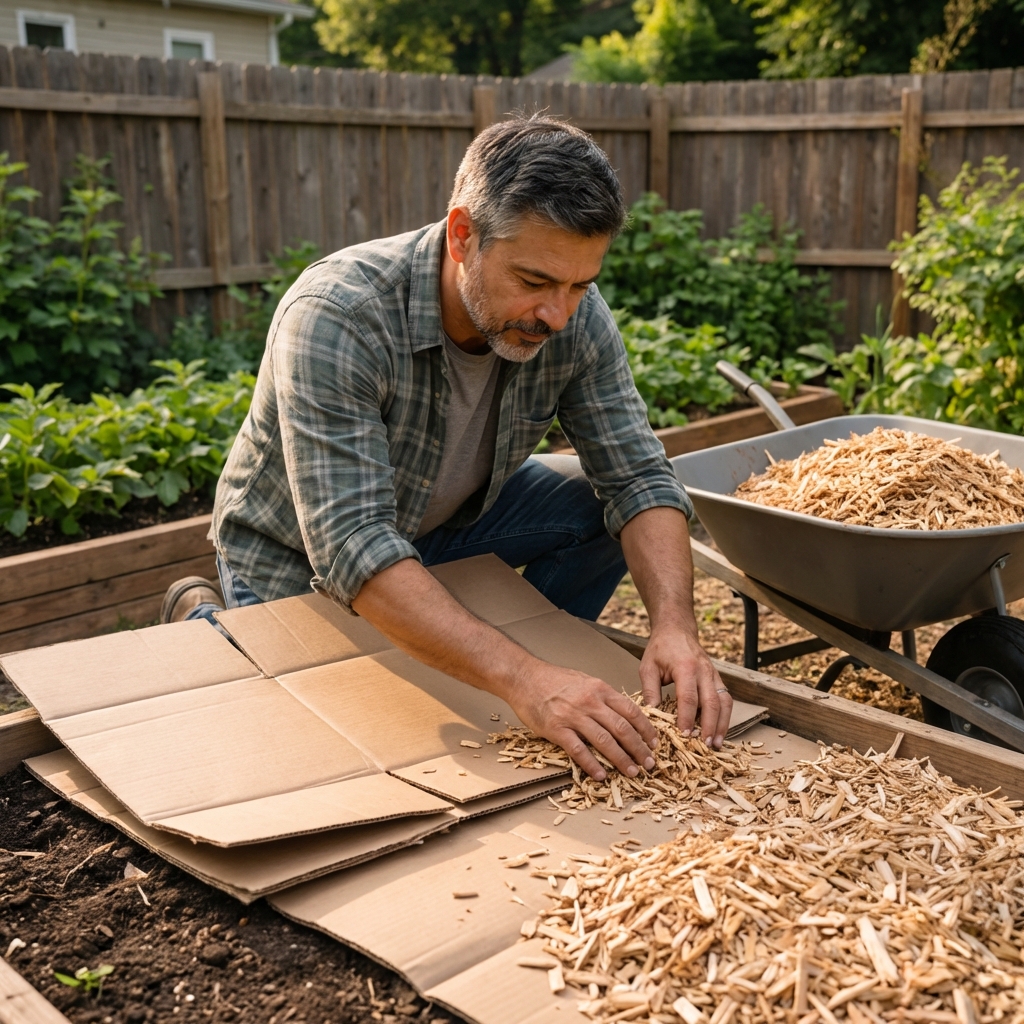
If you want fewer weeds for the whole season, smothering beats spraying. It blocks light and stops most seeds from germinating.
How to do it:
- Cut weeds down low (do not till unless you want to bring up more weed seeds).
- Lay overlapping plain cardboard (remove tape and glossy coatings).
- Wet it thoroughly so it hugs the soil.
- Top with 2 to 4 inches of mulch or compost.
Best for: starting new beds, refreshing old beds, pathways between raised beds, and around shrubs.
Tip: Leave a small gap around the base of woody plants to avoid trapping moisture against stems.
Maintenance note: Windblown seeds can still germinate in the mulch layer on top. Plan to pull the occasional seedling and top up mulch as it settles and breaks down.
5) Hand pulling and digging (still the most targeted)
For weeds growing right next to vegetables and flowers, hand removal is often the safest move. The trick is timing and tools.
- Pull after rain or water first. Damp soil releases roots more cleanly.
- Use a narrow weeding tool to pry out the whole root of dandelion and dock.
- Hoe small weeds early using a stirrup (scuffle) hoe or collinear hoe, especially in vegetable rows. A quick shallow pass is often all it takes.
- Do not let them seed. One neglected weed can turn into hundreds next year.
Best for: beds, borders, and anywhere precision matters.
6) Flame weeding (for experienced users in safe zones)
Flame weeders are propane tools that heat plant cells so they collapse. You are not trying to burn the weed to ash. A quick pass until the leaf looks slightly glossy is enough.
Best for: gravel, cracks, and dormant garden rows when conditions are safe.
Best results: Use it on tiny seedlings and expect repeats, just like other contact methods.
Do not use during dry or windy weather, near mulch, near structures, or around dry leaves. Be aware of hidden smoldering in cracks and debris. Follow local fire rules, HOA rules, and manufacturer instructions, and keep water nearby.
What about baking soda, bleach, and other hacks?
Some popular “natural” suggestions can cause bigger problems than weeds.
- Baking soda can burn small weeds in cracks, but it also adds sodium to soil. Use sparingly and only on hardscapes.
- Bleach is not a good garden option. It can damage soil life, harm nearby plants, and create runoff issues.
- Soapy water alone usually is not strong enough to kill established weeds, but it can help vinegar spread and stick.
How to get better results (timing matters)
- Hit weeds when they are small. Seedlings are easy. Mature weeds are stubborn.
- Target the crown. The growth point is where stems meet the soil. Soak that area for contact sprays and hot water.
- Choose a dry, hot window. For vinegar sprays, sun and heat help speed the burn-down. Spray after dew dries and skip days with rain in the forecast.
- Expect repeat treatments. Perennials often need two to four hits, spaced a week or two apart.
Prevent weeds so you are not constantly spraying
The easiest weed to kill is the one that never sprouts. These habits make a bigger difference than any DIY spray.
Mulch the right way
- Use 2 to 4 inches of mulch in beds.
- Keep mulch a couple inches away from plant stems.
- Top up once or twice a year as it breaks down.
Close the gaps
- In lawns, overseed thin areas and mow high enough to shade soil.
- In beds, plant densely or use groundcovers so sunlight does not hit bare soil.
Do a 10-minute weed walk
Once a week, walk your garden with a small bucket. Pull anything that is about to flower. This one habit keeps weed pressure from snowballing.
Is it safe around pets and kids?
“Natural” does not automatically mean harmless. Vinegar can irritate skin and eyes, salt can damage soil, and boiling water can cause serious burns.
- Keep kids and pets away while you apply any treatment.
- Let sprayed areas dry fully before allowing foot traffic.
- Store mixtures clearly labeled and out of reach.
- Do not spray edible plants directly. Use spot treatments around them instead.
Common questions
Will vinegar kill weeds permanently?
It can permanently kill small annual weeds. For deep-rooted perennials, it often burns the top growth and they return. Repeating treatments and improving prevention (mulch, dense planting) is what makes it feel permanent.
Should I use stronger cleaning vinegar?
Higher-acidity vinegar can be more effective, but it is also more hazardous and more likely to damage nearby plants and irritate skin and eyes. In some areas, high-acid (often 10 to 20 percent) “horticultural” or “cleaning” vinegar products may be regulated or labeled for pesticide use, so check local rules and always follow the label. For most home situations, regular white vinegar plus good timing is enough.
What is the most long-term natural option?
Smothering with cardboard and mulch, then keeping soil covered. It reduces new weeds rather than just burning down what is visible.
Quick method picker
- Pavers and sidewalk cracks: boiling water, vinegar + soap, or flame weeding (if safe)
- Gravel driveways: vinegar + soap, occasional reapplication, then rake and top up gravel
- Vegetable beds: hand pull, hoe lightly, cardboard + mulch between rows
- New bed area: cardboard + mulch smothering for the cleanest start
- Lawns: pull isolated weeds, improve turf density, avoid vinegar sprays
Takeaway
If you want simple and effective, start with boiling water for cracks and cardboard plus mulch for beds. Use vinegar + soap for touch-ups on sunny days, and save salt mixes for spots where you truly do not want anything growing. Pair any quick-kill method with prevention and you will spend a lot less time fighting the same weeds over and over.

Jose Brito
I’m Jose Britto, the writer behind The Country Store Farm Website. I share practical, down-to-earth gardening advice for home growers—whether you’re starting your first raised bed, troubleshooting pests, improving soil, or figuring out what to plant next. My focus is simple: clear tips you can actually use, realistic expectations, and methods that work in real backyards (not just in perfect conditions). If you like straightforward guidance and learning as you go, you’re in the right place.