Yellow orchid leaves can be totally normal or a sign something is off. The trick is not to panic and not to “treat” everything at once. Orchids respond best when you identify the likely cause, make one solid change, and then give the plant time to react.
Below is a practical, home grower friendly checklist for the most common reasons orchid leaves turn yellow, plus what to do next.
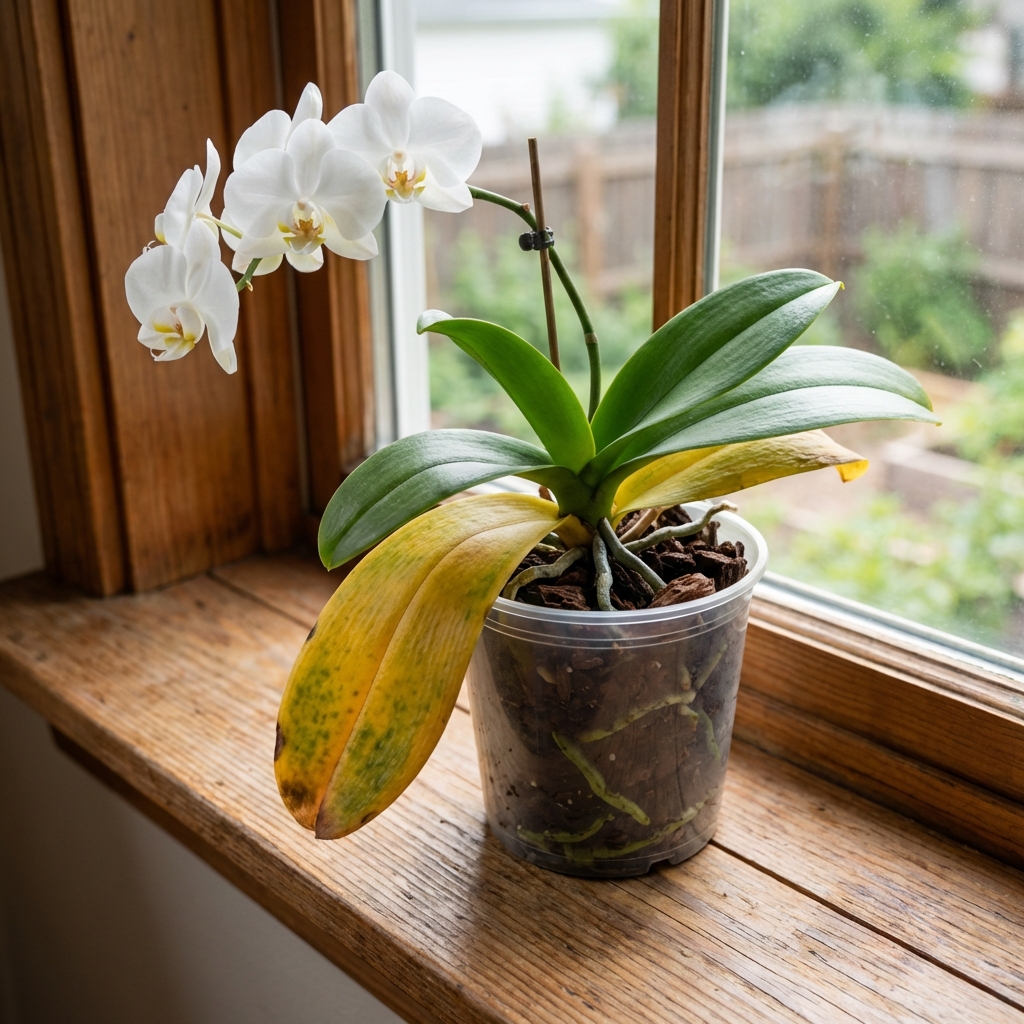
First: is the yellowing normal?
Sometimes a yellow leaf is just an old leaf retiring. Many orchids, especially Phalaenopsis (moth orchids), will periodically drop the lowest leaf as they grow new ones.
Usually normal yellowing looks like this
- Only one of the lowest leaves is yellowing
- The leaf turns evenly yellow from base to tip
- The rest of the plant looks steady: firm leaves, no rapid decline
- A new leaf or new root growth is visible
More likely a problem if you see this
- Multiple leaves yellowing at once
- Yellowing starts with soft, mushy areas
- Leaves are wrinkled, limp, or floppy
- Black spots, streaks, or a bad smell from the pot
- Yellowing is happening fast, over days instead of weeks
If it looks normal, let the leaf yellow fully and come off easily on its own. If you have to tug, it is not ready.
Quick diagnosis: what to check in 3 minutes
Before you change care, do these fast checks. They point you toward the real cause.
- Feel the potting mix: Is it wet and staying wet for days? Is it bone dry and pulling away from the pot?
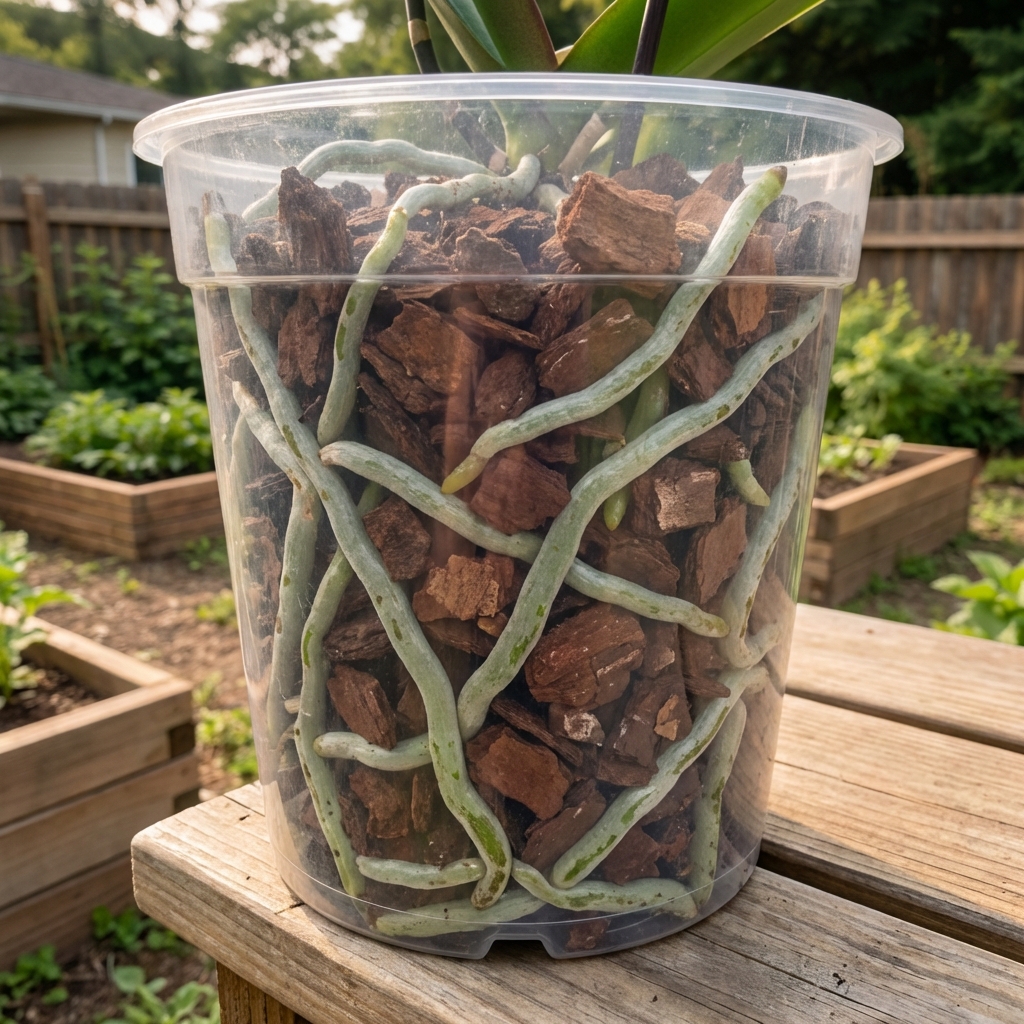
- Look at the roots (through a clear pot if you have one): Healthy roots are usually firm and green when wet, silvery when dry. Bad roots are brown, hollow, mushy, or papery.
- Check light exposure: Is it in harsh afternoon sun, right against hot glass, or under a strong grow light very close to the leaves?
- Check the crown (center of the plant): Any standing water or soft tissue?
- Check for pests: Look under leaves and at leaf joints for sticky residue, cottony clusters, or tiny moving dots.
Most common cause: overwatering and root stress
Overwatering is not about “too much water once.” It is about roots staying wet too long. Orchids need air around roots. When the mix stays soggy, roots suffocate and rot, and the leaves can yellow because the plant cannot move water and nutrients properly.
Signs it is overwatering or poor drainage
- Pot feels heavy for many days after watering
- Mix looks dark and stays damp
- Roots are brown, mushy, or hollow
- Leaves yellow and feel soft, not crisp
What to do
- Pause watering until the mix is close to dry. For many homes, that means watering every 7 to 14 days, not every few days.
- Improve airflow: Use a pot with side holes or an orchid pot inside a cachepot, but never let it sit in water.
- Repot if roots are failing: If you see lots of mushy roots, repot into fresh orchid bark or a bark blend. Trim dead roots with sterilized scissors.
- After repotting, water lightly and let the plant settle. Do not fertilize for a week or two.
Tip: A clear pot makes this easier. You can see root color and condensation, which helps prevent “schedule watering.”
Underwatering can also yellow leaves
If the mix gets too dry for too long, leaves can yellow, wrinkle, and droop because the plant is running on empty.
Signs it is underwatering
- Leaves look wrinkled or limp and dull
- Roots look silvery and dry most of the time
- Potting mix dries extremely fast, sometimes in a day or two
- Pot feels very light
What to do
- Water thoroughly: Soak the pot for 10 to 15 minutes, then drain completely.
- Increase watering frequency slightly, but keep the “drying cycle” intact.
- Check humidity: Very dry heated air can speed drying. A humidity tray (pebbles with water below the pot) helps, or group plants together.
If your orchid is in chunky bark and your home is dry, it might simply need water a bit more often.
Too much light (or heat) causes yellowing
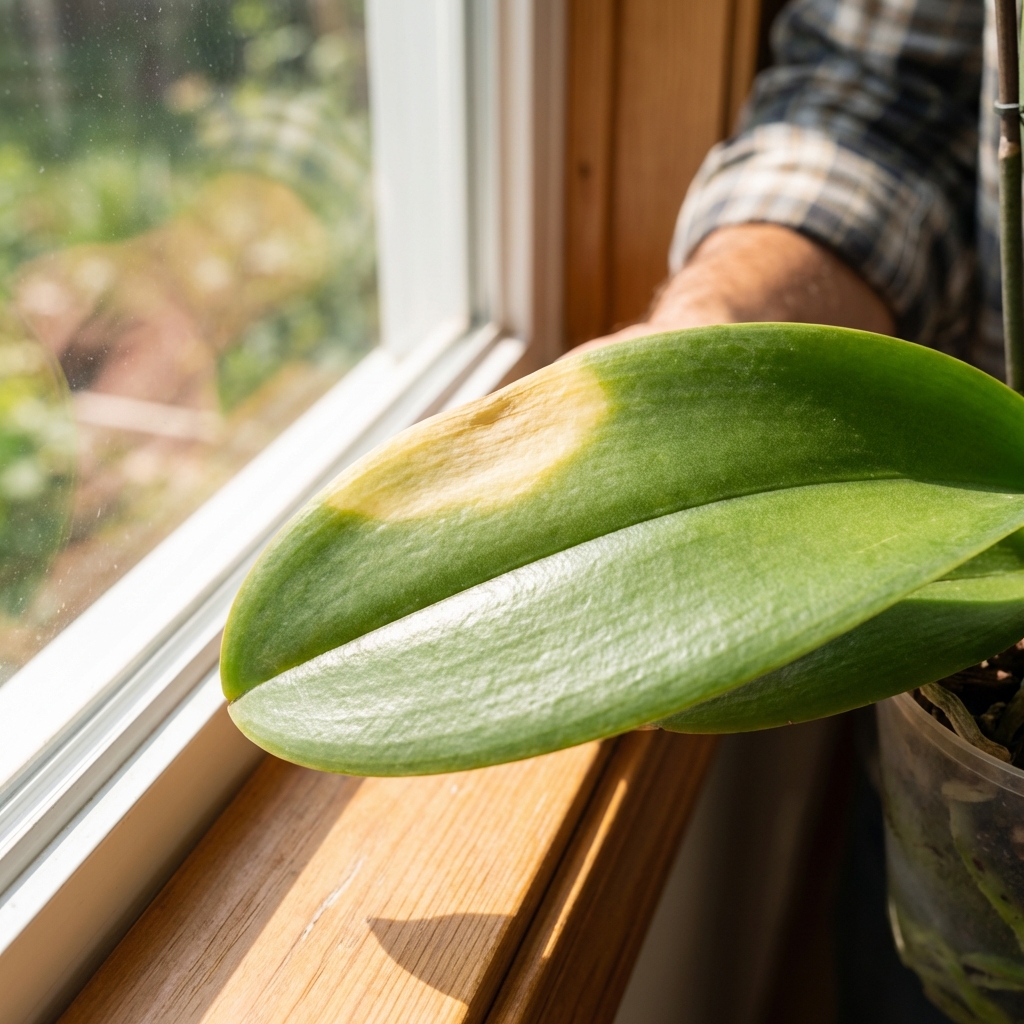
Orchids love bright light, but many common house orchids dislike harsh, direct sun. Leaves can turn pale yellow, develop yellow patches, or show sunburn that later turns tan or black.
Signs of light stress
- Yellowing on the side facing the window or grow light
- Bleached, pale areas
- Crispy, dry patches that look scorched
What to do
- Move the orchid to bright, indirect light. An east window is often a sweet spot.
- If using a grow light, raise it or reduce intensity and keep leaves from touching the fixture.
- Keep plants off hot window glass in summer and away from heater vents in winter.
Nutrient issues: too little, too much, or salt buildup
Orchids do not need heavy feeding, but they do need some nutrients, especially when actively growing. Yellowing can happen with nutrient deficiency, but it is also common when fertilizer salts build up in the pot.
Clues you might be dealing with fertilizer or salts
- White crust on the pot or on top of the mix
- Leaf tips browning along with yellowing
- You fertilize often but never flush the pot
What to do
- Flush the pot: Run room-temperature water through for 30 to 60 seconds to rinse salts. Let it drain fully.
- Fertilize lightly during growth: A common approach is “weakly, weekly” or weakly every other watering.
- In winter or low light periods, reduce fertilizer.
If you use softened water, consider switching. Some softened water contains sodium that can stress roots over time.
Cold drafts and temperature swings
Orchids can yellow if they get chilled, especially if a leaf touches cold glass or sits in a drafty spot near doors and windows.
Signs
- Yellowing after a cold night or a sudden weather change
- Watery, damaged patches that later collapse
What to do
- Keep most common orchids in a steady range, roughly 65 to 80°F if possible.
- Move the plant a few inches back from the window in winter.
- Avoid placing orchids in the direct path of AC or heating vents.
Crown rot: the emergency you should not ignore
If water sits in the crown (the center where new leaves emerge), it can rot the growing point. This can lead to yellow leaves and a rapid decline.
Signs of crown rot
- Soft, dark tissue in the center
- Leaves yellowing and loosening easily
- Bad smell or wet, mushy base
What to do right now
- Remove standing water with a paper towel corner or cotton swab.
- Increase airflow and keep the crown dry.
- If rot is visible, many growers dust the area lightly with cinnamon as a drying agent. Keep it off healthy roots because it can be drying.
- Water carefully around the mix, not into the crown.
If the crown is badly damaged, recovery is harder. Your best bet is to stabilize the plant and watch for basal growth (a new plantlet at the base) in some cases.
Pests that lead to yellow leaves
Indoor orchids can get pests, and repeated feeding stress can cause yellowing, stippling, or overall decline.
Common culprits
- Spider mites: fine speckling, webbing, worse in dry air
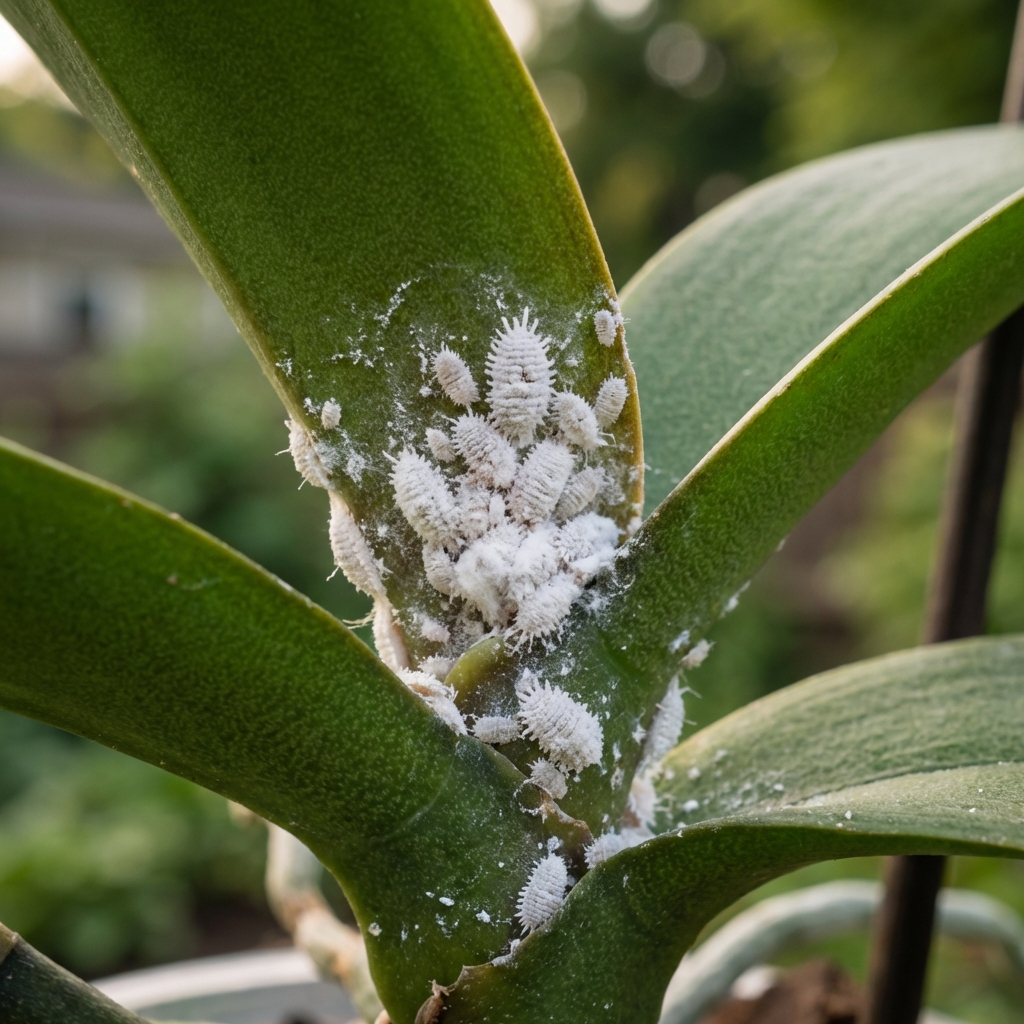
- Mealybugs: white cottony clusters at leaf joints
- Scale: small brown bumps on leaves and stems
- Aphids: clusters on new growth and flower spikes
What to do
- Isolate the plant.
- Wipe leaves (top and bottom) with a damp cloth.
- Spot treat with 70% isopropyl alcohol on a cotton swab for mealybugs and scale. Avoid soaking the potting mix.
- Repeat treatments weekly for a few rounds since pests have life cycles.
Repotting mistakes that trigger yellowing
After repotting, some orchids yellow a leaf or two from stress, especially if many roots were damaged or removed. This is common when old media has broken down and roots were already compromised.
How to repot with less stress
- Repot when you see new roots starting, if possible.
- Use fresh orchid bark or a bark mix sized for your environment. Finer mix dries slower, chunky mix dries faster.
- Trim only dead roots. If a root is firm, leave it.
- Do not pack the mix too tight. Roots need air gaps.
After repotting, focus on stable light, warm temps, and careful watering. Avoid big changes all at once.
Should you cut off yellow orchid leaves?
Most of the time, no. Let the plant pull what it can from the leaf. Once it is fully yellow and detaches with a gentle wiggle, it is ready.
When trimming is okay
- The leaf is mushy or clearly rotting
- There is spreading damage that could invite infection
If you do cut, use sterilized scissors and make a clean cut close to the base without nicking the crown or stem.
Yellow leaves by orchid type: quick notes
Phalaenopsis (moth orchid)
Most common indoor orchid. Yellowing is often from overwatering, low airflow, or an old bottom leaf aging out.
Cattleya
May yellow if kept too wet or too dark. They prefer drying more between waterings than Phals.
Dendrobium
Some types drop leaves seasonally, especially nobile types. Know your variety before assuming a problem.
Oncidium
Often shows stress quickly when underwatered. Pseudobulbs can wrinkle when thirsty.
A simple “fix it” plan (no guessing)
Confirm normal vs abnormal: One old bottom leaf is usually fine. Multiple leaves or fast yellowing needs action.
Check roots and moisture: This is the heart of most orchid problems.
Adjust one variable: Watering schedule, light level, or drainage. Do not change everything.
Wait 2 to 3 weeks: Orchids are slow to show improvement. Look for firm leaves and new root tips as your “success” markers.
Repot if needed: If media is broken down or roots are rotting, a repot is often the real solution.
When yellowing means you should act fast
If you see any of the following, it is worth taking the plant out of the pot and checking roots and crown the same day:
- Bad smell from the pot
- Mushy leaf bases
- Black, wet spots spreading
- Plant suddenly wobbly or loose in the pot
Early intervention can save an orchid that would otherwise keep declining.
Common questions
Can a yellow orchid leaf turn green again?
Usually no. Once a leaf is yellowing from natural aging or damage, it will not fully re-green. Your goal is to stop the cause so new leaves stay healthy.
Why are only the tips of my orchid leaves turning yellow?
Tip yellowing is often tied to salt buildup, inconsistent watering, low humidity, or mild root stress. Flush the pot, check roots, and aim for steadier moisture.
My orchid leaves are yellow but roots look fine. What now?
Look at light and temperature first. Too much sun, hot glass, or cold drafts can yellow leaves even when roots look healthy.

Jose Brito
I’m Jose Britto, the writer behind The Country Store Farm Website. I share practical, down-to-earth gardening advice for home growers—whether you’re starting your first raised bed, troubleshooting pests, improving soil, or figuring out what to plant next. My focus is simple: clear tips you can actually use, realistic expectations, and methods that work in real backyards (not just in perfect conditions). If you like straightforward guidance and learning as you go, you’re in the right place.