Roaches are one of those pests that make you feel like your house is failing some secret cleanliness test. It is not. Roaches come in for the same reasons every backyard critter does: food, water, and a place to hide.
Baking soda gets talked about a lot as an “organic” roach fix. It may help in certain situations, but it is not a guaranteed knockout, and the evidence is mostly anecdotal. Below are practical tips that keep expectations realistic and give you the best shot at results without turning your kitchen into a science project.
Does baking soda really kill roaches?
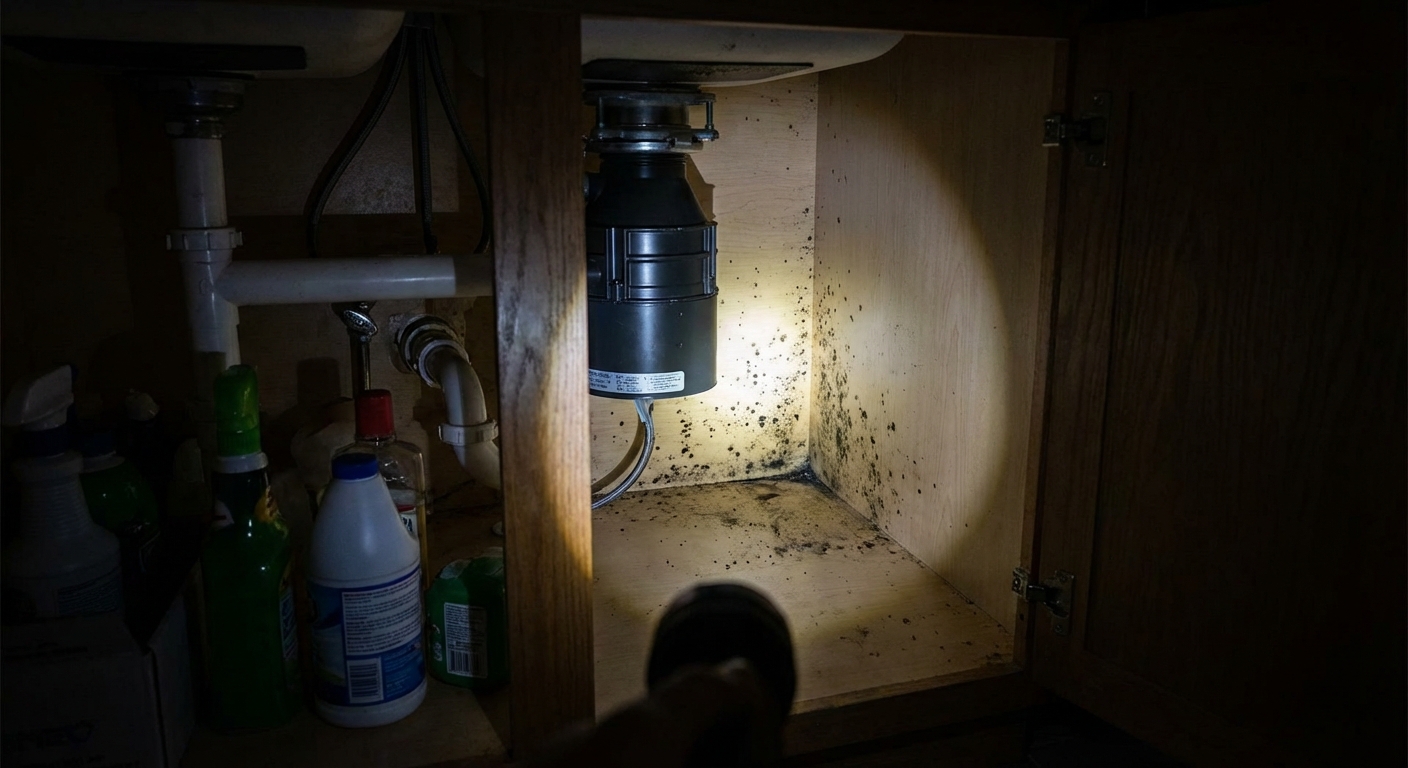
Baking soda (sodium bicarbonate) is often said to kill roaches if they eat enough of it. The usual explanation is that it is thought to react inside the roach and create harmful gas or pressure. That mechanism is not well proven for cockroaches, and the bigger hurdle is usually not chemistry anyway. It is getting roaches to eat a meaningful dose.
That is why baking soda is typically paired with a strong attractant like sugar. Even then, results can be hit or miss, especially with large infestations or if there are easier food sources nearby.
Tips to get better results
1) Always pair it with a bait
Plain baking soda is not very attractive. Mix it with something roaches actively want.
- Simple mix: 1 part baking soda + 1 part powdered sugar
- Optional boost: add a tiny pinch of cocoa powder for scent, or use very finely ground sugar if you do not have powdered
Use small amounts. Fresh bait works better than a big pile that sits for weeks.
2) Put it where roaches travel
Roaches tend to travel along edges and tucked-away routes. Put bait in:
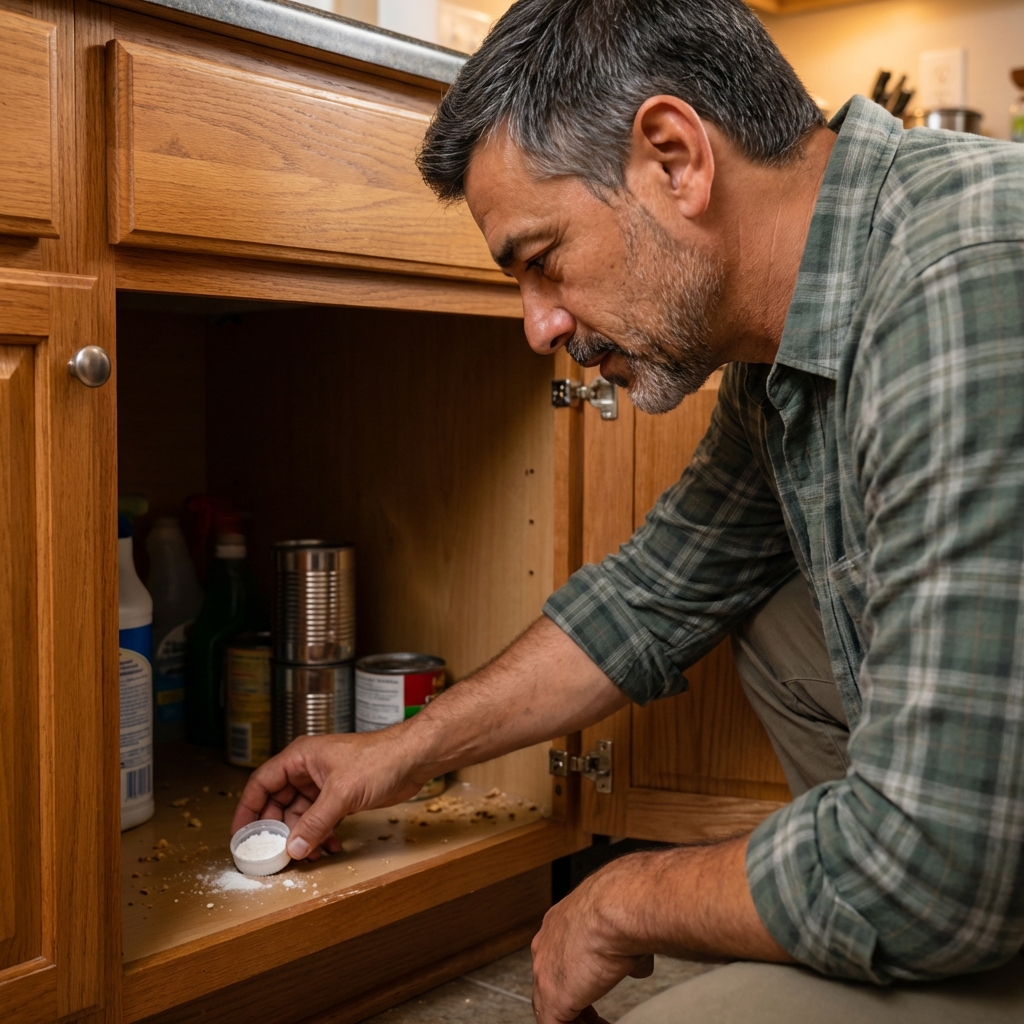
- Along cabinet corners and the back edge of shelves
- Under the sink near plumbing penetrations (only if the area stays dry)
- Behind the fridge and stove (if safely accessible)
- Along baseboards near the dishwasher and trash area
Skip open floor areas. Roaches avoid exposed spots when they can.
3) Use bait dots or shallow caps
A light dusting gets scattered and cleaned up. A mound can get ignored. Better options:
- Place pea-sized bait dots on a scrap of cardboard
- Use bottle caps or shallow jar lids as bait stations
This also makes it easier to remove and refresh.
4) Refresh every few days
Grease, moisture, humidity, and routine cleaning can ruin bait fast. Replace it every 2 to 4 days for the first two weeks, then weekly if you still see activity.
5) Cut off competing food sources
If roaches can eat pet kibble, grease behind the stove, or crumbs under the toaster, they may ignore your bait. The fastest “upgrade” you can make is a 10-minute cleanup routine at night: wipe counters, sweep under the main food-prep area, and put food away.
6) Keep sprays and strong cleaners away from bait
If you are baiting, avoid spraying insecticide or blasting strong cleaners right next to bait placements. Repellent sprays can reduce feeding and make baiting less effective. If you need to clean, remove the bait first, clean, let the area dry, then replace fresh bait in the same tucked-away routes.
Two simple bait recipes
Recipe A: Baking soda + powdered sugar
- 1 tablespoon baking soda
- 1 tablespoon powdered sugar
Mix and place in 6 to 10 small stations near suspected travel routes.
Recipe B: Baking soda bait dough (dry areas)
- 1 tablespoon baking soda
- 1 tablespoon sugar
- Enough peanut butter to make a stiff dough
Use tiny bits. Peanut butter can go rancid, so refresh often and avoid warm, greasy zones.
Tip: If you have kids or pets, use enclosed stations (caps tucked deep into corners, behind appliances, or inside a DIY bait box with small entry holes).
What not to do
- Do not rely on baking soda alone for a heavy infestation. It is usually too slow and inconsistent.
- Do not place bait where it can get wet (under leaky pipes, damp sink corners). Moisture clumps it and reduces feeding.
- Do not mix baking soda with vinegar as a “stronger roach killer.” The fizzing reaction mostly neutralizes the baking soda and does not create a better bait.
- Do not scatter piles everywhere. You want targeted placements you can track and refresh.
Safety notes
Baking soda and sugar are low-tox compared to many pesticides, but “natural” is not the same as “risk-free.” Large ingestion can still cause problems, especially for pets and small children.
- Keep bait out of reach of children and pets.
- Avoid placing bait directly on food-contact surfaces.
- If your pet will eat anything, skip open bait and use enclosed stations.
If you step up to boric acid, treat it as a real pesticide. It can be toxic if ingested and should be kept out of reach and applied in very light, targeted amounts.
Roach type matters
Quick ID helps you pick the right level of response:
- German cockroaches: smaller (about 1/2 inch), light brown or tan, often with two darker stripes behind the head. They thrive in kitchens and bathrooms and reproduce quickly, so small problems can turn into big ones fast.
- American or Oriental cockroaches: larger, darker, more likely to show up from basements, drains, garages, or outdoors. You may need to focus more on entry points, moisture, and exterior conditions.
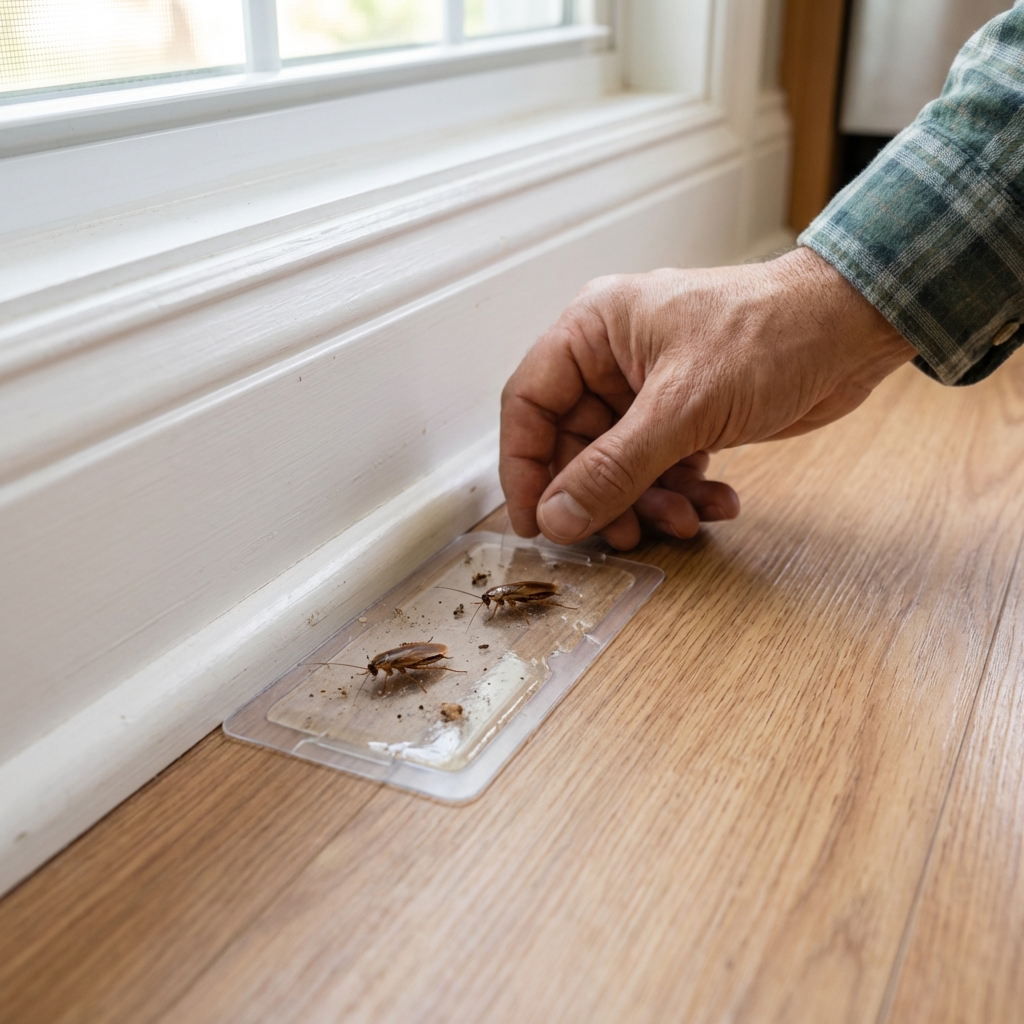
If you are not sure, use a glue trap to catch one for a clear look or snap a photo for identification.
If baking soda is not enough
If you are still seeing roaches after 10 to 14 days, use this as your benchmark: you should see a clear drop in sightings and trap counts. If you are seeing the same amount (or more), it is time to add methods that hit the problem from more angles.
1) Use sticky monitors
Glue traps do two things: they reduce a few roaches and tell you where the traffic is. Put them under the sink, behind the fridge, and along baseboards. Check weekly and track counts.
2) Seal hiding spots
Roaches love gaps. Seal what you can:
- Caulk cracks along baseboards and cabinet seams
- Seal around pipes under sinks
- Add door sweeps if you suspect they are coming in from outside
3) Fix moisture first
Roaches can survive longer without food than without water. If there is a steady drip, condensation, or damp cabinet floor, that can keep them going. Drying out the problem area is often the real turning point.
4) Consider gel baits or boric acid (carefully)
If you want something stronger than baking soda, roach gel baits and boric acid are commonly used in integrated pest management. They still require correct placement and safety precautions, especially with kids and pets.
When to call a pro
- You keep seeing roaches after 2 to 3 weeks of consistent baiting, cleanup, and monitoring.
- You see roaches during the day (often a sign of heavy pressure or limited hiding space).
- You live in an apartment or multi-unit building, since roaches can move between units.
- Someone in the home has asthma or allergies that roaches may worsen.
- You suspect German cockroaches and activity is increasing week to week.
Fast prevention checklist
- Store dry goods in sealed containers
- Take out trash nightly and rinse recyclables
- Do not leave pet food out overnight
- Wipe grease around the stove and backsplash
- Vacuum crumbs under appliances when you can
- Fix drips, leaks, and condensation issues
Think of baking soda as a small tool in a bigger plan. Roach control is mostly about removing what they need to live, then using baits or traps where they already travel.

Jose Brito
I’m Jose Britto, the writer behind The Country Store Farm Website. I share practical, down-to-earth gardening advice for home growers—whether you’re starting your first raised bed, troubleshooting pests, improving soil, or figuring out what to plant next. My focus is simple: clear tips you can actually use, realistic expectations, and methods that work in real backyards (not just in perfect conditions). If you like straightforward guidance and learning as you go, you’re in the right place.