Fleas are the kind of problem that feels small until it is suddenly everywhere. If your cat is scratching, overgrooming, or you are spotting little black specks in the fur (often flea dirt), you need a plan that hits the cat, the house, and the timing. Organic and low-tox options can help a lot, but only if you use them in a simple, repeatable routine.
Below are quick tips that are realistic for real homes. This guide also covers what to skip, because some popular DIY flea ideas can seriously hurt cats.
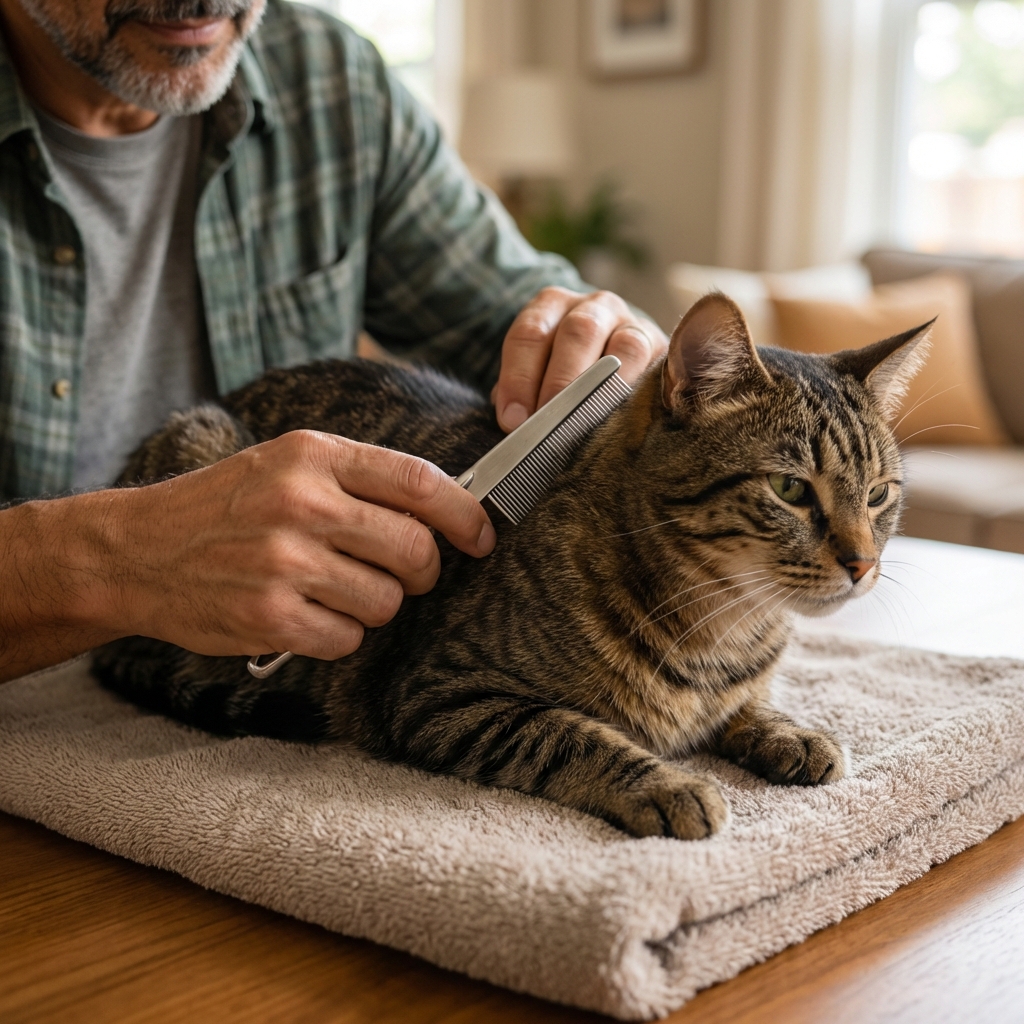
First, confirm it is fleas
Before you start treating, make sure you are dealing with fleas and not allergies, mites, or dry skin.
- Flea dirt test: Comb your cat over a white paper towel. If you see black pepper-like specks, add a few drops of water. If it turns reddish-brown, that is digested blood and a strong sign of fleas.
- Look at common spots: Base of the tail, belly, armpits, and neck.
- Check your home: Fleas love where pets nap. Look for tiny dark specks or jumping insects on light bedding.
If your cat is very itchy, has scabs, or seems uncomfortable, you can do the steps below right away while you schedule a vet call.
Quick, safer things you can do today
1) Flea comb every day for a week
This is simple and surprisingly effective for reducing adult fleas fast, especially when paired with house cleaning.
- Use a metal fine-tooth flea comb.
- Comb slowly from head to tail, paying attention to the neck and base of tail.
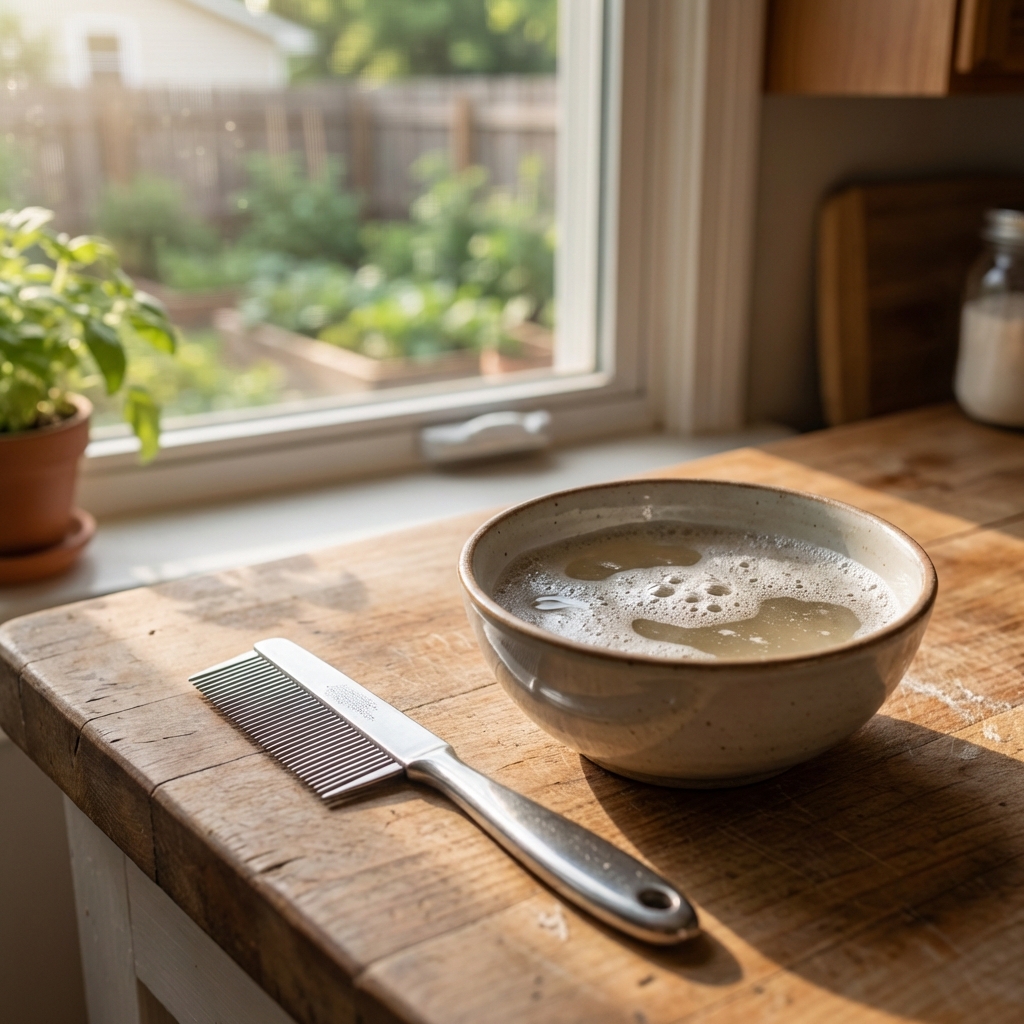
- Dip the comb in a bowl of warm soapy water to trap and kill fleas you pull out.
- Do 5 to 10 minutes daily if your cat tolerates it.
2) Give a gentle bath only if your cat can handle it
Many cats hate baths, so do not turn this into a wrestling match. Stress and scratches are not worth it. But if your cat tolerates water, a bath can remove fleas and flea dirt.
- Use a cat-safe gentle shampoo or a vet-approved mild soap option.
- Avoid getting soap in eyes and ears.
- Work a soapy ring around the neck first. This can help prevent fleas from running to the face.
- Rinse thoroughly and dry your cat quickly and keep them warm.
Safety note: Kittens and seniors can chill quickly after a bath. Keep the room warm, towel dry thoroughly, and stop if your cat seems stressed or cold.
Skip: essential oils, scented soaps, and “natural” dog shampoos. Cats are far more sensitive to many ingredients.
3) Wash bedding hot and dry on the hottest safe setting
This is one of the fastest ways to reduce eggs and larvae in the places fleas thrive.
- Wash pet bedding, throw blankets, and your cat’s favorite nap spots.
- Use hot water when possible.
- Dry on the hottest setting you can safely use for the fabric. High heat helps, but exact timing depends on your dryer and load size.
4) Vacuum like you mean it
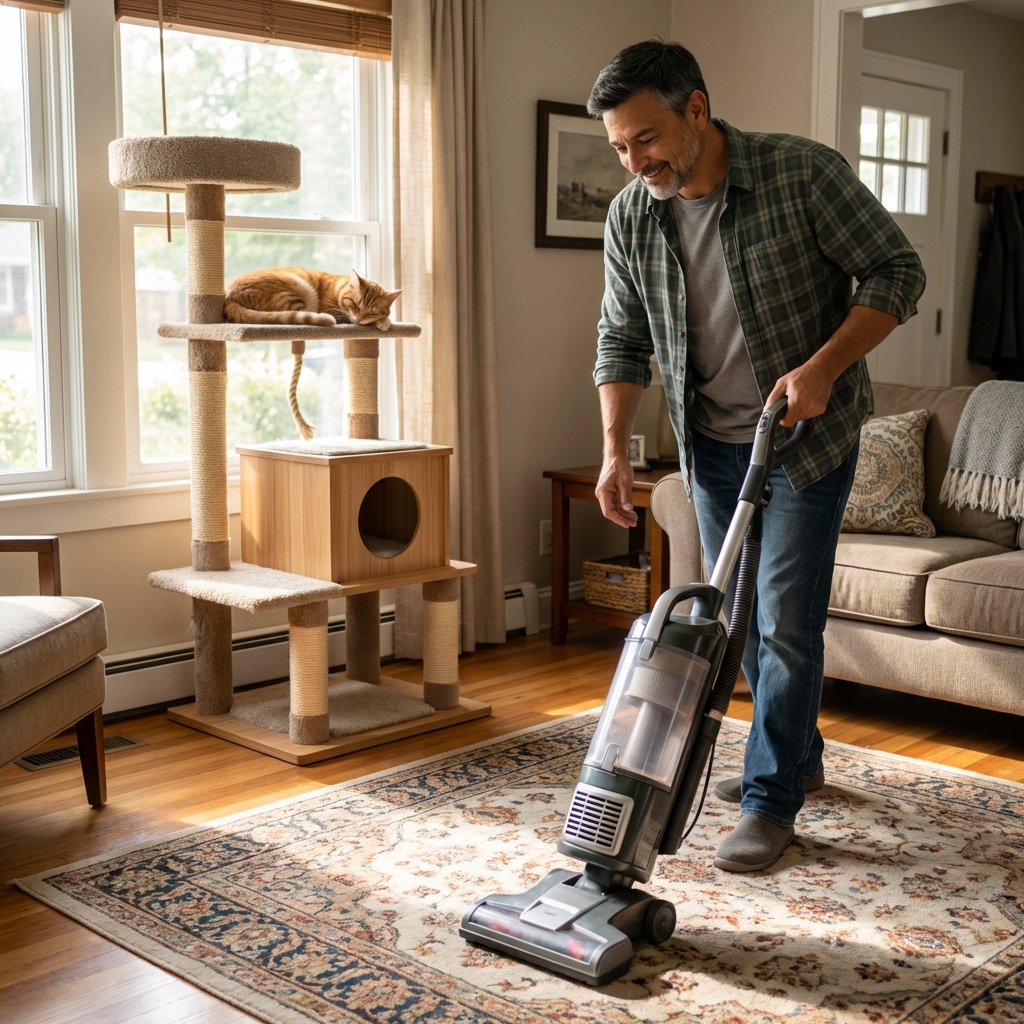
Vacuuming is a low-tox powerhouse because it can help remove adult fleas and larvae from carpets and cracks, plus some eggs. It can also disturb the environment and may encourage some pupae to emerge over time, which is helpful because pupae are the hardest stage to eliminate.
- Vacuum carpets, rugs, baseboards, under furniture, and couch cushions.
- Do it daily for 7 to 10 days if you can, then a few times a week.
- Immediately empty the canister outdoors or seal the bag in a trash bag.
Organic and low-tox options that can help
Food-grade diatomaceous earth (DE): use carefully
Food-grade DE can help in dry areas by damaging the outer coating of insects. Evidence and real-world results indoors are mixed, so think of it as a support tool, not your main strategy. It must stay dry to work, and it can irritate lungs if used carelessly.
- Use food-grade only, never pool grade.
- Apply a very light dusting to cracks, under appliances, and along baseboards where your cat does not roll around.
- Keep pets and people out of the room during application and while dust is in the air.
- Vacuum it up after 24 to 72 hours and repeat weekly for a few weeks if needed.
Do not dust DE onto your cat’s coat. Inhalation and skin irritation are real risks, especially with repeated use.
Beneficial nematodes for yards
If your cat goes outside or fleas are coming from shaded yard areas, beneficial nematodes can reduce flea larvae in soil.
- Look for species sold for flea control, often Steinernema carpocapsae or Steinernema feltiae.
- Apply to moist soil in shaded areas where pets rest.
- They work best with the right temperature and moisture, so follow product instructions closely and water as directed.
This is a nice “organic gardening style” tool, but it will not fix an indoor infestation by itself.
Sticky flea traps
Light and sticky traps can catch some adult fleas and help you measure progress.
- Place near pet sleeping areas.
- Keep away from curious pets and kids.
- Use as a support tool, not your main strategy.
Steam cleaning (optional, low-chemical)
If you have carpet or upholstery, steam cleaning can be a helpful add-on. Heat can reduce flea stages in fabrics without adding pesticides. Let everything dry fully to avoid mold.
What to avoid
Cats are not small dogs. Their bodies process certain compounds very differently, and some popular DIY pest ideas are dangerous.
- Essential oils on cats (tea tree, peppermint, eucalyptus, citrus oils, clove, wintergreen): can cause drooling, vomiting, tremors, liver issues, and worse.
- Garlic or onion in food: toxic to cats and can damage red blood cells.
- Apple cider vinegar as a flea killer: it does not reliably kill fleas and can irritate skin.
- Homemade sprays with alcohol: can irritate skin and is risky if licked.
- Using dog-only flea products: some contain ingredients that are toxic to cats. Even contact with a recently treated dog can be a problem.
If a product label does not clearly say it is safe for cats, treat that as a no.
Do not forget: treat every pet
Fleas move between animals. If you have multiple pets, plan to treat all cats and dogs in the household, using products labeled for each species. If you only treat one pet, the problem often comes right back.
When you may need a proven cat treatment
Sometimes the most “natural” choice is the one that quickly stops suffering. If combing and cleaning are not keeping up, talk to your veterinarian about a cat-safe flea preventive. Many vet-recommended options are low odor, easy to use, and highly targeted, and they are often what finally breaks the cycle when the home has a lot of flea pressure.
If you prefer not to use a long-term preventive, ask your vet what the shortest effective plan looks like for your cat’s age, weight, and health history.
The simple routine that works best
For most households, the best low-tox approach is consistency. Here is a realistic routine you can follow:
Days 1 to 10
- Comb daily (5 to 10 minutes).
- Vacuum daily.
- Wash pet bedding twice per week (or more if you can).
- Use traps to track activity near sleeping spots.
Weeks 2 to 6
- Vacuum 3 to 4 times per week.
- Comb every other day.
- Repeat bedding wash weekly.
Why so long? Fleas have life stages that are protected in the environment. You are not just killing what you see today. You are breaking the cycle. Many homes see major improvement in 3 to 4 weeks, but heavier infestations can take 6 to 8 weeks (or longer) to fully settle down.
When home remedies are not enough
Call a vet if:
- Your cat is a kitten, senior, pregnant, or has health issues.
- You see hair loss, raw skin, scabs, or signs of infection.
- Your cat seems lethargic, pale, or you suspect anemia (heavy flea loads can cause this).
- You cannot get fleas under control after 2 to 3 weeks of consistent cleaning and on-cat efforts.
- Anyone in the home is getting frequent bites and the infestation feels widespread.
Veterinarians can recommend cat-safe treatments and dosing that match your cat’s age and weight. You can still keep your home routine low-tox while using a proven product on the cat if needed.
Quick FAQ
Can I use coconut oil on my cat for fleas?
Coconut oil is not a reliable flea treatment. It may make the coat slippery and help you comb, but it can also cause greasy fur and stomach upset if your cat licks a lot of it. If you try it, use a tiny amount and focus on combing and house cleaning as your main tools.
Do I need to treat my house if I only see a few fleas?
Yes. Fleas in the fur are only part of the problem. Eggs and larvae are usually in bedding, carpets, and floor cracks.
How fast will I see results?
You can often reduce adult fleas within a few days with combing and vacuuming. Full control commonly takes 3 to 8 weeks depending on how established the infestation is and whether all pets are treated.
Takeaway
If you want an organic-leaning approach, keep it simple: comb daily, wash bedding hot, vacuum hard, and be careful with anything “natural” that is not cat-safe. Most flea battles are won with steady, boring consistency.
If you want, tell me your cat’s age, whether they go outdoors, whether you have other pets, and what kind of flooring you have (carpet, hardwood, rugs). I can suggest a practical week-by-week plan that fits your home.

Jose Brito
I’m Jose Britto, the writer behind The Country Store Farm Website. I share practical, down-to-earth gardening advice for home growers—whether you’re starting your first raised bed, troubleshooting pests, improving soil, or figuring out what to plant next. My focus is simple: clear tips you can actually use, realistic expectations, and methods that work in real backyards (not just in perfect conditions). If you like straightforward guidance and learning as you go, you’re in the right place.