If you have squirrels in your yard, you already know they’re going to eat something, whether it’s your birdseed, your tulip bulbs, or the ripest tomato you were saving for later. If you choose to feed them, the goal is simple: offer foods that are safe, close to what they’d naturally forage, and easy to portion so you don’t accidentally invite rats or create a daily squirrel traffic jam.
This page focuses on quick organic options you can put out today, with realistic expectations for a normal backyard. (Also: feeding wildlife is discouraged or regulated in some cities, parks, and HOAs, so it’s worth a quick check on local rules.)
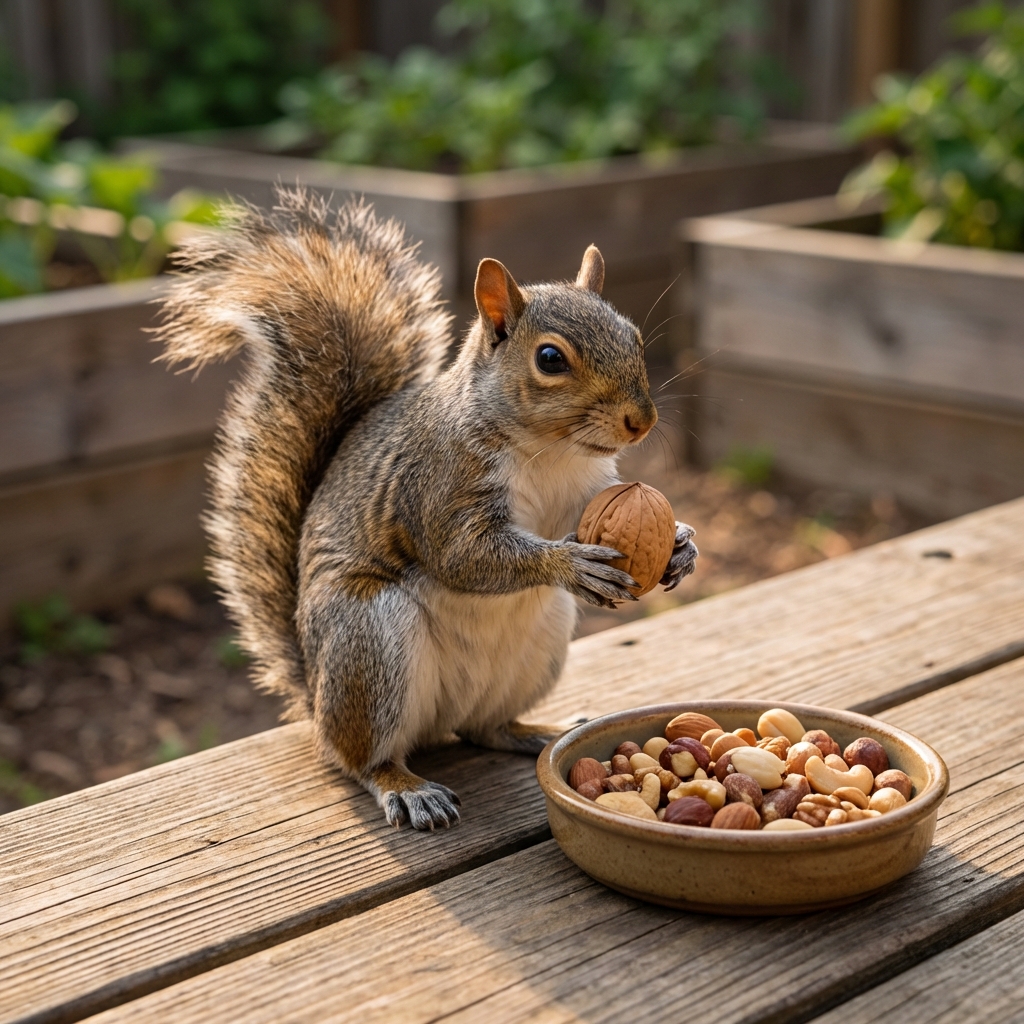
Quick organic foods that are usually safe
If you want the simplest, most squirrel-appropriate foods, think unsalted nuts and plain produce. Organic is fine, but the bigger deal is that the food is clean and not seasoned, sweetened, or salty.
Best fast choices
- Unsalted nuts in the shell like walnuts, hazelnuts, or pecans. In-shell nuts slow them down and reduce the “eat everything in 2 minutes” problem.
- Acorns (if you have them) from oak trees in your yard or neighborhood. They’re a natural forage food, but they’re not something most people buy at the store.
- Plain raw nuts like almonds or brazil nuts (unsalted). Keep portions small because they’re calorie-dense.
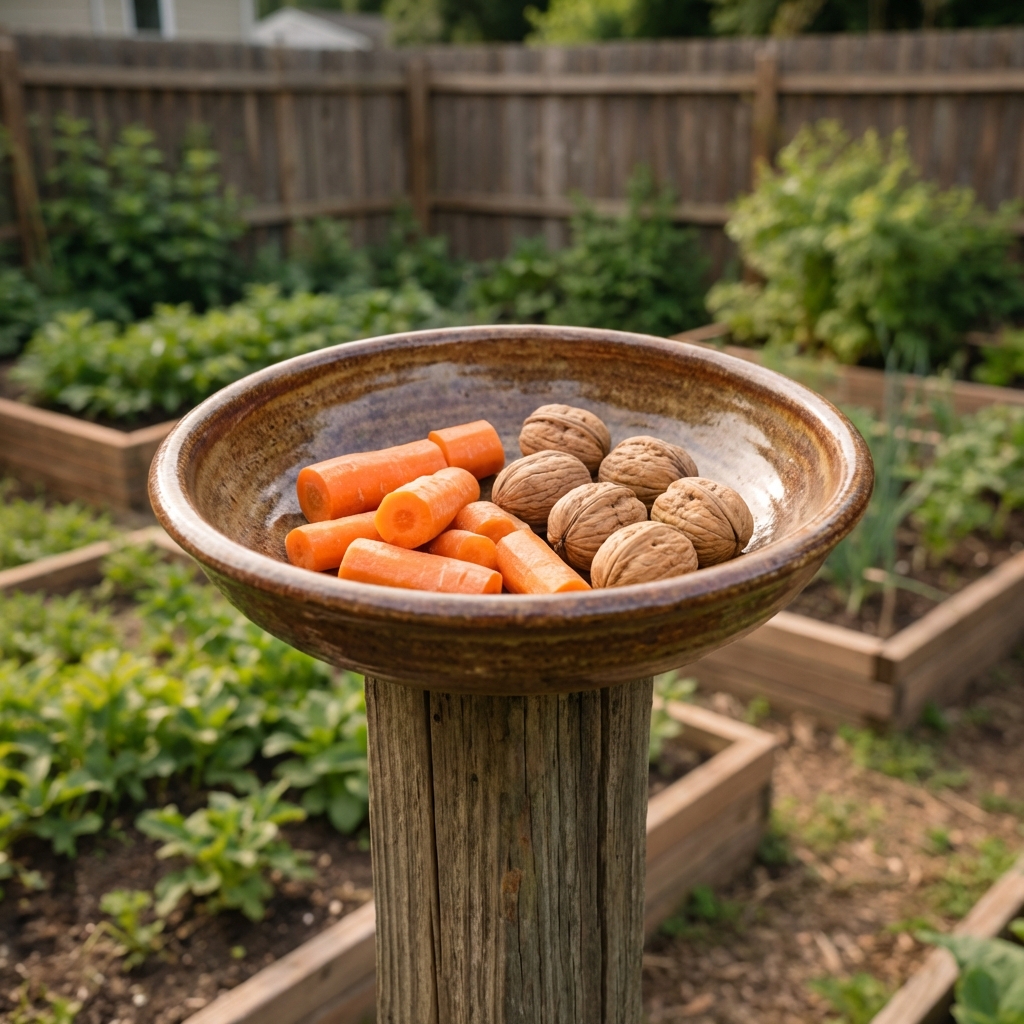
- Vegetables like carrot chunks, broccoli stems, zucchini slices, or leafy greens. These don’t spoil as fast as fruit.
- Fruit in small amounts like apple slices, berries, or grapes cut in half. Use sparingly because sugar draws attention and can get messy. In warm weather, remove uneaten fruit quickly.
- Squash or pumpkin pieces especially in fall. Seeds are a natural food for them.
Quick tip: If you’re using kitchen scraps, stick to fresh, clean pieces. No sauces, no oils, no salt, no baked goods.
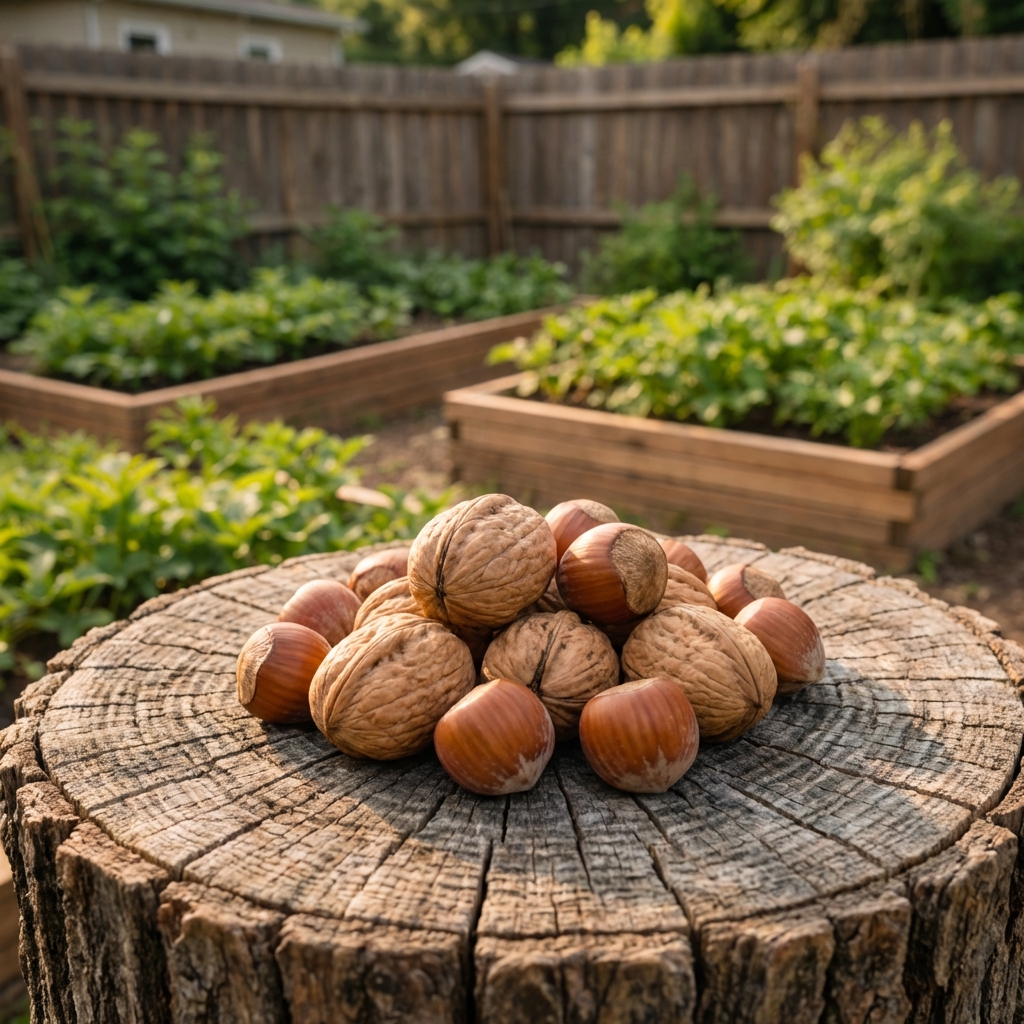
Simple portions that keep things under control
Overfeeding is what turns “cute backyard visitor” into “why are there seven squirrels and a raccoon on my porch.” Start small and adjust based on how many squirrels you’re actually seeing and what disappears in an hour or two.
- Nuts: Start with 2 to 4 in-shell nuts total per day (not per squirrel) for a typical yard visit. If you have multiple squirrels, split that amount across them or bump it slightly and watch for leftovers.
- Veggies: A small handful of chunks, about what fits in your palm.
- Fruit: 2 to 3 small slices, or a few berries.
If food is still sitting there the next morning, you’re putting out too much. That’s when you start feeding rats, mice, and ants.
Signs you’re overfeeding
- Leftovers that sit overnight
- More squirrels showing up every day (and lingering)
- Pushy or aggressive behavior around the feeding spot
- New visitors like rats, mice, raccoons, or lots of ants
Foods to avoid (common mistakes)
Squirrels will eat a lot of things that aren’t great for them. The biggest problems are salt, sugar, and processed foods. There are also a few “seems fine” foods that come with real risks, especially if they’re old, damp, or stored poorly.
- Salted or flavored nuts (including honey-roasted).
- Peanuts and peanut mixes (even if they’re organic). Peanuts are legumes, not tree nuts, and they have a poor calcium-to-phosphorus balance compared to better options. They can also be contaminated with molds that produce aflatoxins, especially when stored in warm or damp conditions. Most of the risk comes from old, wet, or questionable peanuts, so if you do offer them, keep it rare and minimal, use fresh, dry, human-grade, unsalted peanuts, and don’t leave them out in wet weather.
- Bread, crackers, chips, cookies, cereal and other processed snacks.
- Chocolate and anything with caffeine.
- Anything moldy, rancid, or questionable. If you wouldn’t eat it, don’t feed it.
- Large amounts of corn (fresh or dried). It’s not toxic by itself, but it’s a filler food that can encourage heavy dependence. Corn is also one of the foods that can carry aflatoxin contamination under poor storage conditions, which can pose serious health risks to wildlife. If you use it at all, keep it occasional, keep it dry, and remove anything that gets wet.
Also skip sugar-free and artificially sweetened foods. Specific ingredients vary, and it’s an unnecessary gamble for a wild animal. If it’s sweetened, flavored, or processed, it’s usually a no.
Storage note: Keep nuts and seeds cool and dry, and don’t offer anything that smells off or looks dusty, shriveled, or damp.
How to feed squirrels without creating a pest problem
If you want to keep it organic and neighbor-friendly, the feeding setup matters as much as the food.
Keep it clean and predictable
- Use a feeder tray or a shallow dish you can rinse daily.
- Feed in the morning and remove leftovers by late afternoon.
- Place food away from your house and away from bird feeders if possible.
- Don’t feed on the ground if rats are a concern where you live.
- Rotate spots if one area starts to smell or attract insects.
Realistic expectation: Feeding squirrels can increase visits. If you have an active rodent population nearby, any regular feeding routine can make that worse. Start small and stay observant.
Organic squirrel garden idea
If squirrels are tearing into your beds, a small sacrifice zone can help. It’s not magic, but it can reduce pressure on your favorite plants.
- Plant sunflowers on the outer edge of the garden. They love the seeds.
- Grow a patch of pumpkins or winter squash if you have space.
- Leave some fallen nuts if you have oak, hickory, or walnut trees. That’s their natural pantry.
Combine this with physical protection on what you really care about, like hardware cloth over newly planted bulbs or netting over berries.
Fast FAQ
Can squirrels eat peanut butter?
In tiny amounts it’s not usually immediately harmful, but it’s messy, easy to overdo, and often includes salt, sugar, and oils. If you want a quick nut-based option, in-shell nuts are a better choice.
Can squirrels eat oats?
Plain, dry oats in small amounts are generally fine, but they can attract rodents quickly if left out. If you use oats, offer about a tablespoon and remove leftovers the same day.
Should I give squirrels water?
A clean, shallow water dish can help wildlife during hot weather. Change it daily to reduce mosquito breeding and keep it fresh.
Does squirrel diet vary by region?
Yes. This is general guidance for common backyard squirrels. When in doubt, stick to what looks most like natural forage: in-shell nuts, small amounts of plain produce, and clean water.
Quick checklist
- Choose organic unsalted nuts, plain veggies, and minimal fruit
- Keep portions small and remove leftovers
- Use a dish or feeder you can clean
- Avoid processed, salty, or sugary foods
- Be cautious with peanuts and store nuts and seeds dry and cool
- Watch for unintended visitors and adjust fast
If you want the simplest “today” answer: put out 2 to 4 organic in-shell walnuts or hazelnuts in a clean dish, then see what happens and scale down if you get leftovers or extra visitors.

Jose Brito
I’m Jose Britto, the writer behind The Country Store Farm Website. I share practical, down-to-earth gardening advice for home growers—whether you’re starting your first raised bed, troubleshooting pests, improving soil, or figuring out what to plant next. My focus is simple: clear tips you can actually use, realistic expectations, and methods that work in real backyards (not just in perfect conditions). If you like straightforward guidance and learning as you go, you’re in the right place.