Those tiny black flies hovering around your houseplants are usually fungus gnats. They are annoying, but the bigger issue is what is happening in the pot: consistently damp soil gives gnats a place to lay eggs and gives the larvae food (mostly fungi and decaying organic matter).
The good news is you can get control organically. The key is to hit all stages of the life cycle: adults flying around, eggs in the top 1 to 2 inches of soil, and larvae feeding below the surface.
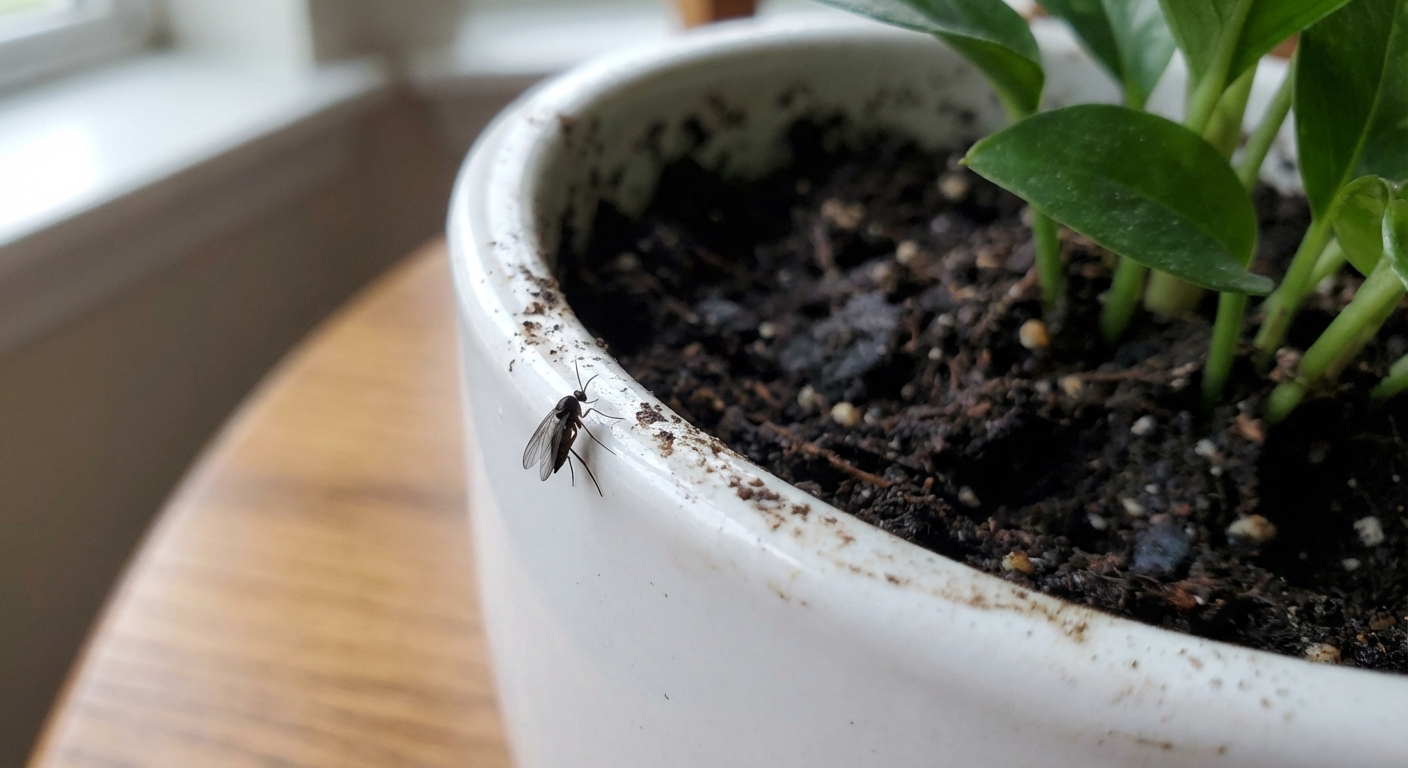
Quick diagnosis: is it really fungus gnats?
Before you treat, make sure you are dealing with the right pest. Fungus gnats are common indoors and they look a lot like tiny fruit flies at a glance.
- Fungus gnats: hang out near the soil surface, fly in short zig-zag patterns, often appear when you water.
- Fruit flies: hover around fruit, trash, drains, and anything sugary or fermenting.
- Shore flies: less common indoors, look stockier, often show up in very wet setups like trays or hydro.
Simple test: lightly tap the pot or disturb the top of the soil. If a few tiny gnats pop up from the soil, that is your culprit.
Do this first (fastest wins)
1) Let the top of the soil dry
This is the fastest way to slow them down because fungus gnats love moisture. In most houseplants, letting the top 1 to 2 inches dry between waterings makes a big difference.
- Water only when the pot feels lighter and the top of the soil is dry to the touch.
- Empty saucers so pots are not sitting in runoff water.
- If your plant can handle it, switch to bottom watering for a few weeks so the surface stays drier.
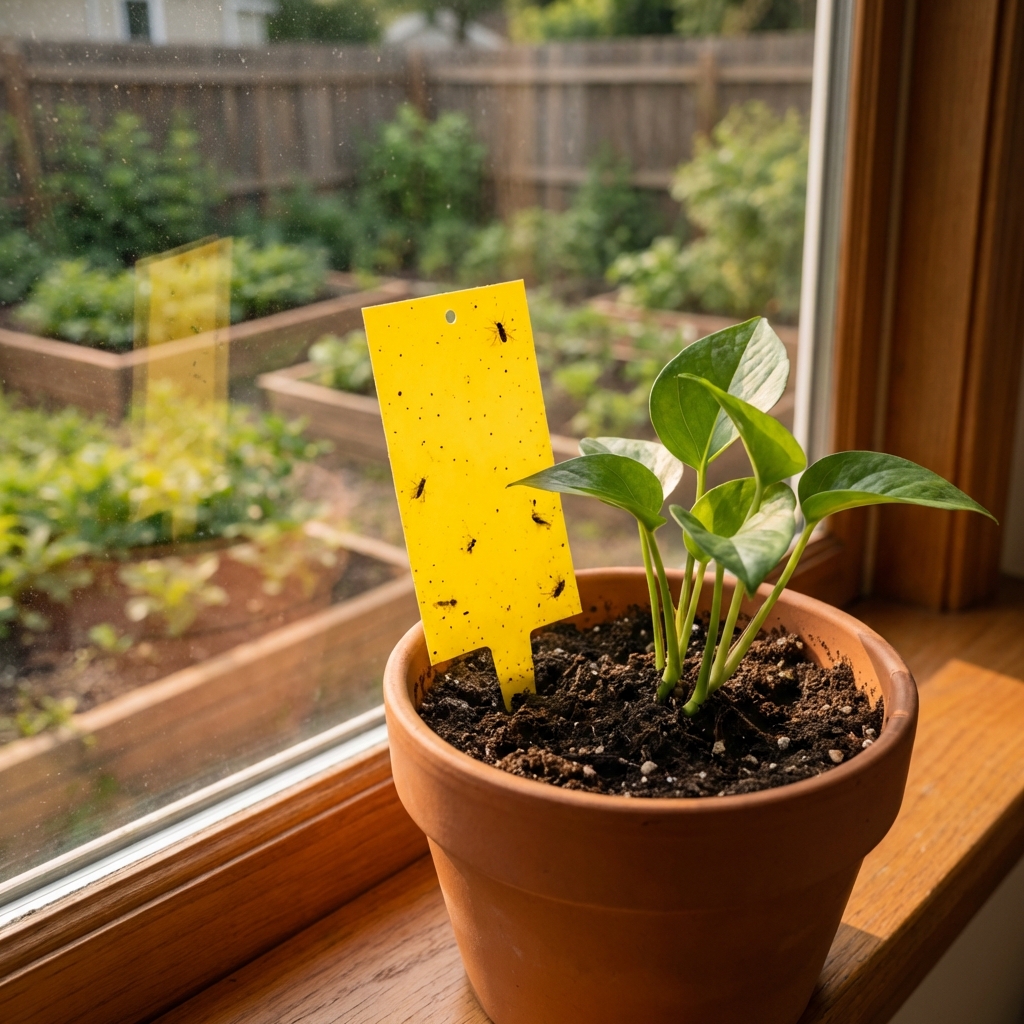
2) Put up yellow sticky traps
Sticky traps do not fix the root problem, but they quickly reduce the number of adults laying eggs and they help you track progress.
- Place traps right at soil level, not across the room.
- Use 1 to 2 traps per pot for heavy infestations.
Organic treatments that actually break the cycle
Adult gnats are the part you see. The larvae in the soil are the part you must stop. Choose one larval treatment below and stay consistent for 2 to 3 weeks.
Option A: BTI (mosquito bits or dunks)
BTI is a naturally occurring bacteria that targets gnat and mosquito larvae. It is one of the most reliable organic tools for fungus gnats.
- How: soak mosquito bits in water for about 30 minutes (or longer), strain, then water your plants with that “tea”.
- Frequency: use it every watering for 2 to 3 weeks.
- Tip: keep using sticky traps while you treat so adults do not restart the cycle.
Option B: Beneficial nematodes (Steinernema feltiae)
These are microscopic beneficial organisms that hunt larvae in moist soil. They work well when you have lots of plants or a recurring problem.
- Apply to moist soil, then keep soil slightly moist for a few days so they can move.
- Use promptly after purchase and follow package directions for mixing and timing, since they are living.
- Apply out of direct sun and avoid hot water, since heat and UV can reduce effectiveness.
Option C: 3% hydrogen peroxide drench (use carefully)
Some growers report this reduces larvae quickly, but it is not my first pick if you have BTI available. Efficacy and plant sensitivity vary, and it can stress roots if overused.
- Mix: 1 part 3% hydrogen peroxide to 4 parts water.
- Apply: once, like a normal watering, then go back to better watering habits.
- Do not: repeat often. If you have delicate plants, seedlings, or cuttings, test on one small pot first.
Top dressing: make the surface hostile to gnats
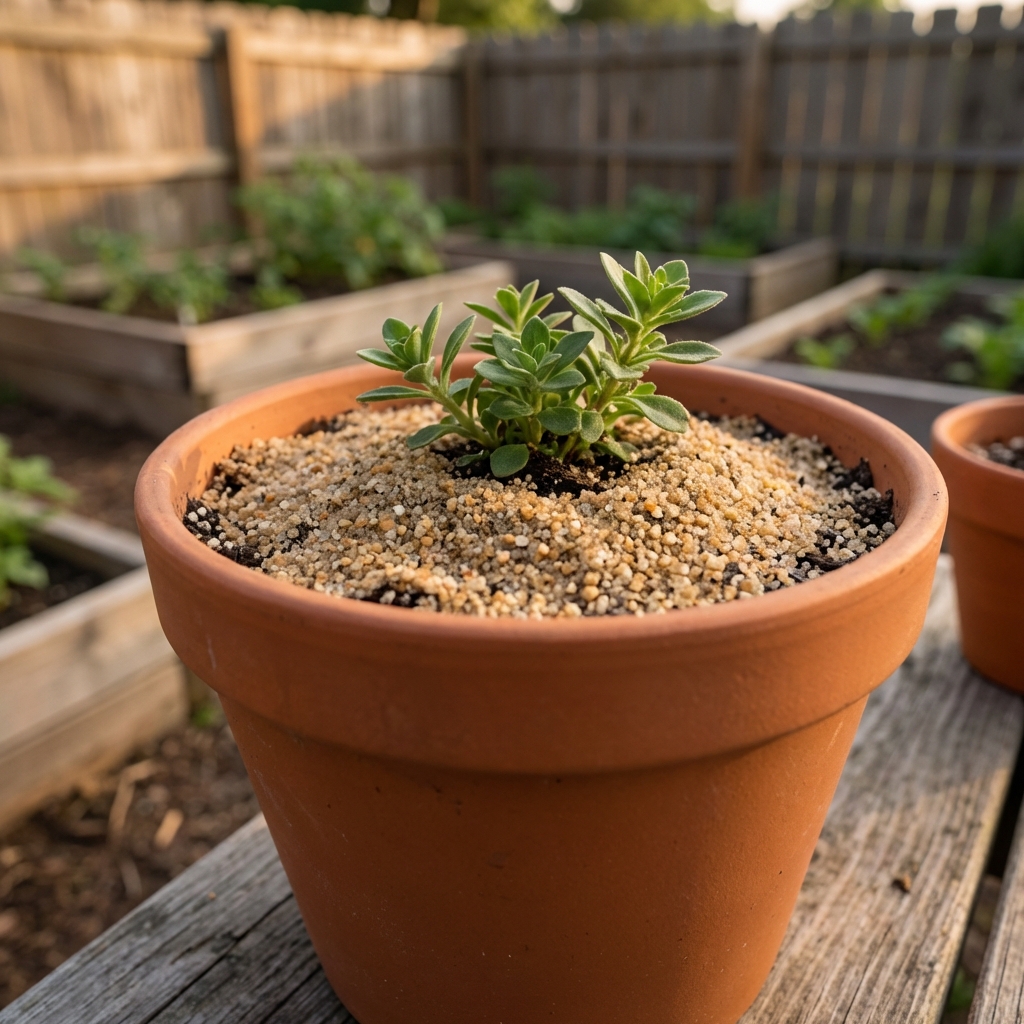
Because fungus gnats lay eggs in the top layer, changing that surface can help. Barriers work best when they stay dry and are deep enough to matter. Think of this as a helpful add-on, not a standalone fix.
Best organic top dressings
- Coarse sand: aim for about 1/4 to 1/2 inch (roughly 0.5 to 1 cm) across the surface. A light dusting will not do much.
- Fine gravel: a coarse, dry layer about 1/2 inch (about 1 cm) can reduce egg laying when the top stays dry.
- Diatomaceous earth (food grade): can help when dry, but it stops working once wet, so it is more of a short-term aid.
Avoid: adding random outdoor soil on top. It can bring in more pests and holds moisture.
Fix the cause: soil, drainage, and watering
If gnats keep coming back, your potting setup is staying wet too long. That is usually a mix, drainage, or watering issue, not bad luck.
Quick checks that prevent repeat infestations
- Drainage matters: for most houseplants, use a pot with a drainage hole, or keep the plant in a nursery pot with holes inside a decorative cachepot.
- Empty the saucer: do not let the pot sit in water.
- Use a chunkier mix: add perlite, orchid bark, or pumice for better airflow (depending on the plant).
- Right-size the pot: an oversized pot holds water longer and invites gnats.
- Check nearby damp spots: drip trays, standing water, terrariums, and wet organic debris can also support gnats.
- Quarantine new plants: keep new arrivals separate for a week and use a sticky trap to monitor.
What not to do (common organic mistakes)
- Do not rely on apple cider vinegar traps for fungus gnats. They are better for fruit flies and barely dent a gnat problem.
- Do not keep “flushing” the pot with water to wash them out. That keeps soil wet and helps them.
- Do not spray random oils into the soil without a plan. Many sprays help on leaves but do little for larvae in the pot.
2-week quick plan (simple and realistic)
If you want a straightforward approach that works for most people, do this:
Days 1 to 3
- Let the top 1 to 2 inches of soil dry.
- Set yellow sticky traps at soil level.
- Improve airflow around the plant if possible.
- Dump standing water in saucers or cachepots.
Days 4 to 14
- Treat larvae with BTI tea every watering (or apply beneficial nematodes once, per label).
- Keep using sticky traps and replace when full.
- Adjust watering going forward so the surface does not stay constantly damp.
Most infestations noticeably drop within a week, but fully breaking the cycle often takes 2 to 3 weeks.
When to repot
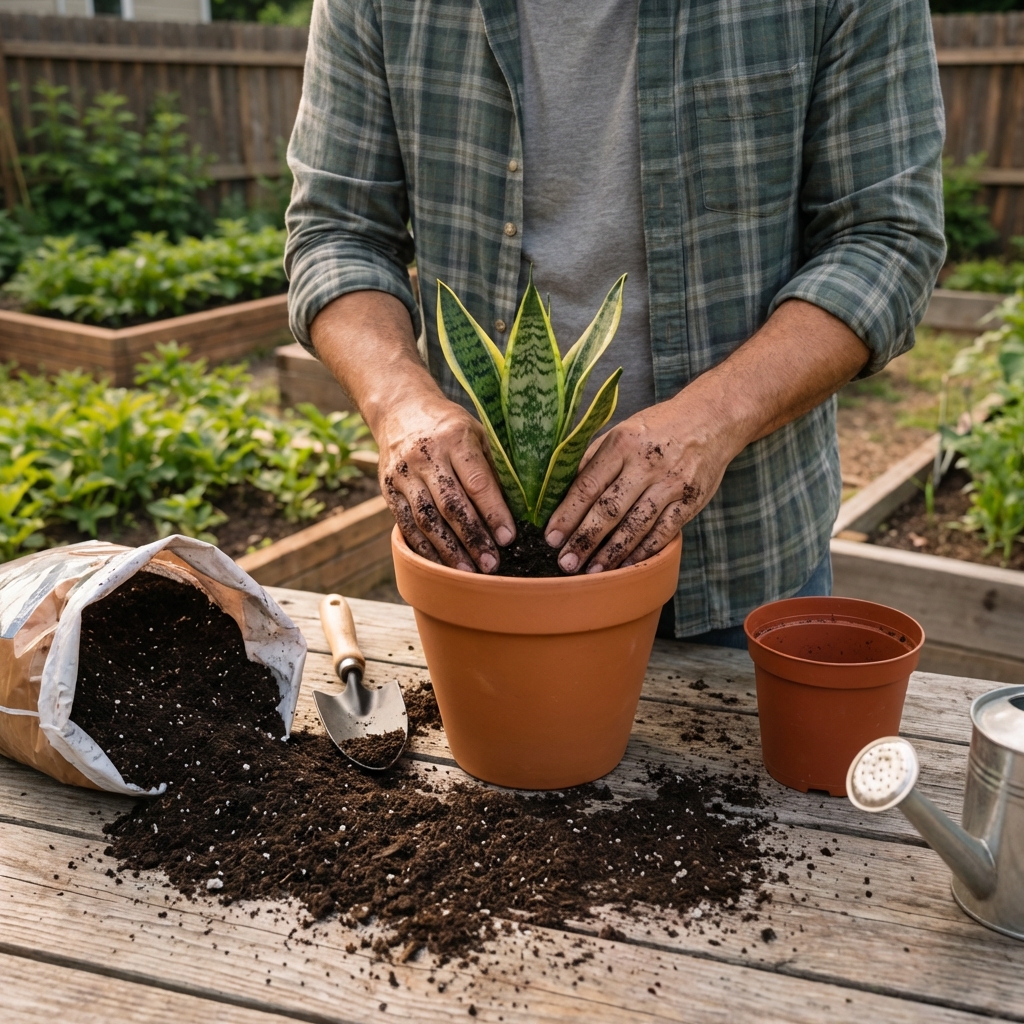
Repotting is not always required, but it helps if the soil is old, compacted, or staying wet for days.
- Repot if: the mix is soggy for a long time, smells sour, or the plant is in dense peat-heavy soil.
- While repotting: shake off loose soil, trim dead roots, and use a fresh, airy mix.
- After repotting: keep sticky traps up for 2 weeks and water carefully.
- Bonus prevention: if gnats keep appearing from new bags of potting mix, store mix sealed and dry. Some people also pre-treat new mix with BTI tea.
FAQ
Are fungus gnats harmful to my plant?
Adults are mostly just annoying. Larvae mostly feed on fungi and decaying organic matter, but in heavy infestations they can stress seedlings, cuttings, and delicate or already stressed roots. Healthy mature plants usually tolerate some larvae, but growth can slow if conditions stay too wet.
Why do I see gnats even when the soil looks dry?
They may be coming from another pot, a drip tray that stays wet, a terrarium, or a bag of potting mix. Put traps in multiple pots to find the main source.
Can I use cinnamon on top of the soil?
Cinnamon is often suggested, but results are inconsistent. It may help slightly by drying the surface, but it will not reliably control larvae like BTI or nematodes.

Jose Brito
I’m Jose Britto, the writer behind The Country Store Farm Website. I share practical, down-to-earth gardening advice for home growers—whether you’re starting your first raised bed, troubleshooting pests, improving soil, or figuring out what to plant next. My focus is simple: clear tips you can actually use, realistic expectations, and methods that work in real backyards (not just in perfect conditions). If you like straightforward guidance and learning as you go, you’re in the right place.