When a hydrangea refuses to bloom, it is usually not being “stubborn.” It is responding to something specific: too much shade, pruning at the wrong time, late frost damage, drought stress, or heavy nitrogen feeding that pushes leaves instead of flowers. The good news is you can often turn things around with a few organic tweaks that work in real backyards.
By “organic” here, I mean the basics that actually move the needle: better light, correct pruning, compost and mulch, steady watering, and soil testing instead of chasing harsh bloom boosters.
Below are quick, practical checks first, then deeper fixes depending on what type of hydrangea you are growing.
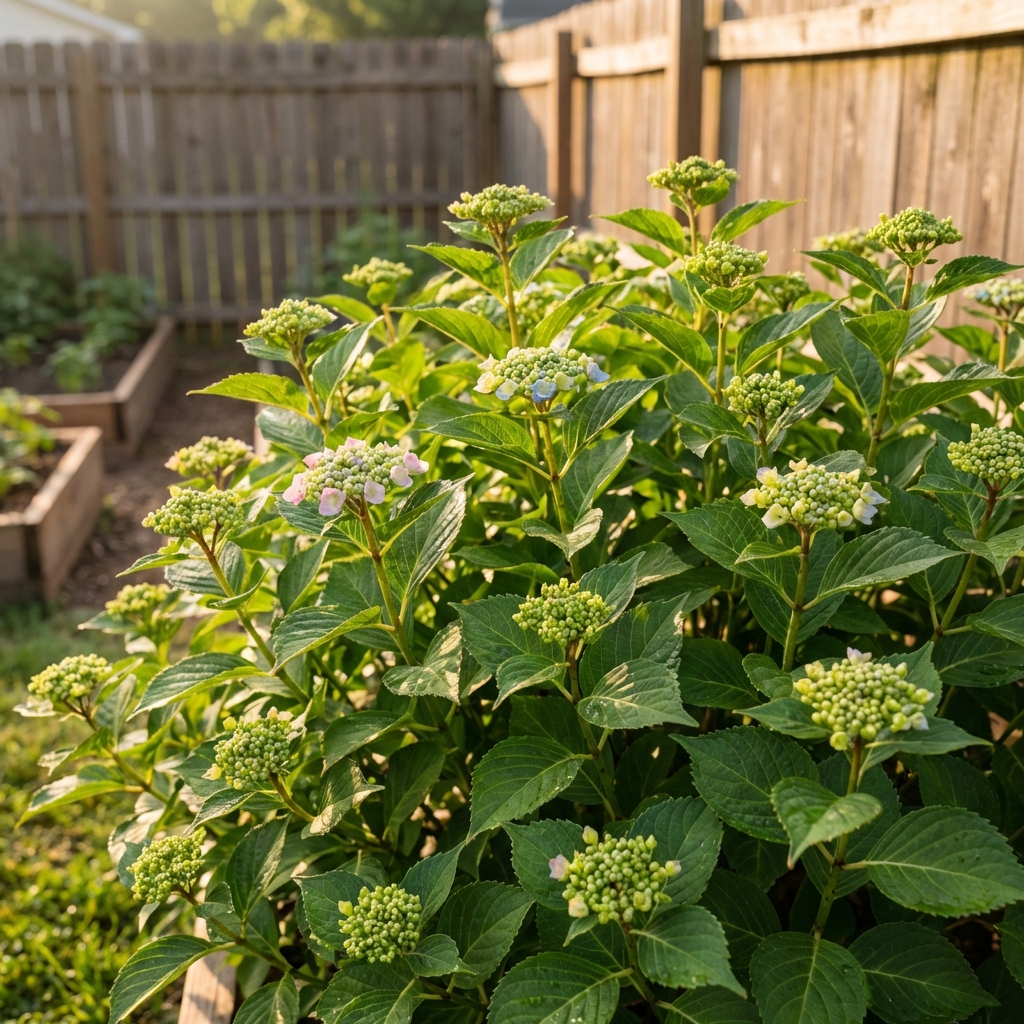
Fast checks that make the biggest difference
1) Make sure it is getting enough light
Most hydrangeas bloom best with morning sun and afternoon shade. Too much shade is one of the most common reasons for lots of leaves and no flowers, right up there with wrong-time pruning and bud damage from cold snaps.
- Bigleaf and mountain hydrangea (Hydrangea macrophylla, H. serrata): aim for 3 to 6 hours of sun, ideally morning.
- Panicle hydrangea (H. paniculata): often blooms best with more sun, especially in cooler climates. In hot zones, give afternoon shade to prevent scorching and stress.
- Smooth hydrangea (H. arborescens): flexible, but 4 to 6 hours is a sweet spot in many yards.
Quick tip: If your plant is in deep shade, do not expect a “fast” bloom fix without more light. Thin an overhead branch, move nearby pots, or plan a transplant in fall or early spring.
2) Stop overfeeding nitrogen
If you are using lawn fertilizer nearby or a high-nitrogen product, hydrangeas may grow big and green and skip blooms. For blooms, aim for steady nutrition, not a leaf sprint.
- Avoid fertilizing with anything labeled high-nitrogen (the first number is high, like 30-0-0).
- Keep lawn fertilizer a few feet away from hydrangea roots, especially downhill where runoff flows.
3) Water like you mean it (especially during bud set)
Hydrangeas set and size blooms best when moisture is consistent. Drought stress can cause bud drop or smaller, weaker flowering.
- Water deeply at the base 1 to 2 times per week depending on heat and soil type.
- Use mulch to hold moisture and keep roots cool.
- Avoid frequent shallow watering. It trains shallow roots and stresses the plant faster.
Identify your hydrangea first
“How do I get it to bloom?” often comes down to one question: Does it bloom on old wood or new wood? If you prune the wrong type at the wrong time, you can cut off this year’s flowers in minutes.
Why it matters: Many old-wood hydrangeas (especially bigleaf) form next season’s flower buds on this year’s growth in late summer into fall. That is why fall, winter, or early-spring pruning can wipe out blooms.
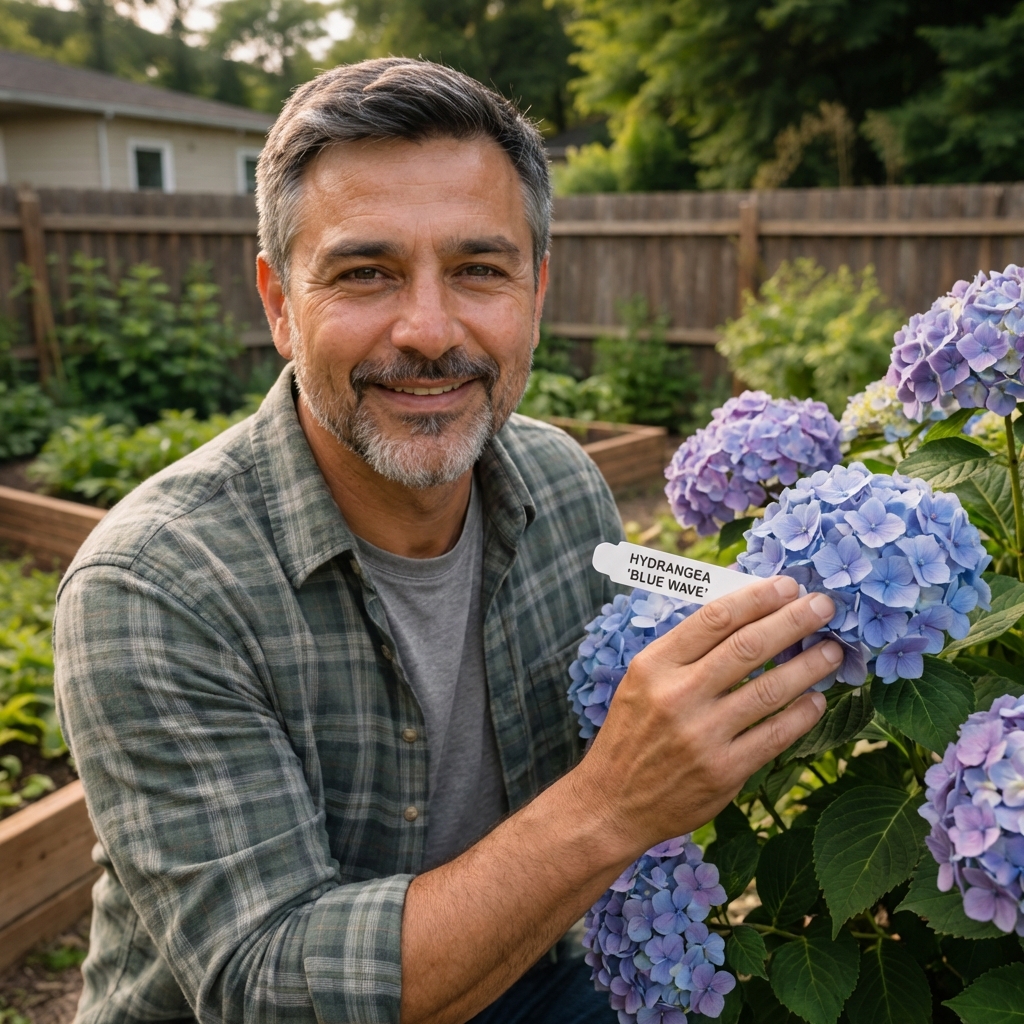
- Bigleaf (macrophylla) and mountain (serrata): usually bloom on old wood (last year’s stems), unless they are reblooming types.
- Oakleaf (quercifolia): blooms on old wood.
- Smooth (arborescens): blooms on new wood.
- Panicle (paniculata): blooms on new wood.
Quick ID clues: Panicle hydrangeas have cone-shaped flowers. Smooth hydrangeas have round, ball-like white flower clusters (think ‘Annabelle’ types) and are very winter hardy. Bigleaf hydrangeas are the common blue or pink mopheads with thick, glossy leaves.
Organic pruning rules that protect blooms
If it blooms on old wood (bigleaf, mountain, oakleaf)
- Do not hard prune in fall, winter, or early spring. You may remove the flower buds.
- In spring, only remove dead wood. Wait until you see green buds swelling, then cut back to live tissue.
- After flowering, you can lightly shape or remove a few of the oldest stems at the base to improve vigor.
Fast bloom goal: Your main job is to protect existing buds. One cold snap or one wrong pruning session can erase blooms for the year.
If it blooms on new wood (panicle, smooth)
- Prune in late winter or early spring before strong growth starts.
- For bigger blooms, cut back by about one-third. For a shorter plant, you can cut harder, but do not scalp it to the ground unless you know the variety tolerates it.
New-wood types are the easiest to “fix fast” because even if winter damage happens, they can still bloom on fresh growth. Just know that in heavy shade, very hard pruning can push lots of leafy regrowth and delay flowering.
Feed for flowers the organic way
For quicker blooms, think in terms of steady soil improvement plus gentle, bloom-supporting nutrients. You do not need harsh chemicals to get results. Also, nutrients cannot override the big levers like light, pruning timing, and bud survival.
Best organic options
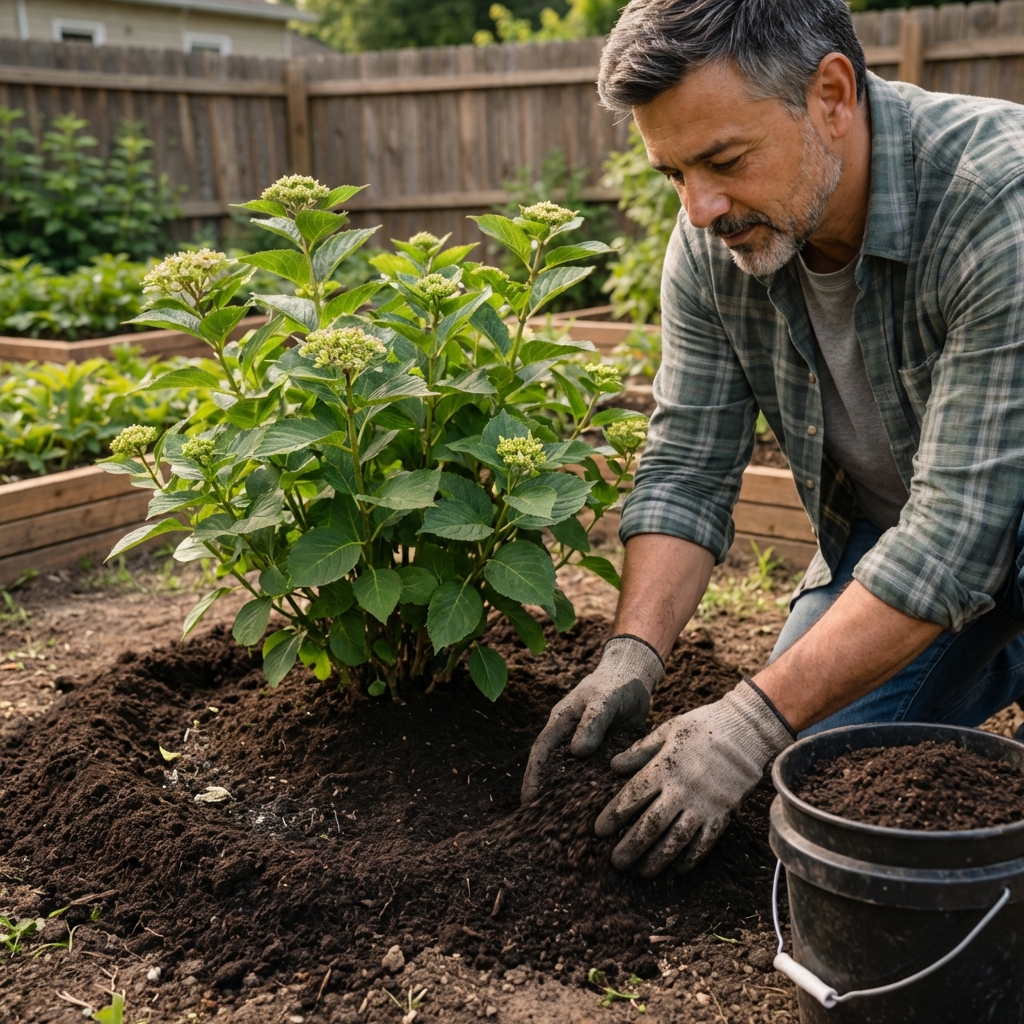
- Compost: Top-dress 1 to 2 inches around the root zone in spring.
- Worm castings: Great for slow, balanced nutrition without pushing excess leafy growth.
- Fish emulsion: Use lightly early in the season if growth is weak, but avoid overdoing it on bigleaf types that already leaf out heavily.
- Bone meal or a low-nitrogen, higher phosphorus blend: Only if a soil test shows low phosphorus. If light or pruning is the problem, extra phosphorus will not force blooms.
Important: Many soils already have enough phosphorus. If yours does, adding more usually does not increase blooms and can create nutrient imbalance. A basic soil test is the most “bang for your buck” organic step you can take.
Mulch that actually helps
- Apply 2 to 3 inches of shredded bark, leaf mold, or pine needles.
- Keep mulch a few inches away from the stems to prevent rot.
Common misconception: Soil pH mostly affects color (blue vs. pink) on many bigleaf varieties. It does not reliably increase the number of blooms.
Protect buds so they can open
If you have bigleaf or oakleaf hydrangeas and you get late frosts, the plant may be forming buds only to have them killed before they ever bloom.
Organic bud protection tips
- Skip fall pruning. Leave stems to help protect buds over winter.
- Mulch the root zone heavily after the ground cools to reduce freeze-thaw stress.
- During a late frost warning, cover the shrub at night with a breathable fabric (old sheet or frost cloth). Remove in the morning once temperatures rise.
In colder zones, some bigleaf hydrangeas fail to bloom simply because buds die back most winters. In that case, choosing a hardy panicle or smooth hydrangea is the simplest fix. A reblooming bigleaf variety can also help because it can flower on new growth if old buds are lost, but performance varies by cultivar and climate.
Troubleshooting: why you have leaves but no blooms
- Too much shade: move to brighter light or open the canopy overhead.
- Wrong pruning time: common with bigleaf and oakleaf. Stop pruning until after bloom.
- Winter dieback or late frost damage: buds got zapped. Protect next spring, switch to a hardier type, or try a rebloomer that can flower on new growth.
- Too much nitrogen: reduce fertilizer and watch for lawn runoff.
- Drought swings: keep moisture even from spring through bloom time.
- Immature plant or transplant shock: some hydrangeas take a season to settle, especially after moving.
- Deer browsing: deer often nip off tender tips where flower buds form. Protect with fencing or repellents.
Quick bloom boost plan
- Check the type: confirm whether it blooms on old wood or new wood.
- Fix light: aim for morning sun, not deep shade (and add afternoon shade in hot climates).
- Water deep: one solid soak beats daily sprinkles.
- Top-dress with compost: then mulch for steady moisture.
- Pause high-nitrogen: especially anything meant for lawns.
- Prune correctly: dead wood only for old-wood bloomers, late-winter to early-spring shaping for new-wood bloomers.
If you do those six steps, most non-blooming hydrangeas start showing improvement either later this season or strongly next season, depending on variety and climate. That is the realistic timeline in a normal backyard.
FAQ
Will coffee grounds make my hydrangea bloom?
Coffee grounds are not a reliable bloom trigger. Used grounds can be a fine addition to compost, but they are not a magic bloom booster. Focus on light, pruning, and consistent moisture first.
Should I use Epsom salt for more blooms?
Only if a soil test shows low magnesium. Otherwise it is easy to overdo salts and stress roots. Compost and a balanced organic approach are safer.
My hydrangea is huge but never flowers. What is the most likely cause?
Wrong-time pruning or bud kill from winter and late frosts are top causes for bigleaf types. Shade plus nitrogen is another classic combination. A plant can look healthy and still not get the signal to set buds.

Jose Brito
I’m Jose Britto, the writer behind The Country Store Farm Website. I share practical, down-to-earth gardening advice for home growers—whether you’re starting your first raised bed, troubleshooting pests, improving soil, or figuring out what to plant next. My focus is simple: clear tips you can actually use, realistic expectations, and methods that work in real backyards (not just in perfect conditions). If you like straightforward guidance and learning as you go, you’re in the right place.