Fleas are tiny, but they can take over fast. The trick is to think in three places at once: your dog (adult fleas), your home (eggs and larvae hiding in fabrics), and your yard (where pets pick them up again). If you only treat one spot, it often looks better briefly, then the bites return within days to weeks as new fleas hatch.
This guide sticks to organic and low-tox approaches that work in real homes. By “organic” here, I mean non-prescription, minimal-chemical steps like physical removal, heat, and targeted low-tox tools. I will also be blunt about one thing: if your dog is severely infested, has flea allergy dermatitis, anemia, or tapeworms, you may need a vet visit and a proven prescription flea product. You can still use the cleaning and yard steps here to prevent reinfestation.
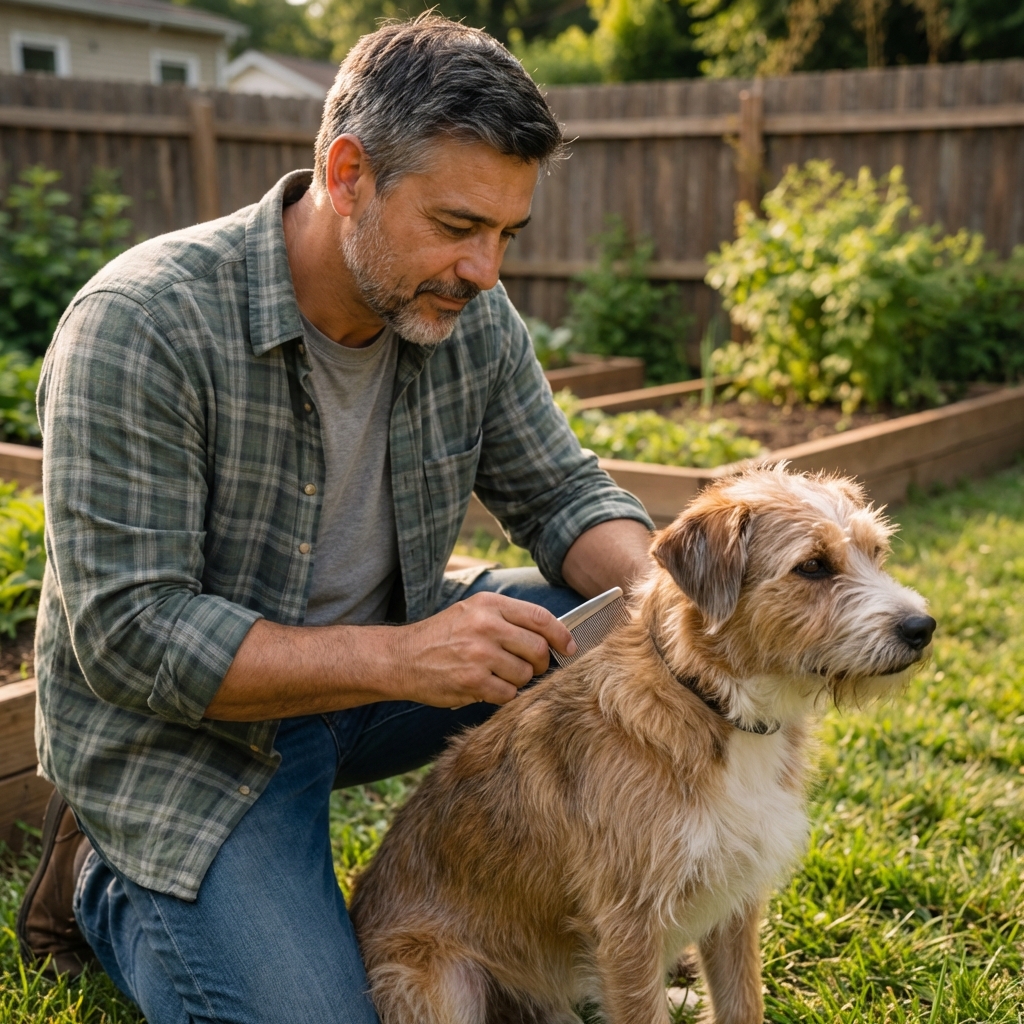
Do this first: a quick flea check
Before you start throwing products at the problem, confirm what you are dealing with. These checks are strongly suggestive, but not perfect.
- Flea dirt test: Comb your dog over a white paper towel. If you see black specks, add a drop of water. If it turns reddish-brown, that is digested blood, a strong sign of fleas. (Other debris can look similar, so use this as a clue, not a lab test.)
- Hot spots to check: Base of tail, belly, groin, behind ears, and armpits.
- House check: Look where your dog sleeps. Flea dirt and tiny jumping fleas often show up around bedding edges and along baseboards.
- Quick “white socks” test: Walk around carpeted areas in tall white socks, especially near pet nap zones. Check the socks for flea dirt or fleas.
Same-day plan (fastest relief)
If you need quick relief, follow this order. It targets adult fleas first, then knocks back the next wave hatching in your home. This is rapid knockdown plus cleanup, not a magic one-and-done replacement for consistent prevention.
1) Comb first (yes, before the bath)
Use a metal flea comb. Comb slowly and dunk the comb in a cup of warm water with a little dish soap to trap and kill fleas. Spend 10 to 15 minutes, especially around the tail base and belly.
2) Bathe with a simple, safer approach
A bath can remove a lot of adult fleas quickly. For many dogs, a gentle pet shampoo is enough when paired with combing.
- Optional soap method (dogs only): A small amount of mild dish soap can help break surface tension and drown fleas. Avoid eyes, nose, and inside the ears, and rinse extremely well. Do not do this repeatedly, as it can dry the coat and irritate skin. Do not use this approach on cats.
- Leave-on time: Work the lather in and let it sit for about 5 minutes if your dog tolerates it, then rinse thoroughly.
- After-bath: Towel dry, then comb again.
Avoid: essential oils applied to your dog unless a veterinarian specifically advises it. Some are toxic to pets and overdosing is easy.
3) Wash everything your dog touches
This step matters more than most people think. Fleas lay eggs that drop into bedding, rugs, and couch seams.
- Wash bedding, blankets, and slipcovers in hot water when fabric allows.
- Dry on the hottest setting the material can handle for at least 30 minutes after reaching full heat.
- Do not forget soft toys, crate pads, and car seat covers.
4) Vacuum like you mean it
Vacuuming is one of the best low-tox flea controls because it physically removes eggs and larvae. It can also stimulate pupae to emerge, which is actually helpful if you keep vacuuming so you can catch the next wave. Hit rugs, baseboards, under furniture, and pet nap zones.
- Vacuum daily for 7 to 10 days if you can.
- Bagless vacuum: empty outside immediately into a sealed bag.
- Bagged vacuum: remove the bag and seal it after each session during an outbreak.
Organic options that help (use safely)
Food-grade diatomaceous earth (DE) for the home
Food-grade DE can help in dry areas by damaging the waxy coating on insects. It is not a quick knockdown like a bath, but it can reduce the population over time when used carefully.
- Use food-grade, not pool-grade.
- Use crack-and-crevice only: a very light dusting along baseboards (behind furniture), in floor cracks, and other hard-to-reach gaps. Avoid broad “carpet dusting” where pets walk, lie, or roll.
- Do not apply DE directly on your dog (or any pet). It can irritate skin and lungs.
- Keep pets and kids out until dust settles, and avoid making clouds.
- Vacuum it up and reapply every few days during active infestations.
Note: DE is dusty and can irritate lungs. If anyone in the home has asthma or respiratory sensitivity, skip it and lean harder on vacuuming and washing.
Sticky traps for monitoring
Place a sticky trap near pet bedding to see if fleas are still active. For better results, use a small light source aimed near the trap at night. It is not a total solution, but it gives you feedback fast.
Beneficial nematodes for the yard
If fleas are coming from outdoors, beneficial nematodes can be a strong organic tool. They target flea larvae in soil and shaded damp areas. Buy a product labeled for fleas, and follow the temperature and moisture directions on the package.
- Look for species commonly used for fleas (often Steinernema feltiae or Steinernema carpocapsae), and follow label guidance for your climate.
- Apply in the evening or on a cloudy day, then water in.
- Focus on shaded spots, under decks, and along fence lines where pets rest.
- Keep soil slightly moist for about a week to help them establish.
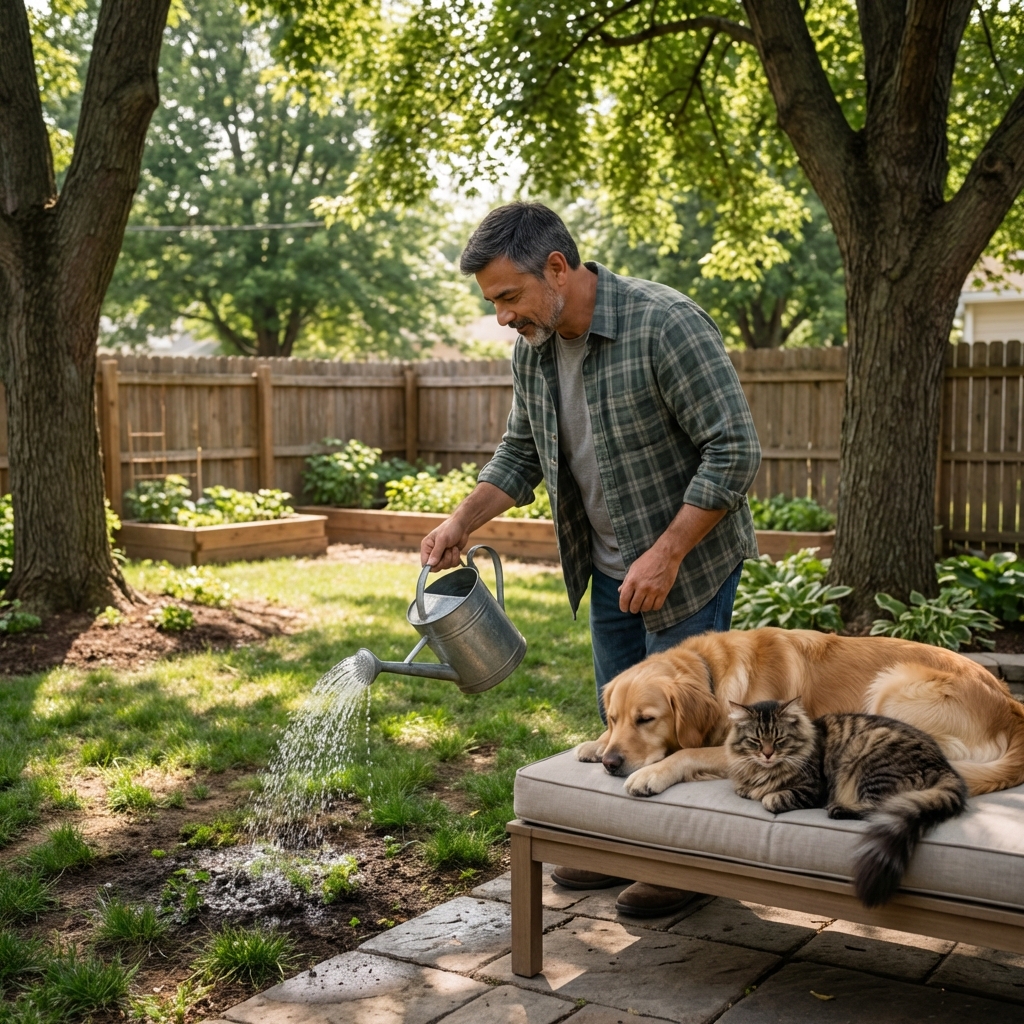
Fast yard tips (stop rebound)
Yard work is not glamorous, but it is often what makes the difference between “temporary relief” and “problem solved.” Fleas like shade, humidity, and places where pets nap.
- Mow and trim: Keep grass shorter and reduce dense, shaded cover.
- Rake out leaf litter: Especially under shrubs and along edges.
- Target pet hangouts: Under porches, dog runs, and the shady corner where your dog loves to flop down.
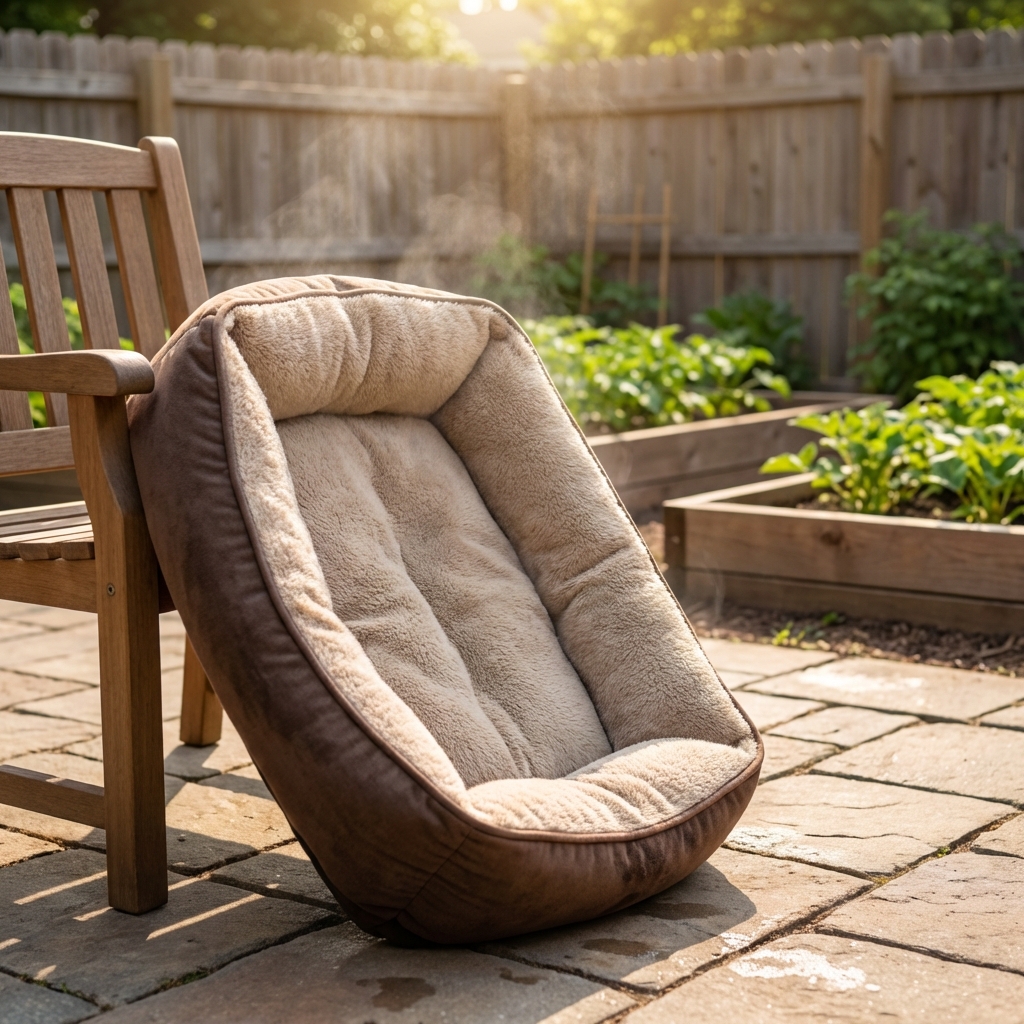
- Wash outdoor pet beds: Or replace if they are old and hard to clean.
If you use nematodes, do these cleanup steps first so the treatment reaches the soil where larvae live.
Why it can look worse again
Even if you do everything right, you might still see “new” fleas for a while. That is usually the life cycle, not failure. Flea pupae can sit protected in carpets and cracks, then emerge over time. Your job is to keep removing adults and cleaning consistently long enough to break the hatch cycle.
Multi-pet note (important)
If you have more than one pet, check them all. Fleas do not respect species boundaries, but many flea products do. Never use dog flea products on cats, and be extra cautious with young, small, pregnant, or senior animals. When in doubt, call your vet.
What to skip (common “natural” mistakes)
- Garlic as a flea repellent: Garlic can be harmful to dogs. Do not use it as a supplement.
- Essential oils on pets: Tea tree, pennyroyal, clove, and others can cause toxicity. Even “pet safe” blends are easy to overdose.
- Only treating the dog: You might kill adult fleas, but eggs and larvae in carpets keep hatching.
- One-and-done cleaning: Flea life cycles are why it comes back. Plan for at least 2 to 3 weeks of follow-through.
Timeline: when you should see results
- Within hours: Fewer adult fleas after combing and bathing.
- Within a few days: Some improvement in biting if you wash bedding and vacuum often. Heavy infestations can take longer because pupae keep emerging.
- Within 2 weeks: Noticeably fewer new fleas as you interrupt the hatch cycle.
- 3 to 6 weeks: Full control is realistic for many homes, especially if the yard is treated and pets are protected consistently.
When to call the vet
Organic approaches can help a lot, but do not wait if your dog is suffering. Contact your vet if you notice:
- Severe itching, scabs, hair loss, hot spots, or skin infections
- Pale gums, weakness, or lethargy (possible anemia, especially in puppies)
- Fleas on a very young, small, pregnant, or senior dog
- Tapeworm segments in stool or around the rear
Also consider a vet plan sooner if you are dealing with a heavy indoor infestation, a warm and humid climate, or shared-living situations (apartments, shared hallways, frequent visiting pets). Sometimes “organic-only” is simply not enough on the animal, even with perfect cleaning.
Even if you choose a vet-recommended flea preventative, the house and yard steps in this article still matter. They reduce how hard the product has to work and help prevent the next outbreak.
Quick checklist for today
- Flea comb your dog and dunk the comb in soapy water
- Bathe, rinse well, then comb again
- Wash and hot-dry bedding and blankets
- Vacuum floors, rugs, couch seams, and baseboards
- Clean or replace vacuum contents immediately
- Do basic yard cleanup and consider beneficial nematodes for shady pet zones

Jose Brito
I’m Jose Britto, the writer behind The Country Store Farm Website. I share practical, down-to-earth gardening advice for home growers—whether you’re starting your first raised bed, troubleshooting pests, improving soil, or figuring out what to plant next. My focus is simple: clear tips you can actually use, realistic expectations, and methods that work in real backyards (not just in perfect conditions). If you like straightforward guidance and learning as you go, you’re in the right place.