If you are seeing tiny flies hovering around your houseplants, you are often dealing with fungus gnats. The adults are annoying, but the real problem is what you do not see: larvae living in the top layer of moist potting mix.
The good news is you do not need harsh chemicals. You can break the life cycle with a few organic moves that work together. I like to think of it as a 3-part plan: dry the top layer, catch the adults, and treat the larvae.
First, confirm they are fungus gnats
Fungus gnats are small, dark, mosquito-like flies that hang around the soil surface and are usually weak fliers. They love consistently damp potting mix.
Quick checks
- Tap test: Tap the side of the pot. If a few tiny flies lift off from the soil, that is a strong sign.
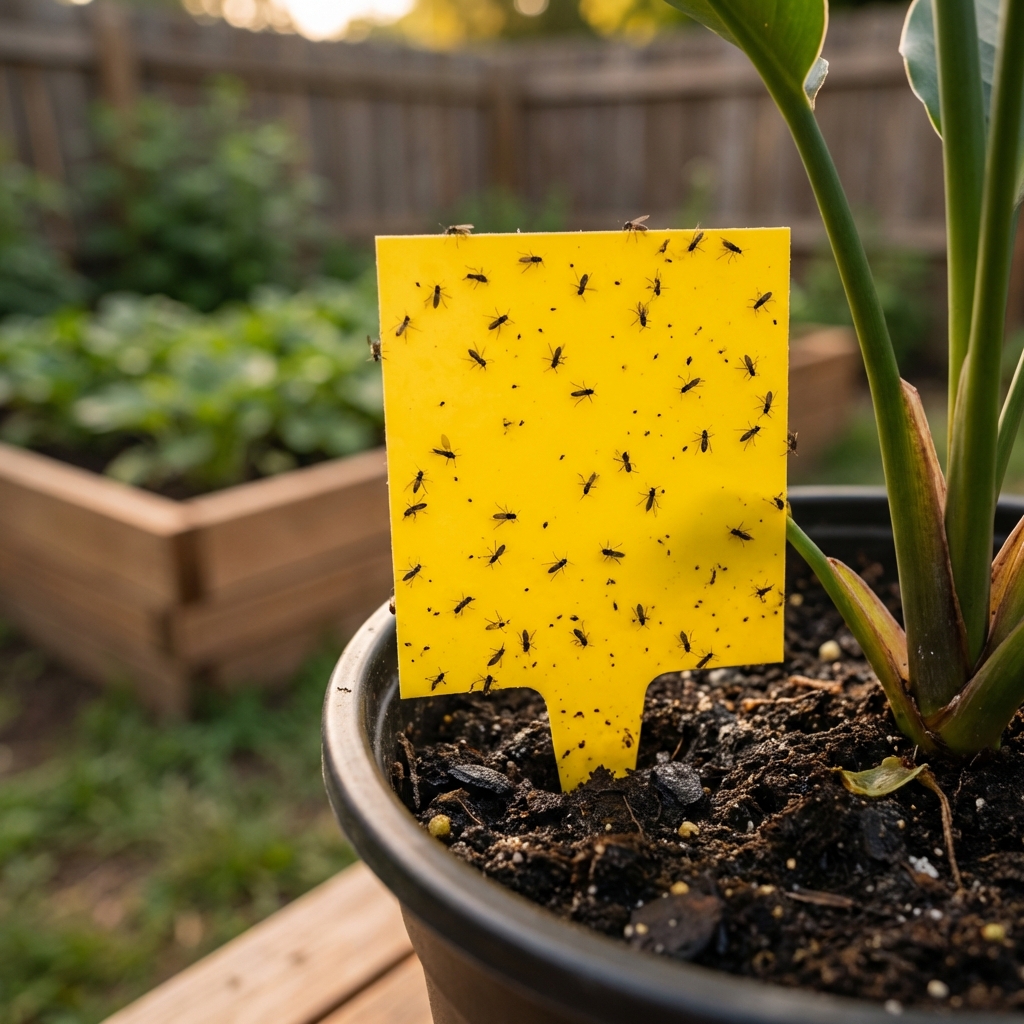
- Sticky trap test: Place a yellow sticky card near the soil. If you catch a bunch within 24 to 48 hours, you have your answer.
- Soil check: If you gently scrape the top 1 inch of soil and see tiny, clear or whitish worms with dark heads, those are likely gnat larvae.
Common lookalikes (quickly)
- Shore flies: Often show up with very wet media and algae. They are usually stronger fliers and more likely to hang out on the pot, tray, or nearby surfaces.
- Fruit flies: More likely to come from fermenting fruit, trash, or drains, not from potting soil.
- Phorid flies: Small “hump-backed” flies that can breed in damp organic gunk. If they are everywhere (not just near plants), check drains and trash areas.
Why gnats show up in potted plants
Gnats thrive when two things line up: moist soil and decaying organic matter. Potting mixes often contain peat, compost, bark, or coir, which is fine. The issue is when the surface stays wet and oxygen-poor. That is a perfect nursery for larvae.
Common causes
- Watering too often, especially in low light or cool rooms
- Pots without drainage holes or saucers that stay full
- Dense, broken-down potting mix that holds water like a sponge
- Bringing home an infested plant from a store or nursery
- Bonus: Dead leaves and debris sitting on the soil surface (free larval food)
The fast organic plan (do these today)
1) Let the top layer dry
This is the big one. Fungus gnats need moisture near the surface to lay eggs and for larvae to survive. Most houseplants can handle a little extra dry time, and many will actually prefer it.
- Water only when the top 1 to 2 inches feel dry. In small pots, that can mean letting the top 25 to 50% of the mix dry.
- Empty saucers after watering so the pot is not sitting in water.
- If your plant needs evenly moist soil, use the treatments below and focus on prevention instead of aggressive drying.
2) Put out yellow sticky traps
Sticky traps do not solve the problem alone, but they cut down the adult population fast and help you track progress.
- Place traps close to the soil surface, not up in the foliage.
- Use 1 to 2 traps per pot for heavy infestations.
- Replace when covered with bugs or dust.
- Keep traps out of reach of kids and pets, and place them where curious noses cannot get to them.
3) Clean up the soil surface
This is an easy win that gets overlooked. Larvae love the damp, decaying stuff.
- Remove dead leaves, dropped petals, and any mushy top dressing.
- Pause heavy fertilizing and avoid adding compost, worm castings, or fresh organic top dressings during an outbreak.
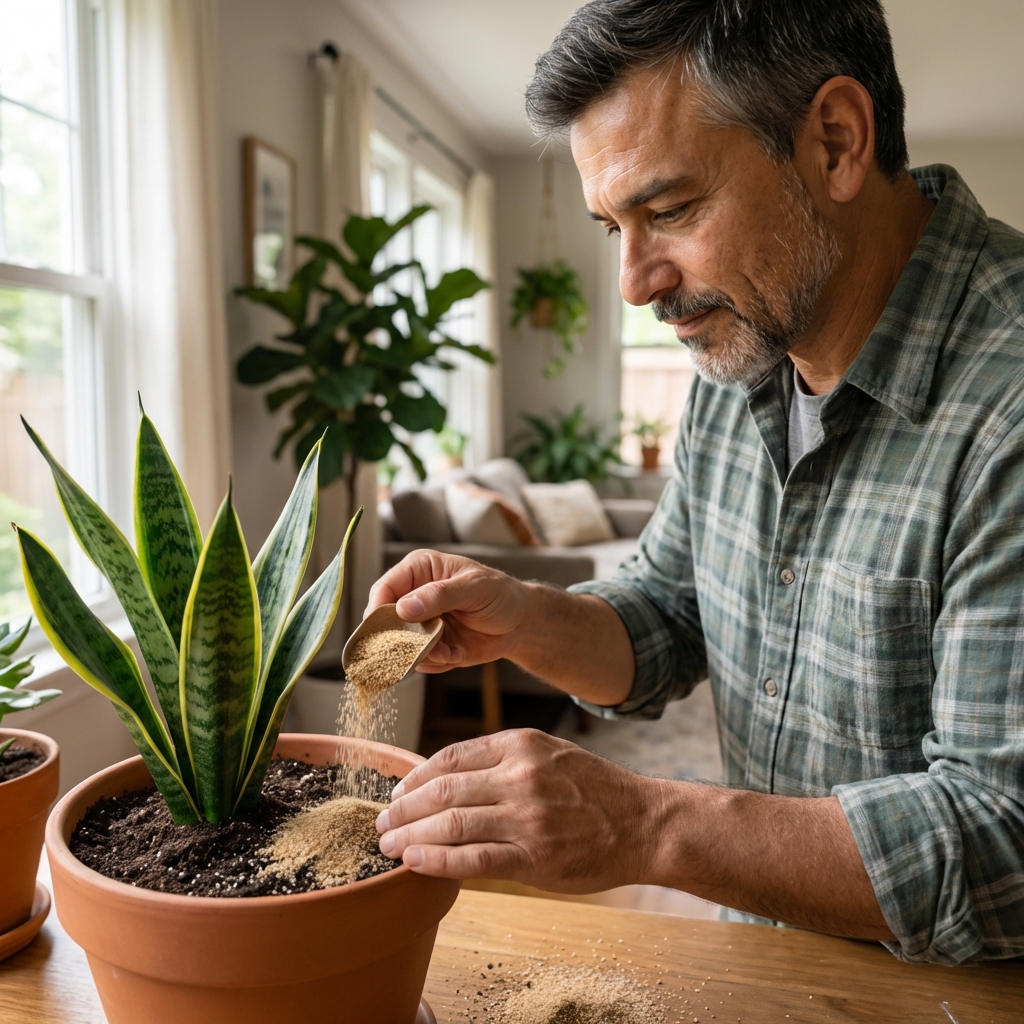
4) Top-dress with a dry barrier (optional)
A dry layer can make it harder for adults to reach moist soil and lay eggs. Results are mixed, so think of this as a helper, not the whole plan.
- Horticultural sand (coarse) works well if applied in a thin 1/2 inch layer.
- Fine gravel can also work, but avoid anything that compacts tightly.
- Only use a top dressing if your potting mix drains well. Do not cover an already soggy, slow-draining mix because it can keep moisture trapped underneath.
- Avoid thick layers of decorative moss while you are battling gnats. It holds moisture.
Organic treatments that kill larvae (the real fix)
Adults are the symptom. Larvae in the soil are the source. Pick one of the options below and commit for 2 to 3 weeks. That covers multiple life cycles.
Option A: BTI (Mosquito Bits or Dunks)
BTI is a naturally occurring soil bacterium that targets mosquito and fungus gnat larvae. It is one of the most reliable organic solutions for houseplants.
How to use:
- Follow label directions for your product. For houseplants, many people soak a small amount of Mosquito Bits in water for about 30 minutes, then strain and water your plants with that “tea.”
- Repeat every 5 to 7 days for 2 to 3 weeks.
- Keep sticky traps up while you do this.
Tip: Do not just sprinkle Bits on top of soil indoors unless you like moldy corn bits. The tea method is cleaner.
Option B: Beneficial nematodes (Steinernema feltiae)
Beneficial nematodes are microscopic predators that hunt larvae in the soil. They are organic and effective, especially for larger plant collections.
- Apply to already moist soil, then keep soil lightly moist for about a week so they can move around.
- Follow package directions carefully. They are alive and need proper storage and application.
Option C: Hydrogen peroxide drench (use carefully)
This is a common home remedy, but it is best used as a short-term knockdown rather than a long-term routine. Evidence is mixed, and it can stress tender roots and soil biology if overused.
- Mix 3% hydrogen peroxide with water (commonly 1 part peroxide to 4 parts water).
- Drench the soil once, let it fizz, and allow the pot to drain fully.
- Wait and watch. If you still see gnats, switch to BTI or nematodes for a steadier approach.
Skip this for very young seedlings, delicate cuttings, or plants already struggling.
Do cinnamon, vinegar, or coffee grounds work?
You will see these suggested everywhere. Here is the real-world take.
- Cinnamon: It can discourage some surface fungi, but it does not reliably kill larvae. If you like it, use it as a light dusting only, not a thick layer.
- Apple cider vinegar traps: They can catch some adults, but sticky traps work better for fungus gnats because gnats are drawn to soil more than vinegar.
- Coffee grounds: Fresh grounds can make the surface stay damp and can invite mold. Not my favorite during a gnat outbreak.
- Dish soap sprays: Spraying foliage rarely helps because gnats are coming from the soil. Focus on the potting mix.
When to repot (and how to do it without bringing gnats along)
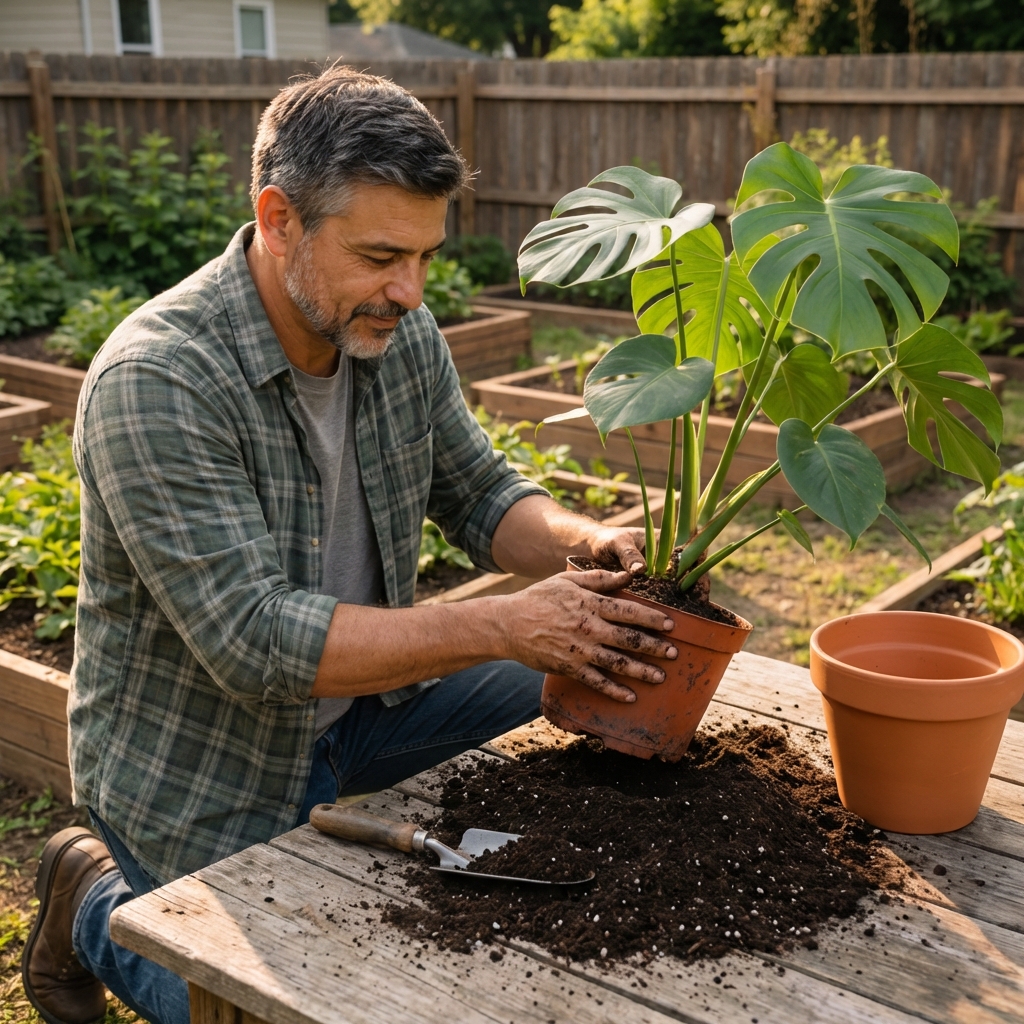
If the potting mix is old, compacted, or staying wet for days, repotting can be the turning point. It is also smart if the infestation is severe and you want a reset.
Repotting steps that reduce reinfestation
- Use fresh, quality potting mix. Avoid mixes that feel overly fine or peat-heavy for your plant type.
- Wash the pot with hot soapy water before reusing it.
- Gently shake off as much old soil as you can without tearing up roots.
- After repotting, water once, then let the top layer dry more than usual for a week.
- Add sticky traps immediately and consider BTI waterings as prevention.
Prevention that actually keeps gnats away
Once the gnats are under control, prevention is mostly about moisture management and keeping the top layer less inviting.
- Water smarter: Water deeply, then wait until the top layer dries. Consistent soggy soil is the gnat magnet.
- Bottom water when it makes sense: Set the pot in a tray of water for 10 to 20 minutes, then drain well. This keeps the soil surface drier.
- Improve drainage: Pots need drainage holes. If you use a cachepot, never let water pool at the bottom.
- Quarantine new plants: Keep new plants separate for a week with a sticky trap to catch surprises.
- Store potting mix sealed: Open bags can become breeding spots in warm garages and basements.
- Keep surfaces clean: Remove dead leaves and avoid letting organic debris build up on top of the soil.
Timeline: what to expect
Fungus gnat control is not usually instant because you are dealing with a life cycle.
- Days 1 to 3: Sticky traps start catching adults. You may still see plenty flying.
- Week 1: Adult numbers drop if you are drying the surface and trapping consistently.
- Weeks 2 to 3: Larvicide methods like BTI or nematodes reduce new adults hatching. This is where you win.
If you are still seeing lots of gnats after 3 weeks, it usually means one of two things: the soil is staying wet, or you have another source nearby (another pot, a bag of mix, or a drain area).
Quick troubleshooting
I let the soil dry out and my plant looks sad
Some plants do not like drying too much. In that case, rely more on BTI or nematodes and try bottom watering to keep the surface drier without starving roots.
Gnats keep coming back in one specific pot
That pot likely has compacted soil or poor drainage. Consider repotting, and check that the pot is not sitting in water.
I see gnats but the soil is dry
Inspect nearby plants, propagation jars, and damp areas like sink drains. Also treat every pot in the room, not just the one you noticed first. Fungus gnats can wander.
My go-to organic combo
If you want the simplest effective approach without overthinking it, here is what I would do in most homes:
- Let the top layer dry between waterings (top 1 to 2 inches, or top 25 to 50% in small pots)
- Put yellow sticky traps at soil level
- Water with BTI tea once a week for 3 weeks (following label directions)
That combo is low-effort and is generally kid and pet friendly when used as directed. Keep sticky traps out of reach, do not ingest any products, and follow the label.

Jose Brito
I’m Jose Britto, the writer behind The Country Store Farm Website. I share practical, down-to-earth gardening advice for home growers—whether you’re starting your first raised bed, troubleshooting pests, improving soil, or figuring out what to plant next. My focus is simple: clear tips you can actually use, realistic expectations, and methods that work in real backyards (not just in perfect conditions). If you like straightforward guidance and learning as you go, you’re in the right place.