Rabbits can wipe out a row of lettuce overnight and clip young plants down to stems before you have your coffee. The good news is you do not need poisons or harsh chemicals to get fast results. The quickest organic wins come from doing two things at once: block access and make your garden less appealing.
This page focuses on practical backyard tactics you can start today, even if you only have 30 minutes and whatever is already in the garage.
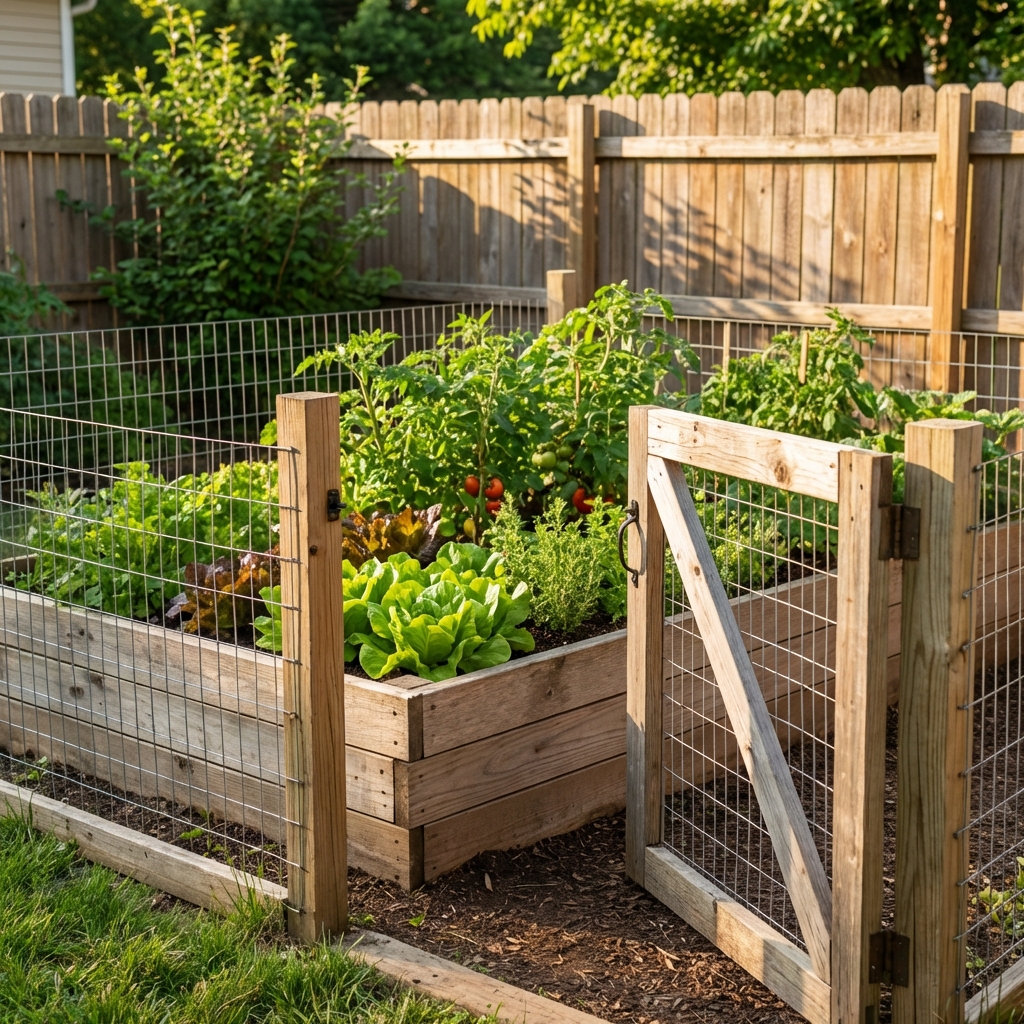
Know it is rabbits (fast ID)
Before you set up defenses, confirm the culprit. Rabbit damage looks a little different than deer or groundhogs.
- Clean, angled cuts on stems and leaves, like someone used scissors. Deer usually tear and leave ragged edges.
- Damage close to the ground, usually within about 18 inches. In winter, snow can lift their reach higher.
- Small round droppings scattered nearby.
- Tracks with two larger hind prints landing ahead of the front prints.
If the tops of plants are being eaten 3 to 6 feet up, that is most often deer, but squirrels, birds, or other issues can also cause higher damage depending on the plant and setup.
Quick tips that work tonight
1) Put up a temporary barrier right now
If you want the fastest result, block them. Even a temporary setup can stop the bleeding while you plan a nicer solution.
- Chicken wire or hardware cloth: Make a quick ring around the bed or the problem area. Chicken wire is fine in a pinch, but keep it tight and supported because it can flex and leave gaps.
- Mesh size: Aim for 1/2 inch openings if you can. Larger openings can let small rabbits squeeze through.
- Height: 2 feet is often enough for rabbits, but 3 feet is better if you have athletic ones.
- Secure the bottom: Rabbits usually slip under more than they dig, but in loose soil they can scratch and squeeze. Tuck the bottom 3 to 6 inches into soil or pin it down with landscape staples, bricks, or boards.
- Close the gaps: Most rabbit “fence failures” are just openings under gates, corners, or uneven ground.
Best material for speed and strength: 1/2 inch hardware cloth. It is stiffer than chicken wire and blocks small rabbits.
2) Protect individual plants with cloches
If you do not have time to fence the whole area, protect the plants that matter most: new transplants and seedlings.
- Use wire wastebaskets flipped over plants.
- Cut the bottom off a clear storage bin and weigh it down. Important: clear plastic in direct sun can overheat and cook plants fast. Drill or cut ventilation holes, prop it open, or pull it off during the heat of the day.
- Make quick cylinders from hardware cloth and stake them.
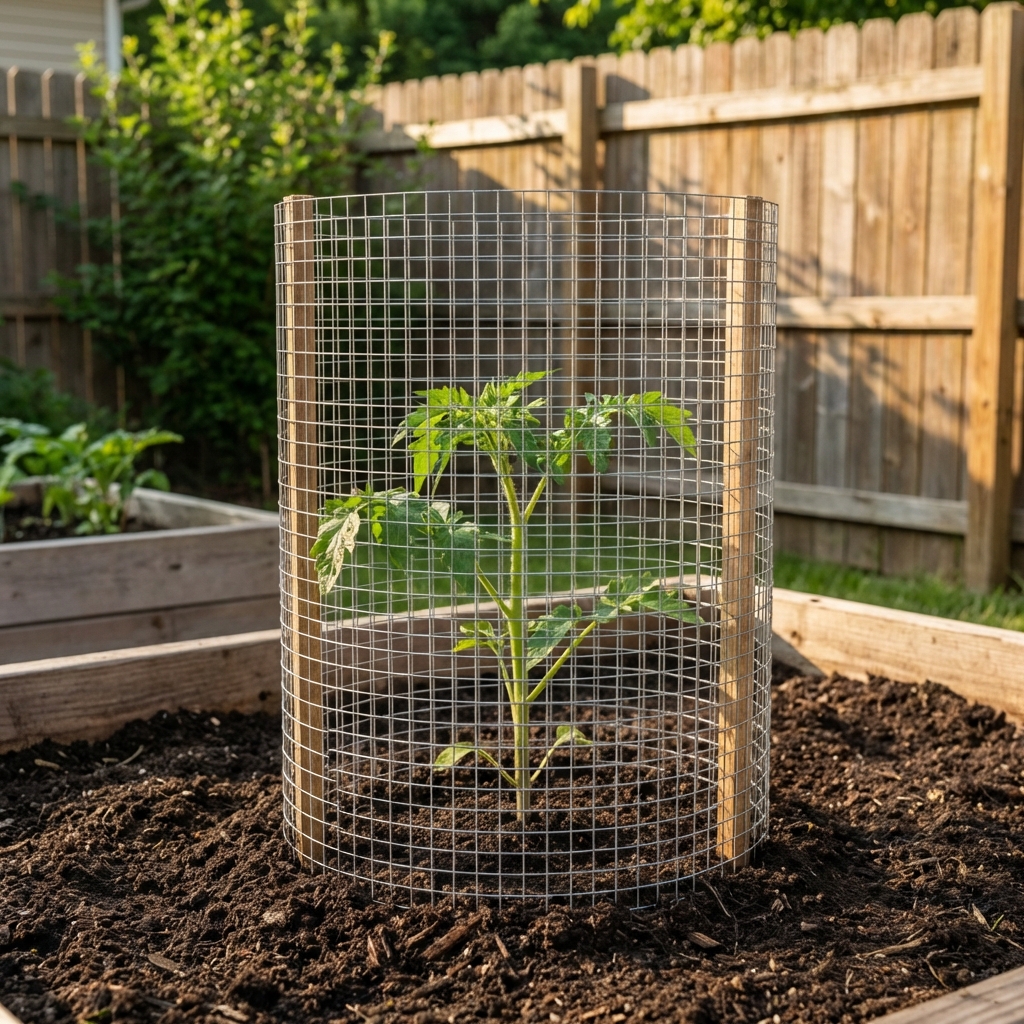
3) Use an organic scent repellent correctly
Rabbit repellents are not magic, but they can buy you time when combined with barriers and cleanup. The key is using them where rabbits actually feed and reapplying after rain.
- Commercial organic options often use garlic, peppermint, clove, putrescent egg solids, or hot pepper.
- Apply to the perimeter and the plants you are protecting, following the label.
- Reapply after rain, overhead watering, and rapid new growth.
Important: Do not spray repellents directly on edibles close to harvest. Use them on the outside of beds, fencing, or on ornamentals, and always follow product directions (including any food-safety intervals).
4) Reduce dusk risk
Rabbits feed most at dawn and dusk. Make your garden feel exposed and inconvenient during those hours. Clear low hiding cover near beds, avoid leaving piles of weeds or trimmings beside the garden, and keep compost and scraps secured so you are not advertising an easy meal.
The best long-term organic fix: a rabbit-proof fence
If rabbits are a regular problem, fencing is the solution that keeps paying you back. It does not wash off in rain and it does not depend on smell.
Fence specs that actually work
- Material: 1/2 inch hardware cloth is the most reliable all-around choice, especially where small rabbits are present. Welded wire with larger openings can work, but it is easier for juveniles to slip through.
- Height: 30 to 36 inches.
- Bottom: If you see digging or you have loose soil, bury about 6 inches, or bend an L-shaped apron outward 6 to 10 inches and cover it with soil or mulch. If digging is not happening, staking and sealing the bottom tight to the ground is often enough.
- Gate: Make sure it closes tight to the ground. Add a board or paver at the threshold to remove gaps.
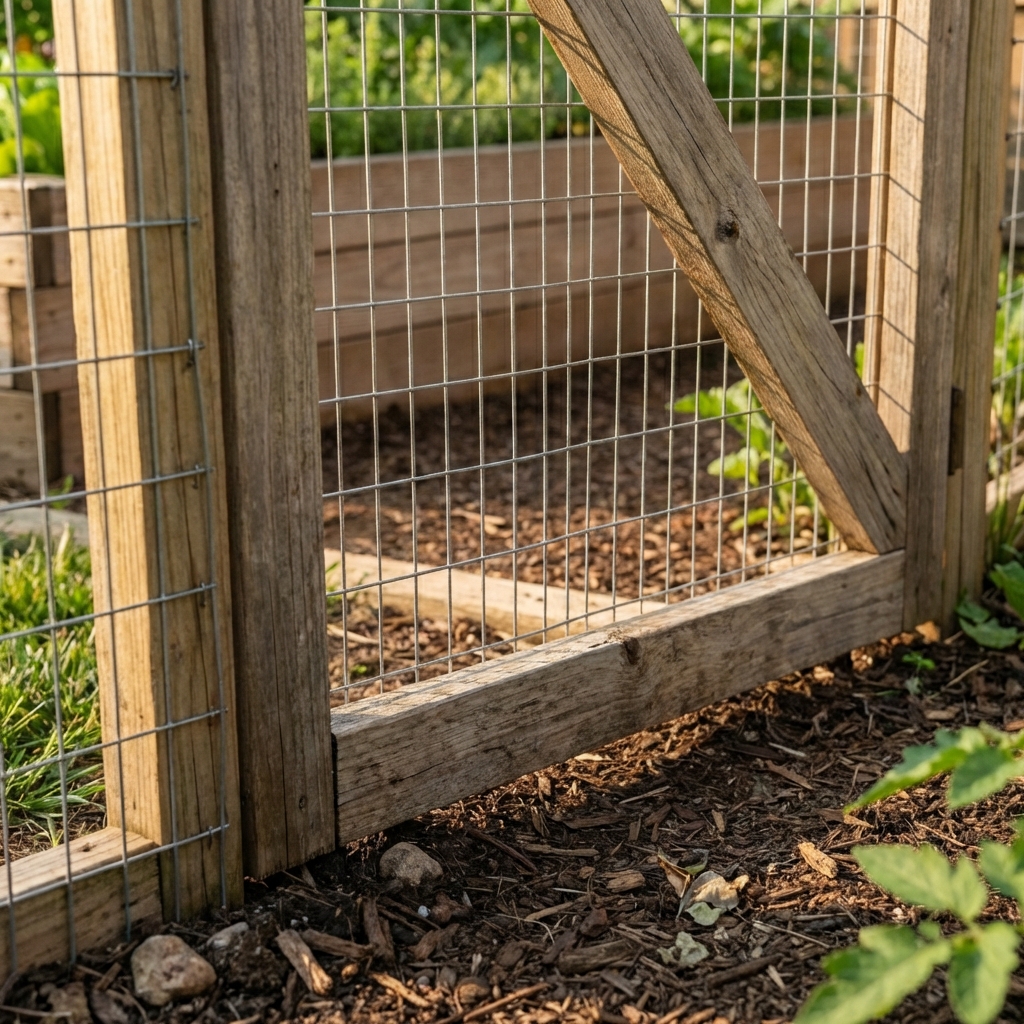
If you already have a fence but rabbits still get in, walk the full perimeter and look for low spots, corners that lifted, and gaps around the gate. Fixing one 3-inch opening can stop the whole problem.
Make your yard less inviting
Rabbits love two things: easy food and safe cover. You can cut damage a lot by removing the places they hide and travel.
Clean up the “rabbit highway”
- Trim tall grass and weeds along fences, sheds, and bed edges.
- Move brush piles, boards, and junk stacks away from the garden.
- Block access under decks and sheds with hardware cloth.
- Keep mulch pulled back slightly from tender stems so rabbits feel exposed.
Stop attracting them with treats
- Do not leave vegetable scraps in open compost near the garden.
- Avoid tossing thinnings or pulled lettuce nearby. Remove them or bury them.
- If you feed pets outdoors, bring leftover food in.
What to plant (and what to protect first)
When rabbits are active, focus protection on the plants they hit hardest, and use less-favorite plants in outer rows as a mild deterrent. No plant is truly rabbit-proof when food is scarce, but preferences are real.
Usually targeted (protect these)
- Young beans, peas, and seedlings of almost anything
- Lettuce, spinach, and tender greens
- Carrot tops and beet greens
- Newly planted flowers like pansies and young marigolds
Often less appealing
- Strong-scented herbs like rosemary, sage, thyme, and oregano
- Alliums like onions, chives, and garlic
- Plants with fuzzy or tougher leaves (not a guarantee, but it helps)
Use the less-appealing plants as edges, but still plan on physical protection for seedlings and greens if rabbits are common in your neighborhood.
Predator presence without hurting wildlife
Rabbits respond to risk. You can add “something feels off here” to your garden without trapping or poisoning.
- Motion-activated sprinklers are one of the best humane tools for nighttime and dawn activity.
- Motion lights can help in some yards, but rabbits often adjust if there is no other pressure.
- Dogs can be effective if they patrol the area, but do not rely on scent alone.
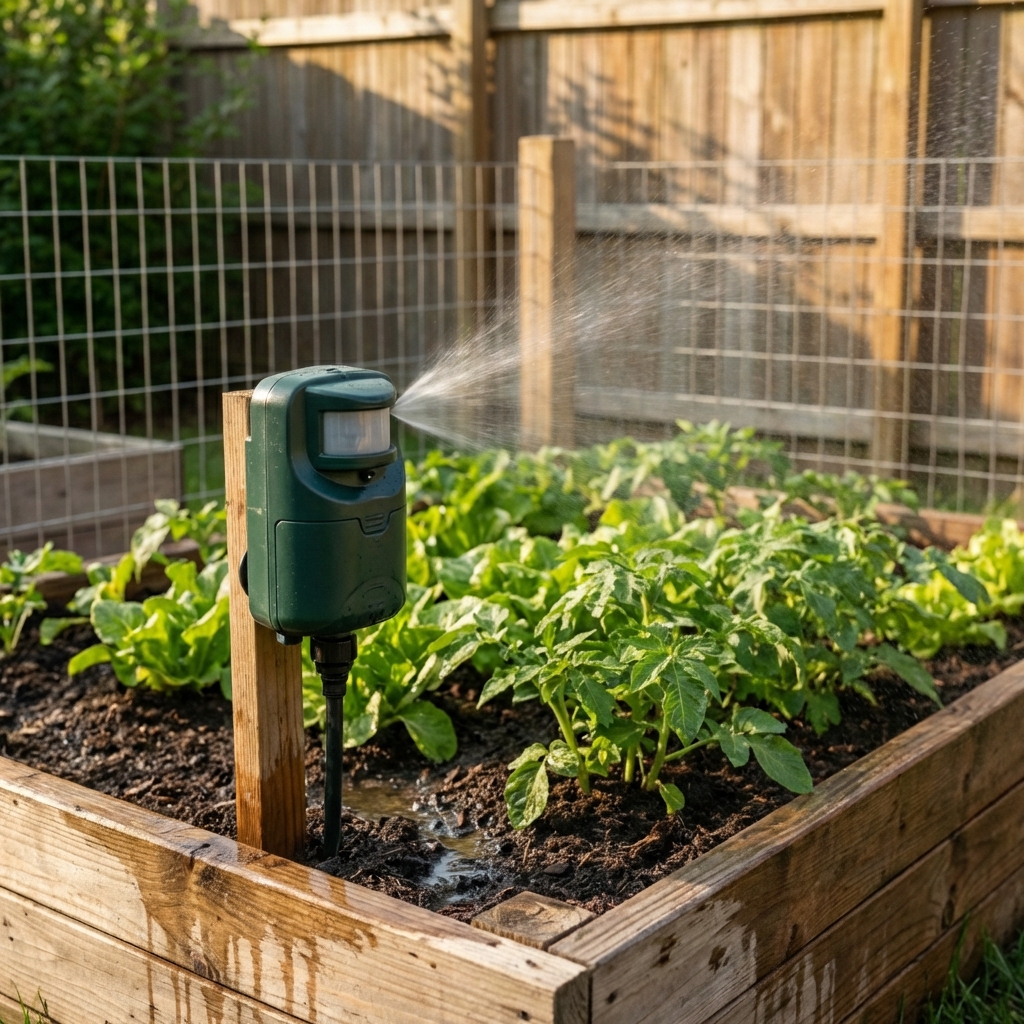
What not to do
- Do not use poison. It is unsafe for pets, kids, and beneficial wildlife, and secondary poisoning can hit predators.
- Do not rely on ultrasonic devices. Results are inconsistent and many animals ignore them.
- Do not expect one spray to solve it. Repellents work best as part of a system.
- Do not ignore the gate. A great fence with a sloppy gate is basically a rabbit door.
Simple 3-step plan
If you want a quick plan you can follow without overthinking it, here you go:
- Tonight: Put up a temporary barrier or cover the most damaged plants with a wire cloche.
- This week: Tighten the perimeter with 1/2 inch hardware cloth, close gaps (especially at the gate), and clear hiding spots near beds.
- This season: Install a proper rabbit fence and add motion-activated sprinklers if pressure stays high.
Once you stop the easy access, rabbits usually move on to the next low-effort meal. Your goal is not to fight nature. It is to make your garden the least convenient option on the block.

Jose Brito
I’m Jose Britto, the writer behind The Country Store Farm Website. I share practical, down-to-earth gardening advice for home growers—whether you’re starting your first raised bed, troubleshooting pests, improving soil, or figuring out what to plant next. My focus is simple: clear tips you can actually use, realistic expectations, and methods that work in real backyards (not just in perfect conditions). If you like straightforward guidance and learning as you go, you’re in the right place.