Wasps often play a beneficial role in a healthy yard, but that does not mean you need them hovering over your grill, buzzing your porch light, or building a nest right above the front door. The goal with organic control is simple: reduce what attracts them, make your house a lousy place to hang out, and deal with small nests early before they grow.
Important safety note: If you suspect you have hornets, yellowjackets nesting in a wall, or anyone in your household has a known allergy, skip the DIY heroics and call a pro. Organic methods can still be used for prevention, but removal can get risky fast.
Before you do anything: wasps or bees?
A lot of people accidentally go after bees when they mean “stinging insects.” If you are not sure, pause and confirm first.
- Honeybees: Fuzzy, golden-brown, usually calmer, often seen working flowers. If you have a cluster or a hive in a wall, contact a local beekeeper or pro who can advise on removal.
- Wasps and yellowjackets: Smoother bodies, clearer black-and-yellow patterns, and a more “sleek” look. They are often interested in meat, soda, and trash.
First, figure out what you are dealing with
Different wasps behave differently. Knowing the basics helps you choose the right next step.
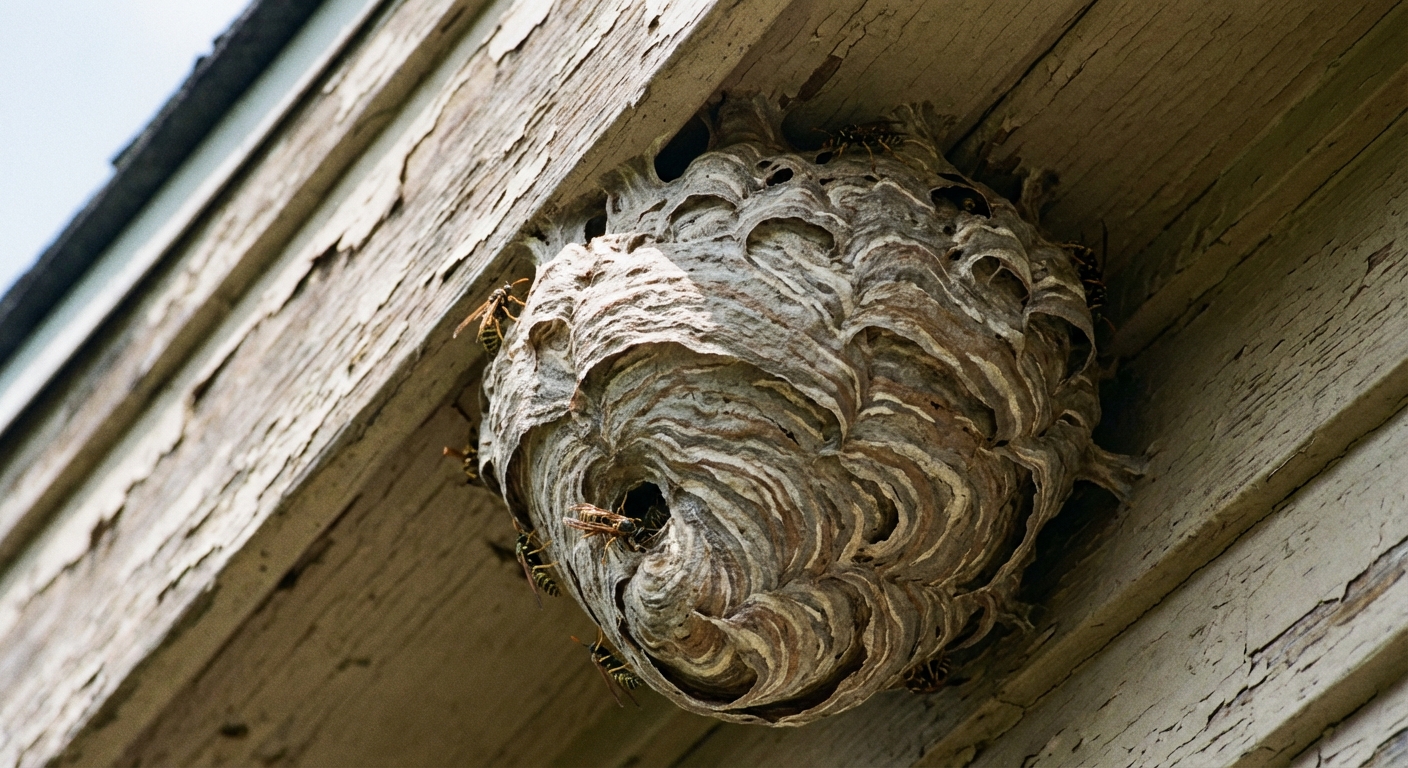
- Paper wasps: Long legs that dangle in flight. They build open, umbrella-shaped nests under eaves, deck rails, and light fixtures. These are the most common porch problem.
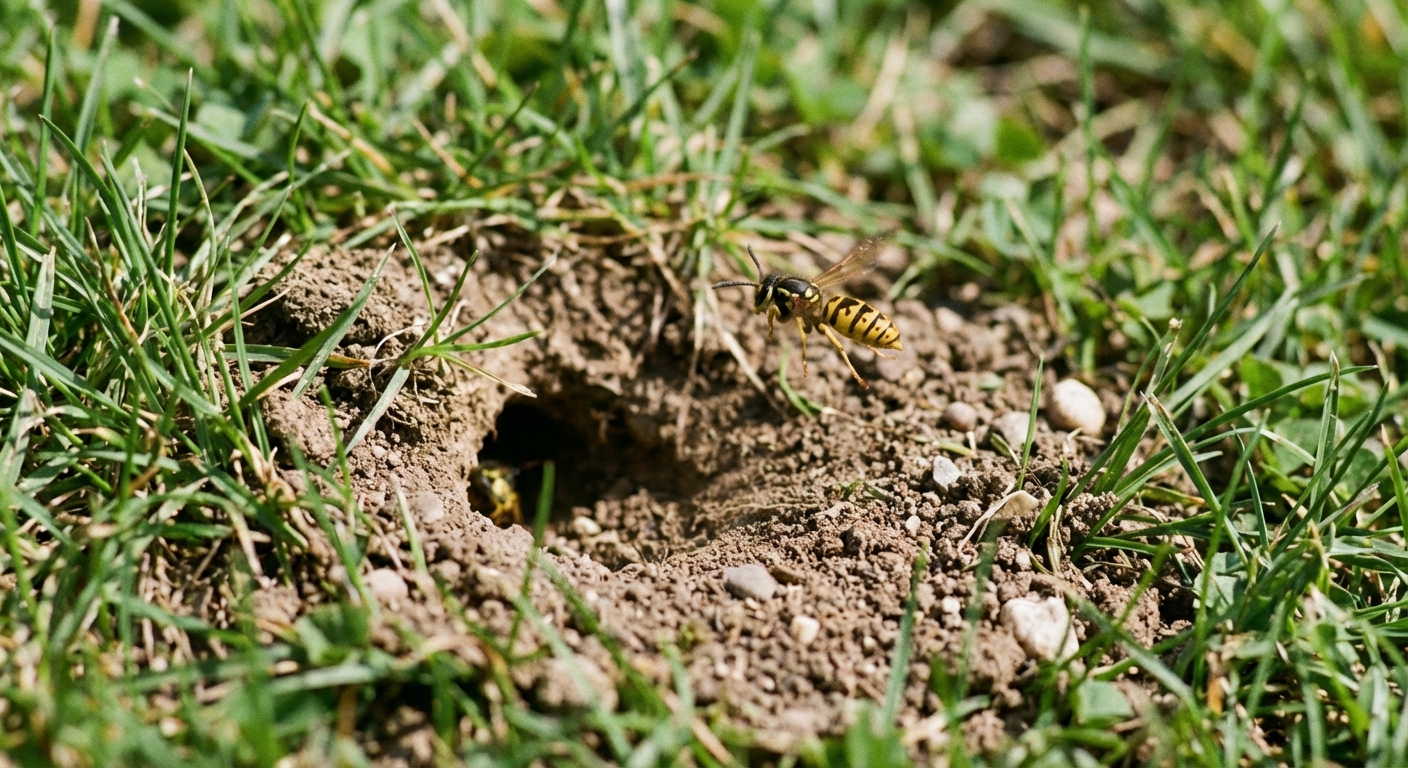
- Yellowjackets: More compact and aggressive, especially late summer. Often nest in the ground, in wall voids, or in dense shrubs. They love trash and meat.
- “Hornets”: In many parts of North America, what people call hornets are often bald-faced hornets, which are actually a type of aerial yellowjacket. True hornets are less common in many areas. Either way, treat large enclosed aerial nests with extra respect.
If the nest is in a wall, attic, soffit gap, or you see lots of wasps coming and going from a tiny crack, that is a sign the nest is not accessible. DIY treatments may push wasps into other voids, and improper treatment can increase the odds of them showing up indoors looking for a way out.
Quick organic steps you can do today
1) Remove the easy food sources
This is the fastest way to help reduce wasp traffic in the next 24 hours.
- Rinse recycling and keep bins closed tight.
- Switch to lidded outdoor cups. Sweet drinks pull wasps in fast.
- Pick up fallen fruit under trees.
- Keep pet food indoors, especially during the day.
- Wipe outdoor tables after meals, including under the table edge.
2) Work at dawn or dusk
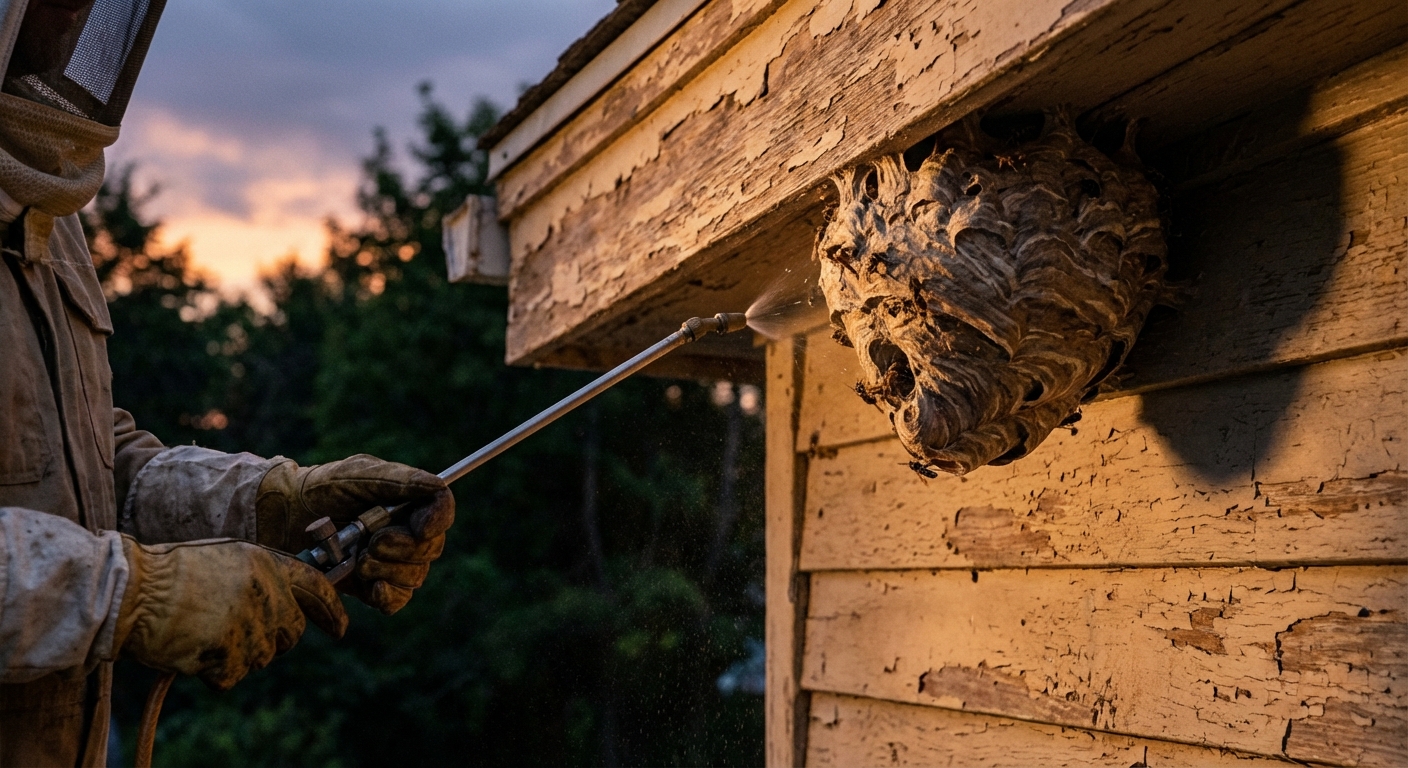
If you are going to spray or knock down a small exposed nest, do it when wasps are least active, typically just before sunrise or after dusk. During the day you are far more likely to get swarmed.
3) Use a strong hose blast for tiny, fresh paper wasp nests
If it is a small paper wasp nest, roughly golf-ball size (about 2 to 3 inches, or 5 to 7 cm) and clearly exposed, a hard stream of water can knock it down. The key is to do it early, before there are dozens of adults guarding it. This method is low-tox, but you still need distance and an exit plan.
4) Try a peppermint spray for wasps that are just loitering
Peppermint oil will not reliably eliminate a nest, but it can help discourage wasps from landing around door frames, porch ceilings, and outdoor eating areas. Evidence is mixed and often anecdotal, so think of this as a mild deterrent, not a cure.
Simple mix: In a spray bottle, combine 2 cups water, 1 teaspoon liquid castile soap, and 10 to 20 drops peppermint essential oil. Shake well and spray surfaces where wasps land (not on flowers, and avoid spraying when bees are active).
Reapply after rain or heavy dew. Test on a small spot first if you are spraying painted surfaces.
Organic DIY sprays for small, exposed nests
Quick reminder: these sprays are for small, exposed nests you can clearly reach, most commonly paper wasps under an eave. If the nest is in a wall void, attic, soffit, or ground cavity, skip DIY sprays and call a pro.
If you have a small, exposed nest (common with paper wasps), a soap-based spray is one of the most effective low-tox options. Soap works by coating the insect and can suffocate it by clogging its breathing openings.
Soap-and-water knockdown spray
- Mix: 1 quart warm water + 2 to 3 tablespoons liquid dish soap or castile soap.
- How to use: Spray directly on the wasps and the nest from a safe distance at dawn or dusk. Saturation matters.
- Then: Once activity stops, knock the nest down with a long pole and dispose of it in a sealed bag.
Wear: Long sleeves, long pants, closed-toe shoes, gloves, and eye protection. Keep kids and pets inside. Do not stand directly under the nest, and always have a clear path to retreat.
When not to use sprays
- If the nest is inside a wall, soffit, or attic void.
- If it is a large nest (basketball size, about 8 to 10 inches or 20 to 25 cm, or larger).
- If you cannot keep a safe distance.
- If you are dealing with yellowjackets you cannot clearly access.
Organic traps: good for reducing numbers
Traps help lower the number of wasps around patios and trash areas. They are most useful when placed correctly and baited for the season. They are not instant miracles, but they can take the edge off within a few days.
Where to place traps
- Put traps away from where people sit, ideally 20 to 30 feet from patios and doors.
- Place them at the edge of the yard, near where wasps travel, not right next to your barbecue.
- Hang them in partial shade so the bait does not ferment too fast in peak heat.
What to use for bait
- Spring and early summer: Wasps are hunting protein. Use a small piece of meat or fish in a trap designed for it. Check often, since protein baits can also attract flies and other scavengers.
- Late summer and fall: They switch to sugar. Use fruit juice, overripe fruit, or a splash of soda.
A simple DIY sugar trap (late season)
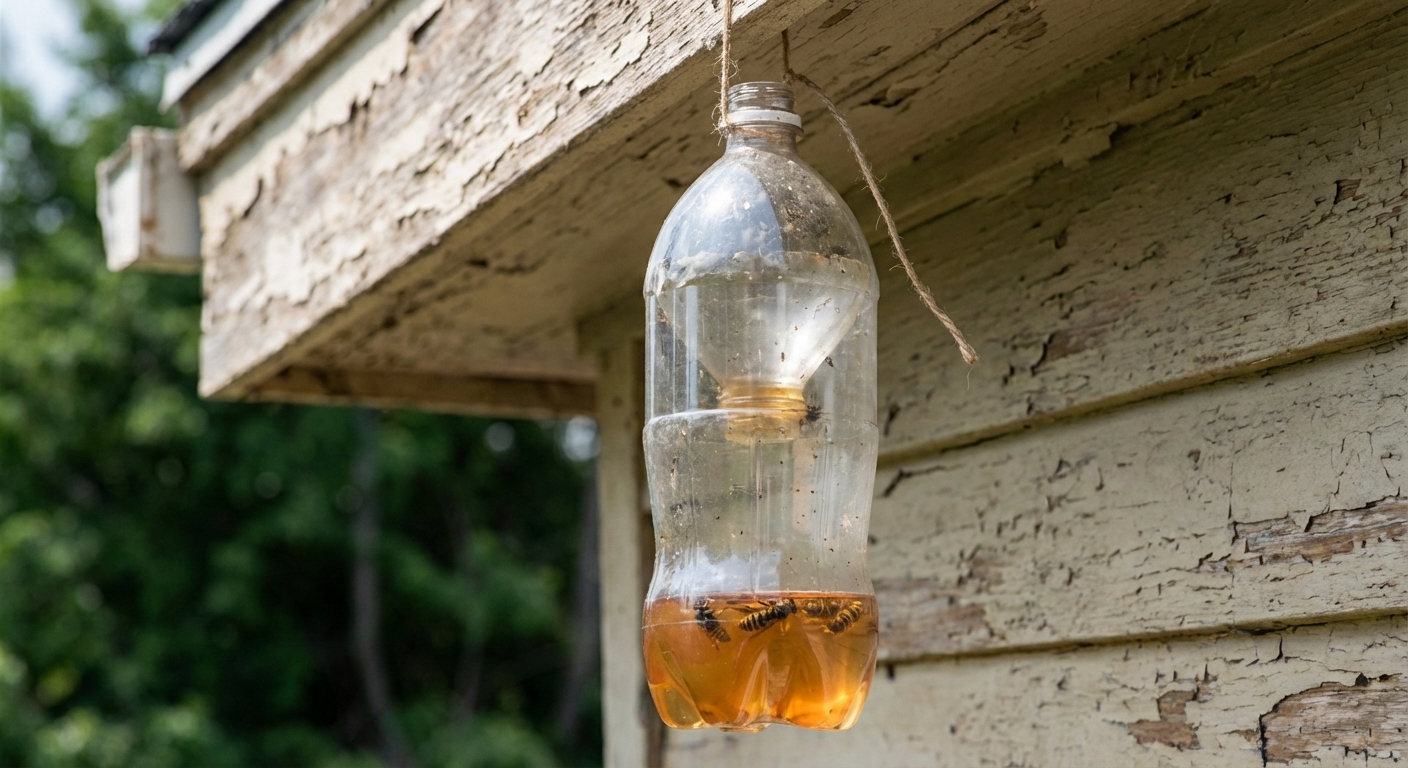
Cut the top off a plastic bottle, invert it like a funnel, and add sweet bait plus a drop of soap to break surface tension. This is not selective and can catch other insects, so use it thoughtfully and place it away from flowers.
Prevent wasps from coming back
Once you knock down the immediate problem, prevention is what keeps it from turning into a weekly battle.
Seal and screen the easy entry points
- Repair torn window screens.
- Seal gaps around soffits, fascia boards, and siding corners.
- Use fine mesh over attic vents if needed.
- Cap or screen unused chimneys and vents properly.
Important: Do not seal an entry point if you suspect an active colony is inside a wall or attic void. Confirm the nest has been removed and activity has stopped first, or have a pro handle it.
Reduce attractive nesting spots
- Keep outdoor clutter down, especially stacks of lumber, upside-down pots, and spare kid toys under decks.
- Trim shrubs near entryways where yellowjackets may build hidden nests.
- Check under eaves and deck rails weekly in spring. Small nests are easiest to remove.
After removal: monitor the spot
For the next week or two, do a quick daily glance at the area where the nest was. If you see rebuilding starting, knock it down early before it turns into a larger colony.
Use decoy nests carefully
Some people hang fake paper nests to discourage paper wasps, since they tend to avoid building too close to other colonies. Results vary by location and pressure. If you try it, hang it early in the season before they start building, and keep it under cover so it does not fall apart.
What not to do
- Do not swat. Swatting makes you a moving target and can escalate aggression.
- Do not block an active entrance to a wall or ground nest. Wasps will look for another way out, sometimes into your home.
- Do not spray flowering plants. You can harm pollinators and still not solve the nesting issue.
- Do not use fire. It is dangerous and can damage your home or start a wildfire.
When to call a professional
Call a licensed pest professional if any of these are true:
- The nest is in a wall, attic, chimney, or other structure void.
- You see heavy activity, especially with yellowjackets.
- The nest is large or located where you cannot work safely.
- Anyone nearby has a sting allergy.
You can still keep it organic-minded by asking about targeted removal, minimal pesticide use, and sealing entry points after removal.
Quick FAQ
How fast do organic methods work?
Removing attractants can reduce wasp visits the same day. Soap spray can knock down a small exposed nest within minutes. Traps usually take a few days to noticeably reduce numbers.
Will vinegar get rid of wasps?
Vinegar may help clean up food smells on surfaces, but it is not a reliable nest killer. If you need knockdown, soap-and-water is typically more effective for small exposed nests.
Do coffee grounds repel wasps?
Some people report success burning coffee grounds for the smoke, but results are inconsistent and it is not a good plan near dry mulch or decking. Focus on food control, early nest removal, and targeted soap sprays.

Jose Brito
I’m Jose Britto, the writer behind The Country Store Farm Website. I share practical, down-to-earth gardening advice for home growers—whether you’re starting your first raised bed, troubleshooting pests, improving soil, or figuring out what to plant next. My focus is simple: clear tips you can actually use, realistic expectations, and methods that work in real backyards (not just in perfect conditions). If you like straightforward guidance and learning as you go, you’re in the right place.