Aphids are one of those pests that can look like a small problem in the morning and a full-on takeover by the weekend. The good news is you can knock them back fast using organic methods that are safe for most home gardens when used correctly.
Below are the quickest options that actually work, plus how to apply them without accidentally frying your plants (also known as phytotoxicity or leaf burn) or wiping out the good bugs that help you long term.
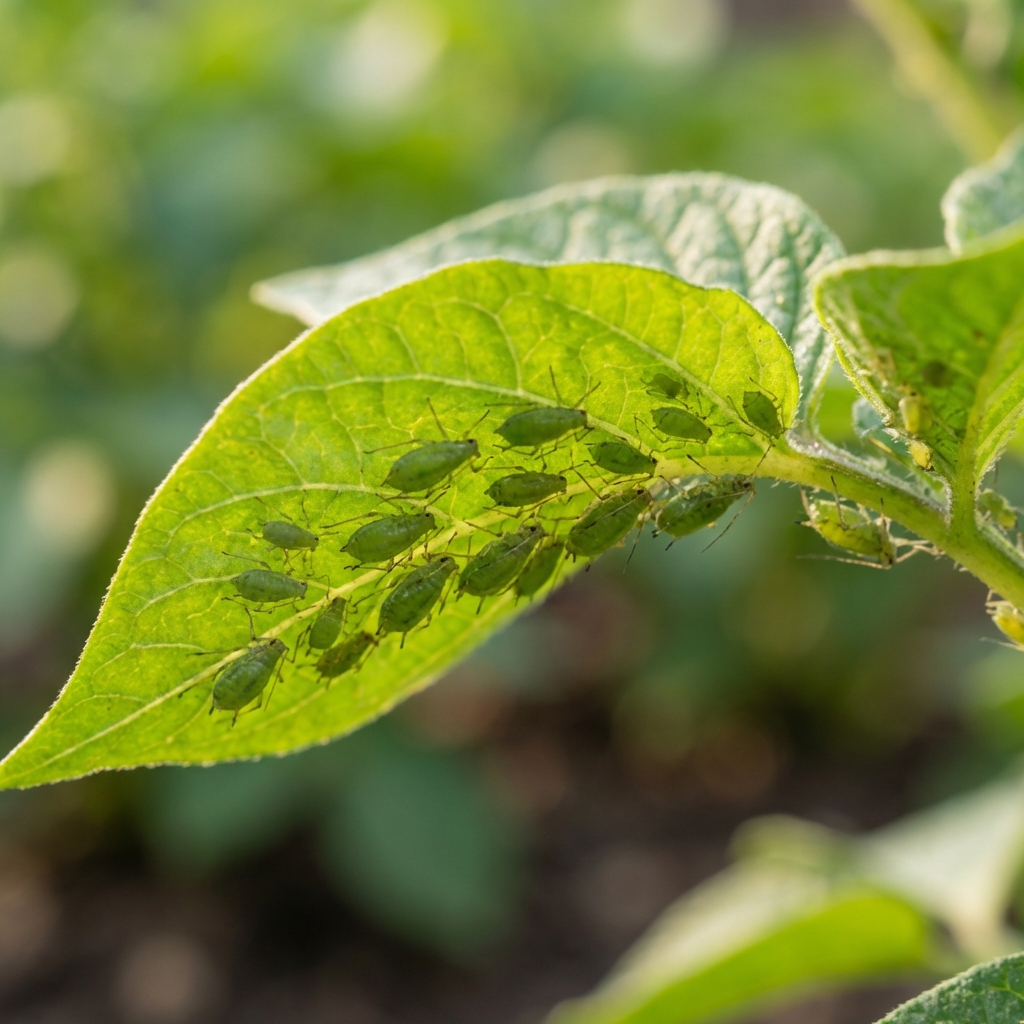
First, confirm it is aphids
Aphids are small, soft-bodied insects that cluster on new growth and the undersides of leaves. Common signs include:
- Clusters of green, black, brown, or pink insects on stems and tender tips
- Curled or distorted leaves, especially on new growth
- Sticky honeydew on leaves, pots, or nearby surfaces
- Ants “farming” them for the honeydew
- Sooty mold (a black film) growing on the honeydew
If you see tiny insects that jump when you touch the plant, those are more likely leafhoppers or flea beetles, and the approach changes.
Fast organic ways to kill aphids
If you need quick results, start with the methods below in this order: prune and physically remove first, then a targeted spray if needed.
1) Prune or pinch the worst tips (instant knockdown)
If aphids are piled onto a few tender shoots, do not overthink it. Snip off the most infested growing tips or pinch them out and trash them. This removes a big chunk of the colony immediately and makes sprays more effective on what is left.
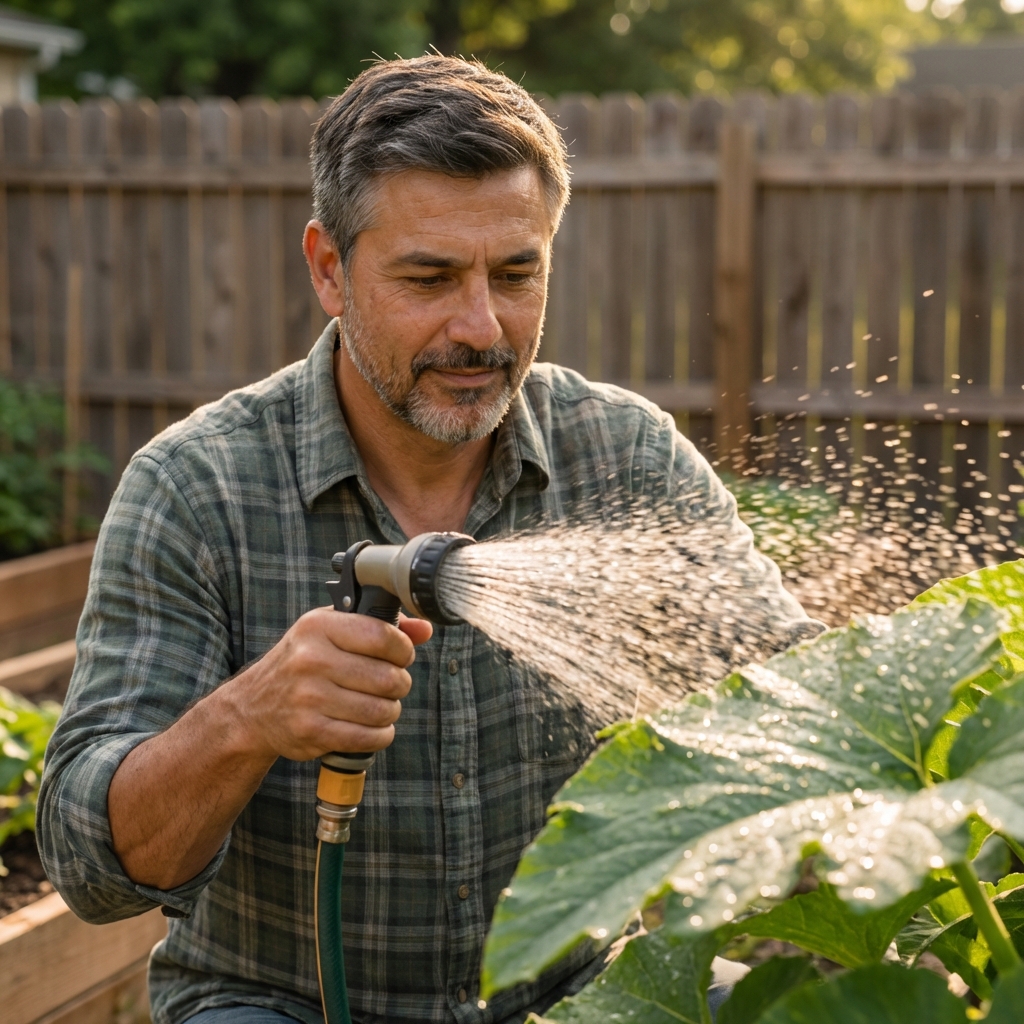
2) Strong water spray (fast and free)
A hard blast of water is one of the quickest ways to drop aphid numbers immediately. It works best on sturdy plants like peppers, kale, tomatoes, roses, and many herbs.
- Spray the undersides of leaves and the growing tips.
- Do it in the morning so plants dry quickly.
- Repeat every 1 to 2 days for a week if aphids keep reappearing.
Note: Very tender seedlings and delicate new transplants can get shredded by a strong spray. For those, use a gentler rinse or your fingers plus a damp cloth.
This does not “kill” every aphid on contact, but it removes enough that predators can catch up and new growth can recover.
3) Insecticidal soap (quick kill on contact)
Insecticidal soap is one of the best organic tools because it works quickly and breaks down fast. It kills by disrupting aphids’ outer coating and it must hit the insects directly.
- Best option: use a labeled insecticidal soap (these are typically potassium salts of fatty acids and are more consistent than homemade mixes).
- If you DIY: mixes vary a lot by soap brand. A common range is 1 to 2 teaspoons up to 1 to 2 tablespoons of mild liquid soap (not detergent) per 1 quart of water. Start on the mild end, test first, and increase only if needed.
- Spray to full coverage, especially the undersides of leaves.
- Test on a few leaves first, then wait 24 hours to check for leaf burn.
4) Horticultural oil (smothers aphids fast)
Horticultural oils work by coating pests and smothering them. You can use lightweight horticultural oil or some ready-to-spray products labeled for vegetables and ornamentals. This is especially effective for heavy infestations tucked into curls and creases.
- Follow label rates closely.
- Cover insects thoroughly. Missed spots stay alive.
- Avoid using on drought-stressed plants or during high heat.
If you have beneficial insects actively working the plant, spot-treat infested areas rather than soaking the whole garden.
5) Neem (know what you bought)
Neem can help, but results depend on the product. There are two common types:
- Neem oil (clarified hydrophobic extract): often acts mostly like an oil, meaning contact control and some smothering. It can help, but it is not always a fast knockout.
- Azadirachtin products (sometimes sold as “neem”): these are more likely to disrupt feeding and development over time, which can help when aphids keep returning.
Whichever type you use:
- Use a product labeled for aphids and for your crop.
- Apply in the evening when bees are not actively foraging, and avoid spraying open flowers.
- Expect to reapply on the schedule listed on the label, especially after rain.
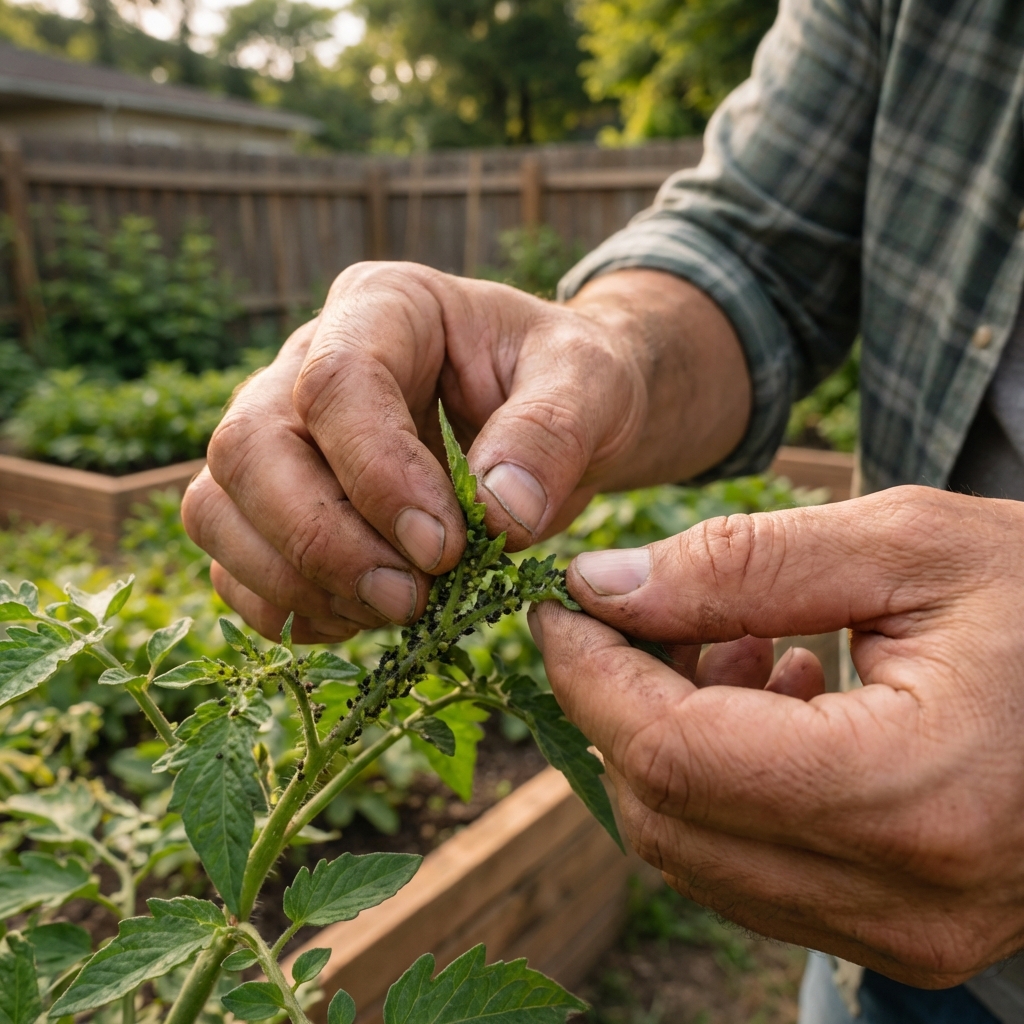
6) Hand removal for small outbreaks
If aphids are concentrated on a few tips, you can pinch them off, wipe them away with a damp cloth, or prune the worst shoots. It is low tech but surprisingly effective early on.
7) Diatomaceous earth (limited use)
Food-grade diatomaceous earth (DE) only works when dry, and aphids usually sit on stems and leaf undersides where DE is hard to place effectively. It can also harm soft-bodied beneficials if they contact it. Think of DE as a supplemental tool for dry, crawl zones, not your main aphid killer.
- Use it lightly in dry areas like pot rims, soil surface, or around plant bases.
- It can be more useful on ant pathways than on aphids directly.
- Reapply after watering or rain.
- Avoid dusting flowers and avoid windy days.
My quick-hit plan
If you want a simple approach, here is a routine that usually gets aphids under control in a few days.
- Day 1: Prune the worst tips, then blast with water and inspect new growth and leaf undersides.
- Day 1 evening: Spot-spray insecticidal soap on remaining clusters.
- Day 3: Recheck. Repeat soap on any survivors.
- Day 5 to 7: If they keep returning, switch to horticultural oil or a labeled neem or azadirachtin product based on label direction and plant sensitivity.
Most failures happen because the spray never hits the aphids, especially under leaves. Coverage matters more than brand.
How to spray safely
- Spray at the right time: early morning or evening, not midday heat.
- Spray only where aphids are: soaps and oils can harm beneficial insects on contact too, so avoid blanket spraying.
- Avoid open flowers: target leaves and stems where aphids cluster, and never spray when bees are actively foraging.
- Test first: spray a small section and wait 24 hours for leaf spotting or burn.
- Do not mix products randomly: soap plus oil can increase burn risk on some plants.
- Edible crop note: follow label directions, including any pre-harvest interval (PHI) if listed. Wash produce before eating, especially after any spray.
- Rinse tender plants if needed: if you see leaf stress after a soap spray, a gentle rinse can help.
Plants that can be more sensitive include some varieties of cucumbers, melons, squash, and certain ornamentals. Always start with a small test spot.
Why aphids come back
Killing the visible aphids is only half the job. Aphids return fast when the conditions that caused the outbreak stay in place.
Check nearby sources
Aphids can reappear from nearby weeds, neighboring plants, or winged adults that fly in. After you treat your main plant, take two minutes to check the plants right next to it, plus any weedy edges.
Cut off the ant problem
If you see ants, they are often protecting aphids from ladybugs and other predators. Use sticky barriers on stems or address ant trails so beneficial insects can do their job.
Go easy on high-nitrogen feeding
Heavy nitrogen pushes soft, juicy growth, which aphids love. If you are fertilizing frequently, pull back a bit and focus on balanced nutrition and healthy soil.
Reduce plant stress
Stressed plants are more susceptible, and outbreaks are more likely. The basics matter:
- Water consistently, especially during hot spells
- Mulch to stabilize moisture
- Thin crowded plants for airflow
Support beneficial insects
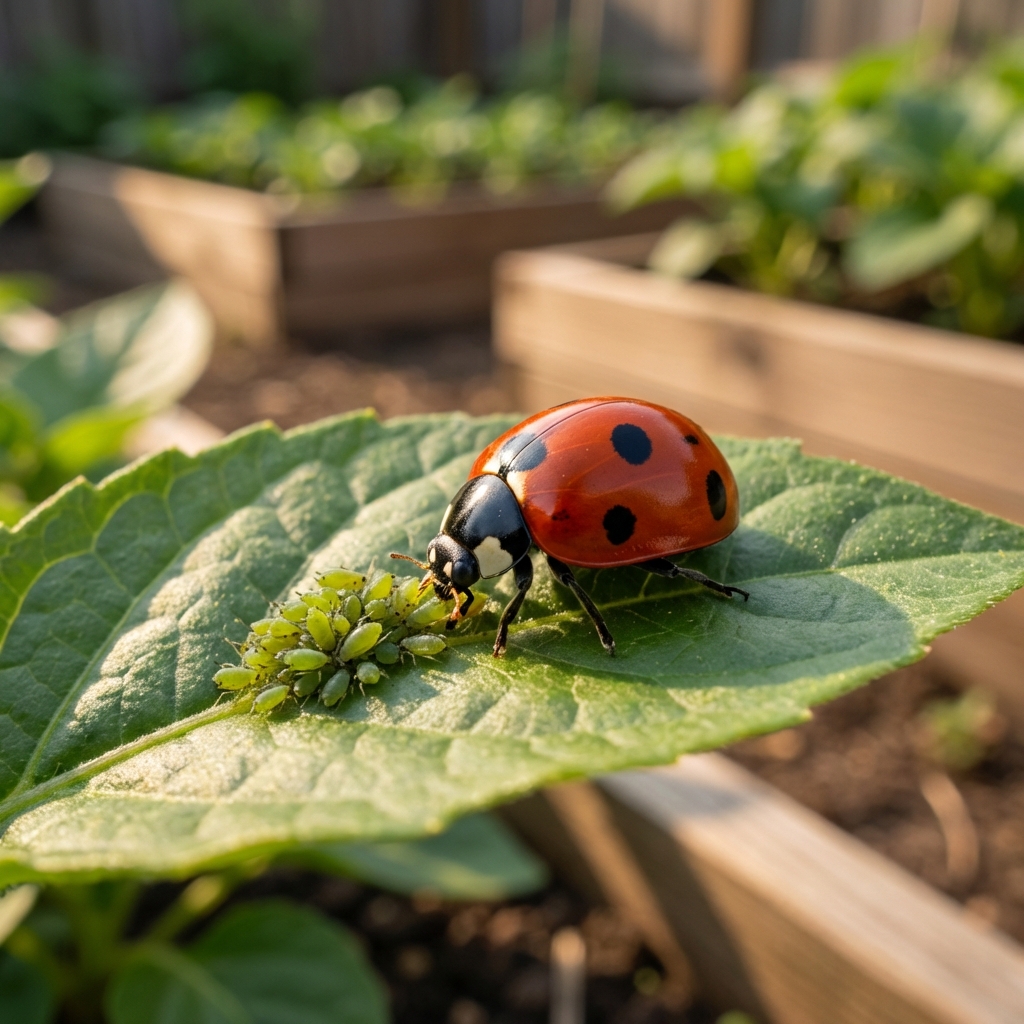
Lady beetles, lacewings, hoverflies, and parasitic wasps all help control aphids. You can encourage them by planting small-flowered blooms nearby (like dill, cilantro, alyssum, and yarrow) and avoiding broad spraying when you only need spot treatment.
Plant tips
Vegetables (tomatoes, peppers, greens)
- Start with pruning or water blast, then soap.
- Check undersides of new leaves twice a week during peak growth.
Roses and flowering shrubs
- Prune heavily infested tips.
- Soap or horticultural oil works well, applied in the cool part of the day.
Houseplants
- Isolate the plant first.
- Rinse in the sink or shower, then use insecticidal soap.
- Repeat weekly for 2 to 3 weeks to catch hatchlings.
Common mistakes
- Only spraying the top of leaves and missing where aphids actually sit
- Spraying in full sun and burning foliage
- One-and-done treatment instead of a follow-up 2 to 3 days later
- Overfertilizing and creating endless tender new growth
- Ignoring ants, which can rebuild the colony fast
- Blanket spraying when you only needed a spot treatment
Quick FAQ
What kills aphids instantly?
A strong water spray removes them immediately, and insecticidal soap can kill quickly on contact when it hits the aphids directly. Thorough coverage is the key.
Is vinegar a good organic aphid killer?
Vinegar can damage plant tissue easily. I do not recommend it on garden plants. Soap spray or horticultural oil is much more predictable and plant-safe when used correctly.
Will dish soap work?
Sometimes, but it is riskier than true insecticidal soap because different dish soaps vary in strength and additives. If you use it, keep the mix mild, test first, and avoid spraying in heat.
How often should I treat?
For active infestations, check every 2 to 3 days and re-treat as needed. Once controlled, weekly checks on new growth usually prevent a rebound.
Bottom line
If you want the fastest organic win, prune the worst tips, blast aphids off with water, then follow with insecticidal soap for what is left. After that, cut the ant traffic, check nearby plants, and avoid pushing too much soft new growth with heavy nitrogen. Do those few things and aphids go from a recurring nightmare to a manageable nuisance.

Jose Brito
I’m Jose Britto, the writer behind The Country Store Farm Website. I share practical, down-to-earth gardening advice for home growers—whether you’re starting your first raised bed, troubleshooting pests, improving soil, or figuring out what to plant next. My focus is simple: clear tips you can actually use, realistic expectations, and methods that work in real backyards (not just in perfect conditions). If you like straightforward guidance and learning as you go, you’re in the right place.