Weeds are stubborn because they are built to survive bad conditions, compacted soil, heat, and neglect. The good news is you do not need harsh chemicals for every weed problem. The trick is matching the right organic approach to the right location.
Quick note on wording: people use “organic” in different ways. In this guide, I mean non-synthetic, DIY, and low-residue approaches that can still be powerful, and still need careful use.
This page covers a few reliable DIY organic weed killer recipes, exactly how to mix them, where they work best, and the small details that make the difference between “it did nothing” and “wow, that worked.”
Safety baseline: these are non-selective methods. Keep sprays off plants you want to keep, keep kids and pets away until dry, and never mix vinegar solutions with bleach or other household cleaners.
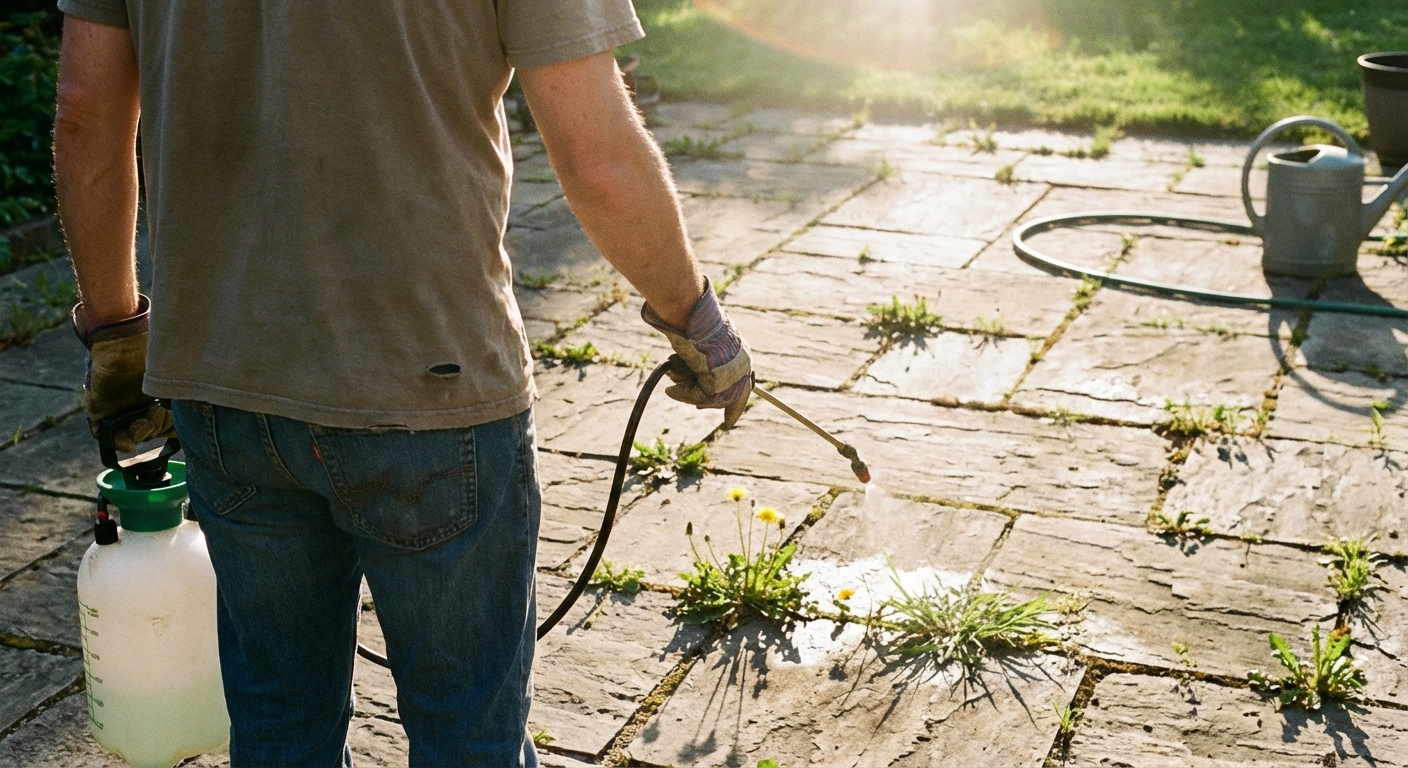
Before you spray: know what you are trying to kill
Organic weed control falls into two main types, and they behave very differently.
- Contact killers burn the leaves they touch. They work fast on small annual weeds, but they usually do not kill deep roots.
- Root-focused control is more about persistence, digging, smothering, and preventing regrowth. This is usually what you need for perennial weeds.
Quick rule: If the weed has a thick root, runners, or pops back up after mowing, plan on repeated treatments and some physical removal.
Fast clue: annual or perennial?
- Annuals (often easy): chickweed, purslane, many tiny seedlings that pull up clean.
- Perennials (usually stubborn): dandelion, bindweed, creeping grasses, anything with runners or a taproot.
Recipe 1: Vinegar + salt + soap (best for cracks and hardscapes)
This is the most popular DIY mix, and it can work well when you use it in the right place. It is a non-selective contact killer, meaning it can damage any plant it touches. Use it for weeds in paver cracks, driveway edges, gravel paths, and fence lines, not in your garden beds.
Important for performance: Standard white vinegar is usually 5 percent acidity, which is already on the mild end for weed control. Diluting it makes it weaker, so this recipe keeps the vinegar as close to full strength as possible.
Mix (about 1 quart)
- 4 cups white vinegar (5 percent acidity)
- 1 tablespoon salt (table salt is fine)
- 1 teaspoon liquid castile soap or a mild, non-antibacterial dish soap
How to mix it
- Warm 1/4 cup of the vinegar (not boiling, just warm) and dissolve the salt in it. This helps prevent sprayer clogs without diluting the overall acidity much.
- Pour the remaining vinegar into your sprayer, then add the salty vinegar.
- Add soap last and swirl gently. Do not shake hard or it will foam.
Where it works best
- Small weeds under 4 inches tall
- Hot, sunny weather with no rain expected for 24 hours
- Hard surfaces where you do not care about nearby grass or soil life
Big warning about salt
Salt can build up in soil and make it harder for anything to grow there later. That is why I treat this as a hardscape-only recipe. Vinegar is what gives you the fast leaf burn. Salt is what increases the risk of long-term “nothing grows here” effects.
Runoff matters: do not use salt mixes where runoff can wash into beds, lawns, tree roots, storm drains, ponds, or waterways.
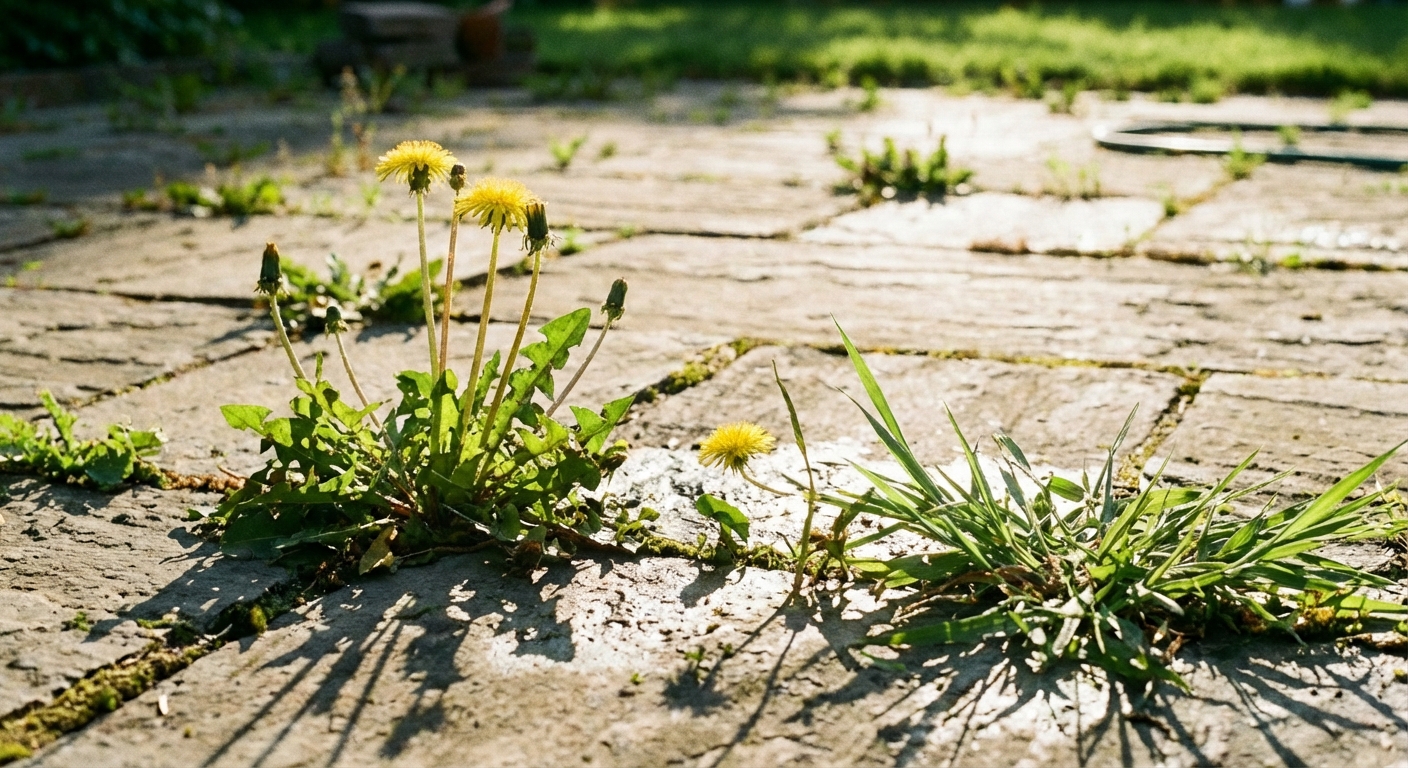
Recipe 2: Straight vinegar spray (less residue, still effective on small weeds)
If you are working near plants you want to keep, vinegar without salt is a better starting point. It still burns foliage, but it does not leave the same long-term soil residue that salt can.
Mix
- White vinegar (5 percent) in a spray bottle
- Optional: 1 teaspoon liquid castile soap per quart to help it stick
Tips that matter
- Spray the leaves, not the ground. This is a leaf-burner.
- Hit weeds at the seedling stage. Older weeds have tougher leaves and bigger roots.
- Expect a second round. Many weeds will need another spray 3 to 7 days later.
- Choose soap carefully. Avoid degreasing, antibacterial, or “extra strength” formulas. Use a small amount.
- Rinse your sprayer after use. Vinegar can be hard on metal parts and can leave odor if it sits.
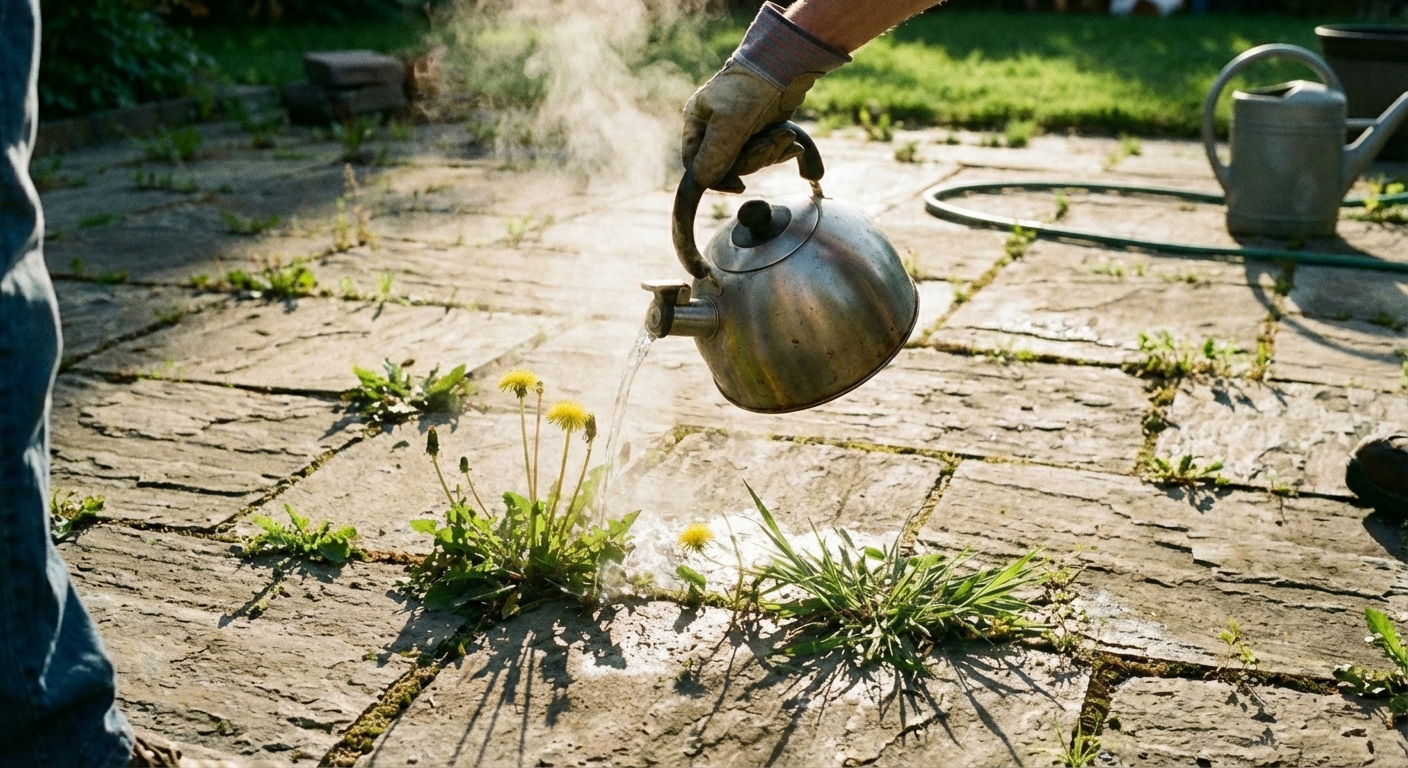
Recipe 3: Boiling water (the simplest organic weed killer)
Boiling water is old-school, cheap, and surprisingly effective for weeds in sidewalk cracks and along edges. It kills by heat, not chemicals.
How to use it
- Boil water and carefully pour it directly on the weed crown and leaves.
- Pour slowly so the heat penetrates into the crack.
- Repeat for tough weeds.
Best uses
- Pavers, brick, concrete cracks
- Gravel paths (works, but may need repeats)
Safety note: Boiling water burns skin fast. It is also non-selective, and runoff can scald nearby turf and ornamentals. Keep kids and pets away and wear closed-toe shoes.
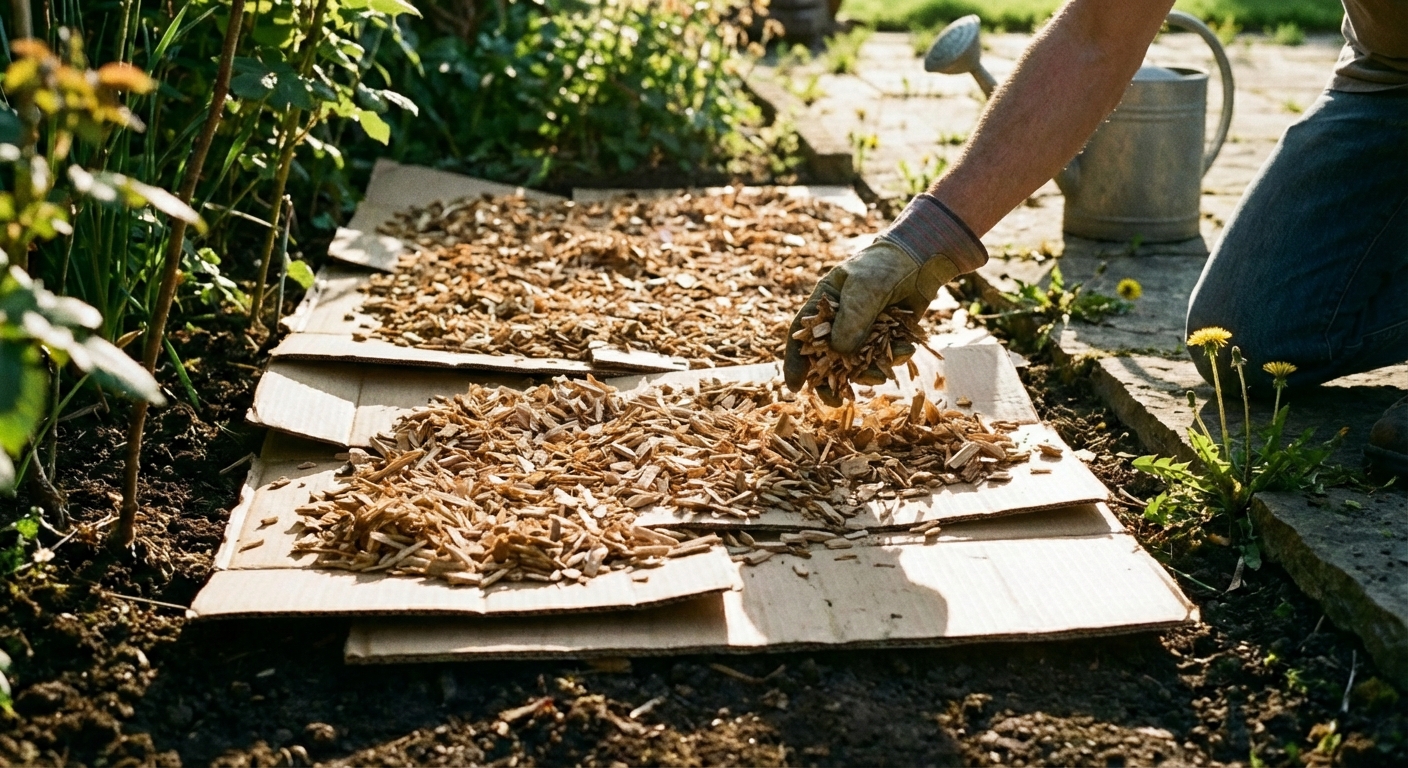
Recipe 4: Mulch and cardboard (best for garden beds)
If you are trying to control weeds in beds where you grow food or flowers, the most reliable organic approach is not a spray. It is light blocking. This method smothers weeds and prevents new seeds from sprouting.
What to do
- Cut weeds down to ground level.
- Lay plain cardboard (remove tape, staples, and glossy print). Overlap edges by 4 to 6 inches.
- Wet it thoroughly so it molds to the soil.
- Cover with 3 to 6 inches of mulch, compost, shredded leaves, or wood chips.
What to know
- Cardboard can temporarily tie up a little nitrogen right at the surface. Under a good mulch layer, it is usually minor.
- In some gardens, smother layers can create a cozy home for slugs. If slugs are an issue for you, check under mulch regularly.
Where it shines
- New garden beds
- Between rows in larger gardens
- Around shrubs and perennials (leave a little space around stems)
Conditions that make DIY weed killers work
- Sun and heat help. Mid to late morning on a warm, dry day is ideal.
- No wind. Drift is how you accidentally burn the plants you love.
- No rain for 24 hours. You want the spray to stay on the leaves.
Spray for coverage, not runoff
Lightly coat the leaves until they glisten. If it is dripping into the soil, you are wasting mix and increasing the chance of harming nearby plants.
Aim at young growth
Seedlings and small weeds have thin cuticles and smaller root systems. That is your best window. Once a weed is mature, you are usually managing it, not erasing it.
Re-treat on a schedule
For most contact killers, plan for a second pass. If you spray once and walk away, perennial weeds will treat it like a haircut.
How to avoid damaging plants you want to keep
- Use a shield. A piece of cardboard held behind the weed works great to stop overspray.
- Use a coarse spray. Fine mist drifts farther.
- Keep sprays off bark and stems. Young stems and tender bark can burn.
- Do not spray on breezy afternoons. This is where accidents happen.
What about horticultural vinegar (20 percent)?
You will see stronger vinegars sold for weed control. They can work faster than kitchen vinegar, but they are also much more likely to cause burns and eye injury.
- Follow the label exactly.
- Wear gloves and eye protection.
- Keep it off skin and away from children and pets.
- Store it like a hazardous product, because it can injure people and pets.
Label and legality note: In some places, high-strength vinegar products are regulated as herbicides. Use only registered products and follow local rules and the label directions.
For most home yards, 5 percent vinegar plus good timing can handle light weed pressure, especially on very young weeds in hardscape areas. For older weeds and grasses, expect repeat treatments or a different approach.
One more option: lawns and turf
Sprays like vinegar and boiling water do not belong in the middle of a lawn. They will burn grass too. For turf, organic weed control is mostly about removal plus making the lawn dense enough to crowd weeds out.
- Hand tools: a dandelion digger or weed puller can remove the root with less soil disruption.
- Mow higher: taller turf shades the soil and reduces new weed seedlings.
- Overseed thin spots: bare soil is an open invitation for weeds.
- Water deep, less often: encourages deeper grass roots, not shallow weeds.
Why weeds come back (and what to do about it)
If you kill the top but the root survives, or if you have a fresh supply of weed seeds blowing in, you will see regrowth. Prevention is where you win long-term.
Prevention checklist
- Mulch garden beds 2 to 4 inches deep. Keep mulch a little away from plant stems.
- Fill cracks. Sand or polymeric sand between pavers reduces places for seeds to sprout.
- Edge your beds. A clean edge slows creeping grasses.
- Pull after rain. Wet soil makes roots come out clean.
- Do not let weeds go to seed. One neglected patch can create next year’s problem.
FAQ
How long until I see results?
With vinegar or boiling water, you often see wilting within a few hours. Full browning usually shows up by the next day. Perennials and grasses may green back up and need repeats.
Will vinegar kill weeds permanently?
It can kill small annual weeds completely, but many perennials will regrow from the root. Think of vinegar as a fast top-kill that often needs repeats.
Will this kill grass?
Yes. Vinegar sprays, salt mixes, and boiling water are all non-selective. If it touches grass blades or roots, it can damage or kill turf.
Can I use these recipes in my vegetable garden?
I avoid salt mixes in beds. For food gardens, focus on hand pulling, hoeing, mulching, and smothering with cardboard. If you use vinegar at all, spot-spray very carefully and keep it off your crops.
Does dish soap kill weeds by itself?
Not reliably. Soap mainly helps sprays stick and spread on waxy leaves. Use only a small amount, and avoid harsh formulas.
What is the safest organic weed control for pets?
In general, physical methods like hand pulling, hoeing, and smothering are the lowest risk. If you spray anything, keep pets off the area until it is fully dry, and avoid spraying where they like to sniff and lick.
My realistic recommendation
If you want a simple plan that works in a normal backyard, do this:
- For patios, pavers, and driveway cracks: use boiling water or the vinegar + soap spray. Use salt only if you truly do not want anything growing there, and only where runoff will not reach soil you care about.
- For garden beds: skip the sprays and go with cardboard plus mulch, then spot-hand-weed as needed.
- For tough perennials: expect repeated attacks and remove as much root as you can.
Weed control gets dramatically easier when you stop chasing every weed and instead focus on blocking light, limiting bare soil, and staying consistent for a few weeks.

Jose Brito
I’m Jose Britto, the writer behind The Country Store Farm Website. I share practical, down-to-earth gardening advice for home growers—whether you’re starting your first raised bed, troubleshooting pests, improving soil, or figuring out what to plant next. My focus is simple: clear tips you can actually use, realistic expectations, and methods that work in real backyards (not just in perfect conditions). If you like straightforward guidance and learning as you go, you’re in the right place.