Christmas cactus (Schlumbergera) is one of those plants that rewards steady, low-drama care. It is not a desert cactus. It is a Brazilian forest cactus that grows as an epiphyte and lithophyte in humid coastal mountains, rooting in branch crotches, mossy pockets, and rocky crevices where moisture comes and goes. When you match that rhythm and keep your inputs eco-friendly, you get healthier segments, fewer pests, and more reliable blooms.

Know what you are growing
Most “Christmas cactus” sold today are holiday Schlumbergera hybrids, and many are actually Thanksgiving cactus (S. truncata) or truncata-heavy hybrids. Care is similar across types, but bloom timing depends on cultivar and conditions.
- Thanksgiving cactus: commonly has pointier, claw-like segment edges and is often marketed for earlier-season blooms.
- Christmas cactus: often has more rounded, scalloped segments and is often marketed for later-season blooms.
- Easter cactus: a different group with a different bloom season and slightly different preferences.
Bottom line: use the same eco-friendly care approach, then fine-tune bloom timing with the light and temperature cues later in this guide.
Light: bright, not blazing
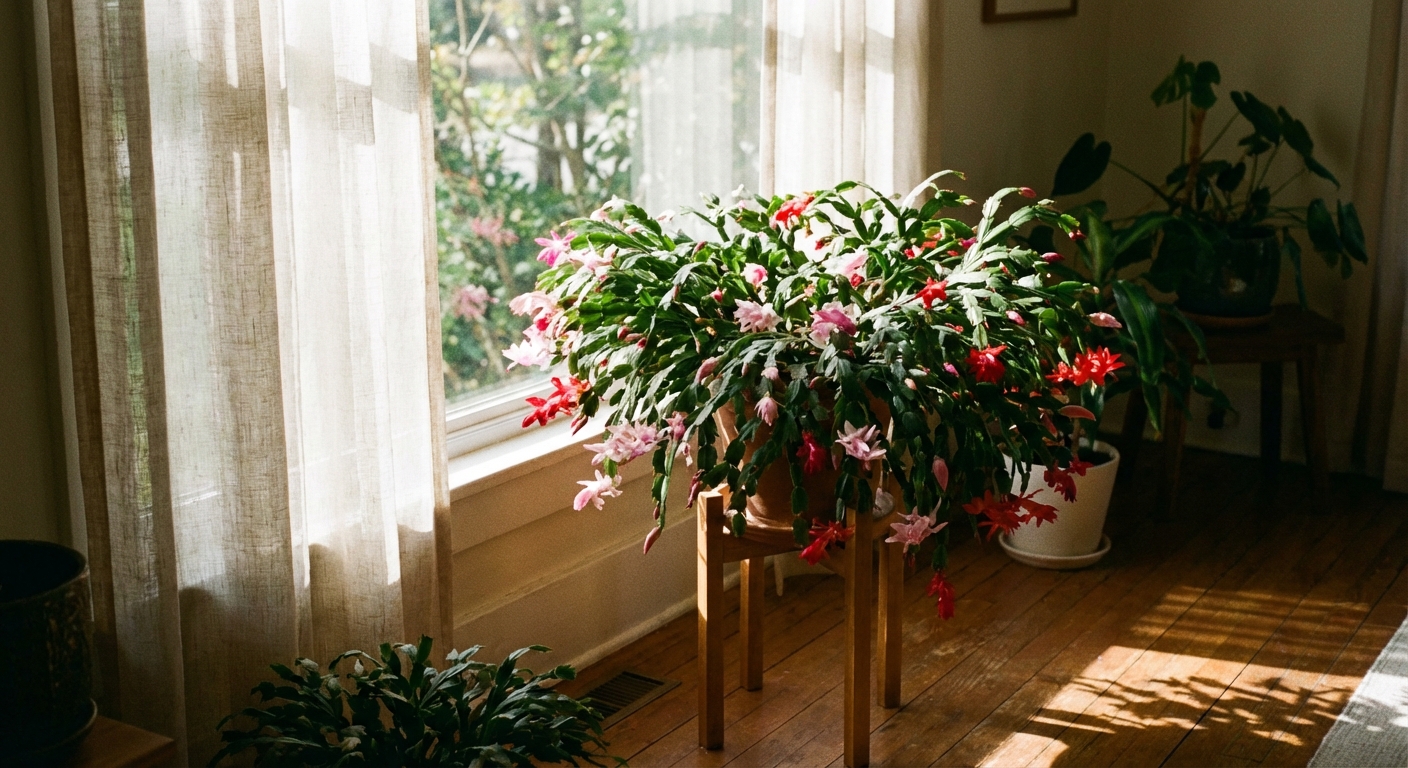
For thick growth and blooms, aim for bright indirect light. A few hours of gentle morning sun is usually great, especially in winter. Harsh midday sun through glass can scorch segments.
Easy light checks
- Too little light: lanky growth, fewer segments, slow flowering.
- Too much sun: red or bleached patches, shriveling at segment edges.
- Just right: medium green segments, steady new growth, buds set in season.
Rotation tip: rotate the pot occasionally during spring and summer for even growth. Once buds form, stop rotating or moving the plant, since changes in light direction can contribute to bud drop.
Watering: the eco-friendly sweet spot
Overwatering is the fastest way to lose a Christmas cactus. Underwatering can also cause bud drop and wrinkling. The goal is a cycle of moist to lightly dry, not constantly wet.
A simple watering rule that works
- Water thoroughly until it runs out the drainage holes.
- Empty the saucer so the pot never sits in water.
- Wait to water again until the top 1 to 2 inches of mix feels dry, or the pot feels noticeably lighter.
Make it greener with small habits
- Use captured water: rainwater is ideal when available. If you use tap water, let it sit overnight (this can help if your water is chlorinated; chloramine will not dissipate this way).
- Water at the root zone: avoid constantly wetting the crown to reduce fungal issues.
- Right pot size: a pot that is too large holds extra wet soil, which increases root rot risk.
Soil: skip peat, keep it airy
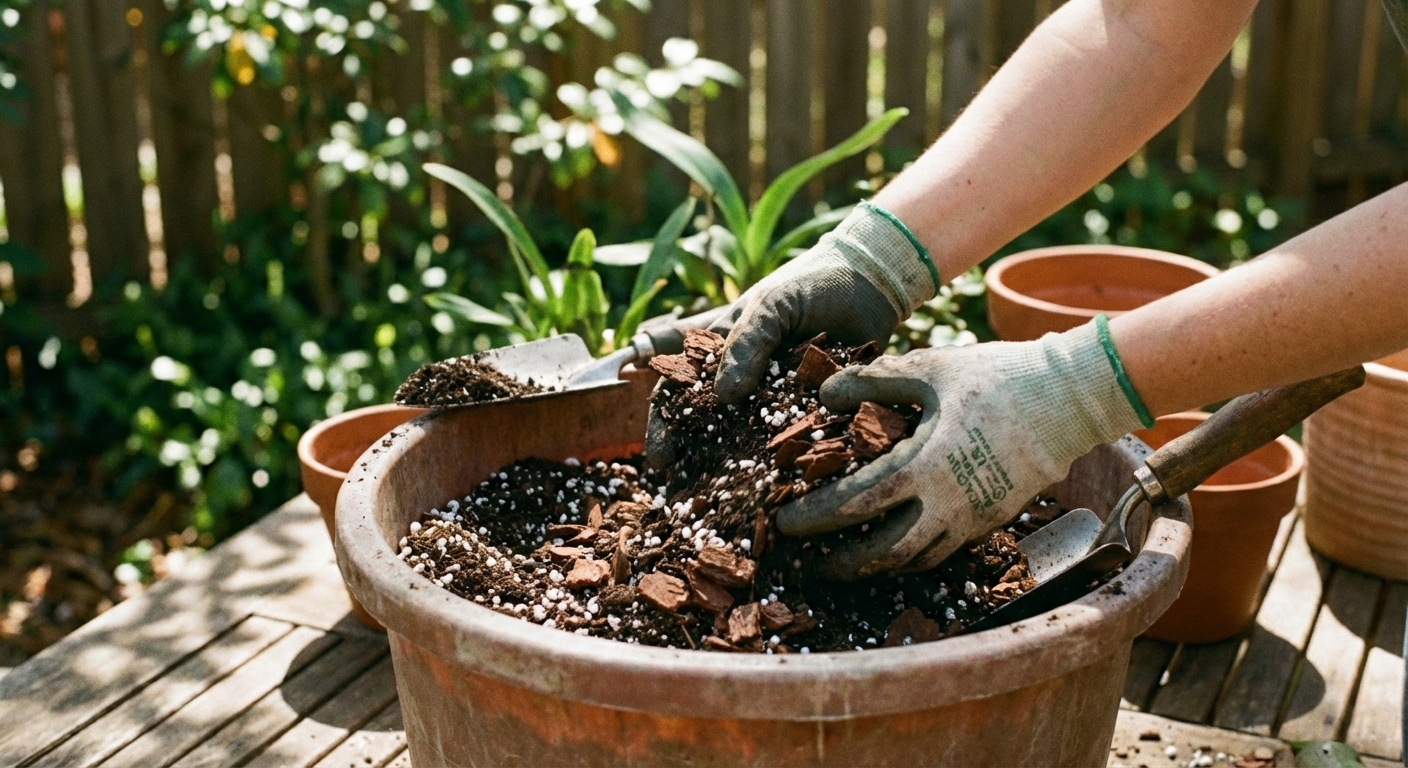
In nature, Schlumbergera roots breathe. They like an airy, fast-draining mix that still holds a little moisture. Traditional houseplant mixes often rely heavily on peat, which has a higher environmental cost. You can build a peat-reduced or peat-free blend that performs just as well.
Peat-reduced mix options
Choose one of these approaches based on what you can find locally:
- Option A (peat-free base): 2 parts coco coir based potting mix + 1 part perlite or pumice + 1 part fine orchid bark.
- Option B (upgrade a basic mix): 2 parts all-purpose potting mix + 1 part perlite or pumice + 1 part bark. Choose the lowest-peat bag you can.
- Option C (store-bought shortcut): an orchid-style mix blended 50:50 with a coir-based mix for better moisture balance.
Eco tip: pumice and bark last longer than some lightweight additives, which means fewer repots and less waste over time. Coir can also come with tradeoffs (transport, processing), so if you have access to a locally made, lower-peat mix or sustainably sourced bark, that can be an even better fit.
Containers and drainage that actually help
Your container choice can either stabilize watering or make it harder.
- Terracotta: breathable and forgiving if you tend to overwater. It dries faster, so you may water a bit more often.
- Plastic or glazed ceramic: holds moisture longer and works well if your home is very dry.
- Always: use a pot with drainage holes.
If you like decorative cachepots, keep the plant in a draining nursery pot inside the cover pot, and dump any collected water after watering.
Reuse tip: you can reuse pots to cut waste. Scrub and rinse, then sanitize if needed (especially after pest or rot issues) before repotting.
Feeding: gentle and organic beats heavy doses
Christmas cactus does not need heavy fertilizer. Overfeeding can cause weak growth and fewer blooms. A light, consistent plan is more sustainable and more effective.
Eco-friendly feeding schedule
- Spring to late summer: feed every 4 to 6 weeks with a diluted organic liquid fertilizer (for example, fish emulsion or seaweed) at 1/4 to 1/2 strength.
- Early fall through bloom: reduce feeding. Let the plant focus on bud set and flowering.
- Winter rest after flowering: pause or feed very lightly if the plant is still actively growing in bright light.
Compost note: avoid top-dressing with heavy compost indoors. It can invite fungus gnats. If you want a natural boost, use worm casting tea or a very thin top-dress of castings only.
Repotting: less often, done smarter
These plants like being slightly snug in their pots. Repot every 2 to 3 years, or sooner only if the mix has broken down and stays soggy, or roots are circling heavily.
How to repot with minimal stress
- Repot after flowering or in spring when growth resumes.
- Go up just 1 pot size, usually 1 to 2 inches wider.
- Trim away any black, mushy roots and refresh with airy mix.
Waste-saving tip: if the pot is still a good size, you can simply shake out the old mix and replant in the same pot with fresh medium.
Humidity and temperature: bloom basics
Because they are forest cacti, Christmas cactus appreciates moderate humidity. Many homes are dry in winter, right when buds are forming.
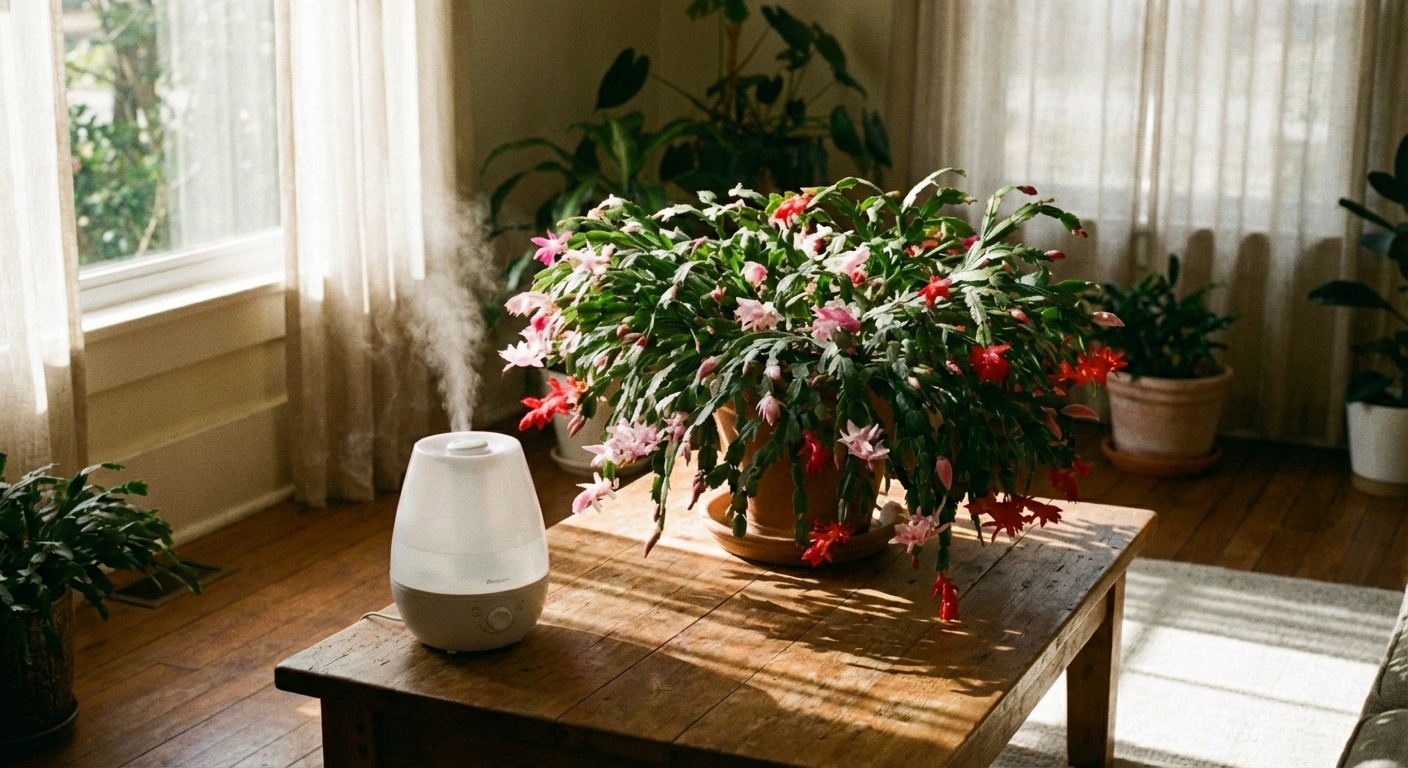
- Target humidity: around 40% to 60% if possible.
- Simple methods: a humidifier is the most reliable. Grouping plants can help a bit. Pebble trays may slightly improve the immediate microclimate near the plant, but they rarely raise whole-room humidity in a noticeable way.
- Temperature range: 60 to 75°F is comfortable for growth. Slightly cooler nights help bud formation.
Draft tip: protect from cold drafts and hot blasts. Avoid leaves touching a freezing windowpane, and keep plants away from radiators and heating vents.
How to trigger blooms naturally
To set buds, Christmas cactus needs two main cues for several weeks: longer nights and slightly cooler temperatures. You do not need to “starve” it or let it go bone dry.
A realistic bloom routine
- 6 to 8 weeks before you want blooms: aim for 12 to 14 hours of uninterrupted darkness each night. If your plant is stubborn, extend closer to 14 to 16 hours.
- Night temps: aim for about 55 to 65°F if you can.
- Watering: keep on the slightly drier side, but do not let it shrivel.
- Once buds appear: keep conditions steady. Moving the plant, blasting heat vents, cold drafts, or letting it dry too much can cause bud drop.
If your home has bright lights at night, a simple eco-friendly fix is to place the plant in a spare room, closet, or behind a curtain in the evening.
Odd but real: bud drop can also be triggered by ethylene gas from ripening fruit kept very close to the plant, especially in a small kitchen or closed room.
Pruning and shaping
If you want more blooms next season, you want more branch tips. Light pruning after flowering encourages branching.
- Twist off 1 to 2 segments per stem (do not cut with dull scissors).
- Focus on leggy stems to balance shape.
- Do not prune late in the year when the plant should be setting buds.
Propagation: more plants, less waste
Propagating Christmas cactus is easy and can be done with almost zero waste.
Stem cutting method
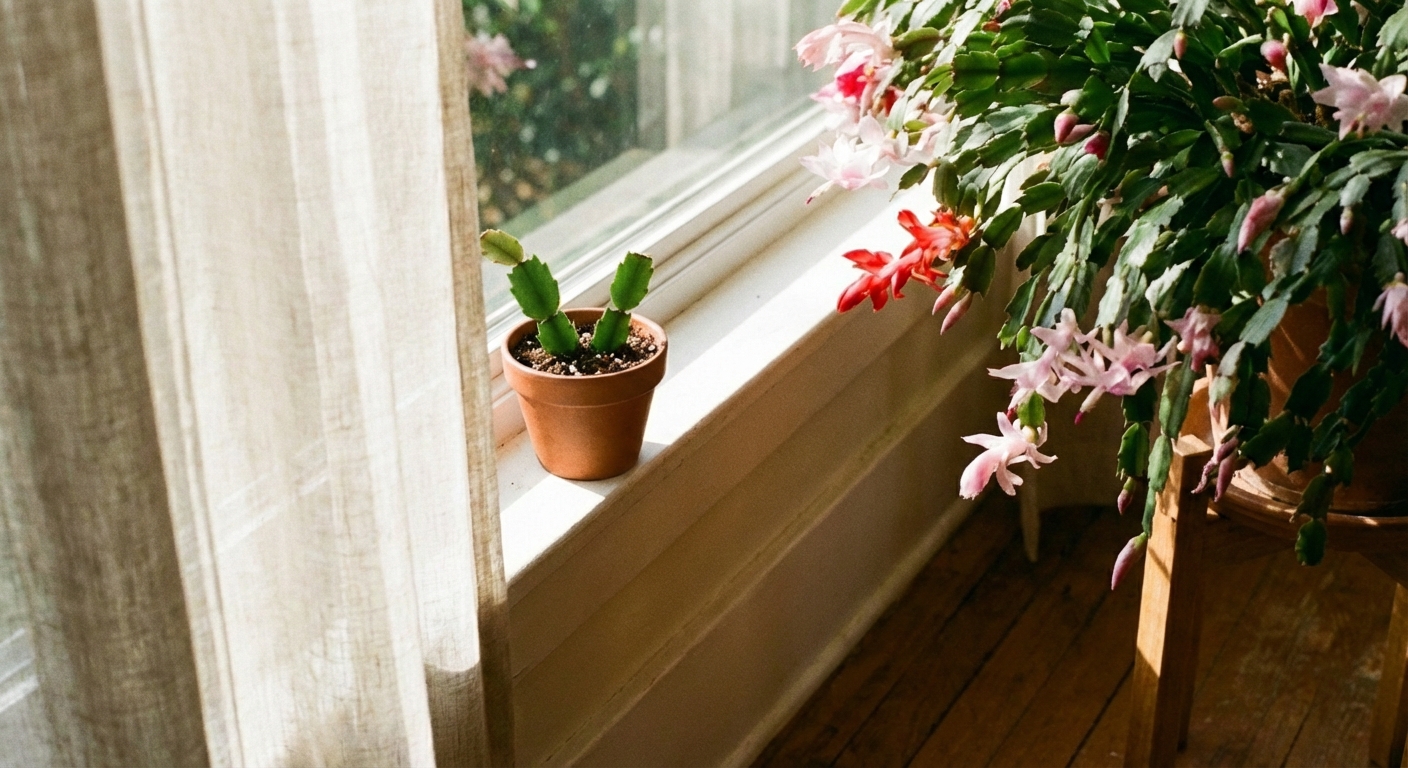
- Twist off a healthy piece with 2 to 4 segments.
- Let it dry for 24 to 48 hours so the end calluses.
- Plant the bottom segment lightly into a small pot with airy mix.
- Keep slightly moist, not wet, until roots form.
Eco-friendly pest control that works
Most problems come from stress. Fix the environment first, then treat pests gently and consistently.
Common pests
- Mealybugs: white cottony clusters in joints. Remove with a cotton swab dipped in 70% isopropyl alcohol, then follow up weekly.
- Spider mites: fine webbing and stippling, usually in dry air. Increase humidity and rinse the plant, then use insecticidal soap as needed.
- Fungus gnats: adults flying around soil, larvae in wet mix. Let the mix dry more between waterings and use yellow sticky traps. Consider a BTi drench if the issue persists.
Skip broad-spectrum sprays indoors whenever possible. Spot treatments and environmental fixes are usually enough for this plant.
Troubleshooting quick fixes
- Wrinkled segments: underwatering, or root damage from staying wet too long. Check roots and adjust watering rhythm.
- Buds dropping: sudden changes in temperature, drafts, moving or rotating the plant, drying out during bud stage, or heat vents.
- No blooms: not enough dark hours, nights too warm, or too much nitrogen fertilizer late in the season.
- Soft, mushy base: root rot. Unpot, trim damaged roots, repot in fresh airy mix, and water less.
Pet safety
Christmas cactus is generally considered non-toxic to cats and dogs, but nibbling can still cause mild stomach upset. If your pet is a dedicated plant-chewer, place the pot out of reach.
A simple eco-friendly care plan
If you just want the basics that work in a real home, use this:
- Spring and summer: bright indirect light, water when the top dries, light organic feeding monthly, rotate occasionally for even growth.
- Early fall: stop heavy feeding, keep nights cooler if possible.
- 6 to 8 weeks pre-bloom: 12 to 14 hours of darkness nightly (up to 16 if needed) plus cool nights.
- Bud and bloom time: steady moisture, no moving, protect from drafts and heat vents.
Do those four things and you will be ahead of most growers. The rest is just fine-tuning for your specific windows, humidity, and winter heat.

Jose Brito
I’m Jose Britto, the writer behind The Country Store Farm Website. I share practical, down-to-earth gardening advice for home growers—whether you’re starting your first raised bed, troubleshooting pests, improving soil, or figuring out what to plant next. My focus is simple: clear tips you can actually use, realistic expectations, and methods that work in real backyards (not just in perfect conditions). If you like straightforward guidance and learning as you go, you’re in the right place.